The Engineering Science of Concrete Coatings: Polyaspartic vs. Epoxy Chemical Structure Across Texas
Selecting the right protective finish for your concrete requires a close look at the underlying science of polymer networks. Understanding the chemical structures of Polyaspartic and epoxy helps you see why traditional resin floors frequently fail under intense thermal stress and mechanical loads. At Floortek Coatings, we utilize advanced aliphatic polyurea technology engineered to deliver exceptional performance in homes and commercial spaces across Texas. By examining how these molecules organize and cure, you can make an educated choice that protects your property investment for decades.
The Molecular Breakdown of Polyaspartic vs. Epoxy Chemical Structure
To understand why traditional materials struggle, we must look at how these coatings are built at an atomic level. Epoxy resins rely on a distinct network of aromatic rings and epoxide functional groups. When you mix an epoxy resin with an amine curing agent, they form a rigid, tightly packed cross-linked thermosetting polymer. This dense structure makes cured epoxy very hard, but it also creates a significant disadvantage: a complete lack of structural flexibility. The aromatic rings in the epoxy backbone are highly vulnerable to solar radiation, causing the material to fracture and discolor easily.
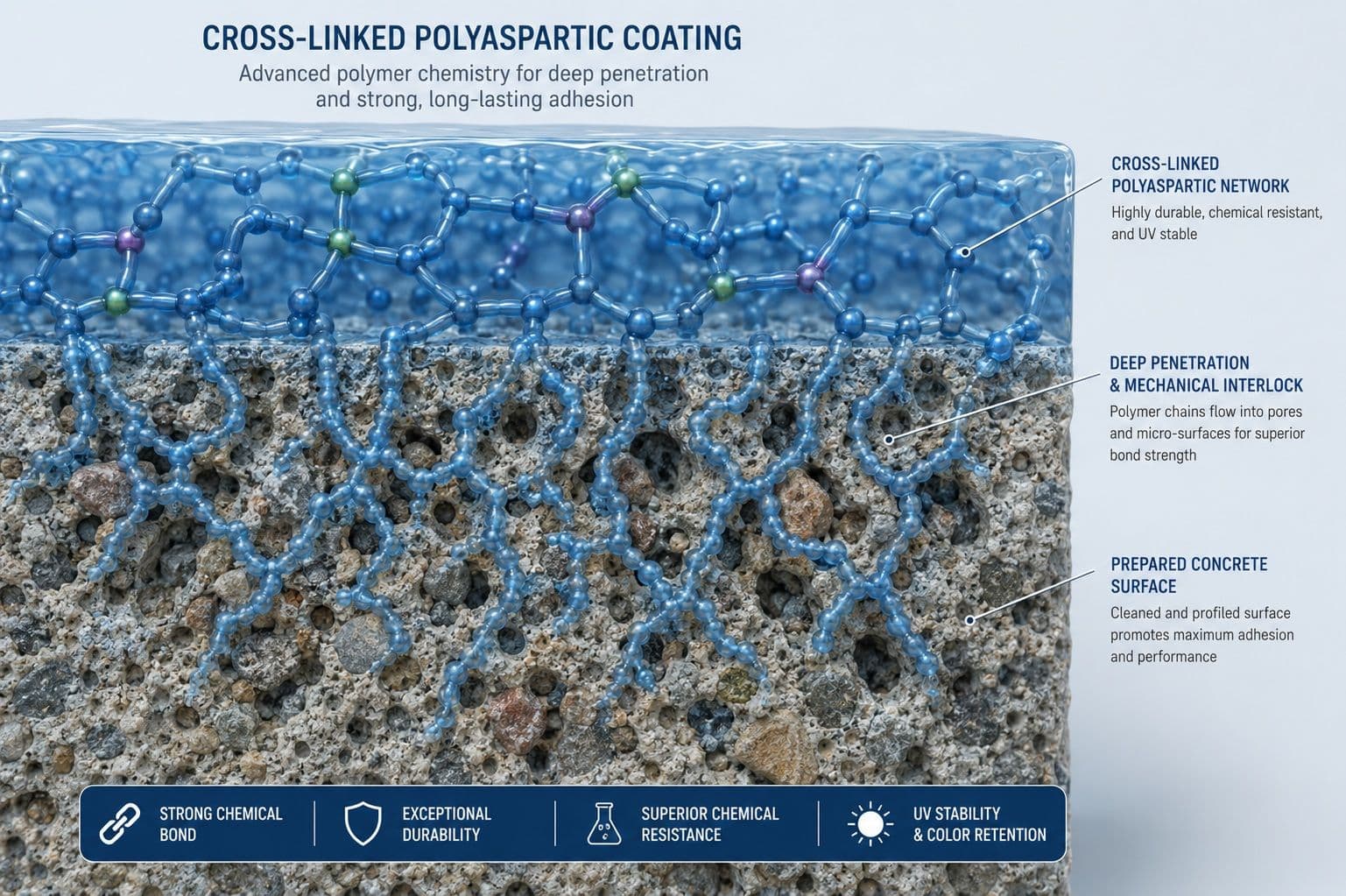
In contrast, our advanced polyaspartic finishes utilize an aliphatic polyurea backbone. The molecular architecture consists of an ester-wrapped amine network that slows down the cross-linking reaction just enough to allow perfect application. Because the carbon chains are aliphatic rather than aromatic, they do not absorb ultraviolet light. This unique configuration gives the system its signature UV-stable properties. The polymer chains are spaced farther apart but held together by incredibly resilient urea links. This gives the finished surface massive impact resistance and the ability to expand and contract without cracking.
How Polyaspartic Molecules Bond with Concrete Surfaces
The longevity of a floor surface depends entirely on its mechanical adhesion to the underlying slab. Epoxy coatings merely sit on top of the concrete substrate. Because epoxy has high viscosity and sluggish molecular motion during application, it fails to penetrate deeply into the concrete's microscopic pores. It creates a topical bond that can easily break under heavy vehicular traffic or vapor pressure.
Our team approaches the installation process with mechanical optimization in mind. We begin with comprehensive concrete surface profiling for polyaspartic adhesion using industrial diamond grinders. This mechanical preparation opens up millions of tiny pores within the concrete matrix. When we apply our premium polyaspartic material, its low viscosity allows it to flow deep into these microscopic cavities. The polyaspartic molecules form covalent bonds with moisture and calcium silicate hydrates within the concrete. Instead of just sticking to the top, it becomes an inseparable part of the concrete itself. This prevents the coating from ever peeling or delaminating from your floor.
Tensile Strength and Material Elasticity Benchmarks
When evaluating long-term performance, mechanical testing data reveals the stark contrast between these two popular options. The tensile strength of polyaspartic vs epoxy showcases why our aliphatic systems consistently outperform standard store-bought resins. Standard epoxy exhibits high tensile strength but zero elongation. When your concrete slab moves due to soil shifting or heavy weight loads, the rigid epoxy layer cannot flex. It simply cracks along with the concrete, destroying your floor finish.
Our polyaspartic formulas are engineered to handle continuous physical stress. They provide up to 10X the flexibility of traditional epoxy coatings. The elongation rate of a polyaspartic system allows it to stretch slightly under immense pressure without losing structural integrity. This high elasticity protects your floors from impact damage when heavy tools or equipment drop onto the surface. We provide this manufacturer-direct value to ensure you get a high-performance floor that withstands daily wear and tear.
Managing Concrete Moisture Vapor Transmission Rates in Texas
Moisture is the primary enemy of any resinous floor coating system. Concrete is a porous sponge that constantly breathes out water vapor from the earth. The concrete moisture vapor transmission rates must be carefully managed to avoid floor failure. Epoxy creates a completely non-breathable barrier that traps this rising vapor underneath its rigid film. As hydrostatic pressure builds, it forces the epoxy film away from the concrete, resulting in unsightly bubbles, blisters, and complete coating failure.
Our team takes a scientific approach to managing moisture issues in Texas slabs. When it comes to moisture, we need to add an extra layer called a vapor barrier. This specialized primer layer acts as an advanced defense system. It regulates the rate of water vapor transmission to safe levels before we apply the polyaspartic topcoat layers. This multi-layered approach keeps your concrete secure against subsurface pressure. It allows you to confidently install our premium finishes in challenging subterranean spaces by utilizing our specialized Basement coating service.
The Practical Benefits of the Polyaspartic Rapid Curing Process Science
The economic impact of downtime during a flooring project is an important factor for both homeowners and businesses. Traditional epoxy systems require a prolonged, tedious curing phase. An epoxy floor can take 3 to 5 days to fully cure before you can drive vehicles or place heavy equipment on it. This slow reaction occurs because epoxy relies on ambient temperature to slowly bond its molecular chains, leaving the wet surface exposed to dust, insects, and debris for hours.
The polyaspartic rapid curing process changes the entire timeline. This chemical reaction occurs via a rapid, controlled cross-linking process independent of ambient air temperature. This allows our skilled technicians to deliver a complete one-day garage floor-coating system. We can walk on the surface just a few hours after the final application. Vehicles can safely drive onto the floor within 24 hours. This rapid turnaround minimizes disruptions to your daily routine while delivering a flawless, industrial-grade finish.
Weathering the Texas Climate: Aliphatic Polyurea UV Stability
The intense Texas sun presents a severe challenge for outdoor and garage concrete finishes. Epoxy coatings possess an aromatic molecular structure that breaks down rapidly under solar exposure. When ultraviolet rays hit an epoxy floor in cities like Austin or San Antonio, the chemical bonds degrade. This molecular breakdown manifests visually as severe yellowing, chalking, and loss of gloss. Within a year, an outdoor epoxy floor will lose its aesthetic appeal and structural strength.
Our advanced solutions eliminate this problem. The technical data on the UV stability of aliphatic polyurea proves that our coatings are completely impervious to solar radiation. The chemical backbone does not degrade or change color when exposed to direct sunlight. This makes our product perfectly suited for outdoor architectural spaces across the Lone Star State. You can upgrade your outdoor living zones with our specialized patio coating service, enhance your pool surroundings with our premium pool deck coating service, or protect your pathways with our sidewalk coating service. Your floors will remain bright, clear, and beautiful despite decades of intense Texas sun exposure.
Chemical Resistance and Practical Everyday Protection
Garages, workshops, and commercial facilities are regularly exposed to harsh chemicals. Traditional epoxy floors are highly susceptible to chemical staining and localized degradation. Hot tires from long drives across Texas highways can cause a phenomenon known as hot-tire pickup. The hot rubber tires chemically bond with the soft epoxy surface, tearing the coating away from the concrete slab when the vehicle moves. Epoxy also softens and stains when exposed to standard automotive fluids like brake fluid, motor oil, and gasoline.
Our polyaspartic systems are designed to improve everyday cleanability and provide heavy-duty chemical resistance. The formation of dense aliphatic chains creates an impenetrable surface layer that prevents fluids from soaking into the material. Motor oil, antifreeze, corrosive road salts, and household bleach sit on top of the coating until you wipe them away easily. This high level of chemical protection prevents hot-tire pickup entirely. Your garage floor stays clean and pristine no matter what projects you handle.
Engineering Custom Aesthetics with Advanced Color Systems
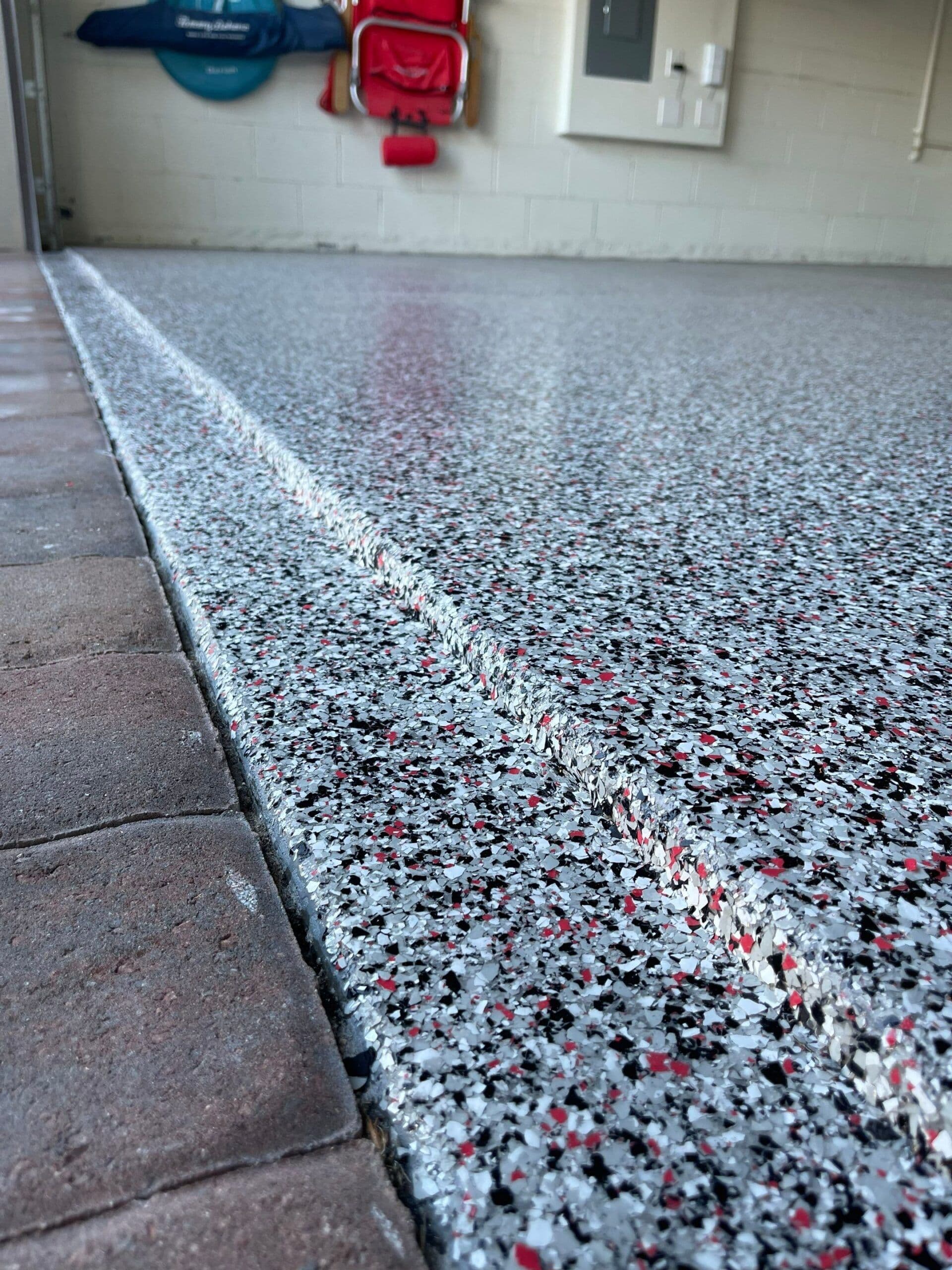
A high-performance floor must also meet your aesthetic expectations. While epoxy floors are prone to fading and limited design longevity, our multi-layered polyaspartic systems provide stunning, permanent visual options. We utilize an advanced chip broadcast system that adds both structural thickness and striking visual texture to your floors. The base polyaspartic layer receives a dense broadcast of decorative flakes, which is then sealed with our ultra-clear, non-yellowing topcoat.
You can explore a wide range of design configurations in our comprehensive Colors and Flake Options library. These systems are perfect for heavy-use zones, including high-traffic vehicle entryways. You can transform your primary exterior vehicle pathways using our specialized driveway coating service. The multi-layered broadcast system helps disguise minor concrete imperfections while creating a beautiful, uniform surface that complements your home's exterior architecture.
Establishing Technical Authority: Why Floortek Coatings Outperforms Epoxy
When you look at the total lifecycle of your floor, the differences between these materials become undeniable. Epoxy may seem like a simple quick fix, but its brittle molecular structure and susceptibility to heat and sunlight mean it will require frequent replacement or repair. Choosing a polyaspartic floor means investing in superior material science that saves you time, money, and hassle over the lifespan of your property.
Polyaspartic Coating Systems:
Formulated with an aliphatic polyurea structure that is permanently UV stable.
Features a rapid-cure chemical design that allows a full 1-day installation.
Penetrates deep into the concrete pores to form high-strength covalent bonds.
Maintains exceptional flexibility to prevent cracking during concrete expansion.
Offers complete resistance against hot-tire pickup and automotive fluids.
Traditional Epoxy Systems:
Built with an aromatic structure that yellows and cracks under UV exposure.
Requires up to 5 days of drying time before vehicular traffic is allowed.
Creates a superficial topical bond that easily peels or delaminates.
Lacks elasticity, causing the floor coating to fracture when the slab moves.
Prone to hot-tire damage and localized chemical softening.
At Floortek Coatings, we control every phase of manufacturing and deployment. We offer a compelling 30% off the first installation to help you upgrade your property with the best available technology. We stand behind our advanced chemistry with a comprehensive Life-of-home warranty that ensures your absolute peace of mind. Check out our completed residential and commercial projects by exploring the Floortek Gallery to see the quality we bring to every job.
To learn more about our corporate philosophy and dedication to engineering excellence, read more about us and discover why Texas property owners trust our expert teams. We serve clients across the state from multiple Floortek Locations, ensuring prompt local service and expert support. Review our full lineup of advanced solutions on our Coating Products page to find the ideal match for your concrete surfaces.
The fundamental difference in performance between these materials comes down to chemical durability and the physics of curing. When our teams install an advanced Floor Coating Service, we leverage the deep molecular advantages of polyaspartic coatings. This engineering focus ensures that your floor survives the toughest conditions. Traditional epoxies rely on basic ambient cross-linking, which leaves them vulnerable to temperature shifts. Our aliphatic polyaspartic systems cross-link reliably in both cold and blistering heat, ensuring a consistent molecular density every single time.
This technical stability is crucial for properties across Texas, where shifting soils and extreme weather put constant stress on concrete foundations. When you choose our polyaspartic systems, you are choosing a surface that moves dynamically with your building. The chemical structure acts like a tough, flexible shield that holds the concrete surface together, preventing minor micro-cracks from widening or spalling. Rigid, brittle epoxy coatings cannot achieve this level of everyday protection. By focusing on the exact science of how polyaspartic molecules bond with concrete, we deliver a superior floor finish that keeps your property functional, beautiful, and highly valuable.
Frequently Asked Questions:
How does the Polyaspartic vs. epoxy chemical structure affect garage floor durability in Houston, Texas?
The aliphatic structure of polyaspartic prevents the yellowing and cracking common with traditional aromatic epoxy resins under intense Texas heat. Floortek Coatings installs these advanced polyaspartic systems to ensure long-term stability and deep penetration into concrete. According to engineering materials tests conducted at Texas A&M University, aliphatic polyurea structures exhibit significantly greater mechanical flexibility than rigid epoxies. This keeps your Houston garage floor protected against heavy impacts and daily wear.
Will the Polyaspartic vs. epoxy chemical structure prevent hot-tire pickup on Dallas driveways?
Yes, the advanced aliphatic polyurea structure eliminates hot-tire pickup by resisting heat transfer from your vehicle tires. Traditional epoxy coatings soften under hot tires, causing the film to peel away from the concrete slab surface. Floortek Coatings uses specialized polyaspartic formulas that maintain their structural integrity at elevated operating temperatures. Material guidelines from the Texas Department of Transportation verify this chemical resistance data. Your Dallas driveway will remain secure and free from tire delamination.
Can the Polyaspartic vs. epoxy chemical structure withstand the intense UV rays found in Austin, Texas?
Yes, the aliphatic polymer chains in polyaspartic coatings are completely unaffected by intense ultraviolet radiation from the sun. Epoxy coatings contain aromatic rings that break down rapidly when exposed to sunlight, leading to chalking and discoloration. Floortek Coatings provides premium polyaspartic installations that stay clear and pristine over decades of sun exposure. Solar stability studies from the University of Texas at Austin confirm that aliphatic clear coats do not degrade under UV light.
How does the Polyaspartic vs. epoxy chemical structure manage concrete moisture transmission in San Antonio homes?
Polyaspartic coatings require an additional vapor-barrier layer to manage high subsurface moisture levels before final application. Epoxy traps moisture beneath its rigid film, creating hydrostatic pressure that causes bubbling and complete floor delamination. Floortek Coatings solves this by using a specialized moisture-mitigation system beneath our polyaspartic finishes. Concrete moisture management protocols from the Texas Commission on Environmental Quality emphasize the need for proper vapor barriers. This process ensures your San Antonio floor remains dry and structurally stable.
Does the Polyaspartic vs. epoxy chemical structure allow for a faster installation process in Fort Worth?
Yes, the rapid cross-linking design of polyaspartic allows our professional crews to finish your installation within a single day. Epoxy coatings require multiple days to cure between coats, leaving your property unusable for a week. Floortek Coatings utilizes this advanced polyaspartic chemistry to get you back on your floor within 24 hours. Structural acceleration data from the Texas Transportation Institute shows polyurea systems cure rapidly across various humidity levels. This minimizes downtime for Fort Worth homeowners.
Is the Polyaspartic vs. epoxy chemical structure more resistant to chemical spills in El Paso workshops?
Yes, the dense cross-linked network of polyaspartic provides superior chemical resistance against motor oil, gasoline, and acids. Epoxy surfaces can soften, stain, or pit when exposed to harsh automotive fluids or industrial solvents. Floortek Coatings-engineered floors prevent these fluids from penetrating the protective top layer. Chemical resistance testing protocols from the Environmental Protection Agency highlight the superior chemical stability of aliphatic polyurea over standard epoxy resins. This keeps your El Paso workshop clean.
How does the Polyaspartic vs. epoxy chemical structure handle foundation shifting in Arlington, Texas?
The high elasticity of polyaspartic allows the coating to stretch over minor concrete cracks without tearing or peeling away. Epoxy is highly brittle and will crack along with the concrete substrate whenever the foundation shifts slightly. Floortek Coatings uses flexible polyaspartic to bridge small micro-cracks caused by expansive clay soils. Soil mechanics data from the United States Geological Survey emphasizes that Arlington soils require flexible, high-elongation surface coatings.
Can the Polyaspartic vs. epoxy chemical structure be applied in cold weather in Corpus Christi?
Yes, polyaspartic systems cure reliably in temperatures well below freezing without losing their structural properties. Epoxy coatings require warm ambient temperatures to initiate their chemical curing process, making winter installations difficult. Floortek Coatings can apply our advanced polyaspartic floor finishes in any season. Climate application data from the National Institute of Standards and Technology confirms polyurea cross-linking is independent of cold ambient temperatures.
Does the Polyaspartic vs. epoxy chemical structure offer better impact resistance for Plano commercial floors?
Yes, the flexible urea links within polyaspartic distribute impact energy away from the point of contact, preventing chipping. Epoxy coatings often fracture or shatter when heavy tools, equipment, or machinery drop onto the rigid surface. Floortek Coatings installs polyaspartic to protect high-traffic commercial spaces from severe physical abuse. Industrial material safety studies from Texas State University show that aliphatic polyurea provides superior impact absorption compared to standard thermoset epoxies.
How does the Polyaspartic vs. epoxy chemical structure affect long-term maintenance costs in Amarillo, Texas?
Polyaspartic coatings lower your maintenance costs because they do not require regular resealing, waxing, or specialized cleaning. Epoxy wears down quickly under heavy foot traffic, requiring frequent topcoat reapplication to maintain its appearance. Floortek Coatings provides a dense, smooth finish that cleans easily with a simple mop and water. Asset lifecycle reports from the Texas Department of Public Safety indicate that advanced polyurea floor systems significantly reduce long-term facility maintenance costs.
Investing in the right concrete coating comes down to selecting superior materials science that withstands the toughest environments. By understanding the Polyaspartic vs. epoxy chemical structure, you can clearly see why our advanced aliphatic polyurea systems deliver the ultimate protection for your home or business. Do not settle for outdated epoxy products that crack, fade, and peel under the Texas sun. Trust the local professionals who combine industrial-grade chemistry with flawless execution. Contact our expert team today by calling us directly at 844-844-4164 to claim your 30% off first installation discount and secure your free, no-obligation floor consultation!
FREE In-Home Estimate
Plus 30% Off
Testimonials
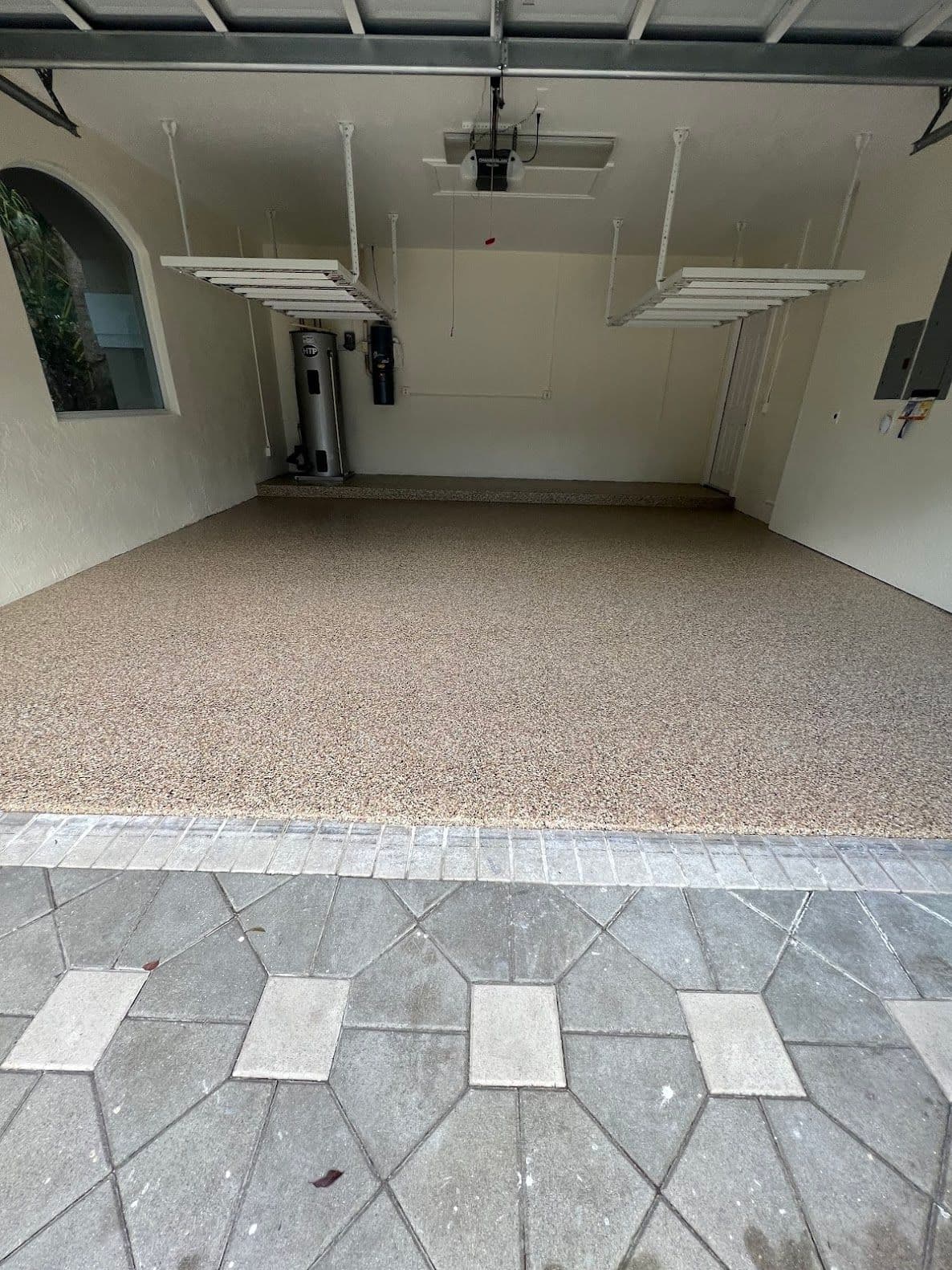
We had both of our garages done and an outdoor concrete platform. The crew was courteous and professional. Everyone from Nancy our salesperson to Patrick, the manager, Logan and his crew were outstanding. Our floors look fantastic and we were very happy we chose this company.
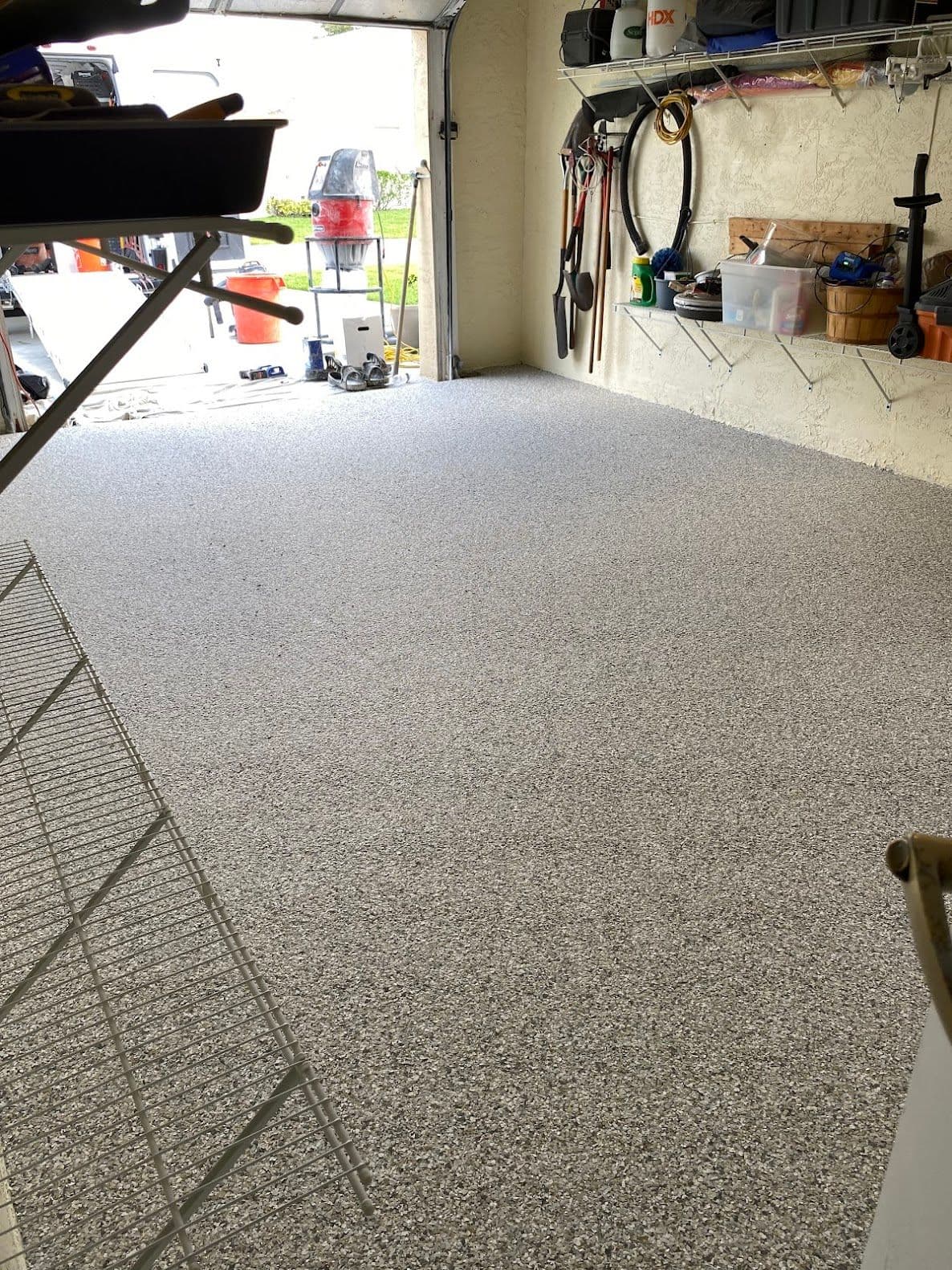
I am very pleased with the quality of work FloorTek has done for me. The two employees that did the actual work were very courteous, worked hard, and explained everything they were doing. Thank you for a great job.
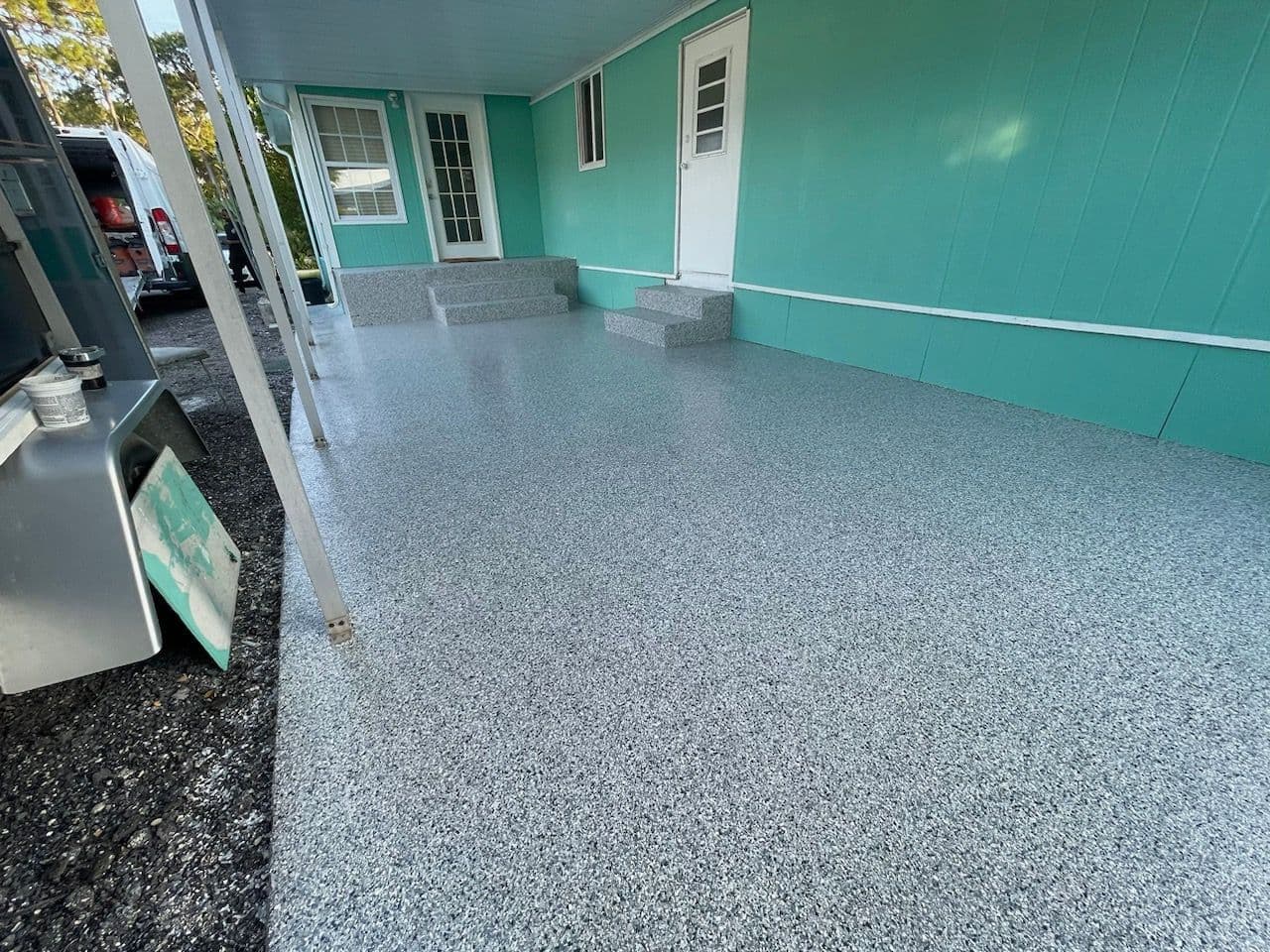
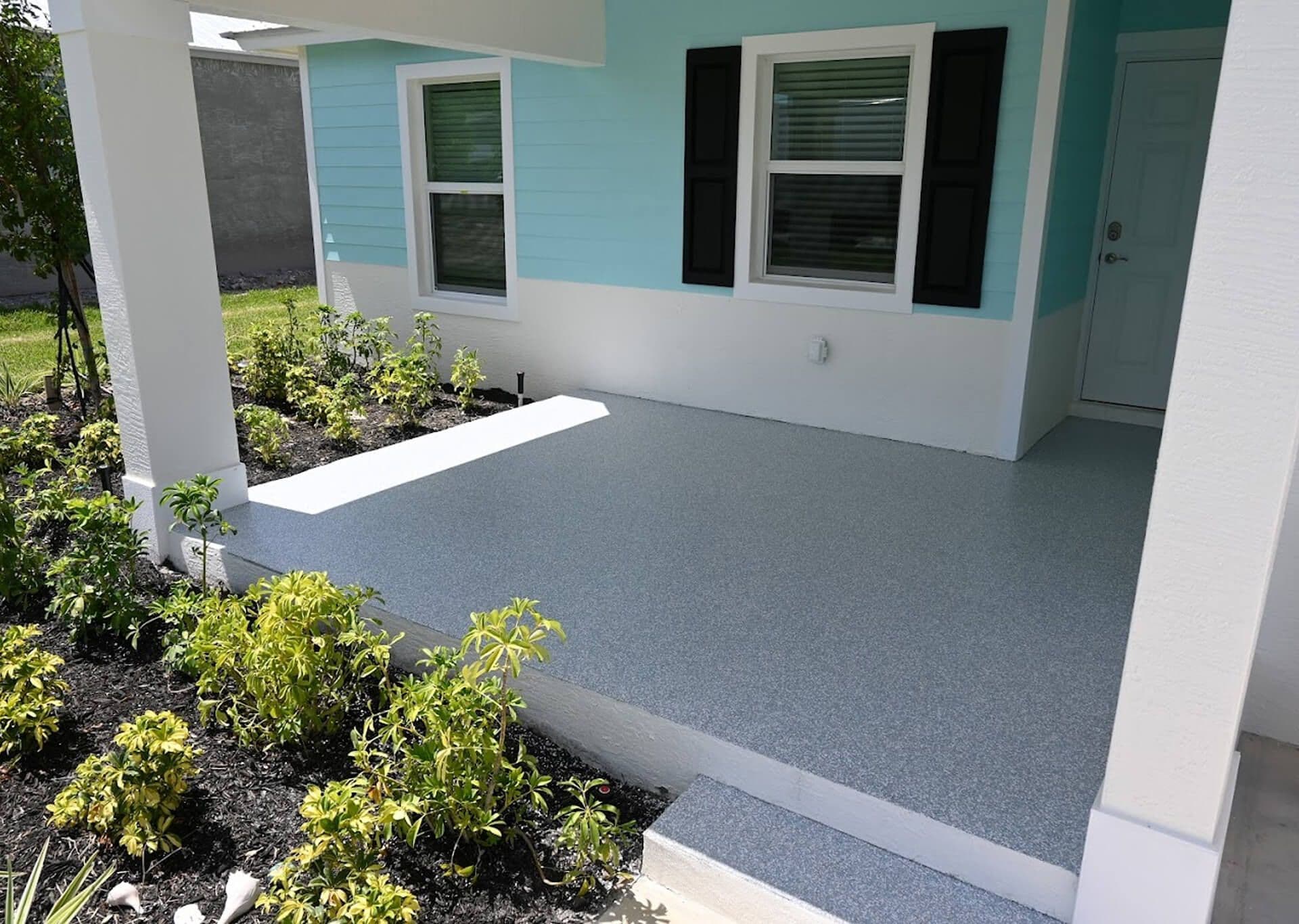
I was happy with the job Floortek did. Good customer communication and customer relationship. My old ugly porch was transformed and I love it. Nancy was very helpful throughout the process. Just know that rain may impact your schedule to make sure the products at highest quality during application.



Contact FloorTek Today