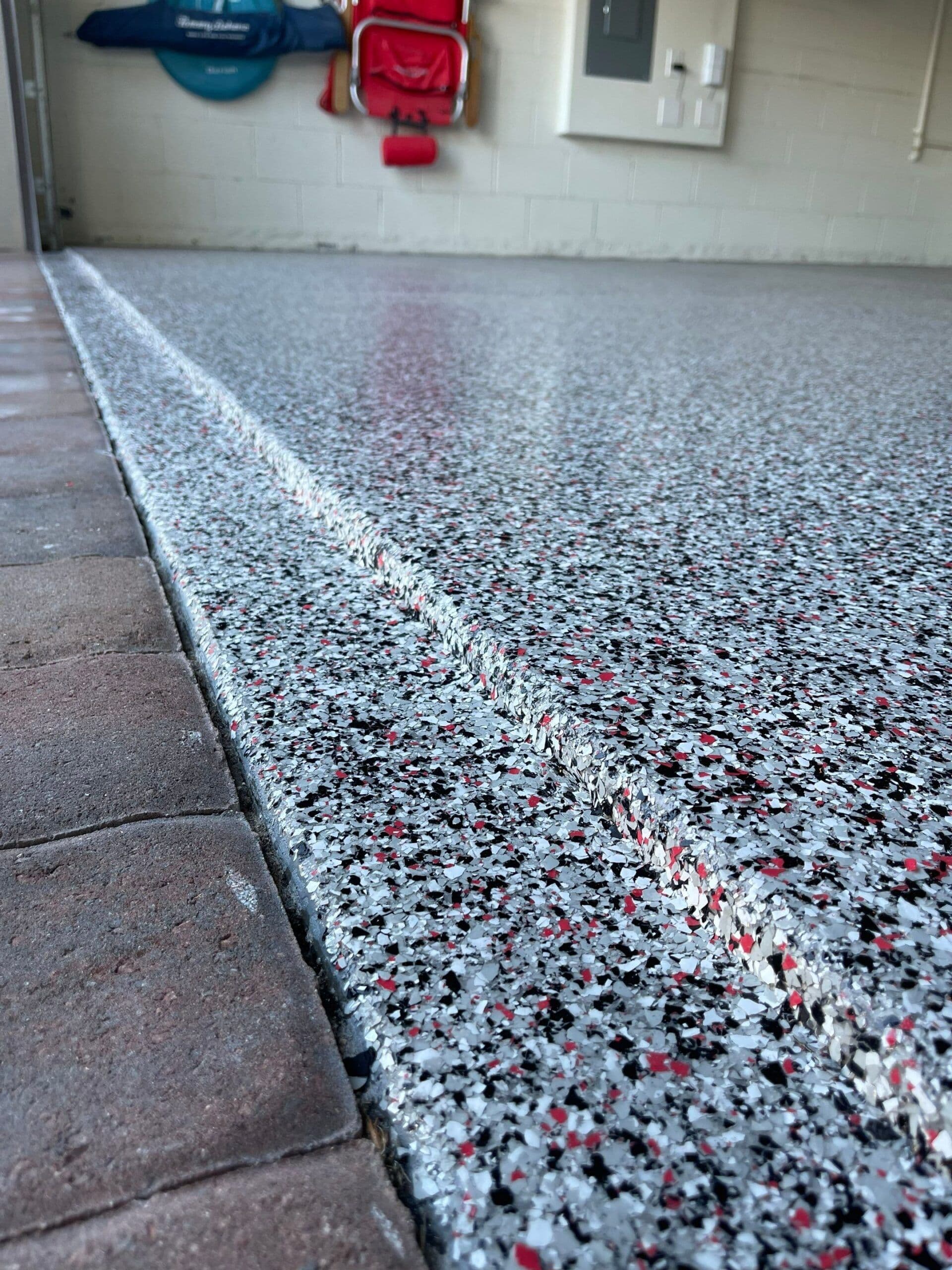
Mechanical Preparation Standards: Concrete surface profiling for polyaspartic adhesion in Texas
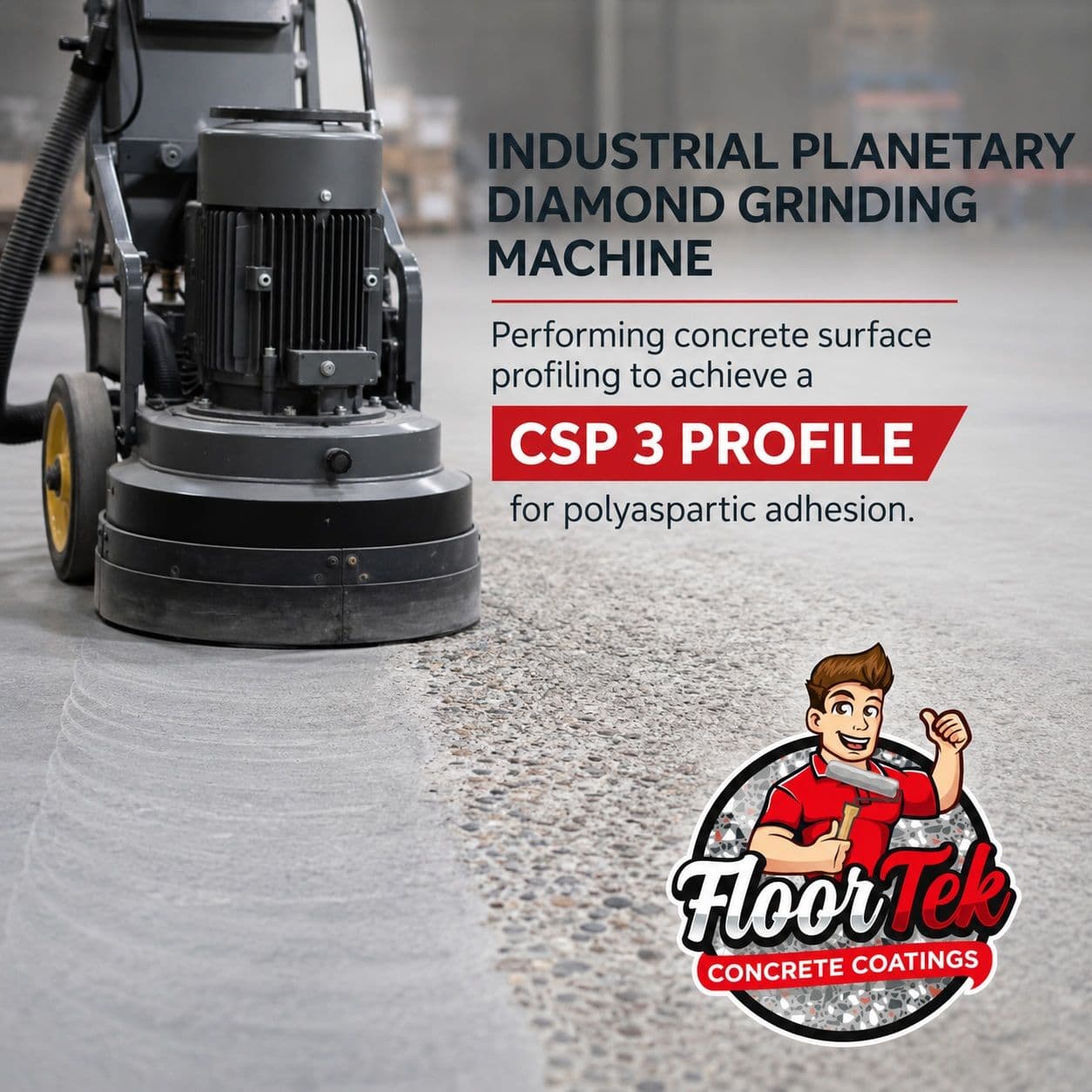
Many floor coatings peel because installers fail to properly prepare the underlying concrete slab. Proper concrete surface profiling for polyaspartic adhesion is the single most critical step to ensure a permanent, high-performance bond. At Floortek Coatings, we treat surface preparation as an exact science rather than a quick preliminary step. We use heavy industrial diamond-grinding machinery to open the pores in your concrete slab, allowing our advanced coating formulas to penetrate deeply and mechanically fuse with the floor.
The Problem with Unprepared Concrete: Why Traditional Coatings Peel
Unprepared concrete looks solid, but its surface is covered with a weak, powdery layer known as laitance. Laitance forms when excess water rises to the surface during pouring and curing. If you apply a coating directly over laitance, it bonds only to the weak layer rather than to the solid concrete beneath. When the floor experiences vehicular traffic or temperature changes, the laitance tears away from the slab, causing the coating to bubble, crack, and delaminate.
Furthermore, concrete is naturally porous, but contaminants like oil, grease, tire plasticizers, and old curing compounds block these pores. Standard retail epoxy kits cannot penetrate these blocked pores. Epoxy sits on top of the concrete like a sheet of plastic. When moisture vapor rises from the ground beneath your slab, it creates hydrostatic pressure that easily pushes the brittle epoxy layer off the floor.
To solve this problem, we must remove the top layer of laitance and open the underlying pore structure. This process creates a rough texture that increases the surface area of the concrete floor. This surface roughness allows our high-performance coatings to establish a deep, unbreakable mechanical anchor.
Understanding CSP: International Concrete Repair Institute (ICRI) Standards
The International Concrete Repair Institute (ICRI) has established clear guidelines to classify surface roughness. These classifications are known as Concrete Surface Profile (CSP) levels, ranging from CSP 1 (nearly smooth) to CSP 10 (extremely rough). Choosing the wrong CSP level guarantees coating failure.
CSP 1 (Acid Etched): Very light texture, similar to fine sandpaper. This profile is insufficient for industrial-grade coatings.
CSP 2 (Diamond Ground): Light texture, achieved using fine-grit diamond tooling. This is the minimum requirement for thin-film coatings.
CSP 3 (Light Shot Blasted or Heavy Ground): Medium texture, resembling medium-grit sandpaper. This is the ideal profile for high-build polyaspartic applications.
CSP 4 to CSP 6 (Medium Shot Blasted): Deep texture, used for thick self-leveling overlays or heavy-duty screeds.
CSP 7 to CSP 10 (Scabbled or Scarified): Extremely deep grooves, reserved for heavy industrial repair mortars.
For optimal polyaspartic performance, we target a CSP 2-3 profile. This specific range removes the weak laitance and exposes the aggregate without fracturing the underlying concrete matrix. It provides the perfect balance of micro-roughness for polyaspartic coatings to achieve total mechanical saturation.
Mechanical Diamond Grinding vs. Acid Etching
Many low-cost contractors use muriatic acid etching to prepare concrete floors. Acid etching relies on a chemical reaction to dissolve calcium carbonate on the concrete surface. However, acid etching has severe technical flaws:
Inconsistent Results: Acid cannot penetrate areas contaminated with oil, grease, or old sealers, leaving those sections completely unprepared.
Structural Risk: Acid can penetrate deep into cracks, where it corrodes the steel rebar, weakening your slab's structural integrity.
Moisture Introduction: Acid etching requires washing the floor with massive amounts of water. This saturates the concrete slab and requires days to dry. If you apply a coating before the slab has completely dried, trapped moisture will destroy the bond.
We completely reject acid etching. Instead, we use mechanical diamond grinding. Our industrial planetary grinders utilize spinning heads fitted with metal-bonded diamond segments. As these diamond segments pass over the concrete, they mechanically shave off the weak top layer, flatten minor imperfections, and cleanly open the pore network. This dry process creates zero liquid waste, generates zero chemical fumes, and leaves the floor perfectly dry and ready for immediate coating application.
Why Polyaspartic Outperforms Epoxy on Properly Profiled Surfaces
Once we achieve the ideal CSP 3 profile, the choice of coating material dictates the longevity of your floor. Epoxy has been the industry standard for decades, but it possesses fundamental chemical weaknesses. Epoxy cures slowly through a rigid cross-linking process, making it brittle. It is highly susceptible to hot-tire pickup, where hot tires from your vehicle chemically bond with the epoxy and pull it off the concrete as the tires cool.
Our advanced polyaspartic technology is typically designed to outperform epoxy across every measurable metric. Polyaspartic molecules feature a unique ester-linked structure that provides exceptional flexibility and elongation. When applied to a properly prepared CSP 2 or CSP 3 profile, the polyaspartic resin flows deeply into the open microscopic capillaries of the concrete before cross-linking.
This creates a dense, roots-in-the-soil anchor system. You can read the specific technical breakdown of how polyaspartic molecules bond with concrete to understand this physical fusion. Because polyaspartic remains flexible, it moves dynamically with the expansion and contraction of your concrete slab during Texas temperature swings. This flexibility makes polyaspartic 10X stronger than epoxy regarding impact resistance, thermal shock resistance, and long-term shear bond strength. For a direct comparison of these structural differences, see our detailed guide on polyaspartic vs. epoxy chemical structure.
Moisture Management and the Role of Vapor Barriers in Texas Soils
Texas weather and soil conditions present unique challenges for concrete slabs. Regions like Houston and Dallas feature expansive clay soils that hold high volumes of water. As temperatures rise, groundwater turns into vapor and moves upward through the porous concrete slab. This physical phenomenon is known as Moisture Vapor Transmission (MVT).
High MVT rates create immense alkaline hydrostatic pressure at the slab surface. If this pressure is applied to a brittle, non-breathable coating like epoxy, it destroys the bond lines and causes widespread delamination. To prevent this, we always measure the moisture levels of your slab using electronic impedance meters and relative humidity probes before applying any material. You can learn more about these critical metrics in our article on concrete moisture vapor transmission rates.
When it comes to moisture, we need to add an extra layer called a vapor barrier. If your slab exhibits high moisture emission, we install a specialized, deep-penetrating epoxy-modified vapor-barrier base coat directly onto the diamond-ground surface. This specialized layer regulates moisture movement and neutralizes hydrostatic pressure. Once this stable foundation is set, we apply our polyaspartic topcoats to deliver a highly durable, UV-stable, and chemical-resistant finish.
Our Professional Installation Process Across Texas Cities
We have optimized our installation workflow to deliver exceptional results with minimal disruption to your schedule. Whether you live in the humid coastal environment of Houston, the limestone terrain of Austin, the expansive plains of Dallas-Fort Worth, or the hot climates of San Antonio and El Paso, our local installation crews understand how to adapt to local atmospheric conditions.
Our systematic installation process includes:
Slab Inspection: We test the concrete hardness using Mohs hardness picks and check for existing sealers or contaminants.
Mechanical Diamond Grinding: We grind the entire floor using planetary diamond grinders, each attached to a HEPA-filtered dust extractor, to ensure a virtually dust-free environment.
Crack and Joint Repair: We chase out all structural cracks and open expansion joints, then fill them with a rapid-curing polyurea joint filler, which we grind flush with the slab.
Base Coat Application: We apply our commercial-grade base coat, which penetrates deeply into the concrete's open capillaries.
Full Flake Broadcast: For textured, multi-colored finishes, we broadcast decorative vinyl flakes to achieve full saturation in the wet base coat.
Scraping and Vacuuming: Once the base coat has cured, we scrape off loose flakes to ensure a smooth, uniform texture and vacuum up any remaining debris.
Polyaspartic Topcoat Application: We seal the floor with our high-solids, clear polyaspartic topcoat to provide maximum protection against UV rays and chemical spills.
Thanks to our rapid-curing polyaspartic process, this entire process takes just one day. Unlike epoxy floors, which can take up to a week to cure, our systems allow you to walk on the floor within hours and park your vehicles on it the very next day.
Technical Data and Material Science of Polyaspartic Bond Strength
To establish true technical authority, we rely on verified material testing standards. The ultimate measure of a floor coating's reliability is its adhesion, determined by ASTM D4541 pull-off testing. In this test, a metal dolly is glued to the coated floor and then pulled upward with a hydraulic adhesion tester until failure occurs.
When an epoxy floor fails in ASTM D4541 testing, it typically exhibits adhesive failure. This means the epoxy peels cleanly away from the concrete surface at relatively low pressure (often below 250 PSI). This proves that the epoxy never truly fused with the slab.
When our polyaspartic coating is applied to a floor properly profiled for polyaspartic adhesion, the results are radically different. Our systems routinely exceed 400-500 PSI during testing. When failure finally occurs, it is a 100% cohesive concrete failure. This means the polyaspartic bond is stronger than the concrete itself; the machine actually tears chunks of raw concrete out of the ground because the chemical anchor refuses to let go.
Furthermore, our topcoats utilize advanced chemistry to achieve unparalleled environmental stability. Our formulas are based on aliphatic polyurea structures. Unlike aromatic structures used in standard epoxies, aliphatic compounds do not degrade or turn amber when exposed to solar radiation. You can review our comprehensive technical data on the UV stability of aliphatic polyurea coatings to see how our coatings maintain crystal-clear clarity over decades of sun exposure.
Additionally, our coatings offer exceptional resistance to automotive fluids, solvents, and acids. For a thorough review of structural resilience, you can read about the tensile strength of polyaspartic vs epoxy. We offer manufacturer-direct value by formulating, supplying, and installing our own high-grade products. This eliminates middleman markups and ensures strict quality control. We stand behind our work with a comprehensive Life-of-home warranty and offer 30% off first installation to make upgrading your property highly accessible.
To view our wide range of aesthetic options, explore our Colors and Flake Options page. You can also view our past projects in our Floortek Gallery or learn more about our company mission on our About Us page. We provide professional concrete preparation and installation for various applications, including:
Check out our diverse line of Coating Products or find a crew near you on our Floortek Locations page.
Frequently Asked Questions:
Why is concrete surface profiling for polyaspartic adhesion necessary for Houston garage floors?
YES. Concrete surface profiling for polyaspartic adhesion removes weak surface laitance caused by Houston's extreme coastal humidity during concrete pouring. Without mechanical diamond grinding, the high-performance polyaspartic layer cannot penetrate the concrete pores to form a secure anchor. Floortek Coatings utilizes heavy planetary grinders to achieve a perfect CSP 2 profile. This mechanical preparation prevents hot-tire pickup and moisture-induced peeling. For technical concrete guidelines, you can consult the Texas Department of Transportation Concrete Manual.
Does concrete surface profiling for polyaspartic adhesion prevent peeling on Dallas driveways?
YES. Concrete surface profiling for polyaspartic adhesion ensures that external coatings can withstand the expansive soil shifts common throughout the Dallas area. Mechanical profiling opens the concrete capillaries, allowing our flexible polyaspartic formulas to fuse directly with the aggregate. This prevents the delamination issues that typically plague standard retail epoxy paint. Floortek Coatings guarantees this deep bond by entirely rejecting weak chemical acid washing. Dallas homeowners can reference soil mechanics data via the University of Texas at Arlington.
How does concrete surface profiling for polyaspartic adhesion affect the lifespan of Austin patio coatings?
Factual Statement: Concrete surface profiling for polyaspartic adhesion maximizes outdoor coating lifespan by creating a high-traction CSP 3 mechanical surface profile. This texture allows the polyaspartic resin to form deep physical roots that resist intense solar heat. Floortek Coatings applies this preparation technique to ensure long-term durability against UV degradation on Austin limestone foundations. When it comes to moisture, we basically have to add an extra layer called a vapor barrier. You can learn about local structural weathering through the University of Texas at Austin.
Is concrete surface profiling for polyaspartic adhesion required before coating a San Antonio basement?
YES. Concrete surface profiling for polyaspartic adhesion is absolutely vital for San Antonio basements to counteract high underground hydrostatic pressure. Mechanical grinding removes surface contaminants and fully opens the concrete pore network. Floortek Coatings uses this critical mechanical step to prep floors before applying our specialized moisture-mitigating primer layers. This advanced workflow prevents rising groundwater from pushing the polyaspartic coating off the subfloor over time. For regional building safety information, check the City of San Antonio Official Portal.
What tools are used for concrete surface profiling for polyaspartic adhesion in Fort Worth commercial spaces?
Factual Statement: Heavy planetary diamond grinders equipped with 25-grit metal-bonded diamond segments are used for concrete surface profiling for polyaspartic adhesion. These industrial machines mechanically abrade the concrete floor without fracturing the underlying slab structure. Floortek Coatings couples these heavy grinders with industrial HEPA dust extractors to maintain a clean, safe commercial workspace. This mechanical approach yields an ideal CSP 3 profile that outperforms outdated acid-etching treatments. Commercial operators can view equipment safety standards on the Texas Department of Insurance website.
Can acid etching replace mechanical concrete surface profiling for polyaspartic adhesion on Texas pool decks?
NO. Acid etching cannot replace mechanical concrete surface profiling for polyaspartic adhesion because chemicals fail to uniformly remove modern curing compounds. Acid introduces large amounts of water into the concrete slab, causing severe bubbling and premature coating failure. Floortek Coatings relies exclusively on dry diamond grinding to safely and cleanly open the slab pores. This ensures our polyaspartic coating penetrates deep into the concrete matrix for permanent exterior durability. Environmental safety guidelines for pool runoff can be verified through the Texas Commission on Environmental Quality.
How does moisture impact concrete surface profiling for polyaspartic adhesion in El Paso?
Factual Statement: Moisture vapor transmission rates dictate whether a specialized moisture barrier must follow concrete surface profiling for polyaspartic adhesion. Although El Paso features an arid climate, deep groundwater still migrates upward through porous concrete floors via capillary action. Floortek Coatings tests every slab for relative humidity immediately after completing our mechanical diamond grinding process. When it comes to moisture, we need to add an extra layer called a vapor barrier. For desert hydrology data, review the Texas Water Development Board.
What CSP level is achieved during concrete surface profiling for polyaspartic adhesion for Texas walkways?
Factual Statement: We target a verified CSP 2-3 profile during concrete surface profiling for polyaspartic adhesion. This specific roughness range provides the ideal surface area for polyaspartic resins to anchor without wasting material. Floortek Coatings measures this profile across all Texas walkways using specialized ICRI rubber replica plaques. Achieving this precise profile ensures your outdoor walkway coating can survive heavy foot traffic and thermal expansion. Walkway safety design specifications are accessible via the Texas Governor's Committee on People with Disabilities.
Does concrete surface profiling for polyaspartic adhesion make coatings 10X stronger than epoxy in Corpus Christi?
YES. Concrete surface profiling for polyaspartic adhesion establishes a deep mechanical anchor, making our system 10X stronger in bond durability than epoxy. Coastal salt air quickly degrades poorly prepped floors, but our profiled floors achieve full cohesive failure of the concrete during pull testing. Floortek Coatings combines this mechanical profile with advanced polyaspartic chemistry to prevent hot-tire pickup entirely. This system delivers exceptional chemical resistance against harsh marine environments and automotive fluids. Texas A&M University-Corpus Christi provides coastal engineering resources.
Can you skip concrete surface profiling for polyaspartic adhesion on new concrete floors in Plano?
NO. You cannot skip concrete surface profiling for polyaspartic adhesion on new slabs because fresh concrete contains a weak surface layer called laitance. New concrete also carries chemical curing agents that completely block polyaspartic molecules from penetrating the slab's pores. Floortek Coatings allows new concrete to cure for 28 days before executing our multi-step diamond grinding process. This guarantees that your brand-new floor receives a durable, high-performance finish that will never peel. Review municipal construction codes on the City of Plano Official Website.
Do not risk your property investment on cheap epoxy kits or cutting corners with acid etching. Our team at Floortek Coatings provides certified technical expertise, industrial diamond grinding preparation, and advanced polyaspartic floor systems throughout Texas. Enjoy a beautiful, chemical-resistant floor in a single day. Contact us today at 844-844-4164 or fill out our online form to claim your 30% off first installation and secure your Life-of-home warranty!
FREE In-Home Estimate
Plus 30% Off
Testimonials
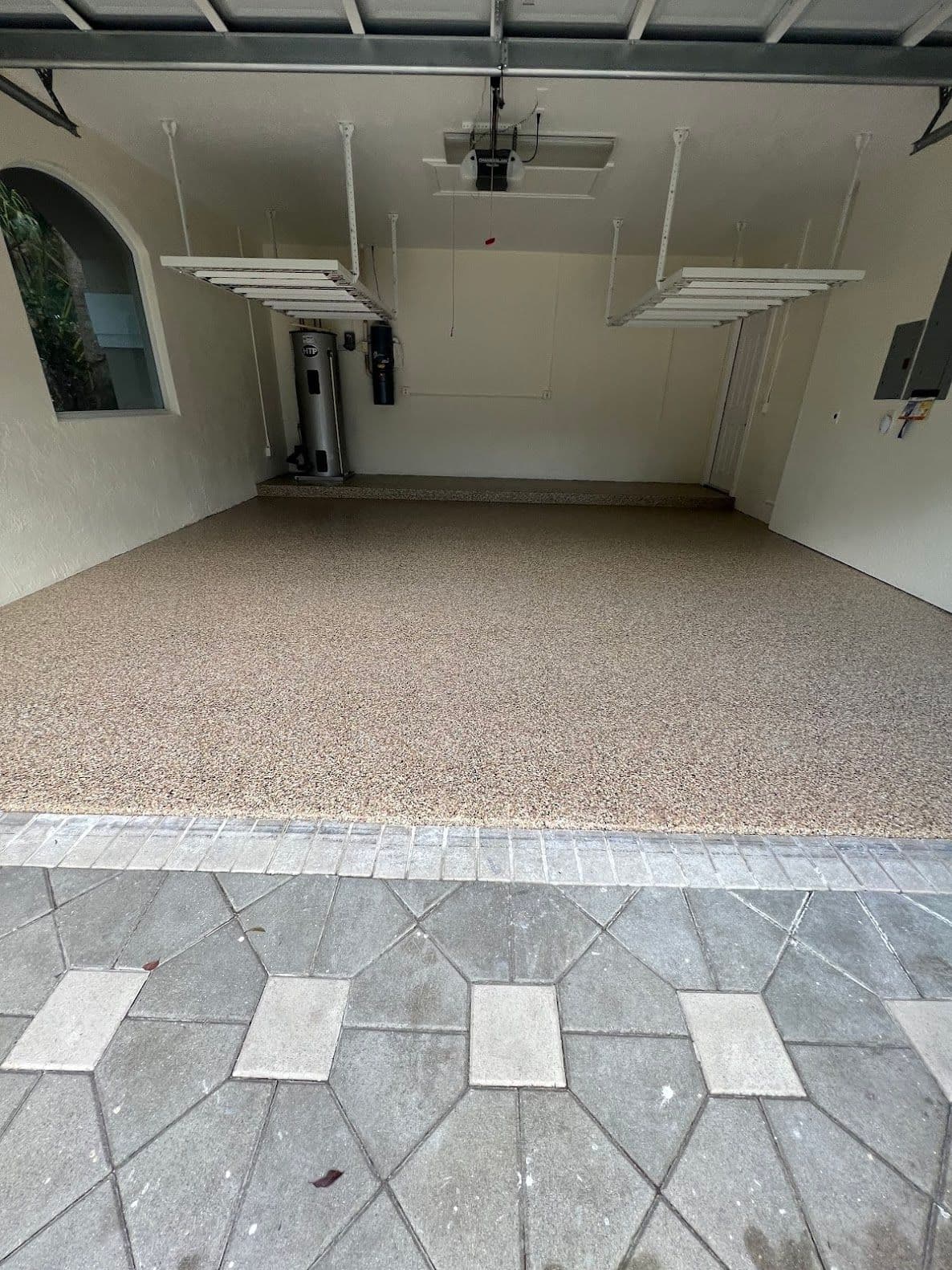
We had both of our garages done and an outdoor concrete platform. The crew was courteous and professional. Everyone from Nancy our salesperson to Patrick, the manager, Logan and his crew were outstanding. Our floors look fantastic and we were very happy we chose this company.
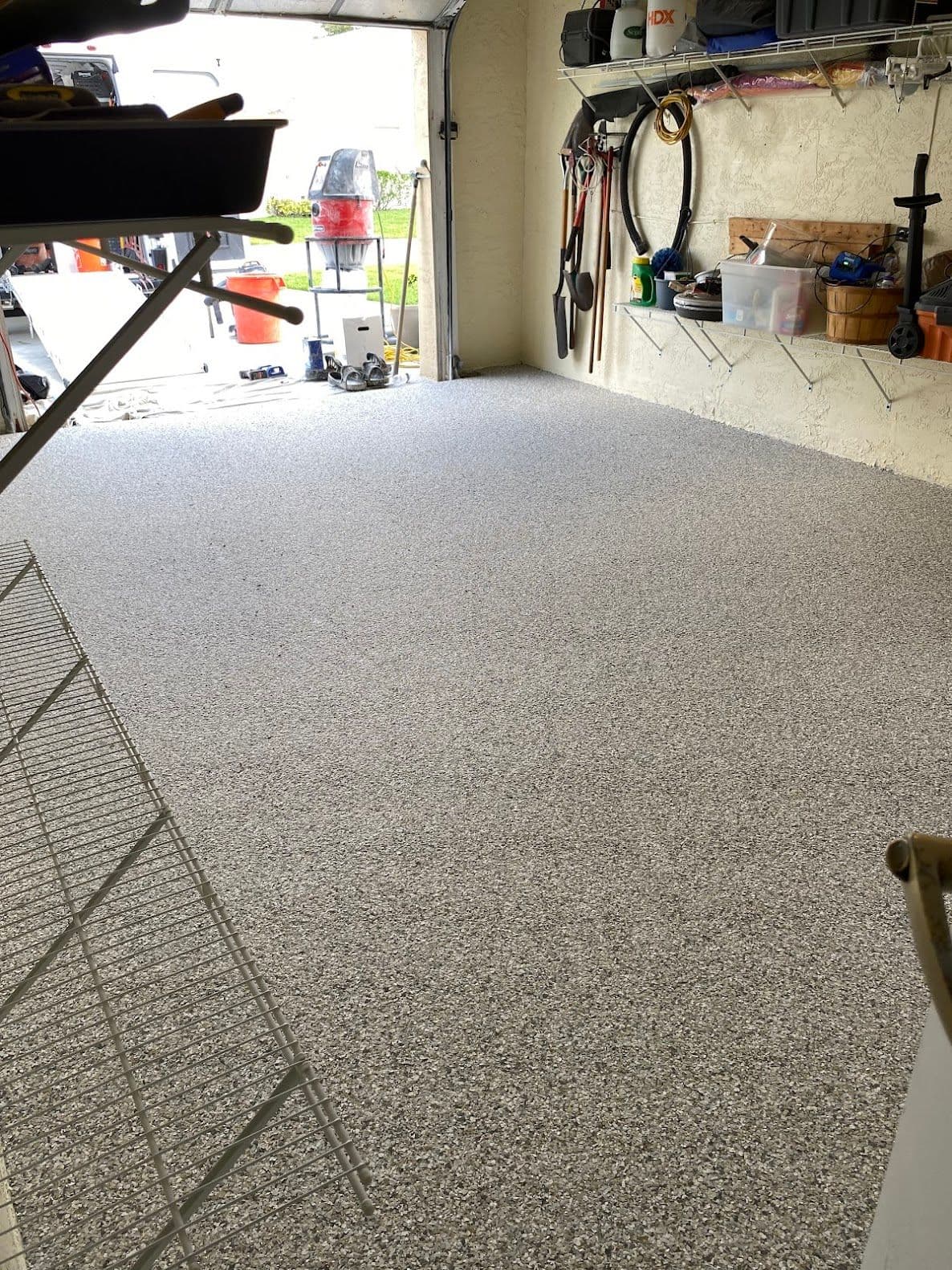
I am very pleased with the quality of work FloorTek has done for me. The two employees that did the actual work were very courteous, worked hard, and explained everything they were doing. Thank you for a great job.
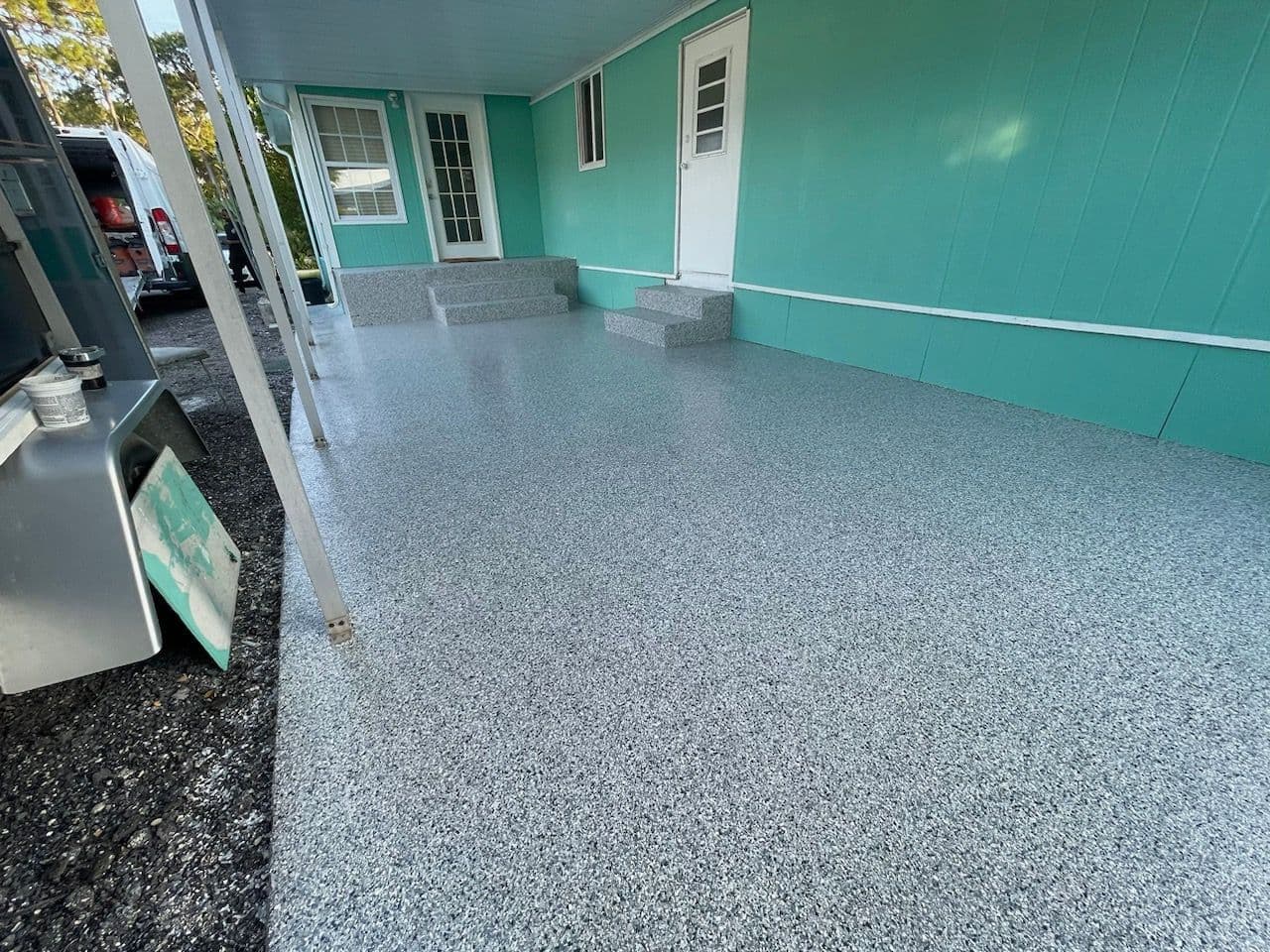
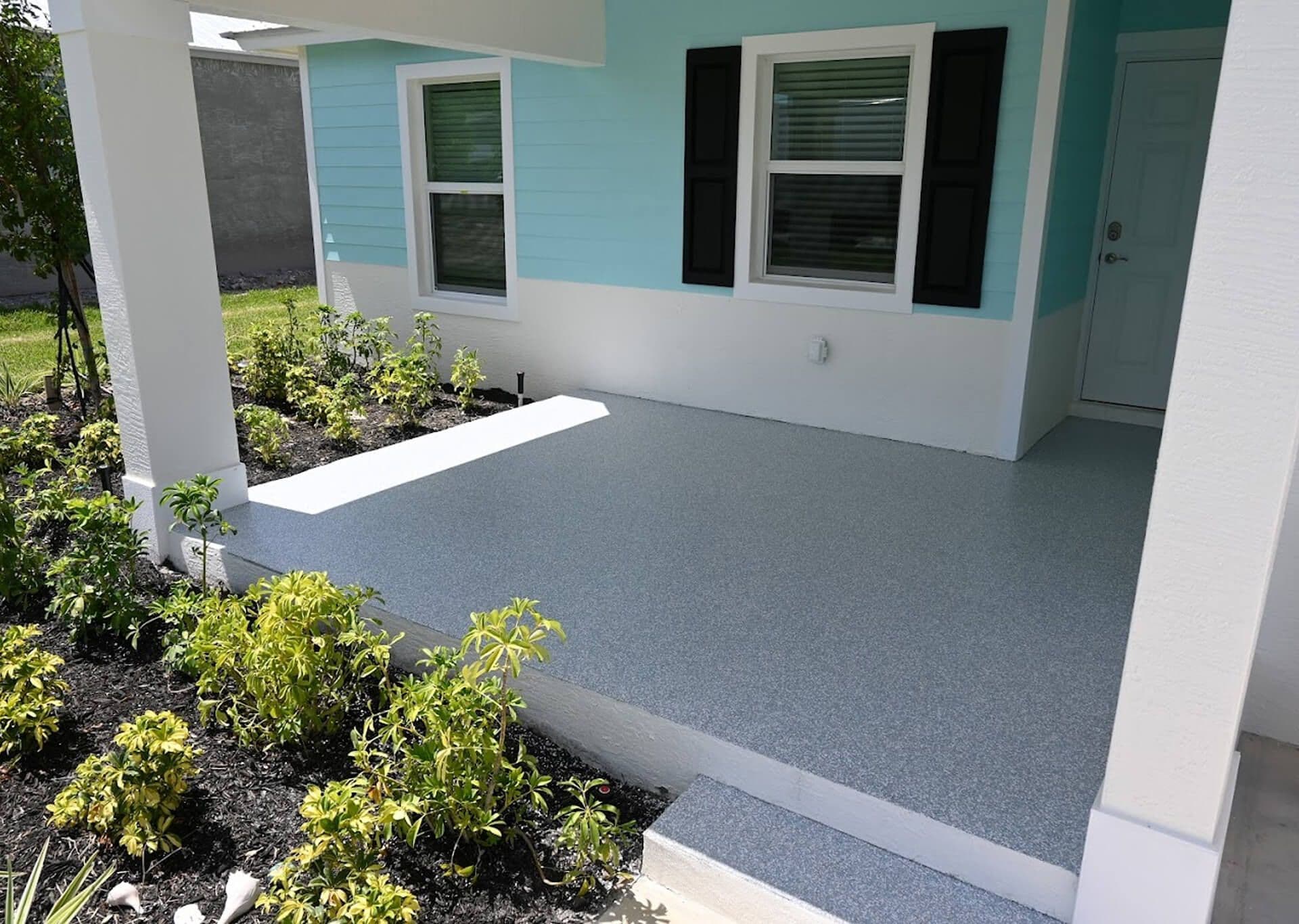
I was happy with the job Floortek did. Good customer communication and customer relationship. My old ugly porch was transformed and I love it. Nancy was very helpful throughout the process. Just know that rain may impact your schedule to make sure the products at highest quality during application.



Contact FloorTek Today