The Technical Authority on Concrete Protection: Unpacking Polyaspartic Coating Technology
Understanding the science of Polyaspartic rapid-curing is essential when selecting a durable floor coating for your property. At Floortek Coatings, we leverage advanced chemical engineering to deliver superior protection compared to traditional epoxy options. Standard floor coatings often fail under extreme thermal shifts, mechanical loads, and chemical exposure. By analyzing the underlying molecular behavior, you can see why our polyaspartic systems offer long-term reliability for residential, commercial, and industrial concrete surfaces. This comprehensive guide details the structural physics, polymer kinetics, and application methodologies that define high-performance concrete coatings.
The Mechanics of Concrete Degradation and Polymer Curing
Concrete looks solid, but it is actually a highly porous, breathable material. Capillary networks within the concrete constantly transport moisture, vapor, and dissolved salts to the surface. Traditional epoxy coatings struggle with this environment. Epoxy requires a slow chemical reaction that depends heavily on ambient temperatures. If the temperature drops or humidity rises, epoxy cures unevenly. This leads to a brittle surface prone to cracking, peeling, and amine blushing. Amine blushing occurs when moisture reacts with the epoxy curing agent, leaving a greasy white film on the surface.
In contrast, our advanced polymer systems cure reliably regardless of ambient climate variations. Whether you operate a facility in the humid air of Houston or the high-heat zones of Dallas, the coating cures consistently. The chemistry eliminates the risk of uneven cross-linking. Traditional epoxy takes 5 to 7 days to reach full mechanical strength. During this prolonged window, the open coating remains highly vulnerable to dust contamination, insect impacts, and moisture damage. Our polyaspartic systems cure to full traffic readiness in a fraction of that time. This eliminates the operational downtime that disrupts your home or business.
The Core Chemistry: Polyaspartic vs. Epoxy Chemical Structure
To understand why our floors last longer, you must look at the chemical structures of polyaspartic and epoxy. Traditional epoxy is made from bisphenol A resins and amine hardeners. These molecules form straight, rigid chains that lack structural flexibility. Over time, physical impacts and thermal expansion fracture these rigid bonds. Epoxy also contains aromatic rings that break down when exposed to solar radiation. This structural failure causes the material to turn yellow and chalky, and to lose its gloss.
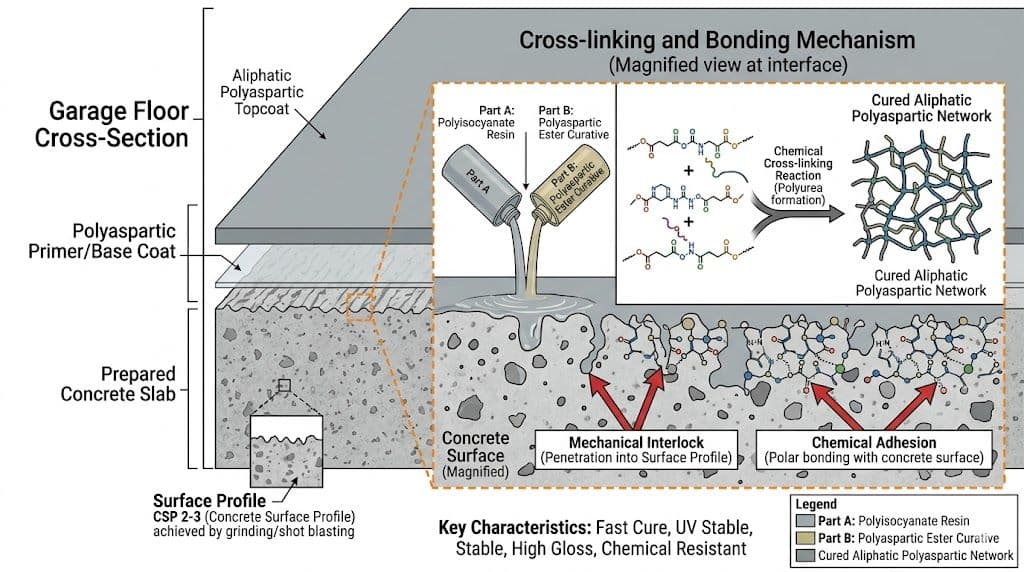
Polyaspartic coatings belong to the aliphatic polyurea family. The molecular backbone consists of aliphatic diisocyanates combined with co-reactants called aspartic esters. The absence of aromatic rings completely prevents solar degradation. Furthermore, the molecular geometry of an aliphatic polyurea is highly cross-linked yet flexible. The ester groups create a sterically hindered amine structure. This steric hindrance acts as a built-in brake system for the chemical reaction. It allows chemical formulators to control the cross-linking speed. This gives installers enough time to apply the material smoothly while still achieving an incredibly rapid final cure.
Unpacking the Polyaspartic Rapid Curing Process Science
The science of the polyaspartic rapid-curing process revolves around a controlled exothermic reaction between isocyanate groups and aliphatic diamines. In standard polyureas, this reaction occurs almost instantly, often within seconds. This rapid reaction prevents manual application with rollers or squeegees. By using modified aspartic esters, we slow the initial reaction rate. This gives our certified technicians a predictable application window. Once the material is spread across the concrete substrate, the reaction accelerates rapidly as the thin film interacts with atmospheric moisture.
The acceleration phase creates dense polyurea linkages across the entire surface area. The molecules lock together in a three-dimensional grid. This cross-linking process does not require high ambient heat to finish. The reaction continues steadily even in sub-zero temperatures or high-humidity environments across San Antonio and Austin. As the polymer chains align, they displace residual air pockets within the film. This creates a dense, non-porous layer. The rapid cure prevents dirt, windblown debris, and humidity from interfering with the polymer formation.
Tensile Strength and Mechanical Performance Data
When evaluating floor coatings, mechanical performance numbers provide the clearest proof of quality. The Tensile strength of polyaspartic vs epoxy reveals a significant gap in durability. Standard epoxy coatings typically exhibit a tensile strength of around 4,000 to 5,000 pounds per square inch (psi). They have an elongation capacity of less than 5 percent. This means that if the underlying concrete shifts even slightly, the epoxy layer shears and cracks apart.
Our polyaspartic formulations deliver a tensile strength that typically outperforms standard options by wide margins. They are engineered to be up to 10X stronger in impact resistance and flexibility than traditional epoxy. The elongation rate of our coatings can reach 100 percent or more, depending on the specific system configuration. This elasticity allows the coating to move dynamically with the concrete during thermal expansion and contraction cycles. It absorbs heavy impacts from dropped tools, machinery vibrations, and heavy vehicular traffic without chipping or delaminating from the concrete base.
Overcoming Texas Moisture: Concrete Moisture Vapor Transmission Rates
High moisture levels in concrete cause most coating failures across Fort Worth and El Paso. Subsurface water migrates upward through the slab via capillary action. This pressure is measured as the concrete moisture vapor transmission rate. When hydrostatic pressure builds beneath a standard epoxy coating, it forces the rigid polymer away from the concrete. This causes unsightly blisters, bubbles, and total coating failure.
To solve this problem, we analyze your slab's specific moisture profile. When it comes to moisture, we need to add an extra layer called a vapor barrier. Our specialized vapor barrier underlayments resist high hydrostatic pressure. We apply this specialized layer directly to the prepared concrete before installing the polyaspartic topcoats. This systematic approach ensures that high Concrete moisture vapor transmission rates cannot detach your new floor finish. It protects your investment from underground water tables and seasonal shifts in soil moisture.
Mechanical Preparation: Concrete Surface Profiling for Polyaspartic Adhesion
The finest chemical formulation will fail without correct mechanical preparation. We never use acid etching because it introduces hazardous water and chemical residues into the concrete pores. Instead, we use heavy industrial planetary grinders equipped with diamond-segmented tooling. This process achieves the exact Concrete surface profiling for polyaspartic adhesion required by the International Concrete Repair Institute (ICRI). We target a Concrete Surface Profile (CSP) rating of 2-3, which feels like medium-grit sandpaper.
Grinding opens up thousands of microscopic pores within the concrete matrix. It removes weak laitance, old sealers, and surface contaminants. When we apply the base coat to this profiled surface, the low-viscosity liquid flows deep into these open microscopic pores. This explains how polyaspartic molecules bond with concrete at a structural level. The polymer chains wrap around the aggregate within the concrete. As the polyaspartic rapid curing process finishes, the coating becomes an inseparable part of the concrete slab itself. Hot tires or heavy rolling loads cannot pull it away.
UV Stability and Environmental Resistance: Aliphatic Polyurea Technical Data
Solar radiation destroys standard epoxy floors. Ultraviolet (UV) rays break the molecular chains of epoxy resins through a process called photo-oxidation. This causes the floor to lose its gloss, turn a dull yellow color, and become brittle. Once the epoxy degrades from UV exposure, it chips away under standard foot traffic. This makes epoxy completely unsuitable for outdoor spaces or garages with high sunlight exposure.
Our systems rely on extensive technical data on the UV stability of Aliphatic polyurea to guarantee long-term aesthetic performance. Because our polyaspartic chemistry lacks vulnerable aromatic structures, UV rays pass through the clear film without breaking the chemical bonds. The floor remains crystal clear and maintains its original color for decades. Our floors are completely UV stable. They are also highly chemical resistant. They easily withstand prolonged exposure to harsh automotive fluids, battery acid, industrial solvents, and de-icing salts without staining, softening, or lifting.
Industrial and Residential Applications Across Texas
Our coating systems are designed to improve properties across many different environments. We tailor each installation to handle the exact demands of the space.
Garages: Your garage floor faces intense pressure from hot tires, heavy tool drops, and fluid leaks. Our Floor Coating Service provides a resilient surface that eliminates tire peeling. It transforms dark, dusty garages into bright, clean, functional spaces.
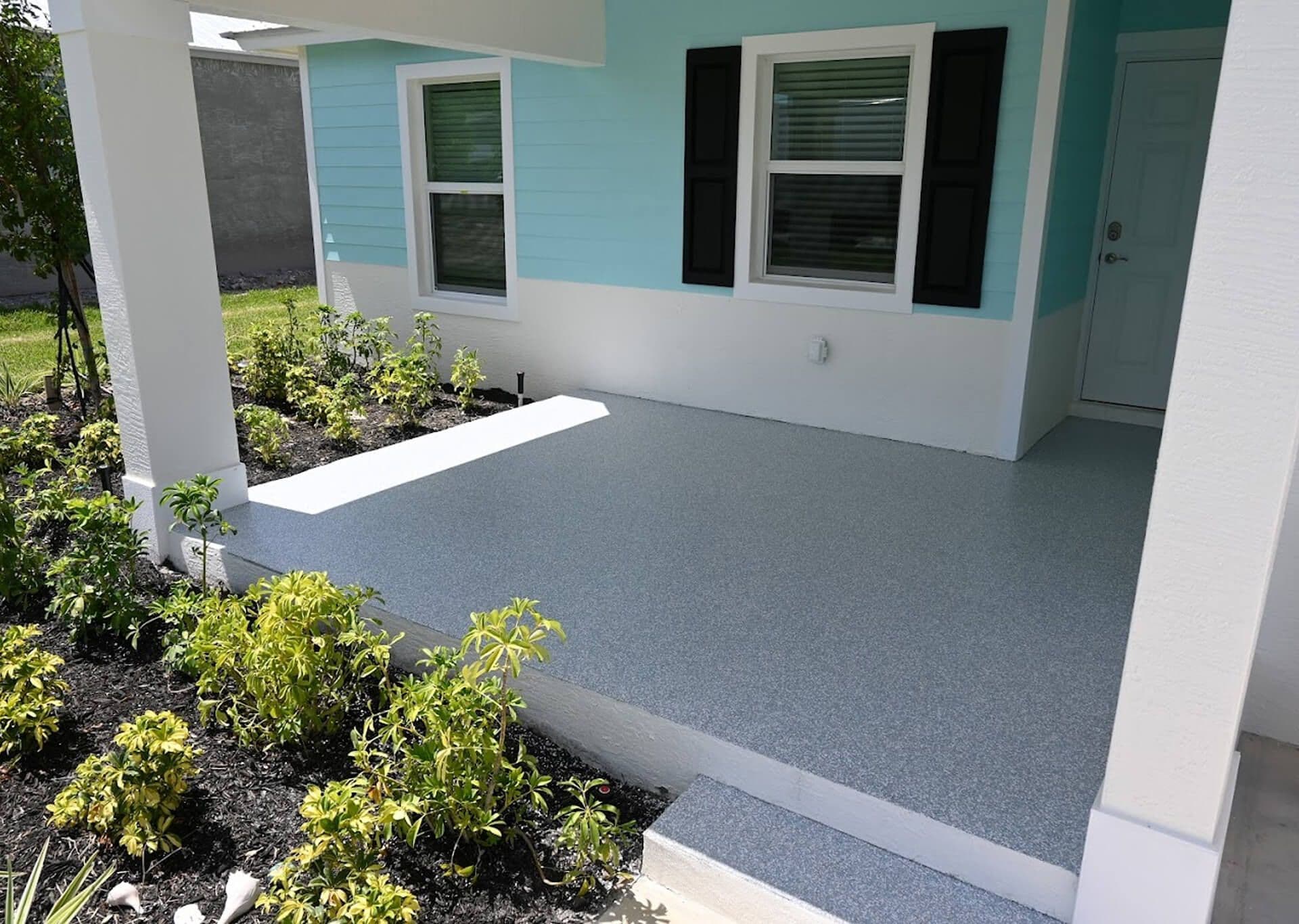
Patios: Outdoor living spaces in Texas suffer under brutal summer sun and freezing winter nights. Our premium patio coating service delivers complete UV stability. It keeps your outdoor entertainment areas looking immaculate without fading or cracking.
Pool Decks: Pool surrounds are constantly exposed to chlorinated water, intense sunlight, and bare feet. Our specialized pool deck coating service protects the concrete from water degradation. The textured vinyl flake finish helps reduce risk by improving surface traction.
Driveways: Driveways endure heavy vehicular loads and constant exposure to weather. Our driveway coating service guards against permanent oil staining, hot-tire tracking, and surface spalling caused by seasonal temperature swings.
Sidewalks: Commercial and residential walkways must withstand heavy foot traffic and constant cleaning. Our commercial-grade sidewalk coating service creates a clean pathway that withstands abrasive wear and high-pressure power washing.
Basements: Below-grade concrete slabs constantly battle rising moisture vapor from the earth. Our deep-penetrating Basement coating service seals off the porous concrete matrix. It helps maintain a clean, dust-free indoor environment.
Colors, Finishes, and Customization Options
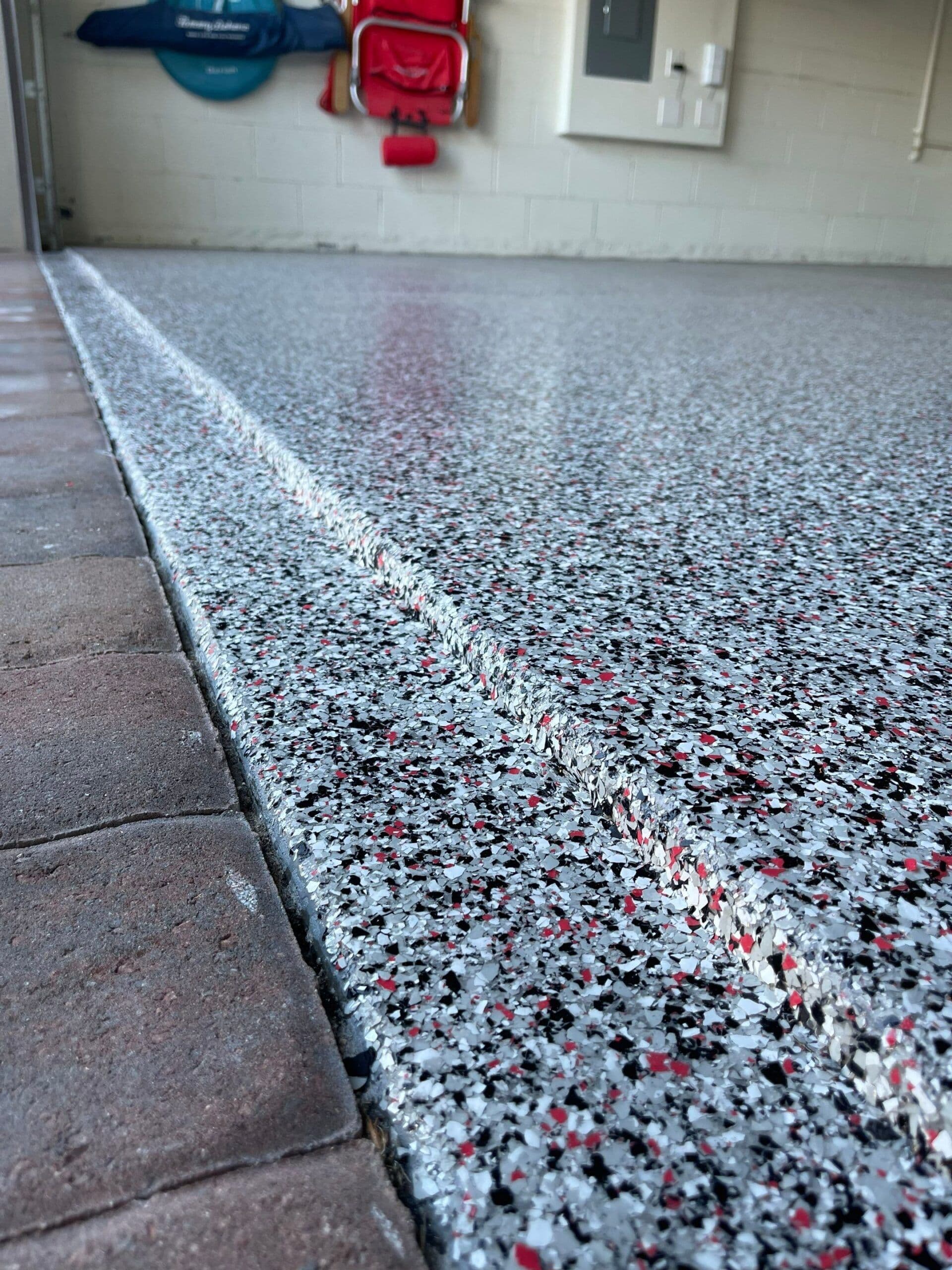
Durability does not require you to sacrifice visual style. We offer a vast selection of decorative Colors and Flake Options to complement any architectural style. Our multi-layered vinyl flake systems distribute multi-colored chips throughout the polyaspartic base. This creates a dense, patterned finish that masks minor concrete imperfections.
We can adjust the texture of the final topcoat to meet your specific safety needs. By embedding specialized fine aggregates into the aliphatic polyurea matrix, we create a textured surface that improves traction underfoot. This customized texture helps protect family members, employees, and customers in wet or high-traffic areas. The final clear topcoat permanently locks these decorative flakes and aggregates in place. It delivers a high-gloss finish that brightens the room by reflecting up to 30 percent more ambient light.
The Floortek Difference: 1-Day Installation and Elite Guarantees
Choosing the right installation partner matters just as much as choosing the right chemistry. At Floortek Coatings, we manage every stage of production and installation. We offer exceptional manufacturer-direct value by cutting out third-party intermediaries and suppliers. This direct control ensures that you receive the highest grade of Our Coating Products at the best possible value.
Our efficient system allows us to complete a full 1-day installation for standard garage floors. Our certified teams grind the concrete, mend cracks, apply the base coat, broadcast the decorative flakes, and seal the floor with a premium clear topcoat in a single day. You can walk on the surface just a few hours after completion and park your vehicles on it the very next day. We stand firmly behind our expert craftsmanship and materials by offering a robust Life-of-home warranty. If you are ready to upgrade your property, we are currently offering a 30% off first-installation discount for new clients.
To learn more about our company, you can read more about us. To see real transformations, check out our Floortek Gallery. To find a team near you, view our Floortek Locations page. When you are ready to transform your concrete, please get in touch with us to schedule your free on-site consultation.
Frequently Asked Questions:
How does Polyaspartic rrapid-curingprocess science protect garage floors in Texas?
Yes, Polyaspartic rapid-curing process science protects garage floors by creating dense, cross-linked bonds that resist high heat. Floortek Coatings utilizes this technology to prevent hot-tire peeling during hot summers. According to chemical data from Texas A&M University, aliphatic polymers handle extreme thermal expansion much better than epoxy. If your slab has high moisture content, we add a vapor barrier to prevent hydrostatic pressure. This complete system protects your garage flooring from cracking or delaminating.
Can the science of Polyaspartic rapid-curing prevent industrial floor peeling?
Yes, the science of the Polyaspartic rapid-curing process prevents industrial floor peeling by forming an unbreakable mechanical bond with the concrete. Standard epoxy coatings often detach under heavy forklift traffic because they lack sufficient elasticity. Our polyaspartic coatings penetrate deep into the open pores of diamond-ground concrete slabs. Research from the University of Texas shows that deep mechanical adhesion prevents delamination. When high-moisture vapor is present, we include a specialized vapor-barrier underlayment to ensure performance.
Why does Polyaspartic rapid curing process science outperform traditional epoxy coatings?
Factual testing shows that Polyaspartic rapid curing process science outperforms epoxy due to its superior molecular flexibility and UV stability. Epoxy coatings contain aromatic rings that degrade, yellow, and turn brittle under solar radiation. Our advanced polyaspartic formulations rely on aliphatic chemistry that remains completely unaffected by UV rays. Studies by the National Institute of Standards and Technology prove aliphatic polyureas have much higher impact resistance. We also add a vapor barrier layer if moisture rates exceed safe limits.
Does Polyaspartic rapid-curing process science work during high summer heat?
Yes, Polyaspartic rapid-curing process science works efficiently across extreme temperature ranges without compromising chemical or structural integrity. High heat causes traditional epoxy coatings to flash-cure too quickly, creating weak spots. Floortek Coatings uses sterically hindered esters to control cross-linking rate at high temperatures. Polymer testing profiles at Texas State University confirm that controlled aliphatic reactions cure uniformly. For damp slabs, we apply a vapor barrier layer before the topcoats.
How does the Polyaspartic rapid-curing process science handle concrete moisture issues?
No, polyaspartic coatings cannot handle high moisture levels on their own, so we add a specialized layer called a vapor barrier. The Polyaspartic rapid-curing process creates a non-porous top layer that requires a dry concrete base. High hydrostatic pressure will lift any standard topcoat if the surface is not properly prepared. Floortek Coatings resolves this by applying a dedicated moisture mitigation barrier first. This process aligns with environmental guidelines outlined by the Environmental Protection Agency.
What makes Polyaspartic rapid curing process science ideal for outdoor patio floors?
Factual data show that the Polyaspartic rapid-curing process is ideal for patios because it provides complete UV stability. Traditional epoxy floor coatings chalk and peel when exposed to outdoor weather elements. Our polyaspartic systems maintain their high-gloss finish and color despite constant exposure to intense sunlight. Structural polymer research at the University of Houston confirms that aliphatic chains resist solar photo-oxidation. We integrate a vapor barrier layer if the patio slab lacks an underlying plastic membrane.
Can the science behind Polyaspartic rapid-curing withstand heavy commercial vehicle traffic?
Yes, Polyaspartic rapid curing process science withstands heavy commercial vehicle traffic due to its high tensile strength and elongation. Epoxy coatings are highly rigid and crack under the heavy weight of commercial trucks. Our polyaspartic floors flex dynamically under heavy loads without fracturing or chipping. Infrastructure design data from the Texas Department of Transportation highlights the benefits of flexible polymer coatings. We always include a vapor barrier layer if subsurface moisture levels are elevated.
How does Polyaspartic rapid-curing process science achieve a one-day installation?
Factual chemistry shows that Polyaspartic rapid-curing process science achieves rapid curing through a fast, moisture-triggered exothermic reaction. Traditional epoxy floor coatings require several days of drying time between layers before traffic is allowed. Our advanced aliphatic polyurea coating cures to full strength within hours of application. Materials research from Oak Ridge National Laboratory shows that modern polyaspartic esters optimize cure times. If moisture is present, we quickly install a vapor barrier layer first.
Does Polyaspartic rapid-curing process science resist chemical spills and motor oils?
Yes, the Polyaspartic rapid-curing process science resists harsh chemicals because it forms an incredibly dense, chemical-resistant molecular grid. Motor oils, brake fluids, and industrial solvents easily penetrate and stain porous epoxy coatings. Our polyaspartic surface prevents chemical liquids from seeping into the floor. Workplace safety documents from the Occupational Safety and Health Administration confirm that non-porous barriers protect concrete substrates. We add a vapor barrier layer to prevent moisture from attacking the floor from underneath.
Why is Polyaspartic rapid-curing process science superior for residential driveways?
Factual evidence proves that Polyaspartic rapid-curing process science is superior because it eliminates hot-tire pickup on exterior driveways. Epoxy coatings soften from the heat of car tires and peel off the concrete substrate. Our polyaspartic systems handle high thermal stress without degrading or losing adhesion. Concrete durability publications from Texas Tech University recommend aliphatic coatings for outdoor exposures. We add an extra layer called a vapor barrier if soil moisture migration is detected.
Ready to Transform Your Concrete Floors?
Do not waste time and money on weak epoxy coatings that yellow, peel, and crack within a few years. Choose the advanced engineering of Floortek Coatings to protect your property. Our certified teams deliver a premium, chemical-resistant, and UV-stable floor finish in a single day. Take advantage of our manufacturer-direct value and protect your home with our reliable Life-of-Home warranty.
Call our expert team today at 844-844-4164 to claim your 30% off first installation discount and schedule your free, no-obligation concrete inspection!
FREE In-Home Estimate
Plus 30% Off
Testimonials
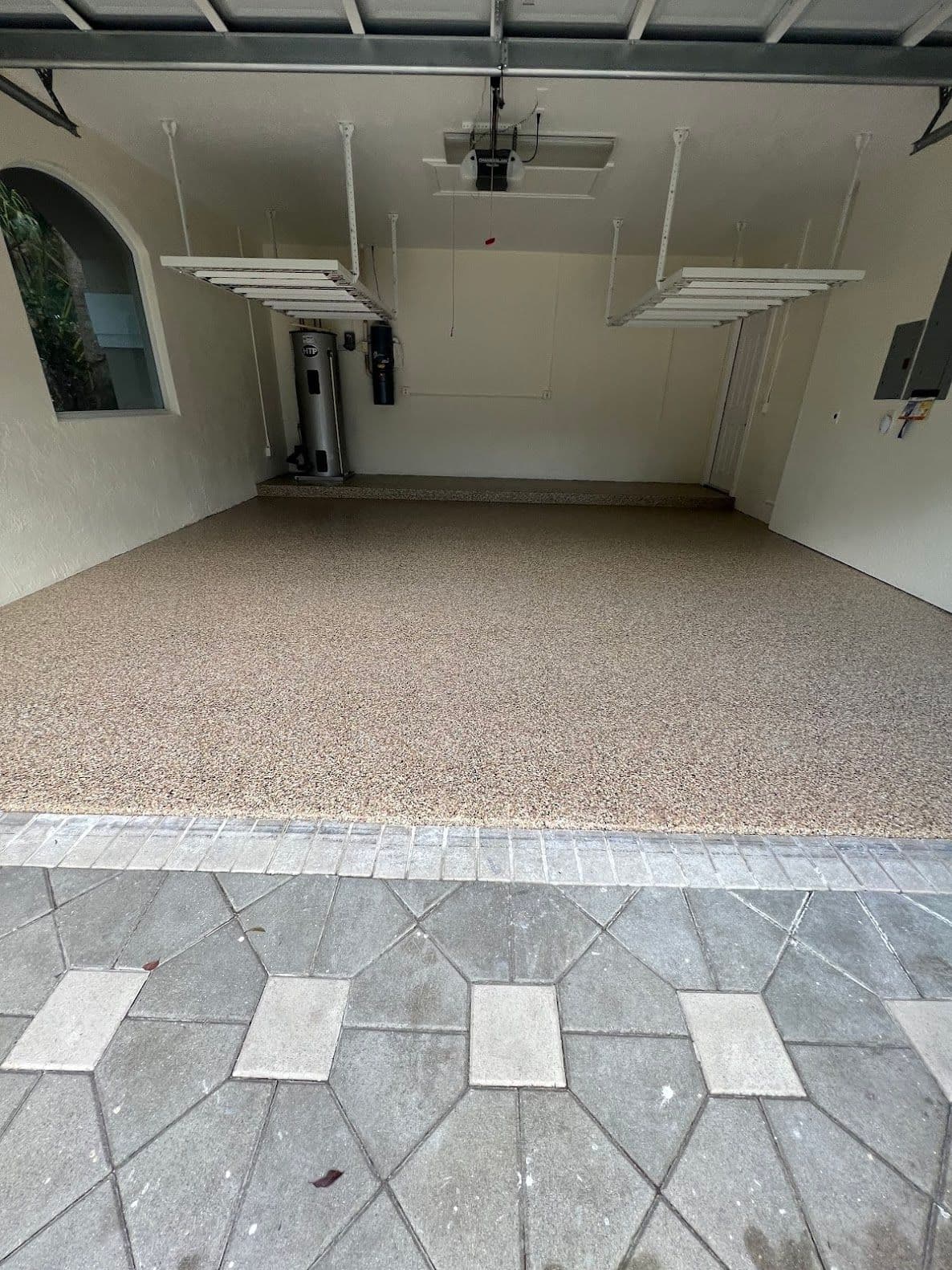
We had both of our garages done and an outdoor concrete platform. The crew was courteous and professional. Everyone from Nancy our salesperson to Patrick, the manager, Logan and his crew were outstanding. Our floors look fantastic and we were very happy we chose this company.
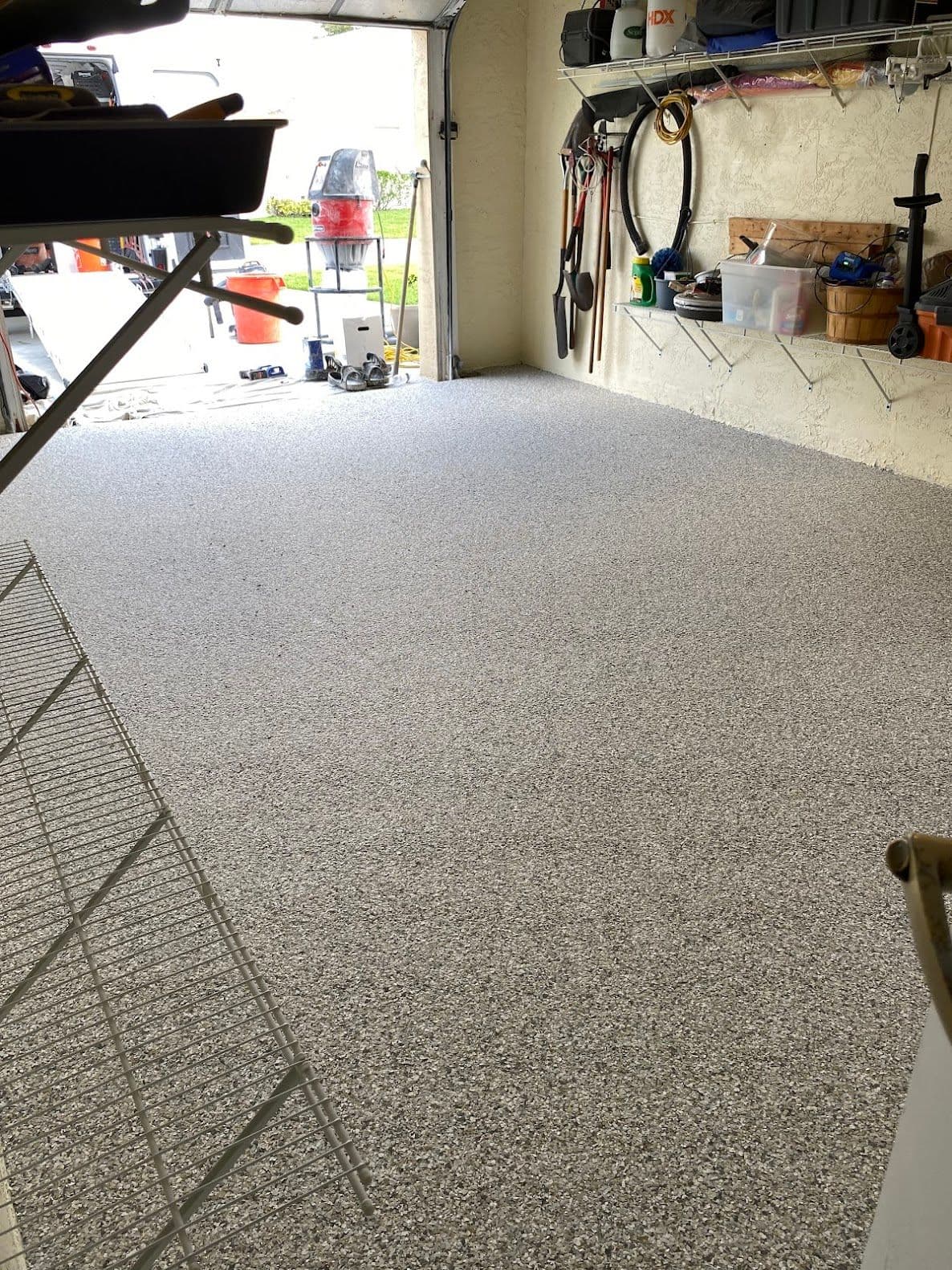
I am very pleased with the quality of work FloorTek has done for me. The two employees that did the actual work were very courteous, worked hard, and explained everything they were doing. Thank you for a great job.
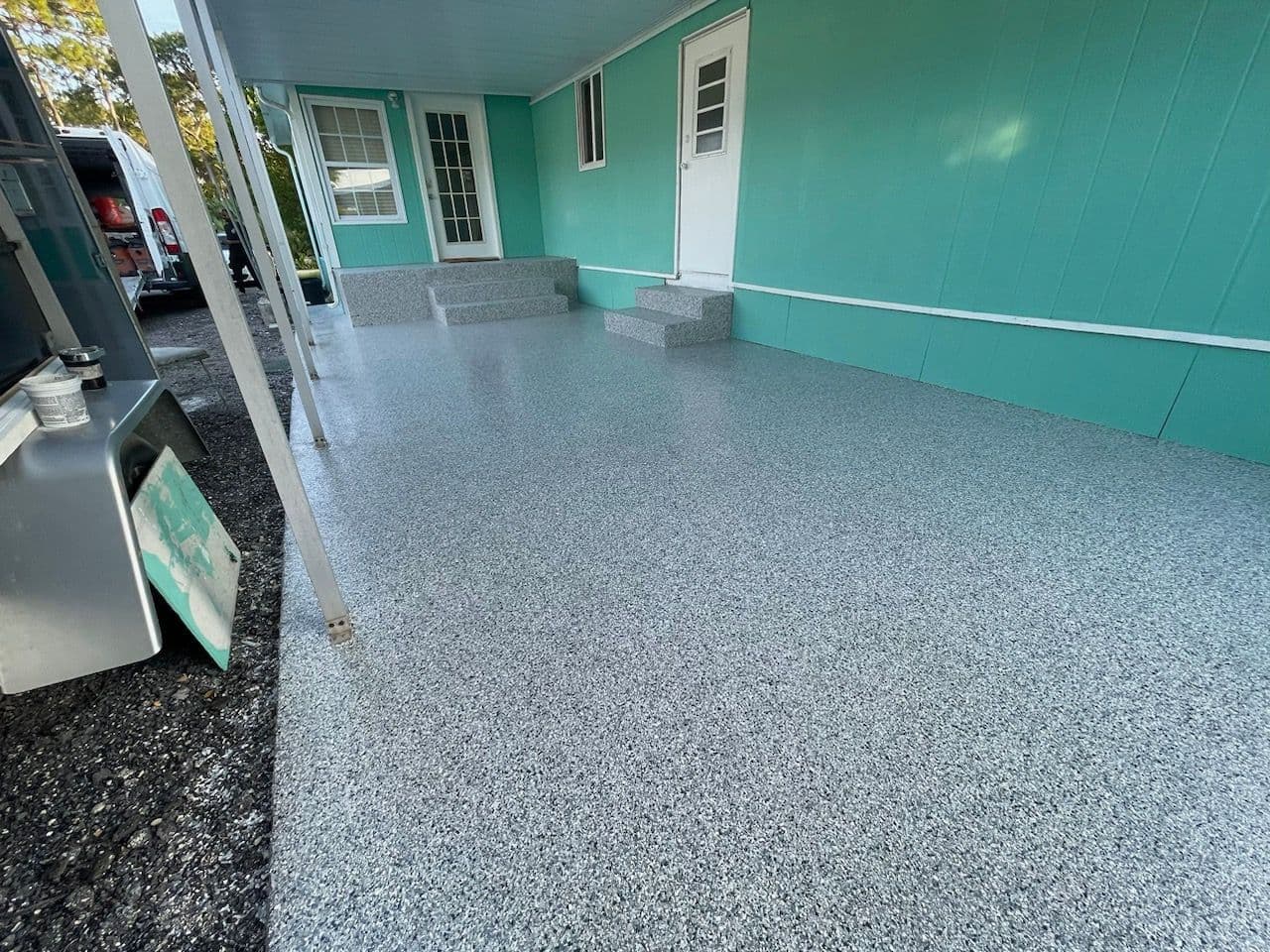
I was happy with the job Floortek did. Good customer communication and customer relationship. My old ugly porch was transformed and I love it. Nancy was very helpful throughout the process. Just know that rain may impact your schedule to make sure the products at highest quality during application.



Contact FloorTek Today