Deep Technical Guide: How Polyaspartic Molecules Bond with Concrete for High-Performance Environments
Understanding how polyaspartic molecules bond with concrete is essential for selecting a floor finish that withstands heavy wear, extreme temperature fluctuations, and chemical exposure. We at Floortek Coatings leverage advanced aliphatic polyurea technology to deliver a superior alternative to traditional epoxy systems. Standard epoxy often sits on the surface and becomes brittle over time. Still, our advanced polyaspartic formulas are designed to improve performance by physically and chemically integrating with the underlying concrete substrate. This deep technical guide breaks down the molecular science of mechanical anchoring, chemical cross-linking, and concrete preparation to show you exactly how we deliver an exceptionally durable, UV-stable, and chemical-resistant finish in a 1-day installation.
Understanding Concrete Porosity and Capillary Networks
To comprehend the structural mechanics of advanced polymer coatings, you must first examine the microscopic anatomy of concrete. Solid concrete is actually a highly porous, sponge-like matrix. When we mix cement, water, and aggregates, a chemical reaction called hydration occurs. This process produces a calcium silicate hydrate gel that forms the structural backbone of the slab.
As excess water evaporates out of the curing concrete, it leaves behind an intricate network of microscopic channels. Material scientists call these pathways capillary pores. The total volume and size distribution of these pores depend directly on the original water-to-cement ratio used during the pour. High-porosity concrete contains millions of interconnected pathways that readily absorb liquids through capillary action.
Unprotected concrete remains highly vulnerable to structural degradation. Heavy vehicle fluids, salts, and environmental acids migrate into these open pores, slowly weakening the matrix from within. To protect this material permanently, a coating must penetrate deep into these capillary networks rather than merely resting on the exterior surface. For scientific data on concrete hydration properties, you can reference the building materials archives at the National Institute of Standards and Technology.
The Chemistry of Polyaspartic Coatings: Aliphatic Polyurea Engineering
The term polyaspartic refers to a specialized class of aliphatic polyureas. The development of this technology represents a significant leap forward in polymer science, specifically engineered to solve the application limitations of standard polyureas and epoxies. The Chemistry of polyaspartic coatings involves a precise reaction between an aliphatic polyisocyanate and a polyaspartic ester amine.
Traditional polyureas react almost instantly. That rapid reaction makes them incredibly difficult to apply evenly by hand. To control this process, polymer scientists modified the amine-functional reactants by introducing sterically hindered groups. These bulky molecular structures act like chemical shields, slowing down the reaction rate.
This controlled reaction profile provides a crucial advantage. It allows the liquid resin to remain workable within a specific window, giving the material ample time to wet out the concrete surface before cross-linking is complete. Once the reaction triggers, the molecules form highly dense polyurea linkages that exhibit exceptional thermal stability, flexibility, and tensile strength.
Mechanical Anchoring: How Polyaspartic Molecules Bond with Concrete
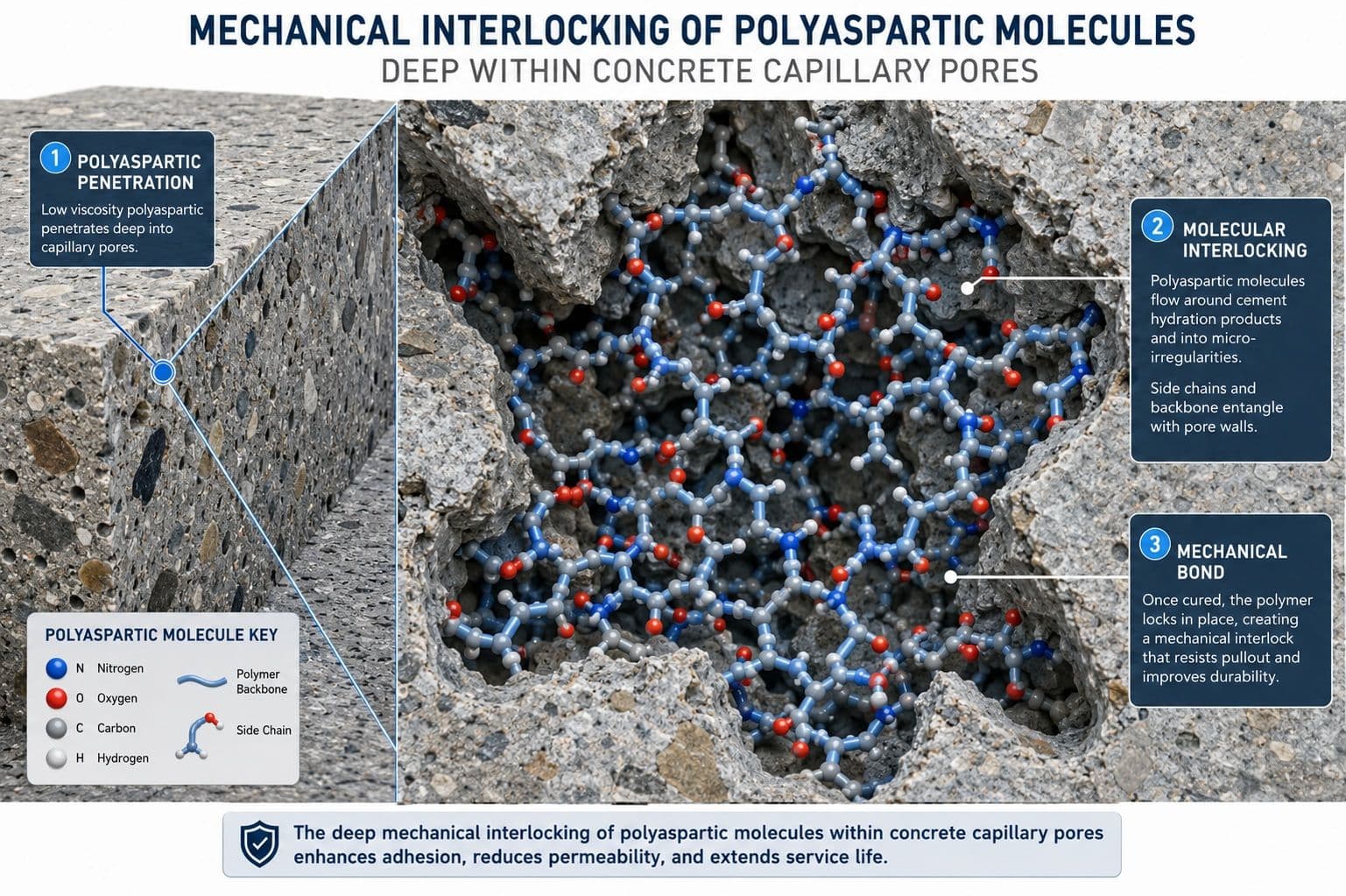
The true magic of the system lies in exactly how polyaspartic molecules bond with concrete at a microscopic level. This process relies on mechanical interlocking, which forms a bond that typically outperforms traditional adhesive options. When we apply the liquid polyaspartic resin to a properly prepared slab, its low molecular weight and low viscosity allow it to behave like water.
The material sinks deeply into the open capillary pores and microscopic valleys of the concrete substrate. As the sterically hindered amines react with the polyisocyanates, the liquid transitions into a solid polymer network while sitting inside these tiny pores.
This in-situ polymerization creates millions of microscopic roots. The cured polyaspartic molecules physically lock around the hardened cement paste and exposed aggregates. Instead of creating a distinct, vulnerable layer on top of the slab, the coating integrates into the upper zone of the concrete matrix itself.
When tension or shear forces are applied to the surface, the stress is distributed evenly throughout the concrete-polymer composite zone rather than concentrating at a single bonded seam. This deep mechanical integration makes it incredibly difficult for the coating to delaminate, bubble, or peel away under intense physical stress.
Polyaspartic vs. Epoxy Chemical Structure: Why Epoxy Typically Outperforms in Surface Failure Risks
When evaluating the Polyaspartic vs. epoxy chemical structure, you can easily see why old-fashioned epoxy formulas fall short in demanding environments. Epoxy coatings are typically formulated from bisphenol-A resins and amine hardeners. These components react to form a highly rigid, three-dimensional crystalline lattice.
While epoxy provides decent initial hardness, its high molecular weight gives it a thick, viscous consistency. This high viscosity prevents the epoxy from penetrating deep into the concrete's finest capillaries. Instead, it sits heavily on top of the surface, relying almost entirely on a superficial, flat bond line.
Furthermore, the rigid nature of cured epoxy makes it brittle. As your concrete slab experiences thermal expansion and contraction, or when heavy vehicles drive across it, the rigid epoxy layer cannot flex in harmony with the building. Over time, this mechanical mismatch causes micro-cracking and bond fatigue.
Our polyaspartic formulations are engineered to deliver up to 10 times the flexible tensile strength of traditional epoxy finishes under specific high-stress conditions. The linear, aliphatic chains within the polyaspartic matrix allow the coating to maintain excellent elastomeric elongation. This means the floor finish can absorb structural shifts, vibrations, and heavy impacts without cracking or releasing its mechanical grip on the concrete.
Concrete Surface Profiling for Polyaspartic Adhesion
To maximize the contact area for molecular bonding, we must carefully prepare the concrete surface before mixing any materials. We strictly follow the industry guidelines established by the International Concrete Repair Institute (ICRI). Achieving the correct Concrete surface profiling for polyaspartic adhesion is the single most important step in our installation process.
We never use acid etching because it leaves chemical residues and fails to open deep capillaries uniformly. Instead, we use heavy industrial grinding machinery equipped with specialized diamond-segmented tooling. This mechanical process removes weak surface laitance, curing compounds, and old sealers, exposing the sound, durable concrete beneath.
Our goal is to achieve a Concrete Surface Profile (CSP) rating of 2-3, which feels similar to medium-grit sandpaper. This mechanical profiling multiplies the available surface area for the polyaspartic molecules to grab onto. It opens the closed capillary pathways, ensuring that our low-viscosity resin can flood into the slab unhindered, forming its deep structural roots.
The Impact of the Texas Climate on Concrete Moisture Vapor Transmission Rates
Operating throughout Texas requires a deep understanding of local geotech and climate conditions. From the extreme coastal humidity of Houston and the intense heat of Austin to the shifting, expansive clay soils of Dallas, Fort Worth, and San Antonio, local slabs face continuous stress. These environmental forces directly increase concrete moisture vapor transmission rates.
Slabs without effective sub-slab vapor barriers constantly draw moisture upward from the soil via capillary action. When this water vapor reaches the top of the slab, it condenses back into liquid form, building up high hydrostatic pressure. If you install a traditional epoxy coating over a high-moisture slab, this trapped pressure will eventually blister and rupture the brittle epoxy film.
To add crucial information to your project planning: for high moisture levels, we need to install an extra layer called a vapor barrier. When we detect elevated moisture emission rates during our initial testing, we apply a specialized moisture-mitigating base coat. This step helps reduce the risk of osmotic blistering and protects the structural integrity of your floor system against severe groundwater forces.
Polyaspartic Rapid Curing Process Science and the 1-Day Installation
The advanced reaction kinetics of aliphatic polyureas allow for an incredibly fast installation timeline. The science behind Polyaspartic rapid curing enables our teams to complete a full, multi-layer floor transformation in just one day.
Traditional epoxy applications require you to wait days between coats, then a week of curing before you can park your car or place heavy equipment on the floor. This extended downtime significantly disrupts residential garages and leads to costly operational shutdowns for commercial businesses.
Our polyaspartic systems are designed to cure rapidly through a chemical cross-linking process that is less dependent on ambient temperatures. Within just a few hours after our final application, the molecular matrix achieves a near-complete cure. This fast cure means you can walk on your new floors in as little as 4 to 6 hours, and you can return heavy vehicles or equipment to service within 24 hours. This rapid turnaround delivers incredible manufacturer-direct value to both busy homeowners and commercial facilities.
Aliphatic Polyurea UV Stability Technical Data
Solar radiation is one of the primary causes of polymer coating failure. When traditional aromatic coatings, like standard epoxies, are exposed to ultraviolet (UV) light, the chemical bonds within their polymer chains begin to break down. This degradation is visible as severe yellowing, chalking, and a complete loss of surface gloss.
Our coatings utilize advanced Aliphatic polyurea UV stability technical data to prevent this breakdown entirely. Aliphatic chemical structures do not contain the light-sensitive aromatic rings found in epoxy. Because of this molecular design, our coatings do not absorb or break down under UV radiation.
Whether we install your system on an outdoor patio or in a sunlit garage, the finish remains completely UV stable. It will not discolor, amber, or fade over decades of exposure to intense sunlight. This ensures that your chosen aesthetic finish maintains its crystal-clear clarity and vibrant color profile for the long haul.
Advanced Flooring Solutions for Texas Homeowners and Commercial Facilities
We are proud to provide our premium, long-lasting surface systems through multiple Floortek Locations across the state. Our systems are carefully tailored to meet the exact performance demands of your specific space.
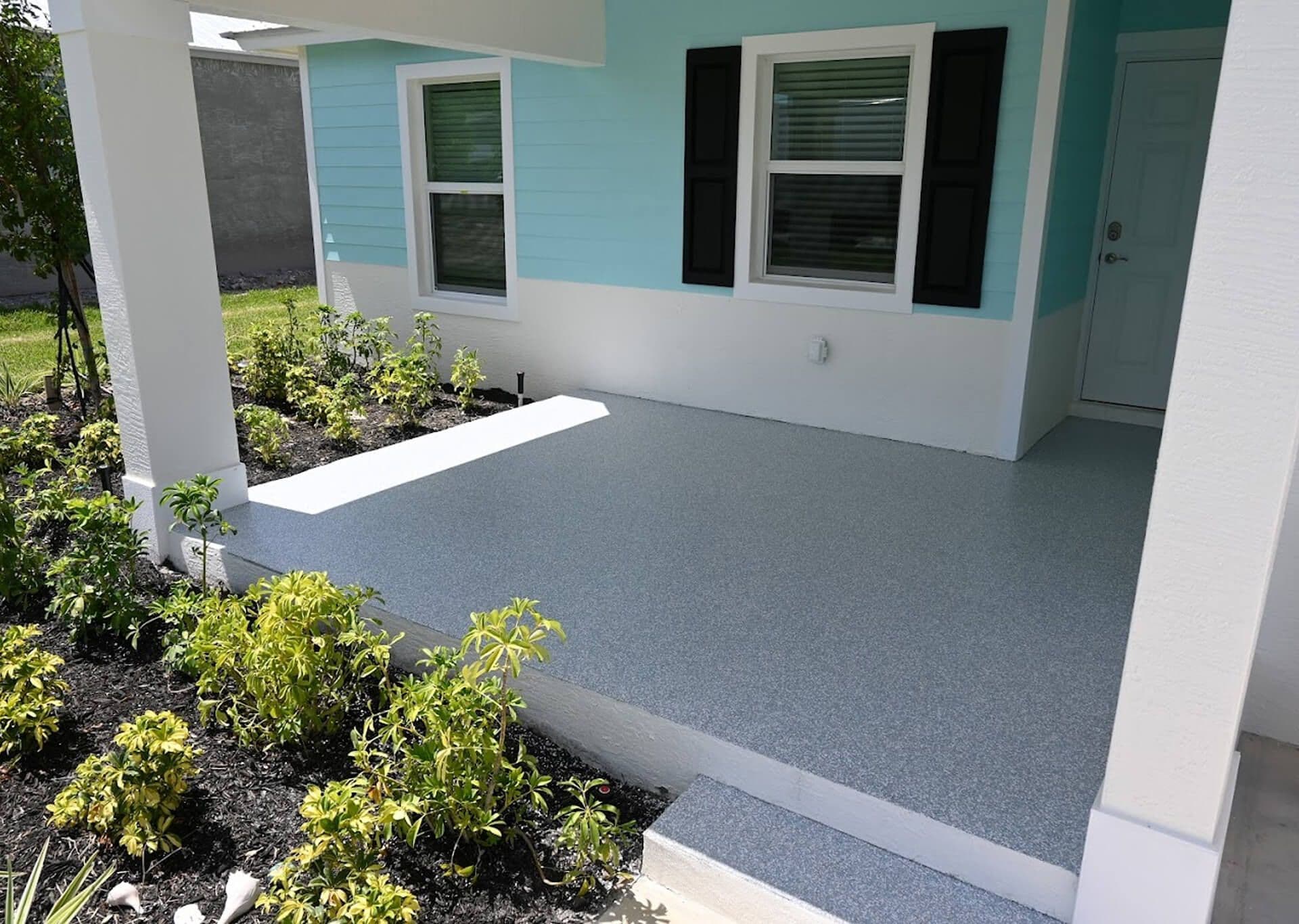
If you want to protect your garage, our specialized garage coating system easily handles hot-tire pickup, dropped tools, and automotive fluid spills. For outdoor living areas exposed to harsh weather and direct sunlight, our patio and pool deck coating services provide durable, UV-stable surfaces that stay comfortable underfoot and elevate your exterior design.
We also specialize in exterior concrete protection for high-traffic paths. Our driveway and sidewalk coating services seal out harsh chemicals, fertilizers, and salts, preventing cracking and surface spalling over time. For below-grade indoor spaces, our Basement coating service seals porous slabs and brightens up your living area.
You can customize your floor to match your personal style or corporate branding. We offer an extensive selection of Colors and Flake Options, allowing you to design a beautiful, textured finish that complements your space perfectly. Every system we install uses Our Coating Products, which are manufactured to the absolute highest standards in the industry.
We stand firmly behind the quality and engineering of our work. To give you complete peace of mind, we back our residential installations with a comprehensive Life-of-home warranty. When you partner with us, you receive a floor designed to perform beautifully for decades.
To see real-world examples of our past installations, browse through our Floortek Gallery. If you want to learn more about our company values and our highly trained crew, please read the About Us page. When you are ready to upgrade your property with a premium [Floor Coating Service](https://www.floortekcoatings.com/one-day-garage-floor-coating), contact our team directly. Take advantage of our current promotion to get 30% off the first installation on your project. Call us today at 844-844-4164 or visit our Contact Us page to schedule your professional site evaluation and receive a free estimate.
Frequently Asked Questions:
What is the science behind how polyaspartic molecules bond with concrete floors?
YES, polyaspartic resin functions by sinking deeply into the microscopic capillary pores of your concrete surface before cross-linking. Floortek Coatings installs this advanced aliphatic polyurea material to ensure superior mechanical interlocking with the slab. You can read more about industrial polymer developments through the National Science Foundation.
Does temperature alter how polyaspartic molecules bond with concrete slabs in Texas?
NO, temperature shifts do not stop this reaction because our formulas are engineered for year-round installations across Texas. Floortek Coatings utilizes specialized polyaspartic esters that form strong molecular bonds even in intense summer heat. Review environmental climate tracking details provided by the Texas A&M University Extension Service.
Why does diamond grinding change how polyaspartic molecules bond with concrete substrates?
YES, mechanical diamond grinding opens closed capillaries and removes weak laitance, maximizing surface area for resin penetration. Floortek Coatings prepares your slab to a CSP 2-3 profile to ensure polyaspartic materials attach permanently. Learn about workplace concrete dust safety standards through the Occupational Safety and Health Administration.
How does moisture vapor transmission affect how polyaspartic molecules bond with concrete surfaces?
YES, high moisture vapor transmission can build hydrostatic pressure that pushes against floor coatings if left completely unmanaged. Floortek Coatings tests your concrete and applies a vapor barrier when needed to protect the polyaspartic system. You can read about moisture movement in construction materials on the Texas Department of Transportation website.
Is chemical cross-linking vital to how polyaspartic molecules bond with concrete long term?
YES, chemical cross-linking creates a dense, continuous polymer network that physically traps itself within the open pores of concrete. Floortek Coatings uses aliphatic formulations where polyaspartic molecules cross-link to deliver maximum chemical resistance and flexibility. Read polymer chemistry studies published by the University of Texas at Austin.
How do outdoor weather conditions alter how polyaspartic molecules bond with concrete patio spaces?
NO, outdoor weather does not degrade the bond because our materials are fully stable when exposed to sunlight. Floortek Coatings applies polyaspartic coatings that maintain their structural integrity even in the presence of extreme ultraviolet radiation and heavy rain. Check out research on infrastructure weathering from the Department of Civil Engineering at Texas Tech University.
Does application thickness change how polyaspartic molecules bond with concrete pool decks?
YES, applying the material at the exact specified mil thickness ensures optimal resin wet-out and deep capillary anchoring. Floortek Coatings carefully controls the thickness of the polyaspartic layers to ensure a permanent mechanical bond. Read more about recreational surface safety recommendations through the Texas Department of State Health Services.
Why do commercial facilities require specialized knowledge of how polyaspartic molecules bond with concrete?
YES, commercial spaces experience severe physical impacts and chemical exposure that quickly destroy low-grade, superficial epoxy floor paint. Floortek Coatings delivers polyaspartic floor installations that easily resist hot tires, chemicals, and heavy forklift traffic. Review public facility management and material specifications on the Texas Commission on Environmental Quality website.
Can heavy vehicle traffic weaken how polyaspartic molecules bond with concrete garage entryways?
NO, heavy vehicle traffic will not break the bond because the cured polymer distributes shear forces throughout the concrete. Floortek Coatings designs polyaspartic garage floors to withstand heavy trucks without peeling, cracking, or delaminating over time. View transportation facility design standards via the Federal Highway Administration.
Does high substrate density impact how polyaspartic molecules bond with concrete basement areas?
YES, very dense, smooth concrete requires deep mechanical grinding to ensure the low-viscosity resin can penetrate the surface. Floortek Coatings carefully profiles tight basement floors so the polyaspartic molecules can establish deep structural roots. Learn more about residential building moisture controls from the U.S. Department of Energy.
FREE In-Home Estimate
Plus 30% Off
Testimonials
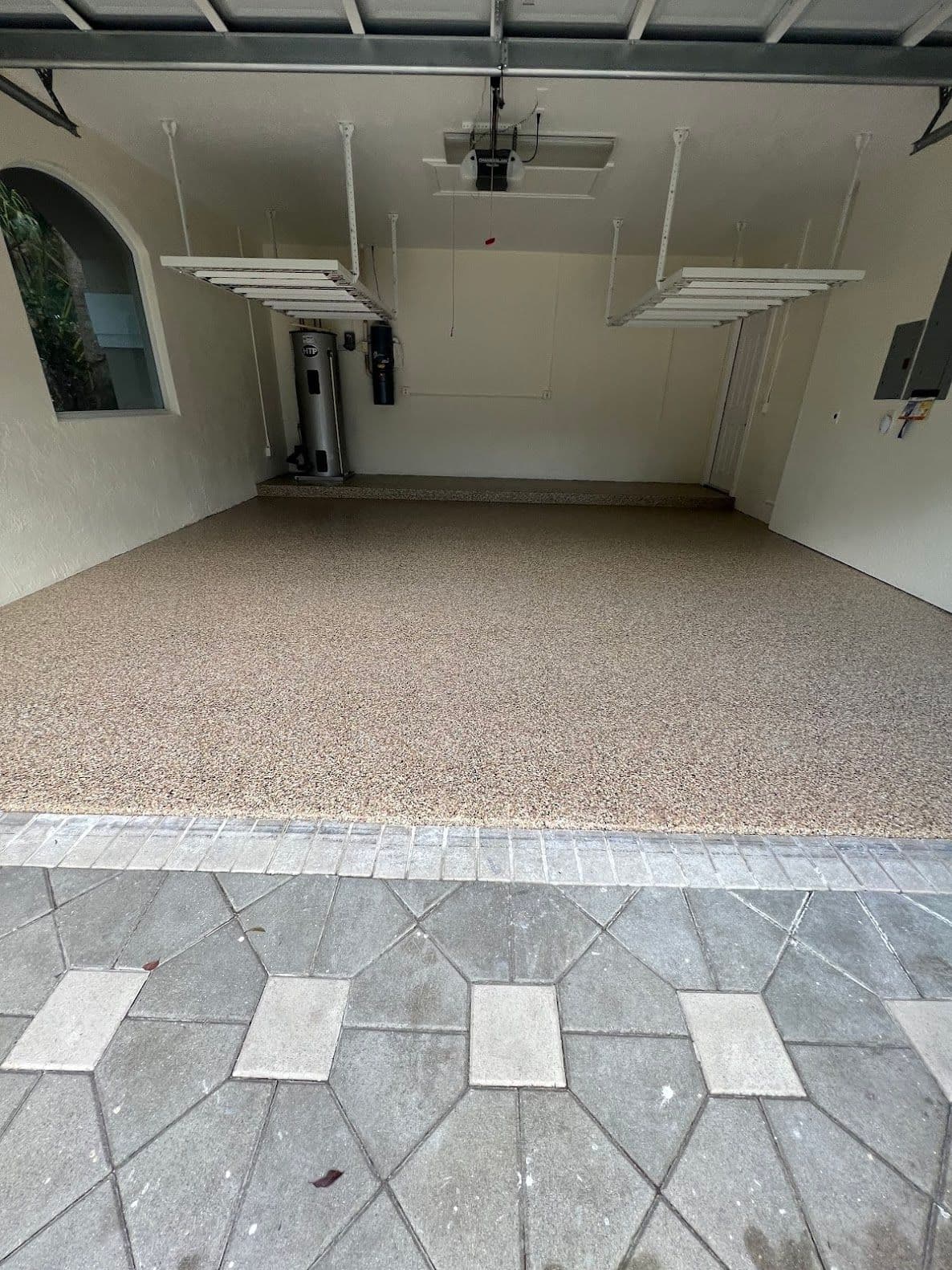
We had both of our garages done and an outdoor concrete platform. The crew was courteous and professional. Everyone from Nancy our salesperson to Patrick, the manager, Logan and his crew were outstanding. Our floors look fantastic and we were very happy we chose this company.
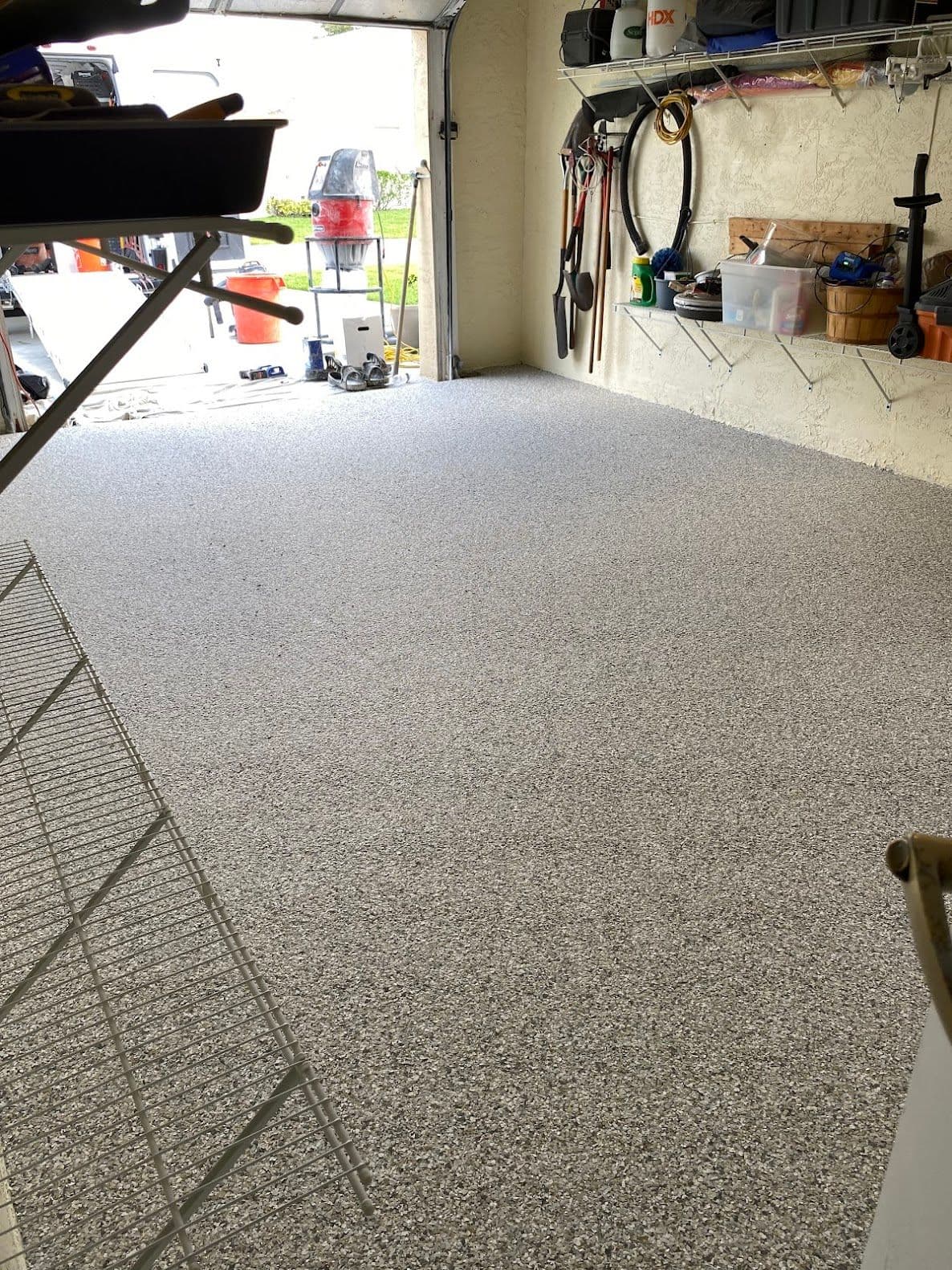
I am very pleased with the quality of work FloorTek has done for me. The two employees that did the actual work were very courteous, worked hard, and explained everything they were doing. Thank you for a great job.
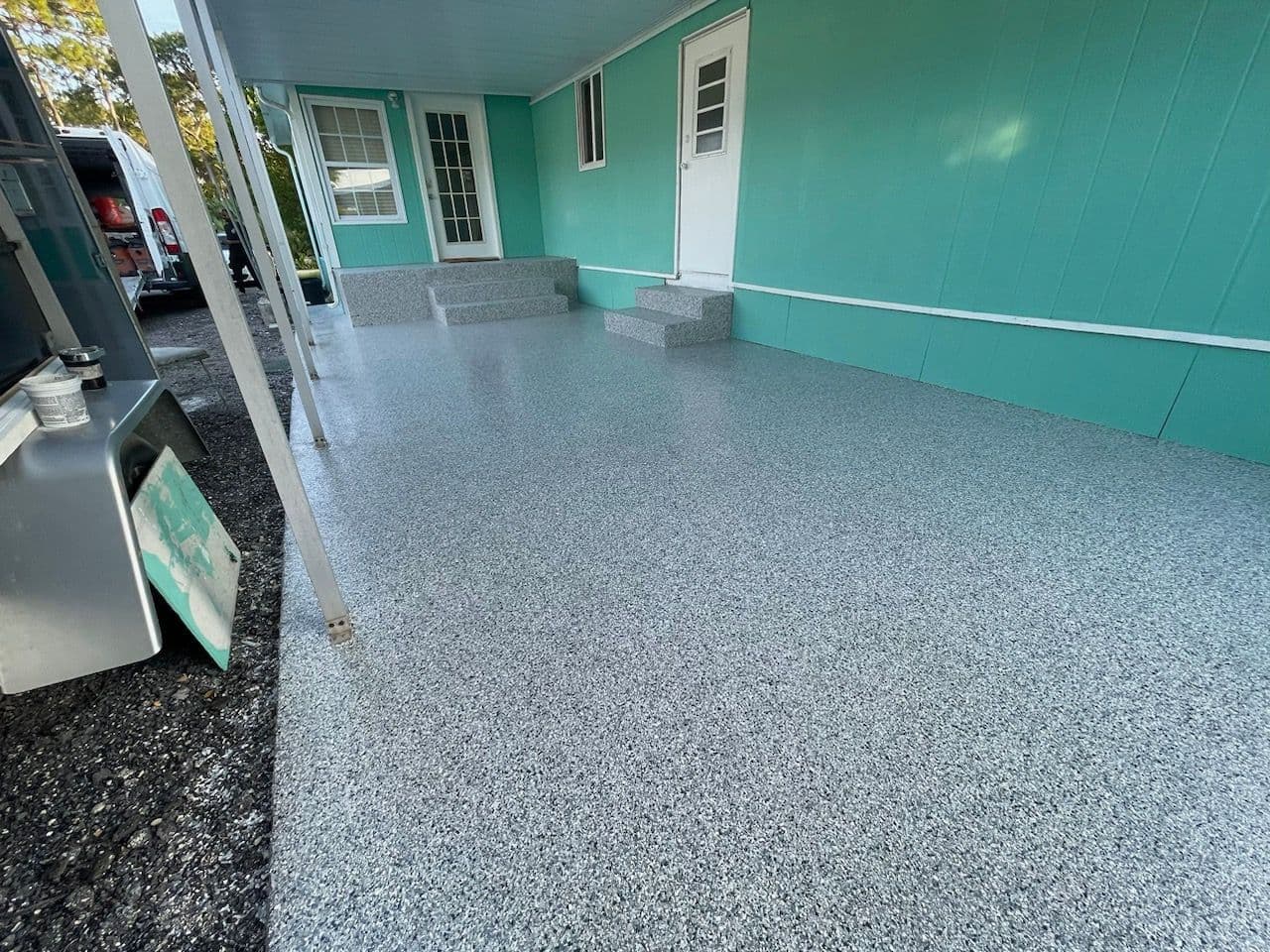
I was happy with the job Floortek did. Good customer communication and customer relationship. My old ugly porch was transformed and I love it. Nancy was very helpful throughout the process. Just know that rain may impact your schedule to make sure the products at highest quality during application.



Contact FloorTek Today