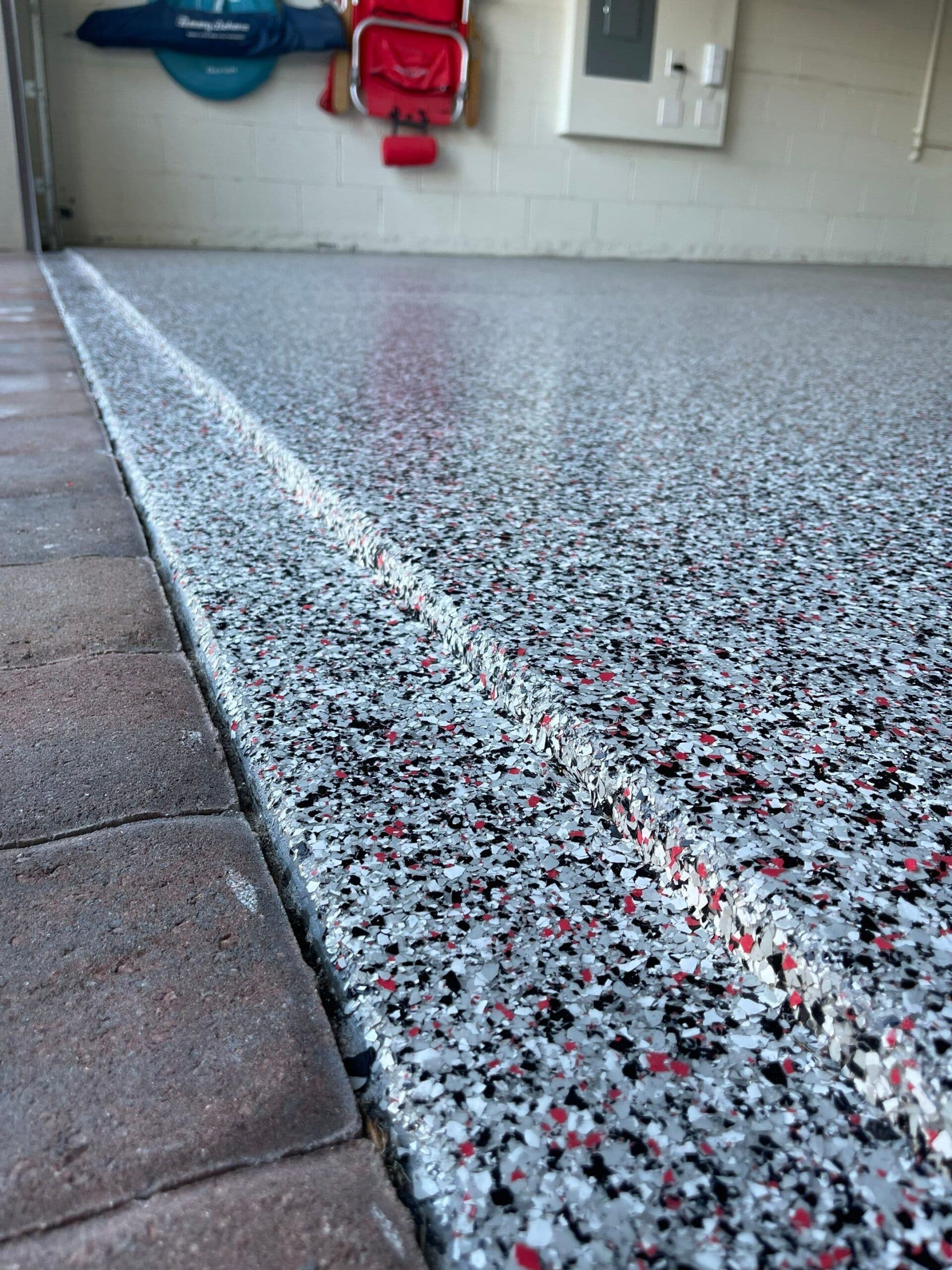
The Complete Engineering Guide to Concrete Substrate Profiling and Polyaspartic Applications in Texas
Securing a permanent bond between a concrete slab and a protective topcoat requires meticulous surface preparation before applying a concrete floor coating. Neglecting the substrate assessment and mechanical profiling stages typically results in immediate material failure, delamination, and peeling. As local experts serving the region, Floortek Coatings uses advanced polyaspartic technology to enhance long-term durability in residential and commercial spaces. By rigorously adhering to industry standards for moisture testing and mechanical grinding, we install a highly resistant system that typically outperforms outdated epoxy applications.
Understanding the Concrete Substrate in Houston, Texas
Concrete is a highly porous material composed of cement, water, and coarse aggregates. While it appears solid, the internal structure resembles a rigid sponge filled with microscopic capillary channels. In the Houston area—including Katy, Sugar Land, The Woodlands, Cypress, Pearland, and Spring—the local climate heavily impacts how concrete behaves. High ambient humidity, combined with expansive clay soils, creates a dynamic environment in which ground moisture continually pushes upward through the concrete slab.
Properly analyzing this local soil dynamic is the first critical phase. Fresh concrete often develops a weak, powdery top layer, known as laitance, as the heavy aggregates sink and water rises to the surface during curing. This laitance layer lacks structural integrity. Applying any resinous material directly over laitance guarantees adhesion failure. Furthermore, Gulf Coast humidity directly affects the moisture equilibrium within the slab. Achieving a pristine, uncontaminated substrate ensures the structural integrity of the final application. Explore our extensive project portfolio in the Floortek Gallery to see how proper substrate analysis yields exceptional results.
The Core Problem with Outdated Epoxy Systems
Standard epoxy coatings are an outdated, inferior technology prone to rapid degradation. Traditional epoxy lacks the necessary flexibility to withstand the micro-movements of a concrete slab as temperatures fluctuate. Because standard epoxy hardens into a rigid, brittle layer, it chips easily upon impact. Furthermore, typical epoxy cures slowly, leaving the material vulnerable to moisture contamination and atmospheric humidity during drying.
Another major failure point of traditional epoxy is its vulnerability to ultraviolet light. Exposure to sunlight causes standard epoxy to yellow, chalk, and eventually break down. Modern engineering has moved past these limitations. Our advanced polyaspartic materials are inherently UV Stable, ensuring the floor retains its original aesthetic without ambering or degrading under direct sunlight. We firmly assert that our polyaspartic material is 10X stronger than epoxy. For a deep dive into these material properties, read our guide on the differences between epoxy and polyurethane concrete floor coatings.
Step-by-Step Mechanical Surface Preparation Protocols
The foundation of any successful application relies on mechanical profiling. Concrete Surface Profile (CSP) is a standardized measurement indicating the roughness of the concrete surface. Most professional-grade polyaspartic systems require a minimum CSP of 2-3 to achieve an adequate mechanical bond.
Initial Decontamination
Before mechanical tools touch the floor, we inspect the surface for oil, grease, and previous sealers. Mechanical grinding drives existing oil deeper into the pores if the surface is not decontaminated first. We utilize industrial-grade degreasers and mechanical scrubbing to extract these contaminants.
Diamond Grinding Operations
To achieve the exact CSP required, we utilize heavy-duty planetary diamond grinders. These machines use segmented diamond tooling to shave off the top layer of laitance, exposing the open, porous concrete beneath. This process removes old paint, weak cement paste, and minor surface imperfections. Diamond grinding creates microscopic scratches in the concrete, significantly increasing the surface area. This expanded surface area allows the polyaspartic basecoat to penetrate deep into the substrate, locking into the concrete pores for a permanent hold. To maintain strict environmental and safety standards during this process, we employ heavy-duty HEPA dust-extraction systems and adhere to guidelines published by the Occupational Safety and Health Administration (OSHA) for managing airborne silica dust.
For those seeking to understand the tools and expertise required, we have documented what sets a professional concrete floor coating company apart from amateur installations.
Advanced Moisture Testing and Vapor Transmission Control
Moisture is the primary cause of coating failures. Hydrostatic pressure occurs when groundwater pushes up against the bottom of the concrete slab, forcing moisture vapor through the capillaries. If a high-performance coating seals the top of the concrete without accounting for this moisture, the trapped vapor builds pressure until it forcibly blisters and blows the coating off the floor.
Because of the heavy clay soils in Texas, rigorous moisture testing dictates our process. We use precise in situ relative humidity (RH) probes inserted directly into the concrete slab to accurately measure internal moisture levels. If moisture levels exceed the safe operational threshold for the basecoat, we implement corrective measures. To prevent moisture damage, we basically have to add an extra layer called a vapor barrier. This specialized moisture-mitigating primer penetrates concrete and blocks capillary tubes, neutralizing upward pressure.
This level of scientific testing ensures a permanent result. The U.S. Department of Energy provides extensive literature on how vapor transmission affects building materials, underscoring the need for proper moisture barriers. Understanding common problems with concrete floor coatings invariably leads back to improper moisture management.
Concrete Repair and Structural Crack Isolation Methods
Applying a premium polyaspartic layer over damaged concrete merely highlights the flaws. Concrete inevitably cracks due to shrinkage during curing, thermal expansion, and soil settlement. Thorough repair is a mandatory phase of our operation.
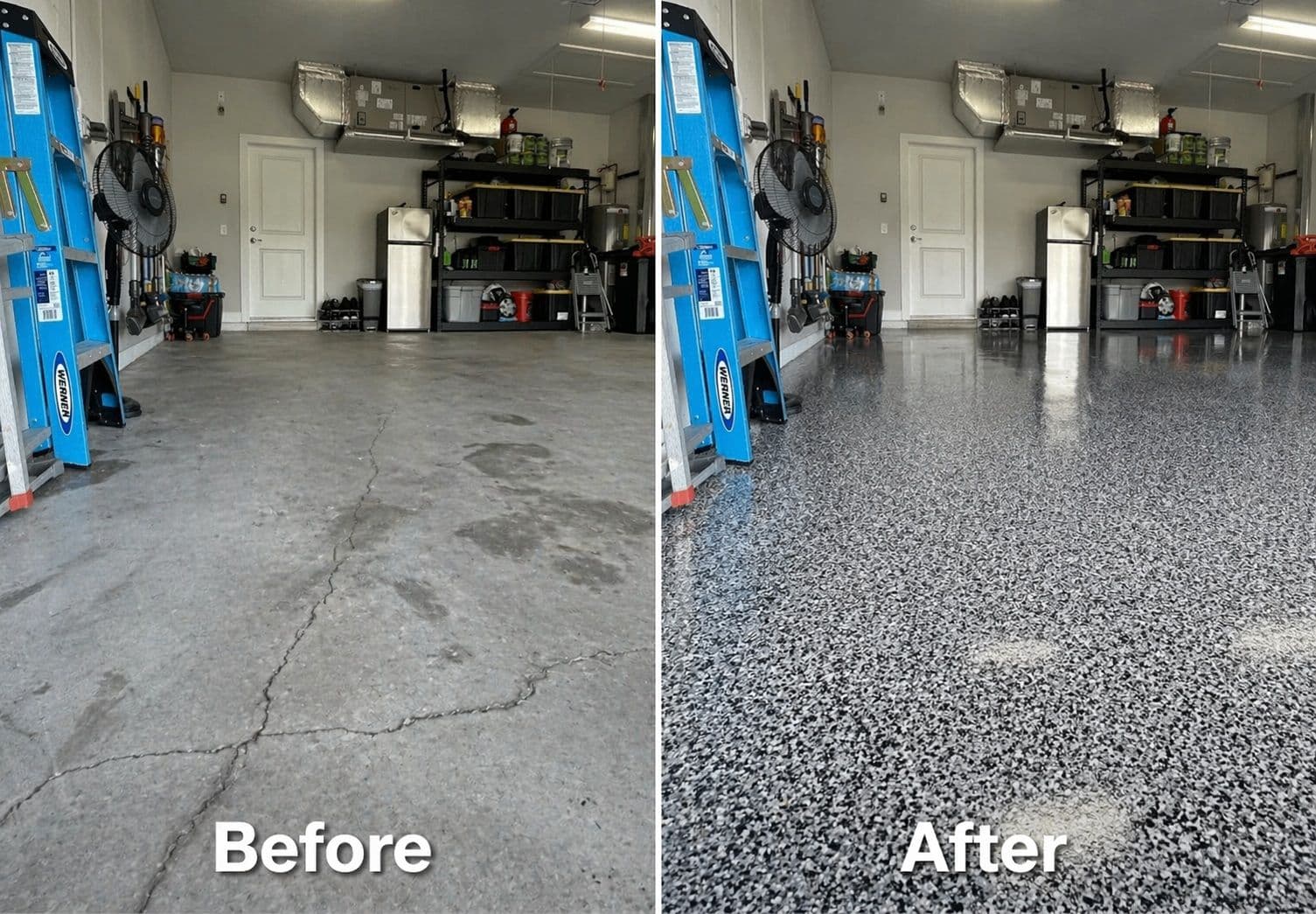
We utilize a V-blade grinder to route out existing cracks, exposing clean concrete walls within the fissure. Once routed, we fill the void using a specialized, rapid-curing polyaspartic mender. This mender is not a standard rigid patch; it possesses elastomeric properties, allowing it to flex slightly with the concrete's natural movement. After the mender cures, we grind the repaired area flush with the surrounding floor, creating a completely seamless canvas.
We address all spalling, pitting, and surface divots using similar high-strength repair compounds. By restoring the slab's structural integrity first, we guarantee that the final topcoat applies smoothly. Proper maintenance and repair significantly extend the lifespan of coated concrete floors.
Why Polyaspartic Technology Outperforms Epoxy
The chemical structure of polyaspartic aliphatic polyurea allows it to bridge the gap between rapid application and extreme durability. We refuse to install epoxy because polyaspartic technology delivers superior results across every metric.
Extreme Durability: The cross-linking density of polyaspartic materials renders the floor 10X stronger than epoxy, providing exceptional resistance to impacts, abrasions, and heavy vehicle traffic.
Rapid Curing Times: The rapid chemical reaction of polyaspartic allows us to offer a true 1-Day installation process. You can resume normal activities and drive on the surface the very next day.
Ultraviolet Light Resistance: Our topcoats are 100% UV Stable, meaning they will not fade, yellow, or chalk when exposed to direct sunlight, making them ideal for exterior applications.
Protection from Contaminants: The dense, non-porous nature of the cured material ensures the floor is Chemical Resistant. Oil, gasoline, transmission fluid, and harsh household cleaners wipe away easily without leaving a stain.
Temperature Tolerance: Polyaspartic materials cure effectively across a wide temperature range, enabling year-round application in both extreme heat and cold.
Clients often ask, "Can I apply concrete floor coatings myself?" Given the rapid cure times of polyaspartic materials and the heavy machinery required for surface grinding, DIY applications often lead to costly failures that require complete mechanical removal.
Comprehensive Coating Applications for Residential Properties
Our polyaspartic systems adapt seamlessly to various residential environments. The most popular residential request is our one-day garage floor coating. By transforming a dusty, stained garage into a clean, functional extension of the home, we significantly increase property value. For insight into why polyaspartic reigns supreme in this environment, review our analysis of the best types of concrete floor coatings for garage floors.
Interior spaces also benefit greatly from our technology. A Basement coating service seals out musty odors and protects against moisture intrusion from surrounding soil. We offer specialized systems engineered as durable concrete coatings for basement environments. For interior living spaces, homeowners prioritize air quality. Our materials contain low volatile organic compounds (VOCs), making them the safest concrete floor coating products for indoor use, a standard supported by guidelines from the U.S. Environmental Protection Agency (EPA).
You can fully customize the aesthetic of these spaces by reviewing our Colors and Flake Options. From solid industrial colors to decorative concrete floor coatings that mimic stone or tile, the design possibilities are vast.
Commercial and Exterior Coating Solutions
Exterior concrete faces brutal conditions in Texas, from intense UV radiation to heavy rainfall. Our UV-stable polyaspartic systems provide the ultimate protection for outdoor surfaces.
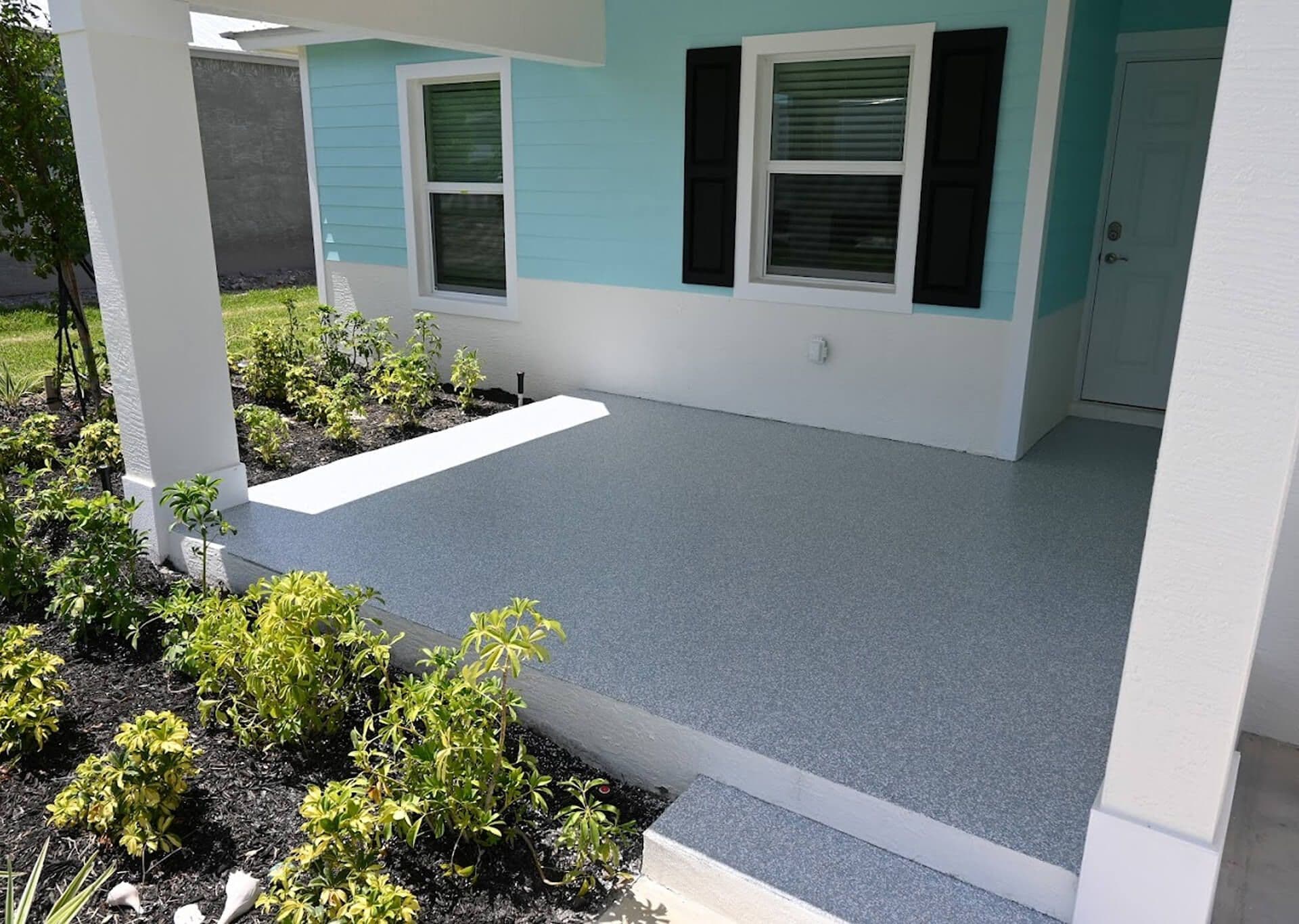
Patios: Enhance your outdoor living space with our patio coating service, designed to resist fading and weathering.
Pool Decks: Our pool deck coating service protects the concrete from chlorine and salt damage while offering a clean, modern aesthetic.
Driveways: A driveway coating service shields the surface from tire marks, oil leaks, and the daily stress of vehicular traffic.
Walkways: Enhance your property's curb appeal with our dedicated sidewalk coating service.
For commercial and industrial facility managers, minimizing downtime is the highest priority. Our 1-Day installation process ensures your facility is back in full operation immediately. To explore the full scope of our commercial capabilities, navigate to Our Coating Products. If you are considering upgrading an aging facility, we provide comprehensive services for the reapplication of concrete floor coating systems.
Ensuring Manufacturer-Direct Value and Guarantees
We pride ourselves on offering Manufacturer-direct value. By eliminating unnecessary intermediaries, we supply premium polyaspartic materials directly to consumers. This streamlined approach allows us to provide an aggressive incentive: 30% off in the first installation.
Because we mandate strict mechanical profiling and utilize the most advanced chemistry available, we confidently back our residential applications with a Life-of-home warranty. Unlike inferior epoxy systems that peel within a few years, our polyaspartic floors are engineered to last the lifespan of the underlying concrete. Understanding concrete floor coating warranties is crucial, as true protection requires coverage against delamination and UV degradation.
If you are researching the cost range of high-quality concrete floor coating, you will find that the initial investment in polyaspartic technology pays massive dividends by eliminating the need for frequent repairs and reapplications. You can learn more about us and our commitment to engineering excellence on our main platform.
Professional Maintenance and Environmental Safety Standards
Maintaining a polyaspartic floor requires minimal effort. Because the surface is chemical-resistant and highly dense, dirt and liquids cannot penetrate the finish. Routine sweeping and occasional mopping with a neutral pH cleaner easily maintain the floor's pristine appearance.
Furthermore, we utilize materials that support sustainability initiatives. Our systems offer excellent eco-friendly concrete floor coating options by minimizing VOC emissions and reducing waste from repeated tear-outs of failed epoxy floors.
We provide extensive coverage throughout the region. To find a service team near you, check the Floortek Locations directory or review our Floor Coating Service in Houston, Texas. Whether you require a specialized residential application or heavy-duty commercial protection, our Floor Coating Service delivers permanent results.
For immediate consultation, please get in touch with us directly. You can reach our headquarters at 844-844-4164 or via our secondary line at 1-346-550-9307. We invite you to visit our main office located at 4109 Katy Hockley Rd #1, Katy, TX 77493 to discuss your facility's requirements.
Frequently Asked Questions:
What surface preparation is needed before applying a concrete floor coating?
Proper surface preparation before applying a concrete floor coating requires extensive mechanical diamond grinding, moisture vapor testing, and structural crack repairs to open the substrate pores. Polyaspartic systems depend heavily on this rough concrete profile to anchor deeply and permanently into the slab. Floortek Coatings executes these precise steps on every project.
The National Institute of Standards and Technology (NIST) highlights the critical nature of material testing and substrate interactions. Grinding the concrete to the correct Concrete Surface Profile (CSP) removes weak laitance and exposes a fresh, porous layer. Without this mechanical intervention, even advanced polyaspartic chemistry cannot form the required mechanical bond, resulting in rapid delamination.
Does high ambient humidity affect surface preparation before applying a concrete floor coating?
YES. High ambient humidity directly alters moisture equilibrium during surface preparation before applying a concrete floor coating. Polyaspartic materials require an accurately assessed substrate to prevent hydrostatic pressure from forcing the coating off the floor. Floortek Coatings uses advanced relative-humidity probes to test every concrete slab.
Research from the U.S. Department of Energy details how moisture vapor transmission moves through building materials. If we detect excess moisture during the profiling stage, we apply specialized vapor-barrier primers. These primers block the concrete capillaries, ensuring that the polyaspartic topcoat adheres securely regardless of external humidity.
Is acid etching an acceptable method of surface preparation before applying a concrete floor coating?
NO. Acid etching fails to provide adequate surface preparation before applying a concrete floor coating because it leaves unpredictable profiles and introduces excess water into the slab. Polyaspartic coatings require a deeper, more consistent concrete profile to mechanically lock in. Floortek Coatings exclusively uses heavy-duty diamond grinders.
According to safety and health guidelines from the Occupational Safety and Health Administration (OSHA), controlling chemical exposures and utilizing dry mechanical methods with HEPA vacuums provides a safer, more controlled environment. Grinding physically shaves the concrete to an exact specification, whereas acid merely burns the surface inconsistently, resulting in weak points where the polyaspartic layer will eventually peel.
Will proper surface preparation before applying a concrete floor coating fix existing concrete cracks?
YES. Routing and filling structural cracks occurs specifically during surface preparation before applying a concrete floor coating. Polyaspartic menders cure rapidly, stabilizing the floor and preventing cracks from telegraphing through the final finish. Floortek Coatings meticulously repairs all damage before applying any basecoat.
The Federal Highway Administration (FHWA) documents extensive protocols for repairing concrete infrastructure. We follow similar principles by using a V-blade to chase the cracks, removing loose debris, and injecting an elastomeric polyurea filler. This process restores the slab's structural integrity, ensuring the final polyaspartic application remains completely seamless and highly durable.
How long does extensive surface preparation take before applying a concrete floor coating?
Thorough surface preparation before applying a concrete floor coating typically takes several hours and accounts for the majority of the installation time. Because our advanced polyaspartic technology cures extremely fast, Floortek Coatings completes the entire preparation and coating job in just one day.
Standards outlined by the General Services Administration (GSA) for facility maintenance emphasize minimizing operational downtime. By using highly efficient planetary grinders and rapid-curing crack menders, we complete the grinding, repair, and cleaning phases quickly without sacrificing quality. This efficiency allows the polyaspartic layers to be installed and cured within hours.
Can I skip surface preparation before applying a concrete floor coating on completely new concrete?
NO. Freshly poured concrete contains latent curing compounds requiring aggressive surface preparation before applying a concrete floor coating. Polyaspartic systems will fail without a mechanical bond, as the smooth, newly troweled surface offers no porosity. Floortek Coatings diamond grinds all new slabs.
The U.S. Environmental Protection Agency (EPA) provides documentation on the chemical emissions and curing agents present in modern building materials. These invisible curing compounds act as a barrier, preventing chemical adhesion. Mechanical profiling strips away this barrier and the weak laitance layer, giving the polyaspartic basecoat the necessary texture to bite into the concrete.
Is moisture testing an essential part of surface preparation before applying a concrete floor coating?
YES. Testing for moisture vapor transmission is an essential step in surface preparation before applying a concrete floor coating. Polyaspartic applications require accurate baseline moisture data to ensure hydrostatic pressure does not compromise the bond. Floortek Coatings scientifically measures every floor before application.
Data from the U.S. Department of Agriculture (USDA) regarding soil dynamics explains how moisture moves from the earth into concrete structures. If we skip moisture testing, trapped water vapor will eventually push upward, causing the polyaspartic layer to blister. We use in situ probes to measure internal moisture and apply specialized vapor barriers if moisture levels exceed operational limits.
Does poor surface preparation before applying a concrete floor coating directly cause peeling?
YES. Inadequate surface preparation before applying a concrete floor coating can lead to catastrophic delamination and peeling. Polyaspartic materials adhere chemically and mechanically only when the substrate is perfectly porous and decontaminated. Floortek Coatings ensures a permanent bond through rigorous mechanical profiling.
The National Institute for Occupational Safety and Health (NIOSH) provides resources on proper tool usage to achieve specific material tolerances. If a contractor attempts to apply polyaspartic over oil stains, dirt, or smooth concrete, the material sits on top rather than penetrating the surface. Diamond grinding eliminates these risks by exposing clean, raw concrete.
Are harsh chemicals used during professional surface preparation before applying a concrete floor coating?
NO. Professional surface preparation before applying a concrete floor coating utilizes dry mechanical grinding rather than harsh liquid chemicals. Polyaspartic technology adheres best to a chemically neutral, clean surface devoid of acidic residues. Floortek Coatings employs industrial HEPA vacuums to safely manage all airborne dust.
Research from the Lawrence Berkeley National Laboratory (LBL) highlights the benefits of reducing the use of volatile chemicals in indoor environments. By relying on heavy-duty diamond tooling instead of muriatic acid, we keep the concrete dry and perfectly profiled. This dry mechanical method ensures the polyaspartic basecoat achieves maximum penetration without interference from trapped chemical moisture.
Why is surface preparation before applying a concrete floor coating critical for long-term durability?
Meticulous surface preparation before applying a concrete floor coating ensures the applied material anchors deep into the concrete's microscopic pores. Polyaspartic technology depends entirely on this mechanical profile to deliver extreme durability and impact resistance. Floortek Coatings guarantees this adhesion with a Life-of-Home warranty.
According to materials research from the Oak Ridge National Laboratory (ORNL), the interface between a substrate and a topcoat dictates the overall strength of the composite system. Proper grinding opens the capillary channels, allowing the polyaspartic resin to wick down into the concrete matrix. When it cures, the coating becomes an integrated part of the slab rather than just a layer sitting on top.
Ready to upgrade your concrete with a system engineered to last a lifetime? Stop settling for outdated, peeling epoxy and trust the permanent power of polyaspartic technology. Take advantage of our 30% off offer on the first installation and experience our true 1-Day installation process. Call us today to secure your Life-of-home warranty and get the ultimate, 10X stronger floor your property deserves!
FREE In-Home Estimate
Plus 30% Off
Testimonials
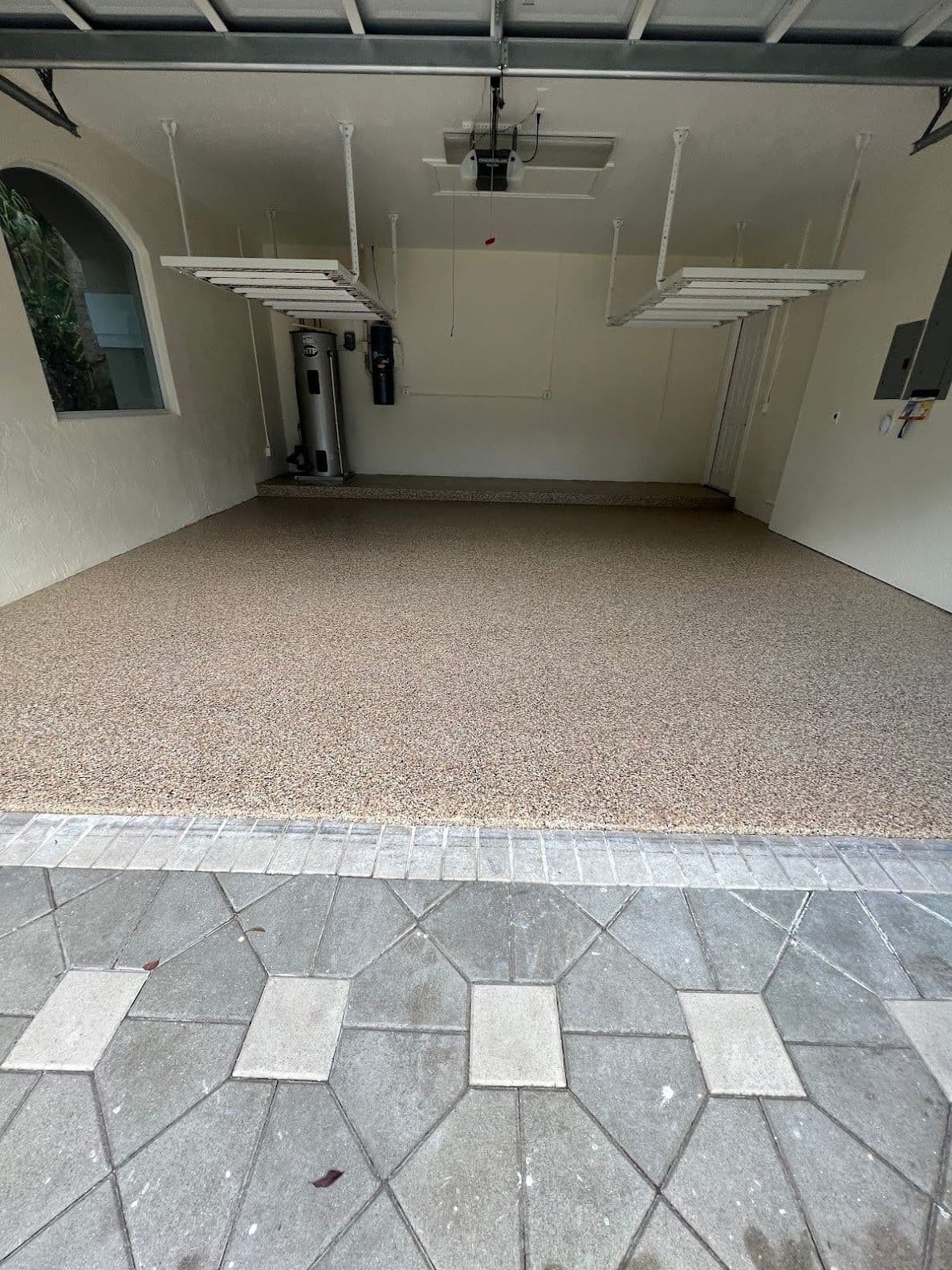
We had both of our garages done and an outdoor concrete platform. The crew was courteous and professional. Everyone from Nancy our salesperson to Patrick, the manager, Logan and his crew were outstanding. Our floors look fantastic and we were very happy we chose this company.
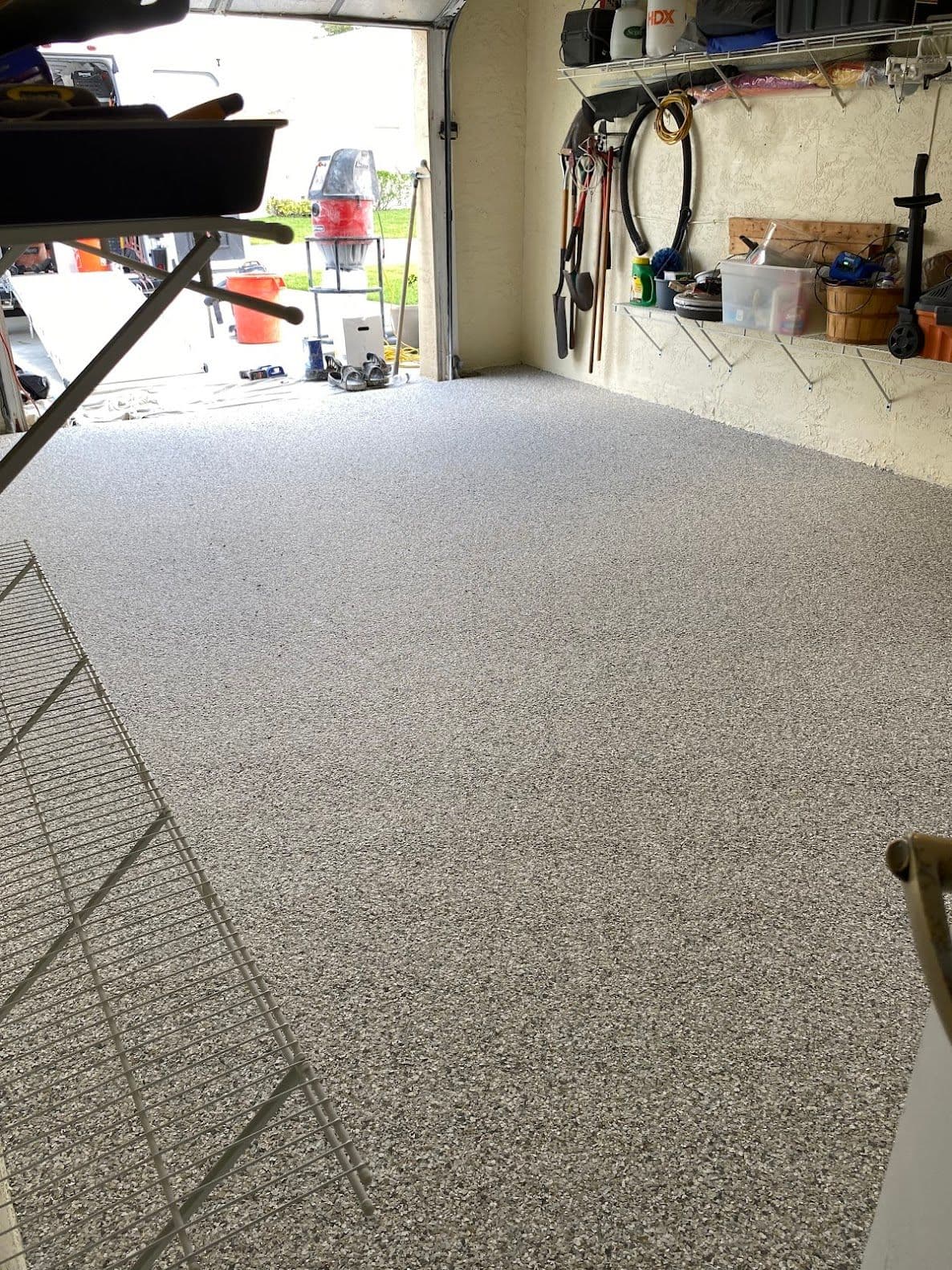
I am very pleased with the quality of work FloorTek has done for me. The two employees that did the actual work were very courteous, worked hard, and explained everything they were doing. Thank you for a great job.
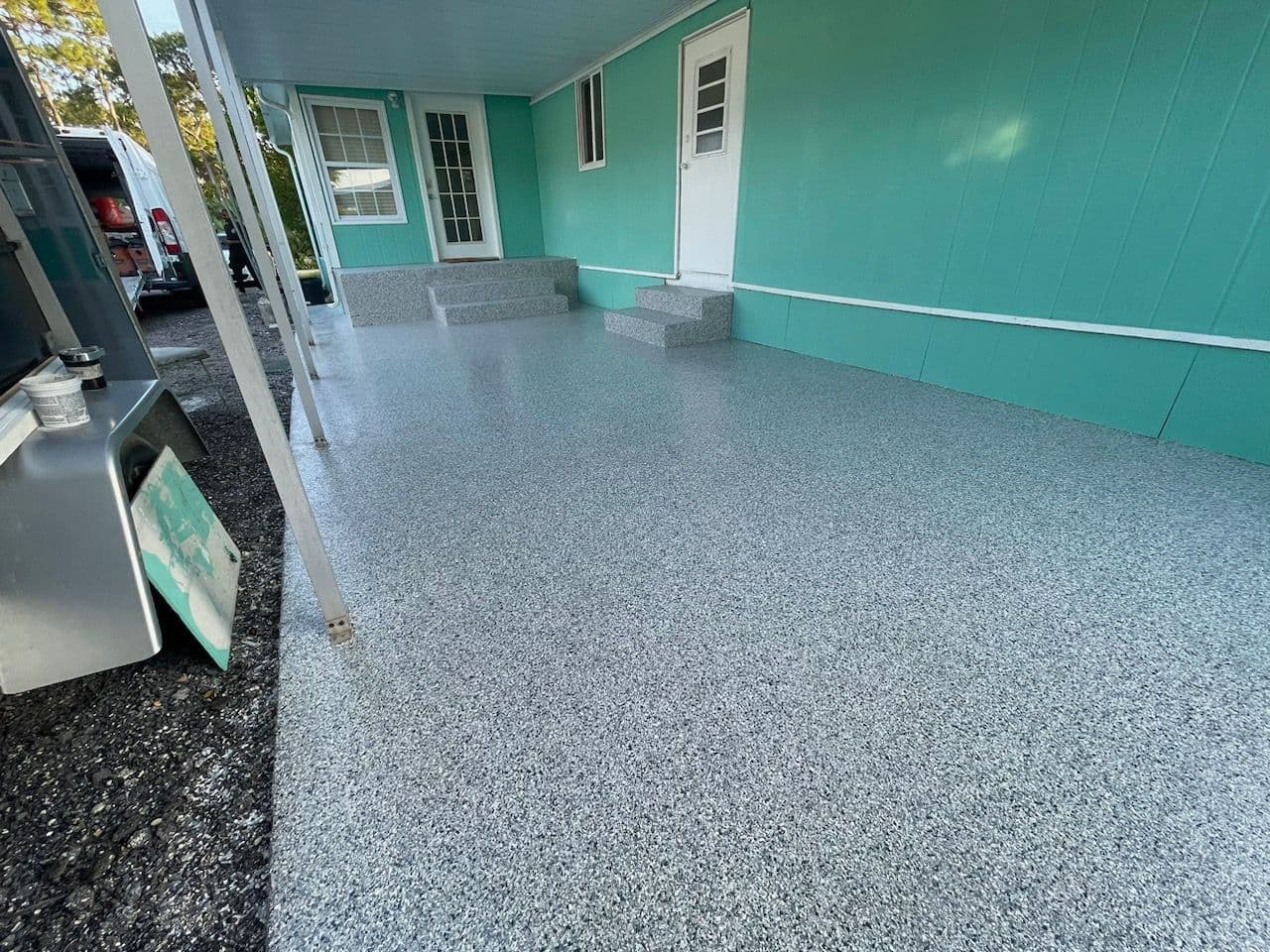
I was happy with the job Floortek did. Good customer communication and customer relationship. My old ugly porch was transformed and I love it. Nancy was very helpful throughout the process. Just know that rain may impact your schedule to make sure the products at highest quality during application.



Contact FloorTek Today