Avoiding Structural Failures: A Complete Guide to Common Problems with Concrete Floor Coatings in Houston, Texas
Homeowners and industrial facility managers throughout the Gulf Coast region routinely experience severe physical damage when using substandard concrete sealers. Understanding the root causes of common problems with concrete floor coatings allows property owners to choose superior protective materials, such as high-quality polyaspartic coatings, that withstand harsh regional conditions. Whether you live in the heart of Houston, out in Katy, or up in The Woodlands, local concrete foundations endure significant environmental and mechanical stress.
Discover why traditional coatings often fail and how advanced polyaspartic technology can give property owners confidence in protecting concrete for decades. Partnering with Floortek Coatings ensures long-lasting results across residential, commercial, and industrial properties, inspiring trust in our solutions.
Dominant Triggers Behind Surface Failures
Moisture Vapor Transmission and High Groundwater Tables
The coastal plain geography of Southeast Texas features high water tables and clay-rich soils that expand and contract, creating sub-slab moisture pressure beneath garages and facilities in Sugar Land, Pearland, and League City. Concrete appears solid but behaves like a sponge,e with microscopic capillaries that allow moisture to migrate upward and increase the risk of coating failure if not properly addressed.
The trapped moisture cannot escape into the atmosphere, so it physically detaches the coating from the underlying cement matrix. Industry research published by the University of Texas at Austin demonstrates that internal moisture gradients drive severe delamination cracking and paste spalling in concrete structures undergoing hydration. To resolve these regional threats, experienced installers must perform extensive testing before applying any protective material. Property owners who fail to address this sub-surface moisture will inevitably experience premature flooring failure, resulting in bubbling sheet layers that crack under regular residential use.
Inadequate Substrate Profiling and Mechanical Grinding Errors
A main reason behind coating failures is poor physical preparation of the base concrete slab before any liquid resin is poured. Many amateur contractors or DIY homeowners try to prepare concrete by throwing down weak muriatic acid solutions bought at local home improvement stores. This chemical approach often fails to open up the concrete pores deeply enough, leaving a smooth surface that cannot accept a solid mechanical bond. True performance requires mechanical diamond grinding to open up the concrete matrix and create an ideal profile.
The International Concrete Repair Institute recommends specific surface profiles for different coating weights, with a medium sandpaper texture as the professional standard. Skipping this mechanical preparation means the resin sits on the surface rather than bonding deeply, risking early failure when heavy vehicles park on the floor.
Contaminant Disruption from Embedded Oil and Chemicals
Concrete floors in automotive spaces, machine shops, and older homes around Pasadena and Conroe often absorb significant volumes of contaminants over decades of use. Fluids such as old motor oil, brake fluid, industrial grease, and previous acrylic sealers penetrate deep into the porous concrete structure. If these substances are not completely removed by thorough degreasing and mechanical diamond grinding, they act as effective bond breakers. Liquid polymers cannot wet out a surface that contains greasy oils or chemical residues.
The foreign molecules create a physical barrier that prevents the curing resin from contacting clean concrete silicates. Over time, these embedded contaminants migrate back toward the surface, slowly dissolving the chemical bond line from underneath. Even a small drop of hidden motor oil can cause a wide patch of coating to flake off under minor mechanical stress. When wondering, Can I apply concrete floor coatings myself, individuals must realize that removing deep industrial contaminants requires heavy industrial equipment and heavy-duty chemical neutralizers that standard rental stores do not supply to the public.
Structural Deconstruction of Common Coating Defect Symptoms
Peeling and Intercoat Delamination Mechanisms
Peeling represents one of the most obvious signs of flooring degradation across commercial and residential garages. This symptom occurs when the cured resin matrix physically separates from the concrete base, or when separate layers of a multi-coat system pull apart. Intercoat delamination typically occurs when the installer waits too long between coats, allowing the base layer to fully cure and slick over before the top layer can chemically cross-link.
In places with high ambient temperatures, such as Cypress and Tomball, liquid resins cure much faster than normal, shortening the critical window for applying subsequent coats. When this window closes, the new layer cannot form strong chemical bonds with the previous coat. Instead, it relies on weak mechanical adhesion that fails under minimal shear stress. Reviewing a detailed breakdown of common problems with concrete floor coatings highlights how sensitive multi-layered installations can be to environmental variables. To prevent these problems, technicians must carefully monitor curing times using precise regional environmental charts.
Pinholes and Outgassing Bubbles in Curing Polymers
Pinholes and miniature surface bubbles form when pockets of air or vapor escape from the porous concrete substrate during the liquid-curing phase. This physical process, called outgassing, follows basic thermodynamic principles. As solar radiation heats a concrete slab in Bellaire or Missouri City, the air trapped inside the expanding concrete matrix rises toward the surface. If a protective topcoat is curing too quickly, rising gas bubbles get trapped halfway through the wet film, forming surface blisters.
When these blisters eventually pop, they leave small circular voids known as pinholes. Research on coating film formation published by the National Institutes of Health shows that high ambient humidity and temperature variations often trigger severe defects and reduce chemical protection across coastal zones. Outgassing problems can ruin the look and strength of your floor, creating open points where water or automotive chemicals can reach the bare concrete underneath. Applying materials during cooling cycles helps reduce outgassing since the slab naturally draws air inward as it cools.
Discoloration, Chipping, and Hot Tire Adhesion Loss
Discoloration often appears as cloudy patches, uneven color tones, or white surface blushes on the floor. These problems can happen when liquid resins are mixed unevenly or exposed to high moisture during the critical chemical reaction phase. Chipping occurs when a brittle material cracks and breaks away from the concrete after being struck by heavy tools, lawn mowers, or dropped objects. Hot tire pickup is another frustrating problem for vehicle owners across Houston, Texas.
When a vehicle drives down hot highways, its tires absorb substantial thermal energy from the asphalt. Parking that hot vehicle on low-grade flooring allows the tires to pass that thermal energy into the polymer layer. This intense heat softens the coating, while the vehicle's weight presses the tire tread deep into the soft material. When the driver backs out the next morning, the tire pulls the coating right off the concrete slab. This happens because the bond between the tire and the soft coating is stronger than the bond between the coating and the concrete floor. Selecting a superior Floor Coating Service in Houston, Texas, ensures your floor can withstand intense heat from vehicles without peeling or lifting.
The Chemical Vulnerability of Standard Epoxy Formulations
Brittle Chemistry and Thermal Shock Cracking
Standard epoxy floor materials use basic resin networks that become incredibly stiff and brittle upon full cure. This rigid molecular structure lacks the elongation and flexibility needed to adapt to changing temperatures throughout the year. Concrete slabs in Kingwood and Humble undergo constant movement due to heavy seasonal rains, clay soil shifting, and extreme drying cycles. When a concrete slab expands or contracts, an inflexible epoxy layer cannot move with it. This physical tension creates small hairline cracks across the floor surface that expand over time.
Furthermore, washing down a garage floor with cool water on a scorching summer afternoon causes a sudden temperature drop known as thermal shock, which can cause brittle epoxy to split. When comparing epoxy and polyurethane concrete floor coatings, the structural limitations of basic epoxy become clear.
Standard epoxy typically underperforms compared to advanced systems for several reasons:
Epoxy resins possess minimal tensile flexibility, leading to regular cracking when concrete foundations shift.
Epoxy materials cure very slowly, requiring days of downtime before you can park vehicles or walk on the floor.
Epoxy layers have low thermal tolerance, making them highly vulnerable to hot tire pickup and heat damage.
Epoxy bonds degrade quickly when exposed to standing water or harsh automotive fluids.
UV Degradation and Aesthetic Ambering of Epoxy Layers
Standard epoxy resins are highly vulnerable to ultraviolet radiation from natural sunlight. When exposed to UV light, the chemical bonds within standard epoxy break down in a process called photo-oxidative degradation. This breakdown changes the color of the floor, turning clear or light gray epoxies into an unattractive yellowish-brown amber color. This yellowing happens quickly on garage edges, outdoor patios, or near windows where sunlight regularly hits the floor.
In addition to turning yellow, UV exposure makes epoxy brittle and chalky, causing it to lose its protective strength over time. The top layer breaks down into a fine powder that washes away during regular cleaning cycles. To understand how long-lasting materials behave over time, read about concrete floor coating warranties to see why standard epoxy lacks long-term UV protection. Using non-fading polyaspartic coatings ensures your floor stays clean, bright, and strong even under intense Texas sunlight.
Advanced Mitigation Strategies: Engineering the Ultimate Solution
The Necessity of Concrete Moisture Vapor Barriers
To successfully stop ground moisture from destroying a new floor, installers must handle sub-slab moisture vapor transmission directly. In humid climates like Houston, high groundwater levels constantly push vapor up through concrete floors. To prevent moisture damage, we basically have to add an extra layer called a vapor barrier. This specialized barrier layer blocks rising moisture molecules before they can reach your decorative topcoats.
Industry research from Iowa State University shows that sub-slab vapor retarders significantly reduce indoor humidity levels and prevent dangerous hydrostatic pressure buildup. Without this essential barrier layer, even the thickest industrial coatings can bubble and peel away over time. Laying down a dedicated vapor barrier creates a secure, long-lasting bond that protects your flooring investment for decades. This intermediate layer keeps your beautiful topcoats perfectly dry and firmly anchored to the floor below.
Diamond Grinding Protocols for Optimal Coating Longevity
Mechanical diamond grinding is the premier method for professional floor prep in the industry. Our teams use heavy-duty walk-behind grinding machines fitted with industrial diamond-segmented plates to profile the concrete surface. This intensive process removes weak surface concrete, clears out old paint, and profiles the hard concrete floor below. Diamond grinding creates a clean, rough texture that matches the International Concrete Repair Institute's exact CSP standards.
This rough profile gives liquid polyaspartic resins the perfect texture to anchor deep into the concrete floor. Grinding also uncovers hidden air pockets, allowing installers to patch holes and fix cracks before applying any coatings. Taking the time to prep the floor properly is the best way to extend the lifespan of coated concrete floors and prevent peeling before it starts. Skipping this mechanical grinding process and using acid washing instead often leads to early floor failure.
Why Floortek Coatings Delivers High-Performance Flooring
The Multi-Layer Polyaspartic Advantage
Floortek Coatings provides advanced concrete sealing systems that eliminate the headaches associated with old-fashioned epoxy paint. Our modern polyaspartic formulas are engineered to be 10X stronger than epoxy, providing superior durability for busy residential and industrial spaces. We choose to use high-grade aliphatic polyaspartic technology because it cures quickly and forms tight, dense polymer chains. This advanced design makes our coatings completely UV Stable, meaning your floor will never turn yellow or fade under bright sunlight.
Our resilient floors are also highly chemical-resistant, standing up to motor oil, gasoline, brake fluids, and harsh cleaning products without staining or softening. Our efficient process allows for a complete 1-Day installation, letting you use your garage or commercial space again in just twenty-four hours. We are proud to offer factory-direct value and an incredible Life-of-home warranty that guarantees your floors will look fantastic for decades. Plus, new customers can save big right now with an exclusive offer: 30% off the first installation of their new floor system.
Local Applications and Regional Texas Operations
Our professional team serves residential and commercial properties throughout the broader Houston metro region, including Spring, Tomball, Cypress, and Katy. If you want to see our beautiful past projects, browse through our online Floortek Gallery to view high-resolution transformations. You can read more about us to learn about our high material standards, certified team, and modern installation equipment. We manage a regional office at 4109 Katy Hockley Rd #1, Katy, TX 77493, enabling us to provide prompt service throughout the area. To see all the areas we cover, check our full list of Floortek Locations online. You can speak with our team directly by calling our main office line at 844-844-4164 or reaching our local branch at 1-346-550-9307 to schedule your home consultation today.
Our team provides a full suite of protective flooring options tailored to handle tough Texas weather conditions. We deliver a specialized one-day garage floor coating that updates your garage with an ultra-durable finish in just 24 hours. For outdoor spaces, our high-quality patio coating service protects your outdoor concrete from harsh UV rays and heavy rain. We also provide a durable pool deck coating service that stays bright and comfortable under the hot afternoon sun.
Homeowners looking to boost curb appeal can choose our professional driveway or sidewalk coating service to keep outdoor pathways clean and strong. For interior projects, our specialized Basement coating service prevents dampness and mold growth in low-elevation spaces. Every single [Floor Coating Service](https://www.floortekcoatings.com/Floor Coating Service) we offer is designed to deliver maximum value, lasting beauty, and unmatched protection.
To achieve an exceptional finish, clients can explore our wide selection of Colors and Flake Options to find the perfect color scheme for their home. Our technical staff can explain the benefits of Our Coating Products so you can choose the best system for your property. When researching the best types of concrete floor coatings for garage floors, you will see that polyaspartic materials outperform old-fashioned epoxy in every category. If you want to protect below-ground concrete, installing a durable concrete coating in basement spaces will prevent moisture from causing premature wear. Hiring a reliable, professional company for concrete floor coating services ensures every step of the installation is handled with industrial tools and deep technical expertise.
Our modern formulas are engineered to meet strict environmental and indoor safety standards. Property owners can safely install the safest concrete floor-coating products for indoor use without worrying about chemical fumes or unpleasant odors during application. If your current floor has an old, failing epoxy coating, our team can handle the full reapplication of concrete floor coating systems to deliver a pristine surface. When looking at the full cost range of high-quality concrete floor coating options, remember that choosing long-lasting materials saves you from expensive repairs down the road.
If you are interested in a unique look, we offer decorative concrete floor coatings that mimic stone or tile without any weak grout lines. Our team focuses on providing sustainable finishes and offers eco-friendly concrete floor coating options that protect your slab while minimizing your environmental footprint. To learn more or get started, contact us today for a free property assessment from our flooring experts.
Frequently Asked Questions:
What triggers the most common problems with concrete floor coatings on garage surfaces?
Sub-slab moisture transmission triggers most surface defects. High hydrostatic pressure forces water vapor upward through concrete capillaries, which breaks the polymer adhesive bond. This moisture action leads to peeling, bubbling, and early floor failure. Property owners must choose advanced materials to avoid these issues.
To stop these failures, Floortek Coatings applies advanced polyaspartic formulas that resist extreme sub-surface vapor pressure. Traditional epoxy materials trap water vapor and peel away quickly. The Iowa State University Research Guide explains how water can trigger common problems with concrete floor coatings.
Can high humidity levels accelerate common problems with concrete floor coatings?
YES. Excessive atmospheric humidity stops standard floor coatings from curing properly. High moisture in the air causes cloudiness, color fading, and weak chemical bonds. This environmental issue ruins the floor's look and shortens its lifespan. Proper humidity control is necessary during installation.
Our team at Floortek Coatings utilizes advanced polyaspartic systems that handle high humidity without losing strength. Standard epoxy coats break down when applied in humid weather. The National Institutes of Health Coating Study shows how humidity triggers common problems with concrete floor coatings.
Does poor surface prep cause common problems with concrete floor coatings over time?
YES. Inadequate floor preparation is a leading cause of early coating failure. Applying liquid resins over a weak, powdery laitance layer or old oil stains prevents the formation of a strong mechanical bond. This mistake causes the floor to peel under heavy vehicle weight. Unprepped floors cannot hold coatings.
Professional diamond grinding completely avoids these issues. Floortek Coatings utilizes heavy industrial diamond grinders to create a clean, rough profile. This process ensures our advanced polyaspartic formula anchors deep into the concrete. The University of Texas at Austin Research Library links poor prep to common problems with concrete floor coatings.
What are the common problems with concrete floor coatings, and how can they be avoided?
Peeling, bubbling, and yellowing are frequent flooring defects. Property owners can avoid these issues by skipping brittle epoxy and choosing professional diamond grinding with high-grade polyaspartic formulas. Adding a vapor barrier stops rising moisture from breaking the bond line. Modern polyaspartic floor installations protect surfaces perfectly.
Choosing Floortek Coatings helps property owners completely avoid early flooring damage. Our advanced polyaspartic flooring is engineered to be 10X stronger than epoxy. The Iowa State University Moisture Guide explains how preparation stops common problems with concrete floor coatings.
Why do traditional epoxy systems face common problems with concrete floor coatings?
Traditional epoxy materials are naturally rigid and brittle. This outdated chemical structure cannot handle the natural expansion and contraction of shifting concrete floors. Epoxy also breaks down under hot temperatures and changes color when exposed to natural sunlight. These flaws cause major surface delamination.
Advanced polyaspartic formulas solve these chemical issues. Floortek Coatings provides flexible, UV-stable systems that move with your floor. This advanced technology completely prevents cracking and hot tire pickup. The National Institutes of Health Material Report outlines why old epoxy faces common problems with concrete floor coatings.
Do hairline foundation cracks lead to common problems with concrete floor coatings?
YES. Unfixed foundation cracks expand over time and tear brittle floor coatings apart. Shifting soils and changing temperatures cause concrete slabs to move constantly. Rigid floor paints crack along these lines because they lack the elasticity of modern formulations. Proper repairs must happen before application.
Our team at Floortek Coatings repairs all cracks using industrial polyurea fillers before coating. Our flexible polyaspartic layers stretch over minor slab movements without tearing. The University of Texas at Austin Structural Study shows how moving concrete creates common problems with concrete floor coatings.
Is hot-tire pickup a common problem with concrete floor coatings?
YES. Hot tire pickup regularly destroys lower-grade epoxy coatings. Heat from vehicle tires softens weak polymers, causing the tread to stick to the floor. When the vehicle moves, the tire pulls the soft coating off the concrete floor. This leaves bare concrete fully exposed.
Our advanced polyaspartic flooring completely prevents hot tire pickup. Floortek Coatings installs heat-resistant finishes that easily handle hot tires. This durability keeps your garage floor clean and beautiful for decades. The Iowa State University Engineering Report explains why hot tires cause common problems with concrete floor coatings.
How do industrial facilities deal with common problems with concrete floor coatings?
Industrial warehouses use heavy mechanical grinding and high-grade polyaspartic coatings to prevent floor failures. These commercial spaces require robust chemical resistance and impact resistance to withstand forklift traffic and heavy equipment. Weak epoxy paint peels quickly under heavy traffic. Industrial floors require extreme product resilience.
Our heavy-duty flooring at Floortek Coatings provides exceptional strength for industrial spaces. Our premium polyaspartic formulas resist heavy impacts, abrasions, and chemical spills. The National Institutes of Health Industrial Film Review demonstrates how advanced polymers address common problems in concrete floor coatings.
Will proper concrete moisture testing eliminate common problems with concrete floor coatings?
YES. Pre-installation moisture testing identifies high vapor levels before they can ruin your new floor finish. Checking the relative humidity allows installers to use a dedicated vapor barrier. This step stops ground moisture from breaking the coating bond. Testing ensures long-term foundation health.
Every project from Floortek Coatings includes thorough slab testing. We apply high-performance polyaspartic systems designed to handle tough moisture conditions. The Iowa State University Testing Framework reveals how testing helps avoid common problems in concrete floor coatings.
Can sub-slab outgassing induce common problems with concrete floor coatings during installation?
YES. Outgassing occurs when air escapes from the pores of concrete as temperatures rise. This moving air creates tiny bubbles and pinholes in wet, slow-curing floor paints. These holes ruin the floor's look and create weak spots in your floor protection. Trapped air damages surface seals.
We apply our fast-curing polyaspartic coatings during cooling cycles to prevent outgassing. Floortek Coatings ensures a perfectly smooth finish without air bubbles. The University of Texas at Austin Materials Report explains how outgassing causes common problems with concrete floor coatings.
Ready to transform your home with a permanent concrete coating solution?
Don't let peeling epoxy ruin your garage floor. Contact Floortek Coatings today to lock in your exclusive 30% discount and secure a beautiful, life-of-home guaranteed floor in just one day!
FREE In-Home Estimate
Plus 30% Off
Testimonials
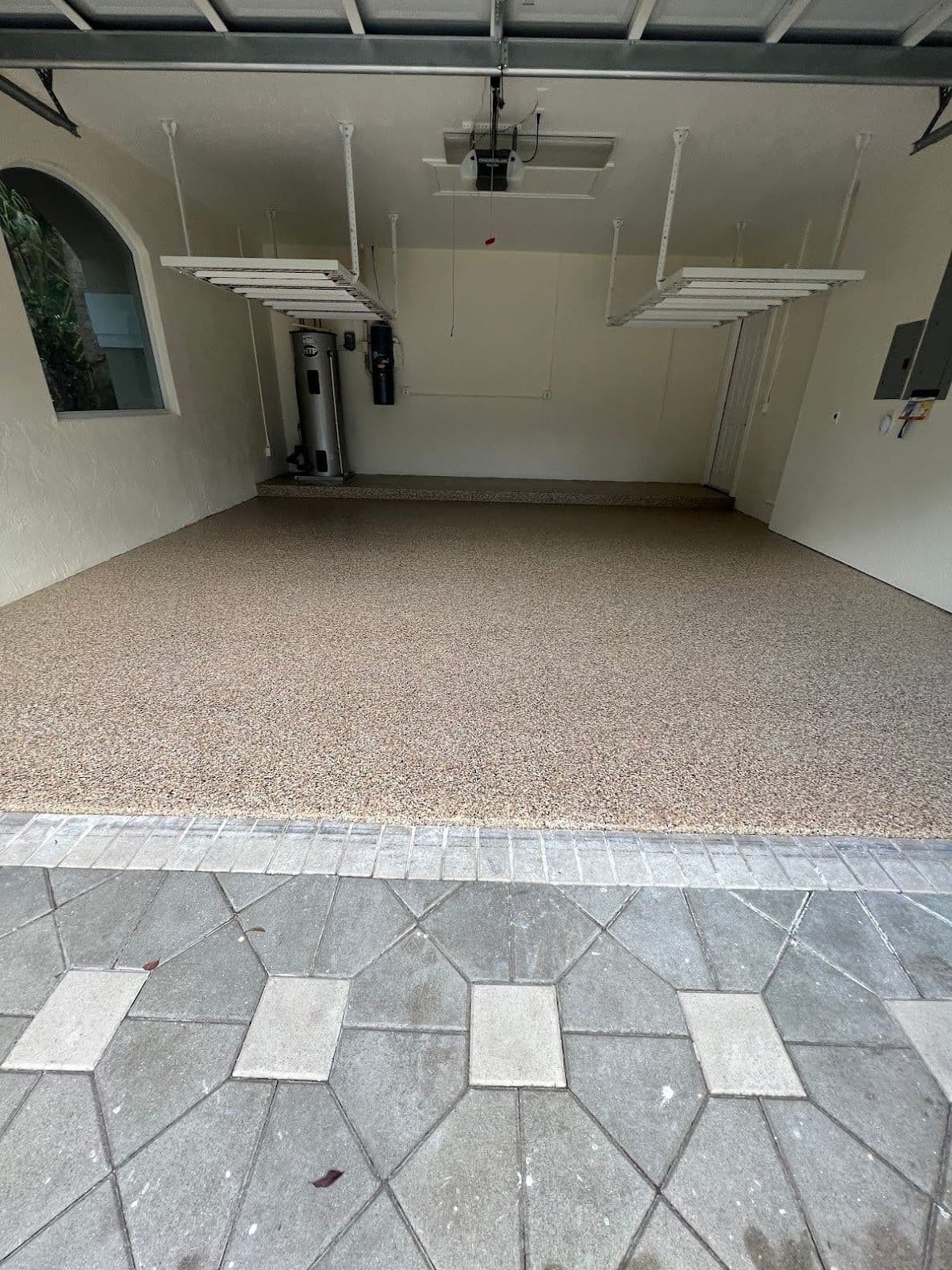
We had both of our garages done and an outdoor concrete platform. The crew was courteous and professional. Everyone from Nancy our salesperson to Patrick, the manager, Logan and his crew were outstanding. Our floors look fantastic and we were very happy we chose this company.
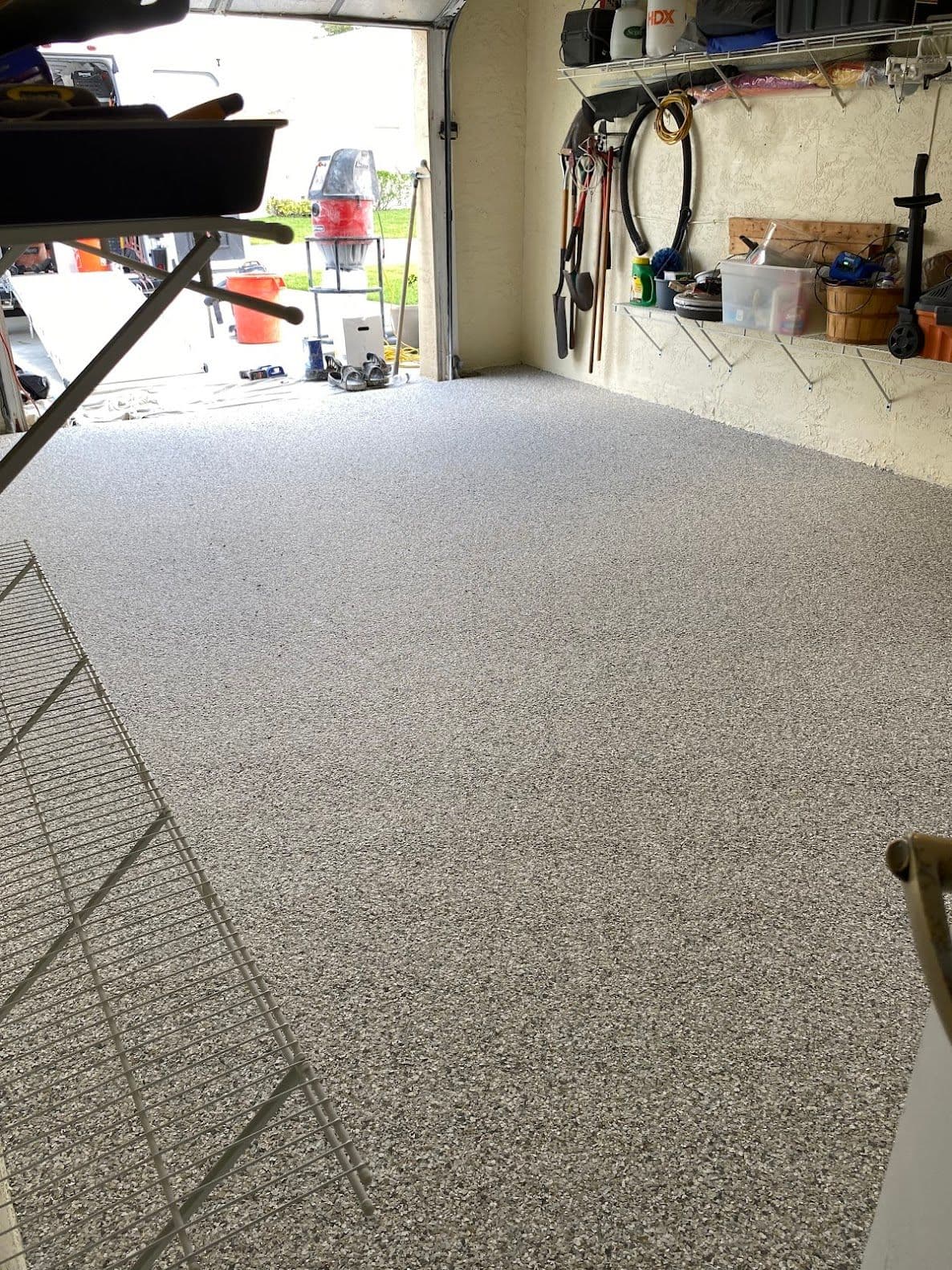
I am very pleased with the quality of work FloorTek has done for me. The two employees that did the actual work were very courteous, worked hard, and explained everything they were doing. Thank you for a great job.
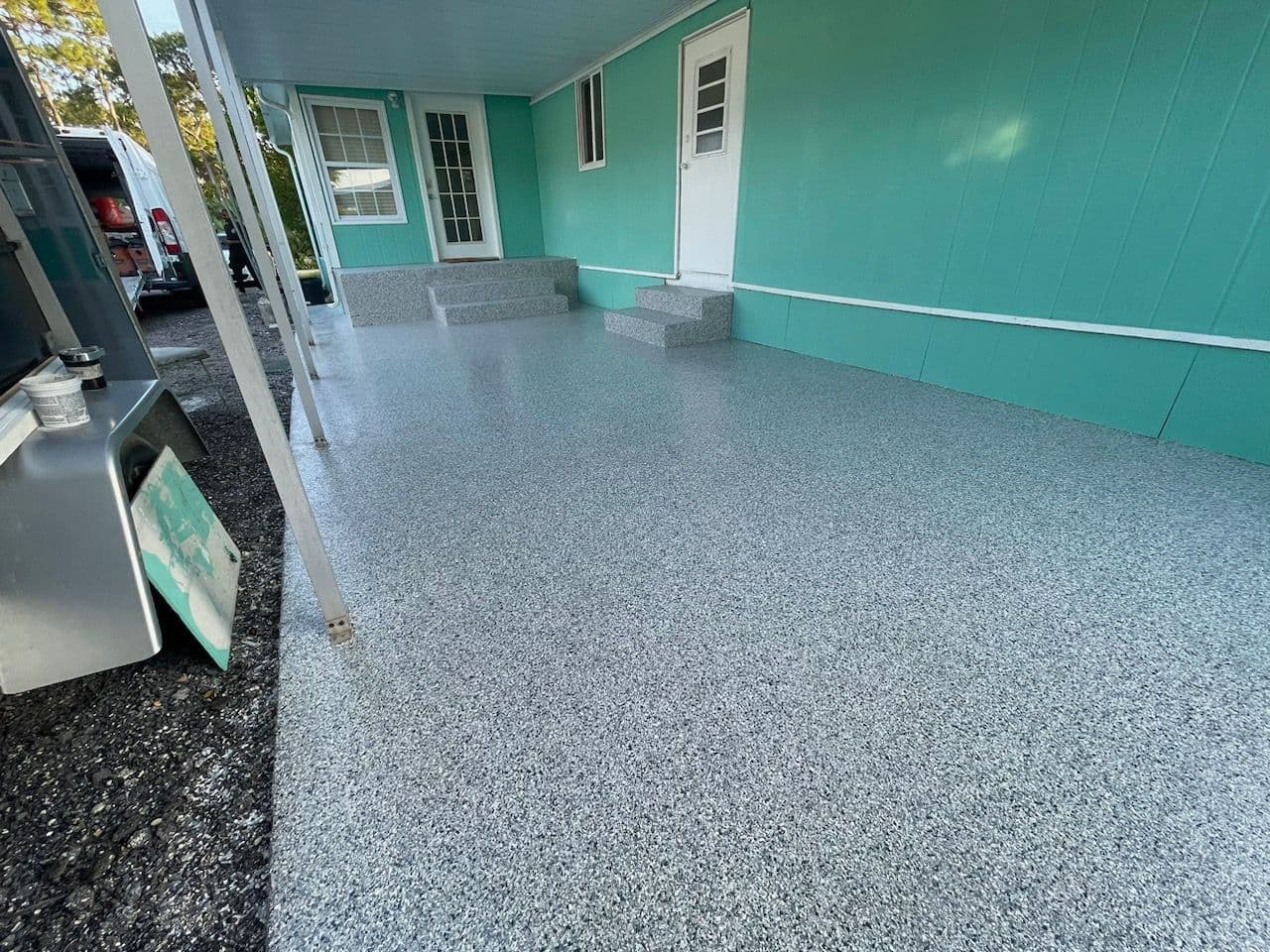
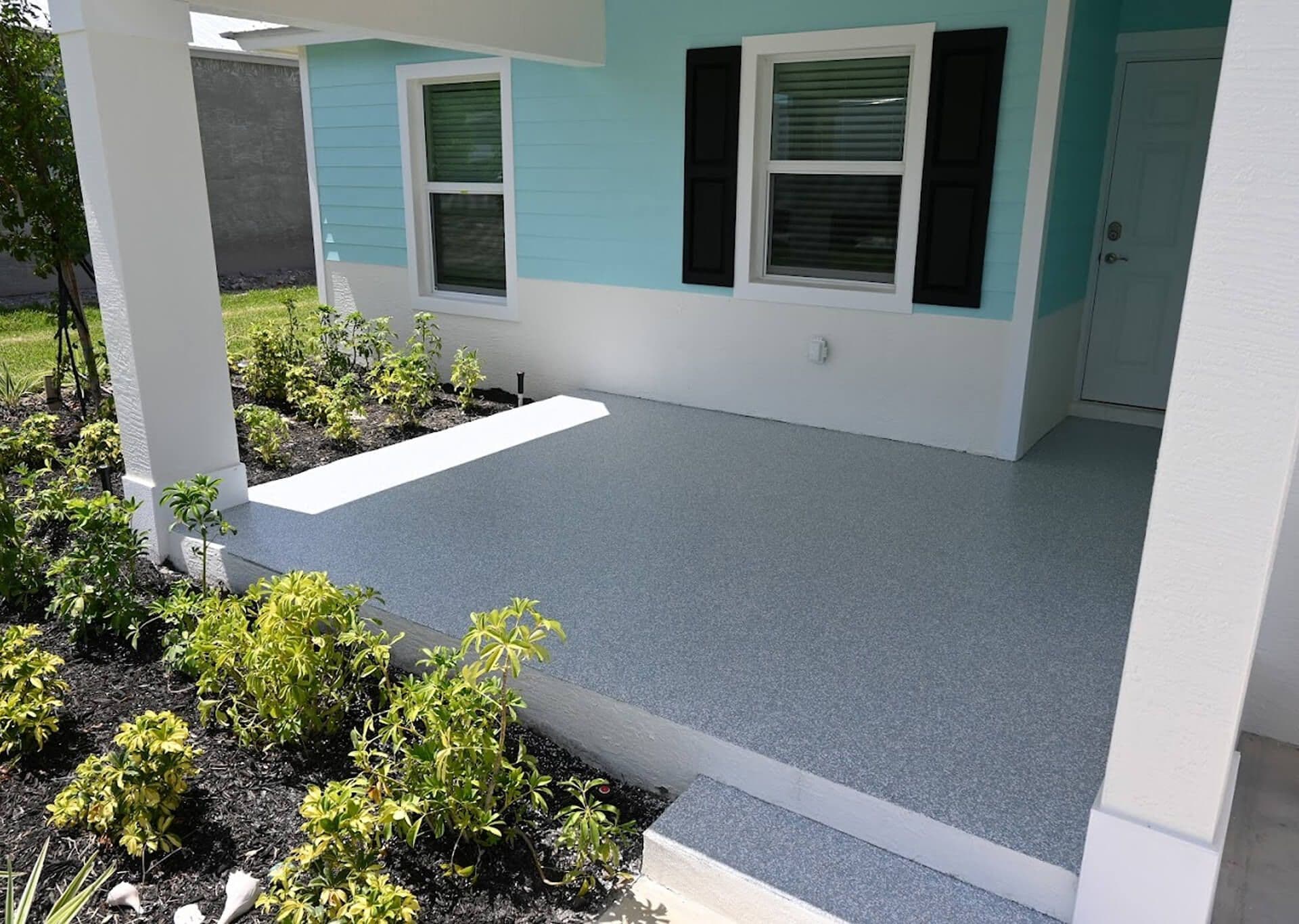
I was happy with the job Floortek did. Good customer communication and customer relationship. My old ugly porch was transformed and I love it. Nancy was very helpful throughout the process. Just know that rain may impact your schedule to make sure the products at highest quality during application.



Contact FloorTek Today