High-Performance Concrete Engineering: The Definitive Guide to One-Day Flooring Installation in Houston, Texas
Achieving a permanent transformation of the concrete surface requires a precise mechanical profile and sophisticated polymer engineering. A professional one-day flooring installation delivers an immediate return to service without compromising structural adhesion or long-term durability.
The Technical Challenges of Resinous Architectural Overlays
Concrete slabs are dynamic, porous substrates composed of cured Portland cement, water, and mineral aggregates. Over time, bare concrete surfaces are subject to severe mechanical wear, chemical exposure, and environmental degradation. Applying a liquid chemical protective layer requires a deep understanding of substrate physics. Resinous finishes protect industrial and residential concrete, but traditional systems face distinct engineering challenges. Delamination, bubbling, and cracking occur when standard materials fail to bond properly at the molecular level. For decades, traditional contractors utilized standard formulations that required extended cure times. These prolonged schedules left applications exposed to atmospheric dust, temperature fluctuations, and moisture interference before cross-linking could complete. Achieving successful protection requires rapid polymer curing that locks into the concrete profile before external environmental variables disrupt film formation.
Understanding Surface Porosity and Mechanical Profiles
Concrete surfaces feature a complex matrix of interconnected capillaries formed during the initial hydration phase, as documented by the National Institute of Standards and Technology (NIST). These microscopic voids permit the migration of gases and liquids through the slab. To achieve high adhesion, a liquid application must penetrate these capillaries and anchor itself deep within the concrete profile. Standard topcoats that merely sit on top of the concrete are vulnerable to mechanical shearing and delamination under heavy vehicle traffic. Achieving the proper International Concrete Repair Institute (ICRI) Concrete Surface Profile (CSP) is foundational to eliminating installation failures. Mechanical profiling opens up the pore structure, removing weak surface laitance and exposing sound aggregate. This preparation creates a high surface area for mechanical interlocking, transforming the smooth concrete into a rough texture that accepts high-solids polymer resins.
The Role of Chemical Adhesion vs. Mechanical Bonding
A durable floor coating requires a combination of mechanical interlocking and chemical cross-linking. When a high-solids polymer flows into open concrete capillaries, it establishes a physical root system. Once the chemical reaction triggers cross-linking, the liquid transforms into an ultra-dense solid phase that cannot be separated from the concrete matrix. This bond strength typically exceeds the concrete's cohesive tensile strength. If a mechanical load or shear stress is applied to the surface, the concrete subfloor will fracture before the bond line between the polymer and the substrate separates.
Overcoming Houston Climate Extremes and Substrate Moisture
The geographical and environmental realities of Southeast Texas present significant obstacles for resinous applications. Slabs in Houston, Texas, experience chronic environmental stress from high atmospheric humidity, intense solar radiation, and unstable clay soils. Municipalities across the region—including Katy, Sugar Land, The Woodlands, Cypress, Pearland, League City, Conroe, Pasadena, and Baytown—share a common architectural vulnerability: high ambient moisture and shifting foundations. When atmospheric temperatures fluctuate rapidly, concrete slabs absorb and release thermal energy, causing volumetric expansion and contraction. Standard coatings are brittle and break under this thermal movement, leading to widespread micro-cracking and eventual delamination.
The Physics of Thermal Shock in Southeast Texas
In coastal Texas environments, outdoor surfaces experience intense solar heating followed by sudden cooling downpours. This environmental shift causes rapid thermal shock within the concrete matrix. A protective layer must possess an optimal modulus of elasticity that allows it to expand and contract in unison with the underlying concrete substrate. If the applied layer lacks sufficient flexibility, the internal shear stresses generated at the bond line will crack the polymer away from the surface. Advanced polyaspartic chemistry is engineered for high elongation, allowing it to withstand regional thermal cycles without fracturing.
Regional Soil Compaction and Slab Movement
The clay soils prevalent throughout Harris County and Fort Bend County swell significantly when wet and shrink during dry summer spells. This constant subgrade movement leads to minor shifts and settling in residential foundations. Brittle resinous overlays cannot bridge the fine hairline fractures that develop during these minor shifts. A flexible polymer system absorbs these micro-movements, maintaining a seamless protective barrier across the entire slab footprint. To view examples of these transformations across the region, you can browse the Floortek Gallery to see completed residential projects.
Material Mechanics: Why Epoxy Substantially Underperforms Polyaspartic Resins
For many years, epoxy was the standard choice for residential and industrial garage floor applications. However, modern polymer development has rendered standard epoxy obsolete due to its inherent structural limitations. Epoxy coatings cure through a rigid, slow cross-linking process that makes them highly susceptible to brittle fracturing, chemical degradation, and thermal failure.
The Degradation of Brittle Cross-Linked Epoxy Networks
Epoxy matrices possess a molecular structure that lacks internal flexibility. When subjected to impact from dropped tools or heavy mechanical loads, the rigid epoxy lattice cannot distribute the force, resulting in chipping, cracking, and localized delamination. Furthermore, epoxy exhibits poor thermal stability. When vehicle tires become hot from driving on regional highways, the localized heat softens the epoxy coating. As the tires cool and contract overnight in a garage, the softened epoxy adheres to the tire tread. When the vehicle is driven out the next morning, the tire pulls the epoxy clean off the concrete surface. This hot-tire pickup is a primary defect associated with an outdated one-day epoxy garage floor system.
Chemical Incompatibility and Yellowing Under Solar Radiation
Standard epoxy resins are highly vulnerable to ultraviolet (UV) radiation. Exposure to sunlight triggers a chemical breakdown known as photo-oxidative degradation, which destroys the polymer bonds. This causes the coating to chalk, lose its gloss, and turn an amber or yellowish color over time. Additionally, epoxy has limited resistance to modern automotive fluids, industrial solvents, and corrosive chemicals. Common compounds such as brake fluid, gasoline, and battery acid can easily soften and stain an epoxy surface, leaving the concrete substrate vulnerable to long-term structural deterioration. Choosing a modern garage floor coating company helps property owners avoid these material limitations.
Advanced Moisture Vapor Mitigation via Integral Capillary Barrier Seals
Moisture vapor transmission represents one of the primary catalysts for protective coating failure in coastal environments. Slabs built on grade absorb groundwater through capillary action from the high water tables typical of the Texas Gulf Coast. As heat draws this moisture upward, it transitions into a gaseous state, creating significant upward pressure against non-breathable surface films. This pressure accumulates at the bond line, breaking the adhesion of weak coatings and forming large blisters. According to technical bulletins from the National Institutes of Health (NIH), unmitigated vapor pressure causes catastrophic adhesive failures across various resinous systems.
Implementing the Vapor Barrier Layer
To prevent moisture damage and subsequent coating failure, we must address the slab's internal moisture vapor emission rate. To prevent moisture damage, we basically have to add an extra layer called a vapor barrier. This specific barrier is applied directly to the mechanically profiled concrete before the decorative or protective coats are introduced. The integral vapor barrier penetrates the capillary channels and reacts within the pores to form a tight, impermeable shield that blocks the upward migration of moisture. This crucial layer ensures that subsequent coats remain permanently bonded and insulated from the hydrostatic forces acting deep within the concrete slab. Homeowners researching basement floor coatings or ground-level slabs must prioritize this mitigation phase to prevent long-term delamination.
The Five-Phase Precision Process of a 1-Day Installation
Executing a flawless surface transformation within a tight 24-hour window requires an optimized, systematic approach. Every phase must be precisely timed and executed using commercial-grade equipment and specialized chemistry. This accelerated timeline is achieved by exploiting the rapid cross-linking capabilities of advanced polyaspartic esters, allowing property owners to regain full access to their facilities within a single day. This rapid process is the core of a modern-day flooring service.
Phase 1: Mechanical Profiling and Surface Contaminant Removal
The installation begins with rigorous mechanical profiling of the concrete slab using heavy planetary diamond grinding machinery or shot-blasting equipment. This phase removes all existing curing compounds, old sealers, oils, and weak surface laitance. Technicians carefully guide the equipment across the entire floor, ensuring a uniform surface profile that meets strict ICRI standards. High-efficiency dust extraction systems are coupled directly to the grinding equipment to capture airborne particulates, ensuring a clean, dust-free environment inside the facility.
Phase 2: Crack Repair and Deep Subfloor Deep-Patching
Once the slab is profiled and vacuumed clean, all structural cracks, spalls, and pitted areas are inspected. Technicians use a high-strength, rapid-curing polyurea joint filler to pack the voids. This specialized patching compound penetrates deep into the fractures, binding the detached concrete walls together at a molecular level. Within minutes, the patch cures harder than the surrounding concrete, allowing installers to grind it flush with the rest of the slab, creating a perfectly smooth, monolithic canvas.
Phase 3: Application of the Basecoat and Moisture Vapor Barrier
With the subfloor perfectly leveled and clean, the primary basecoat is mixed and applied. In scenarios with elevated sub-slab moisture, the specialized moisture mitigation layer is integrated into this phase. The basecoat consists of a premium, high-solids polyaspartic resin that is evenly spread across the concrete surface using specialized squeegees and rollers. This low-viscosity material penetrates deeply into newly formed pores in concrete, forming a robust root system that ensures maximum adhesion.
Phase 4: Full Broadcast of Decorative Polymeric Flakes
Immediately following the even distribution of the basecoat, a dense layer of decorative vinyl color flakes is broadcast across the wet resin. The flakes are thrown high into the air, allowing them to fall vertically and distribute evenly across the entire surface. Installers broadcast the flakes to absolute saturation, completely covering the wet basecoat. This heavy-flake layer provides structural bulk to the system, increasing impact resistance and adding visual depth to the floor design. Property owners can customize these patterns by selecting specific Colors and Flake Options to match their design preferences.
Phase 5: Scraping, Re-Vacuuming, and Topcoat Execution
After the basecoat achieves initial cure—which typically takes under two hours—the excess, unbonded flakes are swept and reclaimed. Technicians then use flat steel scrapers to shave the floor in multiple directions, flattening any vertical flakes to ensure a smooth, comfortable surface texture. The floor is thoroughly vacuumed a final time to remove all fine dust particles. Finally, a clear, high-solids polyaspartic topcoat is mixed and applied over the flake matrix. This final protective shield locks the system together, creating an exceptionally durable finish. This comprehensive method offers a superior alternative to standard options from generic floor-coating companies.
Structural Concrete Prep: The Mechanics of Shot-Blasting and Diamond Grinding
Achieving a lifetime bond between a protective polymer and a concrete slab depends entirely on the mechanical preparation phase. Acid etching, a chemical preparation method often used by amateur installers, is fundamentally insufficient because it fails to remove deep-seated oil contaminants and often leaves acidic residues that weaken the concrete matrix. Professional installers rely exclusively on mechanical abrasion to prepare the substrate.
Planetary Diamond Grinder Mechanics
Planetary diamond grinders utilize horizontally rotating discs fitted with specialized diamond segments. As these multi-headed discs spin under heavy downward pressure, the diamond matrices shear away the top layer of weak concrete. Installers select specific diamond-grit configurations based on the hardness of the concrete slab, which can vary widely between older and newer properties in Texas. Coarse-grit diamonds strip tough existing coatings and cut into hard concrete, while finer-grit segments smooth the surface profile to ensure an even application of the liquid base coat.
The Shot-Blasting Method for Industrial Slabs
For heavy-duty commercial or highly contaminated industrial surfaces, shot blasting is often used. This process involves propelling thousands of tiny steel spheres at high velocity against the concrete surface. The impact of the steel shot cleanly fractures away brittle laitance, deeply embedded oils, and tightly adhered residues. The machine immediately vacuums up the steel shot and separated debris, recycling the steel spheres back into the blasting chamber while depositing the dust into a multi-stage filtration collector. This method creates an aggressive, highly textured profile that is ideal for heavy-polymer bonding.
Environmental Particle Capture and Dust Control
To maintain structural safety and air quality, professional preparation equipment must utilize integrated containment filtration systems. Industrial vacuums equipped with High-Efficiency Particulate Air (HEPA) filters are connected directly to the grinders and shot-blasters. This setup vacuum-seals the tool deck against the concrete surface, capturing up to 99.97% of airborne crystalline silica dust down to 0.3 microns. This process complies with federal occupational health regulations and prevents fine concrete dust from settling into HVAC systems or adjacent residential structures.
Residential, Commercial, and Exterior Architectural Coating Classifications
High-performance polyaspartic systems are highly versatile and can be tailored to protect a wide array of environments. Each specific architectural zone features unique performance demands, ranging from heavy vehicular loads to intense sunlight exposure. Selecting an experienced floor coating company ensures that the appropriate system configuration is applied to each environment.
Garage Environments and Automotive Workspaces
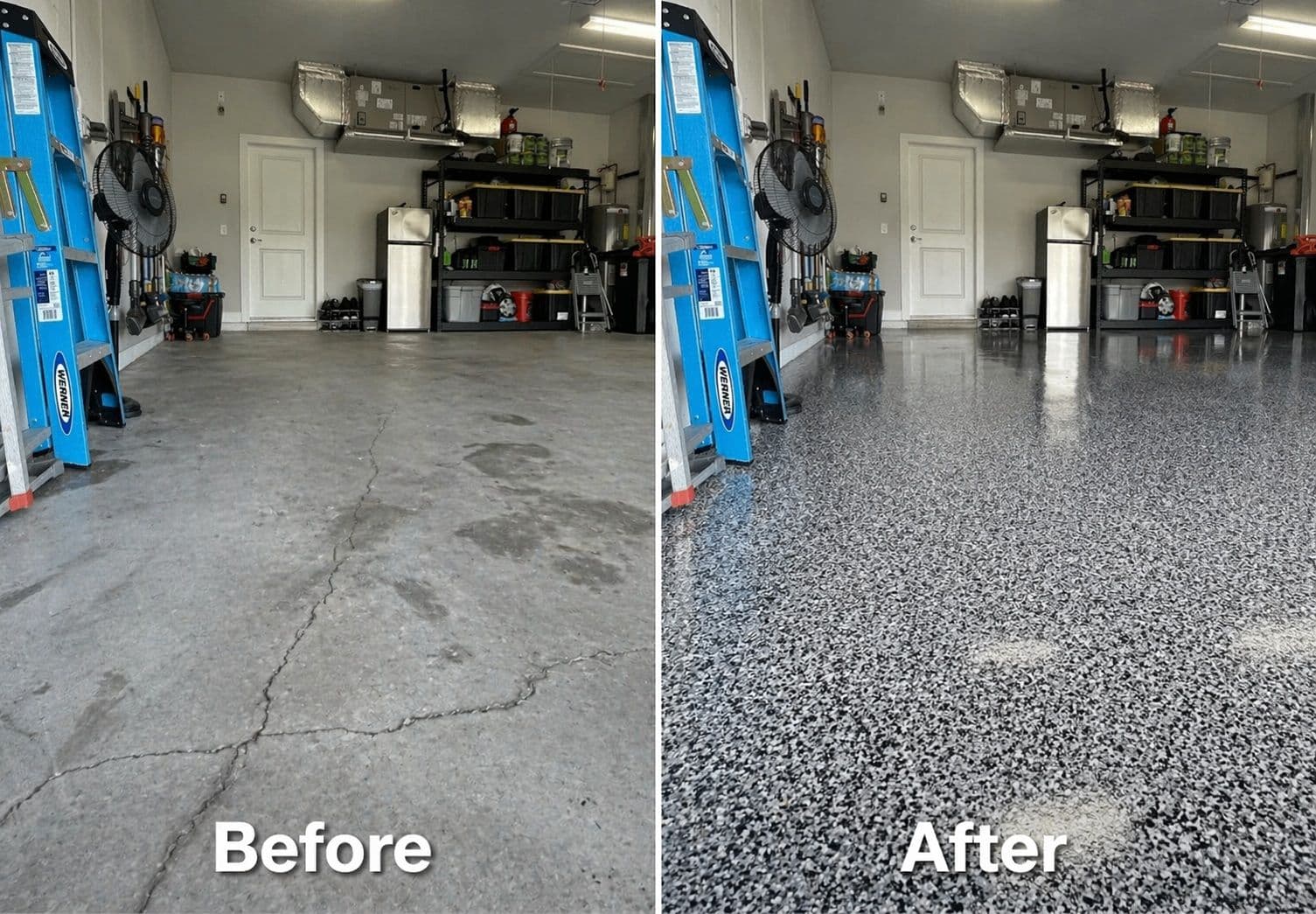
Residential garages experience significant mechanical stress from vehicular loads, tool drops, and chemical exposure during automotive maintenance. Standard concrete absorbs oils and fluids rapidly, leading to permanent staining and structural weakening. Implementing a specialized one-day garage floor coating transforms the garage into an extension of the living space. The resulting surface resists hot tire imprints, mechanical floor jacks, and corrosive fluids while providing a bright, light-reflective finish that is simple to clean. Homeowners seeking reliable protection frequently search for "garage floor coatings near me" to find factory-trained installation crews.
Commercial Kitchens, Retail Spaces, and Industrial Warehouses
Commercial facilities operate under strict operational schedules where downtime results in significant revenue loss. Retail corridors, hospital walkways, and manufacturing facilities cannot afford to close down for multiple days to cure a standard floor coating. A rapid Commercial Floor Coating Service meets these strict timelines, allowing full pedestrian traffic to resume just hours after the topcoat is rolled out. Furthermore, its dense cross-linked structure prevents dirt and bacteria from colonizing the surface, maintaining a hygienic environment that meets commercial health codes.
Exterior Applications: Patios, Pool Decks, and Walkways
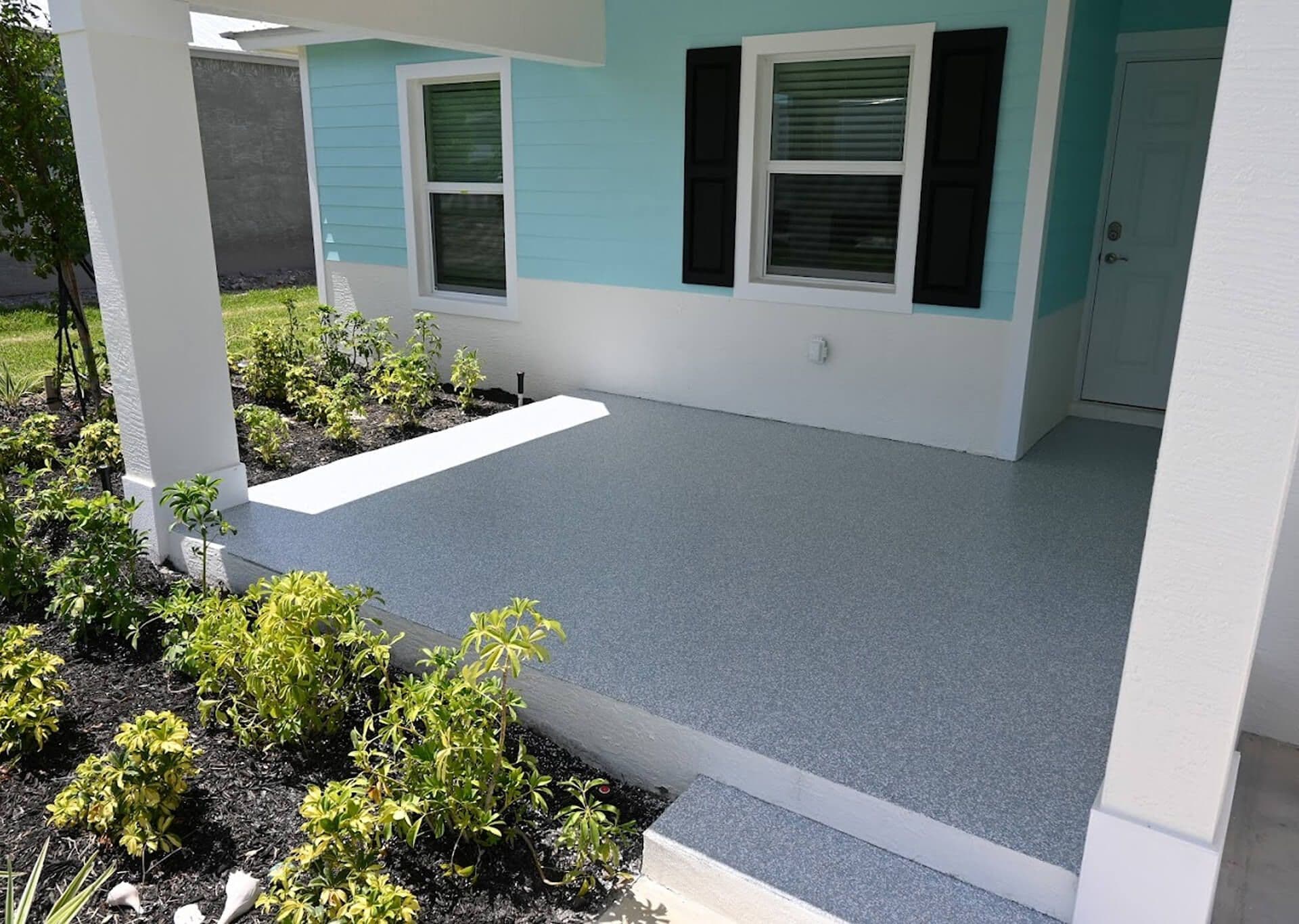
Outdoor concrete surfaces in Texas are exposed to relentless UV rays and heavy rainfall. While traditional coatings crack, peel, and fade under these harsh conditions, polyaspartic formulations remain unaffected. Because the aliphatic chemistry is inherently UV-stable, the clear topcoat retains its crystal clarity and high gloss over decades of continuous exposure. This long-term stability makes it an exceptional choice for a premium Patio Floor Coating Service, a high-exposure Pool Deck Floor Coating Service, or heavy-traffic pedestrian walkways.
Long-Term Maintenance and Integrity Preservation Protocols
While advanced polyaspartic floor coatings are engineered for maximum durability, proper care protocols help ensure the surface maintains its aesthetic appeal and structural integrity throughout its lifespan. Unlike porous concrete or weak epoxies, a smooth polyaspartic surface prevents contaminants from penetrating the material, making routine cleaning highly efficient. Property owners should consult a comprehensive Polyaspartic concrete coatings Care and Maintenance Guide to maximize the service life of their floor.
Routine Cleaning and Debris Removal
Daily maintenance involves removing loose dirt, sand, and abrasive grit with a soft-bristled broom or a microfiber dust mop. If allowed to accumulate, heavy fine grit can act like sandpaper under vehicular traffic, slowly dulling the glossy finish of the topcoat over long periods. Regularly sweeping or vacuuming the surface prevents this superficial micro-abrasion, preserving the high-gloss clarity of the clear coat.
Washing and Chemical Decontamination
For a deeper clean, the floor should be mopped with a mixture of warm water and a clear, non-filming, pH-neutral cleaner. Avoid using floor detergents containing soap, oil, or citrus additives, as these compounds leave a thin residue that attracts dirt and dulls the surface. If the floor is exposed to harsh chemicals such as gasoline, motor oil, or brake fluid, the spill should be wiped up promptly with an absorbent cloth. While the surface is highly Chemical Resistant, leaving corrosive industrial compounds on the floor for extended periods can cause minor surface staining.
Mechanical Stress and Impact Dynamics on Concrete Substrates
Concrete handles compressive loads well, but it exhibits relatively low tensile strength. When heavy objects such as steel jacks or tools strike a bare concrete surface, the impact force induces microfractures in the cement paste's crystalline matrix. Standard epoxy coverings transmit this kinetic energy directly to the bond line, where the brittle resin cracks and shears away from the concrete. Polyaspartic structures operate differently. The polyaspartic ester network incorporates structural flexibility. When an impact occurs, the elastomeric bonds absorb and distribute the kinetic energy over a wide surface area, minimizing localized stress concentrations and preventing chipping or fracturing.
Protecting Regional Infrastructure: Sidewalks and Driveways
Extending high-performance polymer protection to municipal and residential walkways requires specialized engineering. Slabs used for Driveway or Sidewalk Floor Coating Services are exposed to extreme environmental conditions. Rainwater, combined with atmospheric carbon dioxide, forms weak carbonic acid, which slowly leaches calcium hydroxide from bare concrete—a destructive process known as carbonation. Applying an aliphatic polyurea system seals the concrete against environmental moisture infiltration, halting carbonation and significantly extending the operational lifespan of the concrete infrastructure.
Engineering High-Density Polymer Formulas
To achieve maximum chemical cross-linking, the raw chemical compounds must be manufactured under strict laboratory conditions. Floortek utilizes Our Coating Products, sourced directly from manufacturing facilities, providing a significant advantage over local hardware store kits. Standard retail kits contain high concentrations of water or volatile solvents designed to extend shelf life, which compromises the cross-linking density of the cured film. Our manufacturer-direct formulations consist of 100% solid resins, ensuring that the applied liquid cures into a uniform, thick protective layer that remains completely free of microscopic pinholes or solvent voids.
Structural Basecoat Penetration Dynamics
The longevity of a rapid surface installation depends entirely on the fluid dynamics of the initial basecoat layer. When the resin is poured onto a mechanically profiled concrete floor, it must have a sufficiently low viscosity to wet the surface successfully. This allows the polymer to flow freely into the open capillaries before the cross-linking reaction accelerates. Once inside the concrete pores, the rapid chemical reaction locks the polymer chains around the microscopic aggregate structures, establishing a permanent mechanical anchor that resists high hydrostatic pressures. This process forms the foundation of our elite Floor Coating Service.
Long-Term Value and Warranty Verification
Investing in concrete surface protection requires verifiable assurance of material longevity. Many local contractor operations offer brief warranties that contain extensive exclusions regarding thermal failure or chemical staining. Floortek provides a comprehensive Life-of-home warranty backed directly by our manufacturing partnerships. This warranty coverage reflects our confidence in our materials and demonstrates that our polyaspartic systems typically outlast traditional epoxy alternatives by decades under identical operating conditions.
Verifying Local Expertise and Network Locations
Selecting a local installation partner requires careful verification of field experience and geographic availability. Floortek maintains multiple operational hubs across Southeast Texas, providing fast deployment and localized expertise tailored to the specific concrete conditions of each neighborhood. Property owners can visit our dedicated Floortek Locations directory to find a factory-trained application crew serving their specific ZIP code.
Elaborating on Basement Foundations and Local Realities
While basement structures are rare in coastal Texas due to high water tables, certain properties in elevated northern sectors feature deep foundations that require protection. Utilizing a specialized Basement Floor Coating Service ensures that below-grade concrete slabs remain clean and fully protected from the damp soil conditions characteristic of the region's subgrade.
The Evolution of Rapid Curing Polyurea Materials
The underlying chemistry behind modern rapid-cure finishes traces back to high-performance industrial liners. Early developments in polyurea flooring proved that these materials could cure rapidly under extreme temperatures, but their rapid set times required specialized high-pressure spray equipment. The introduction of polyaspartic esters solved this application bottleneck, enabling the use of rollers while retaining all the mechanical benefits of polyurea.
Analyzing Alternative Coatings: Floortex and Penntek Options
When evaluating choices across the industry, consumers often cross-shop various proprietary brands. Options like a traditional Floortex floor coating or a multi-layer Penntek floor coating use similar chemical foundations. However, Floortek sets itself apart by delivering an elite-tier 1-day coating solution that is custom-formulated for high-humidity coastal slab applications. This focused engineering outperforms generic solutions from national franchises that fail to adapt their chemistry to the intense moisture vapor emissions found across Texas.
Choosing Local Crews Over National Broker Networks
Many online searches for floor coating companies direct consumers to national lead-generation networks that subcontract the actual labor to uncertified local workers. Working directly with an authentic local company ensures that full-time, factory-trained employees manage your project. Homeowners can read more about us to learn about our operational standards and how our dedicated local team delivers premium 1-day garage floors without using uncertified subcontractors.
Setting New Standards in Surface Restoration
The continuous advancement of resinous technology has pushed modern materials far beyond old standards. What used to be called a one-day garage floor often involved cheap DIY water-based kits that would flake within months. Today, our advanced polymer structures represent the next generation of surface preservation, outperforming older next-level concrete coatings by maximizing cross-linking density. Our team provides an unparalleled One-Day Floor Coating Service built on verified chemical properties and strict mechanical standards.
Property owners can visit our main facility located at 4109 Katy Hockley Rd #1, Katy, TX 77493, to view our full product catalog in person. To explore our complete range of architectural surface systems, visit the official Floortek Coatings homepage. Our dedicated Floor Coating Service in Houston, Texas,s is specifically optimized to protect regional slabs from atmospheric humidity. To speak directly with a senior technical estimator about scheduling an on-site concrete inspection, please reach out to us at 844-844-4164 or contact our regional Houston line at 1-346-550-9307. You can also complete our online scheduling form via our Contact Us portal to secure your priority booking.
Transform your concrete surface into a highly durable architectural asset with our elite industrial-grade technology. Reach out to our technical team today to claim your special 30% off your first installation offer and coordinate your on-site subfloor evaluation.
Frequently Asked Questions:
Can a one-day flooring installation withstand heavy vehicle traffic?
YES. A professional one-day flooring installation utilizing industrial polyaspartic resins easily supports heavy residential vehicle traffic. This advanced multi-layer system is designed to improve the durability of concrete substrates and typically outperforms outdated retail consumer coatings under heavy localized mechanical wear.
The underlying molecular structure creates a highly dense cross-linked network. This network distributes heavy kinetic forces across the slab. It prevents cracking from heavy equipment. For detailed data on polymer mechanical load testing, view research by the National Institute of Standards and Technology (NIST). Choosing Floortek Coating ensures your surface remains highly resistant to mechanical compression.
Does high humidity affect a one-day flooring installation?
NO. Extreme ambient humidity does not hinder a professional one-day flooring installation when using high-solids polyaspartic materials. These advanced coatings cure via a reliable chemical mechanism that is unaffected by high ambient moisture levels.
Traditional finishes fail when moisture interferes with chemical cross-linking. Advanced polyaspartic technology is highly moisture-resistant during application. It provides an efficient alternative for humid coastal climates. For atmospheric humidity data and construction guidelines, visit the Department of Energy (Energy.gov). Securing a professional installation from Floortek Coating protects your concrete slab from humid environmental conditions.
Is a one-day flooring installation superior to standard epoxy coatings?
YES. A modern one-day flooring installation utilizing premium polyaspartic chemistry is significantly superior to standard epoxy resin applications. This advanced technology provides excellent structural flexibility, finishes curing within hours, and delivers far greater overall durability.
Standard epoxy coatings form brittle cross-linked matrices that crack easily. Polyaspartic coatings are engineered to be highly resistant to heavy impacts. They do not fade or yellow from solar exposure. For comprehensive peer-reviewed data on industrial resin performance, consult the National Institutes of Health (NIH). Choosing Floortek Coating guarantees an advanced protective layer that typically outperforms older epoxy formulations.
Can old concrete receive a professional one-day flooring installation?
YES. Severely aged concrete surfaces can safely receive a professional one-day flooring installation following thorough mechanical substrate preparation. Technicians use planetary diamond grinders to remove loose laitance, deep oils, and past contaminants before resin application.
Mechanical abrasion exposes the sound aggregate beneath the damaged surface paste. Installers fix existing cracks using rapid-curing polyaspartic fillers before rolling the basecoat. These steps restore structural integrity to deteriorated floors. For concrete petrography standards and remediation guidelines, view technical updates from the Federal Highway Administration (FHWA). Booking your restoration project through Floortek Coating transforms aged concrete into a long-lasting, heavy-duty architectural asset.
What are the common problems with concrete floor coatings, and how can they be avoided during a one-day flooring installation?
Hydrostatic pressure and poor prep cause most concrete coating failures during a one-day flooring installation. Installers avoid these major problems by executing rigorous planetary diamond grinding and applying an integral capillary moisture vapor barrier.
Improperly prepped concrete surfaces prevent liquid resins from bonding correctly. Applying a high-solids polyaspartic system over damp concrete leads to blistering. Professional crews always test moisture levels before starting the application. For detailed guidance on subfloor moisture mitigation systems, consult the research published by Iowa State University (Iowa State Research). Trusting Floortek Coating eliminates these common installation pitfalls through precision engineering.
Does a one-day flooring installation emit harmful chemical fumes during curing?
NO. A professional one-day flooring installation using modern high-solids coatings emits virtually zero volatile organic compounds during cross-linking. The advanced polyaspartic chemistry enables rapid polymer development without relying on hazardous volatile solvents.
Traditional paint formulations release dangerous odors that linger in homes for days. Modern industrial formulations cure through an additive chemical reaction rather than evaporation. This keeps your indoor air clean and completely safe during installation. For environmental safety guidelines on volatile compounds, see the Environmental Protection Agency (EPA) reports. Choosing Floortek Coating guarantees an eco-friendly project that protects family health.
Can outdoor patios be completed in a single day, including flooring installation?
YES. Exterior residential patios can easily receive a heavy-duty one-day flooring installation using specialized aliphatic resins. This industrial-grade material is chemically engineered to remain fully UV-stable, preventing yellowing in intense daily Texas sunshine.
Sunlight degrades standard epoxy binders, leading to severe chalking and peeling. Polyaspartic chemistry is highly resistant to solar radiation and intense heat. It preserves its gloss and color over decades of exposure. For technical data on materials exposed to severe weather environments, review the polymers database at the National Science Foundation (NSF). Partnering with Floortek Coating keeps outdoor recreation areas beautiful and fully protected.
How long must the concrete cure before a one-day flooring installation can begin?
New concrete slabs typically require 28 days of curing before a 1-day flooring installation can safely proceed. This structural window allows the concrete hydration reaction to complete, reducing internal moisture to acceptable baseline levels.
Applying non-breathing polymers prematurely traps excess mixing water within the slab matrix. This trapped fluid creates hydrostatic pressure that cracks weak surfaces over time. Installers use electronic relative humidity meters to verify that the concrete is ready for polyaspartic application. For detailed concrete curing time charts and hydration chemistry, review information from Portland State University (PSU.edu). Scheduling with Floortek Coating ensures strict adherence to engineering parameters.
Will hot tires cause delamination after a one-day flooring installation?
NO. Hot vehicle tires will not cause delamination or hot-tire pickup after a professional one-day flooring installation. The applied polyaspartic matrix exhibits exceptional thermal stability and maintains structural hardness under high glass transition temperatures.
Standard garage paints soften when warm tires transfer heat directly into the floor layer. As tires cool, they bond to the paint and peel it away. Polyaspartic coatings maintain their hardness under extreme automotive heat cycles. For polymer material research regarding thermal stress thresholds, visit the science databases at the University of Houston (UH.edu). Selecting Floortek Coating permanently eliminates hot-tire peeling issues.
What maintenance is required to preserve a one-day flooring installation?
Routine sweeping and occasional mopping are the only actions required to maintain a premium one-day flooring installation. The non-porous top layer prevents grease, vehicle oil, and household dirt from penetrating the concrete subfloor.
Abrasive sand dust acts like sandpaper under vehicle tires over time. Regularly sweeping with a soft broom prevents superficial scratching of the glossy coat. Clean the floor with warm water and pH-neutral cleaner. For official cleaning chemical safety standards and material preservation guidelines, see reports from the Centers for Disease Control and Prevention (CDC.gov). Choosing Floortek Coating provides a low-maintenance surface that remains beautiful for life.