Epoxy vs Polyaspartic Garage Floor: Why We Switched to 1-Day Polyaspartic
If you're researching an epoxy versus polyaspartic garage floor, you've likely encountered a lot of confusing information. As professionals who have worked with these products for years, we’re here to set the record straight.
We’re Floortek Coatings. We specialize in installing epoxy floors. Years ago, that’s what the market offered. But we saw firsthand how often they failed—peeling, yellowing, and chipping. That's why we made the complete switch to our advanced polyaspartic system.
Why did we change? Because our polyaspartic 1-day floor coatings are 10X better than epoxy.
This guide will break down the real-world differences between epoxy and polyaspartic, based on our hands-on experience. Many homeowners ask us, "Is polyaspartic better than epoxy?"For your garage, your patio, or your basement, the answer is a definite yes. We’ll show you exactly why.
The Biggest Difference: Get Your Garage Back in 24 Hours
The most apparent benefit of polyaspartic is the reduced installation time. Our systems are true 1-day floor coatings, providing homeowners with the peace of mind of a quick, stress-free process.
An old-school epoxy installation typically takes 3 to 5 days. The crew arrives, prepares the floor, and applies a base coat. Then you wait 24 hours for it to cure. Then they come back for the flake. Then you wait again. Then they come back for a topcoat. The whole time, your garage remains unusable, and the chemical smell is potent. In the United States, high humidity or a sudden cold snap can further delay the curing process.
With our polyaspartic system, the entire job is done in one day.
We diamond-grind the concrete.
We apply the polyaspartic basecoat.
We broadcast the decorative flakes.
We apply the crystal-clear, UV-stable topcoat.
andThat’s it. You can walk on your new floor just a few hours later and park your cars on it the very next day. This speed is a significant factor for our customers when deciding between the polyaspartic vs epoxy garage floors.
The #1 Epoxy Killer: Hot-Tire Pickup
Ever see a neighbor's epoxy floor with big, ugly patches peeled off right where their tires sit? That’s called “hot-tire pickup,” and it’s the #1 killer of epoxy floors.
Here’s what happens: Epoxy is basically a challenging plastic paint. When you drive your car, your tires become hot due to friction with the road. When you park on an epoxy floor, that heat softens the coating. The epoxy’s bond with the concrete is weak, so the next time you back out, the coating sticks to your hot tires and rips right off the floor.
This is not a problem with our floors.
Polyaspartic coatings are a different class of material. They are chemically designed to handle much higher temperatures without softening. More importantly, our basecoat penetrates deep into the concrete, wicking into the pores like a tree root. This creates a permanent chemical bond that is three times stronger than epoxy.
Your hot tires won't peel our floors. Ever. This is a non-issue with polyaspartic, but it's the main complaint we see in the epoxy garage floor vs polyaspartic comparison.
The Yellowing Problem: Epoxy vs. Polyaspartic and Sunlight
If your garage has windows or you like to leave the garage door open, sunlight will destroy an epoxy floor.
Epoxy is not UV-stable. Its chemical structure breaks down under ultraviolet light. Within a year or two, that "clear" topcoat will turn a dingy, ugly yellow color. This is called "ambering," and it’s an unavoidable consequence of using epoxy. It makes your floor look old and dirty.
Our polyaspartic topcoat is 100% UV-stable. It will never yellow or amber, ever. It stays perfectly crystal clear for the life of the floor. This keeps your chosen Colors and Flake Options looking vibrant and new for decades. This UV stability is also why polyaspartic is the only product we trust for outdoor use. We usm for both our patio coating service and our pool deck coating services. Imagine paying for a beautiful new patio coating only to have it turn yellow in the first summer. We would never let that happen to a customer.
Flexibility vs. Brittle: What Happens When You Drop a Wrench?
vs. Here’s another significant difference in the polyaspartic vs. epoxy floor-coating debate: impact resistance.
such as Epoxy cures into a rugged, brittle shell. Think of it like a thin sheet of glass. When you drop a heavy tool, like a hammer or wrench, the epoxy has no "give." It chips or creates a spiderweb crack. Polyaspartic is also extremely hard, but retains some flexibility. This lets it absorb and spread out the force from an impact. That same dropped hammer is far more likely to bounce off without leaving a mark.
This durability difference is enormous. When considering the cost of polyaspartic vs. epoxy, remember that a polyaspartic floor doesn't require constant repairs due to new chips and cracks. The technology behind these coatings is so advanced that similar materials are used to protect critical infrastructure, as noted in research by the U.S. Department of Transportation, giving homeowners a sense of security and confidence in their investment.
A Floor for Every US Season
Epoxy is incredibly picky about when it can be installed. You can't apply it if the concrete is too cold (below 55°F) or if it's too hot. This is a massive problem in most parts of the United States. Installers are often limited to just a few perfect weeks in the spring or fall.
Our polyaspartic systems can be installed in temperatures ranging from -30°F to 140°F.
Whether it's a freezing January day or the middle of a blazing August heatwave, our expert teams can give you a perfect, permanent installation. We don't have to wait for the weather, and you don't have to wait for your new floor to arrive. This wide application window is another significant advantage in the epoxy vs. polyaspartic garage floor Matchup, ensuring homeowners feel accommodated and at ease regardless of the weather conditions.
A Warning: Why Those DIY Epoxy Kits Always Fail
You’ve seen them—the $200 epoxy kits at the big-box hardware store. They seem like a great deal, but they are the single biggest reason people call us for a "rescue."
These kits are guaranteed to fail, and it's because of one word: preparation.
DIY kits tell you to clean your floor with an "acid etch." This is a gimmick. It merely lightly roughs up the surface. It does not open the pores of the concrete. The epoxy has nothing to grab onto, so it peels in sheets, often within 6 months.
The only correct way to prep a garage floor is with mechanical diamond grinding. We use 800-pound, industrial-grade concrete grinders. This process removes the top layer and opens up the concrete's pores, making it like a fresh, porous sponge.
Our polyaspartic basecoat penetrates deeply into those pores and forms a bond that becomes an integral part of the concrete itself. A DIY kit sits on top like a coat of paint, waiting to fail. The epoxy vs. polyaspartic garage floor question becomes especially clear when comparing a professional polyaspartic installation to a cheap DIY epoxy kit.
Our Coating Products: More Than Just Garages
The same amazing technology that makes our garage floors unbeatable is also effective on any concrete surface. We use Our Coating Products To protect and beautify all of your concrete spaces.
Our driveway coating service stops road salt and ice from cracking your concrete.
Our sidewalk coating service boosts your home's curb appeal.
We even offer a Basement coating service to turn that damp space into a beautiful, functional room.
The polyaspartic garage floor coating vs epoxy Conversation is just the beginning. We’re talking about total concrete protection. We can even discuss the differences between polyaspartic and polyurea, and how our system offers the best of both.
See the Floortek Difference for Yourself
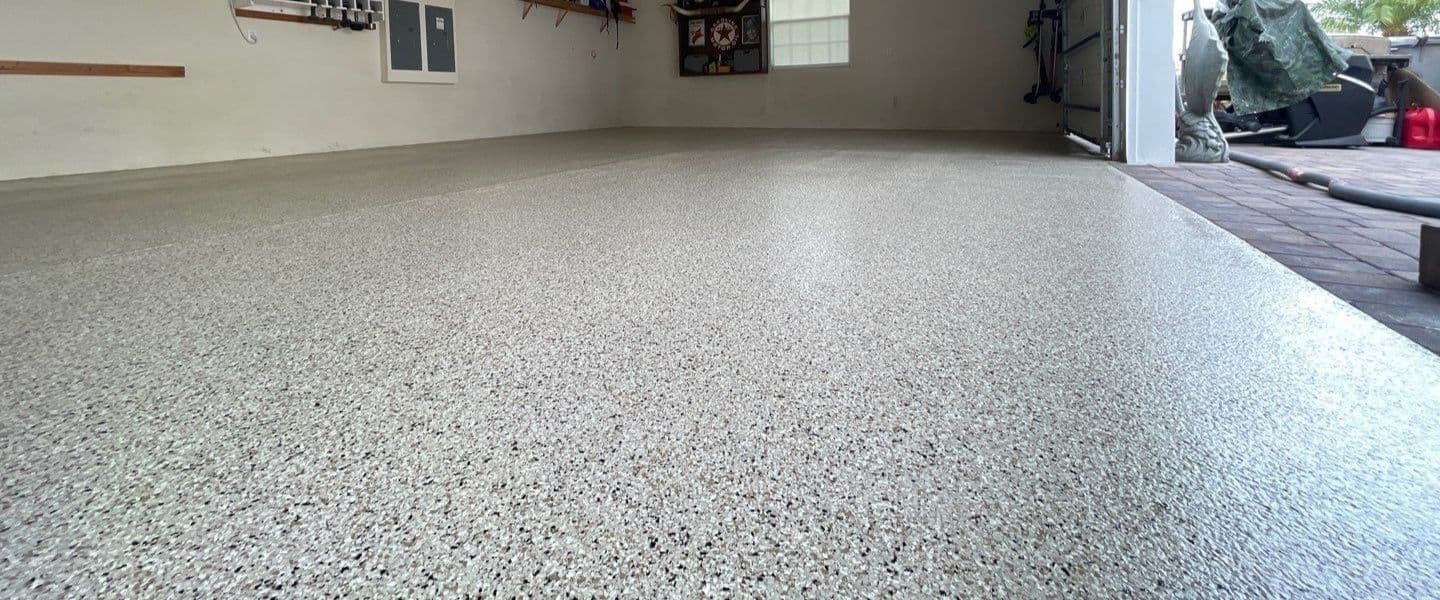
We can't discuss the differences between polyurethane and polyaspartic on a todayic basis, but the proof is in the pictures. We invite you to look at our Gallery of recent projects. You'll see beautiful, glossy floors that were installed for real homeowners in just one day.
Want to know more about the team? Learn more about us and discover our commitment to getting the job done right the first time.
The polyaspartic polyurea vs. the epoxy floor. The debate is over for us. We've seen epoxy fail too many times. It cracks, it peels, and it yellows. We only install 1-day floor coatings using our advanced polyaspartic system because it's stronger, more flexible, and looks better for decades.
We are so confident in our process and product that we back every installation with our Life-of-home warranty. This is the final word in the polyaspartic vs epoxy garage floor Debate.
Your Final Step to a Perfect Garage Floor
Stop worrying about the epoxy vs polyaspartic garage floor debate. The choice is clear.
You deserve a floor that won't chip, peel, or yellow. You deserve a floor you can be proud of, installed in just one day. And you deserve to work with a company that stands behind its product.
For a limited time, we are offering 30% off on the first installation for new customers.
Don't wait. Contact us through our website to get your Free Quote. Or, call us now at 844-844-4164.
Let our team at Floortek Coatings show you what a truly one-day floor installation looks like.
Frequently Asked Questions About Epoxy vs. Polyaspartic
Which coating lasts longer in the Epoxy vs Polyaspartic Garage Floor comparison?
Polyaspartic is four times stronger than traditional epoxy. A Floortek Coating resists chips and peels effectively. We offer a life-of-home warranty for every project. In the Epoxy vs Polyaspartic Garage Floor debate, polyaspartic wins on longevity. Check Texas A&M engineering for data on concrete coating durability.
Can an Epoxy vs Polyaspartic Garage Floor be installed in one day?
Yes, polyaspartic cures in just 24 hours. Epoxy often takes five days to dry completely. A Floortek Coating provides a fast, professional finish. This speed makes the Epoxy vs Polyaspartic Garage Floor choice easy for homeowners. See Minnesota.gov for residential construction timelines and standards.
Will an Epoxy vs Polyaspartic Garage Floor yellow in the sun?
No, polyaspartic is 100% UV stable and will never yellow. Epoxy coatings fade and chalk when exposed to sunlight. A Floortek Coating maintains its vibrant color forever. In the Epoxy vs Polyaspartic Garage Floor battle, UV protection is critical. Visit Energy.gov for info on UV-reflective surface materials.
What is the cost-benefit of an Epoxy vs. a Polyaspartic Garage Floor?
Polyaspartic offers superior long-term savings through manufacturer-direct value. We currently offer 30% Off first installation for new clients. A Floortek Coating avoids the costly repairs common with epoxy. Comparing epoxy and polyaspartic garage floor costs reveals polyaspartic's true worth. Refer to UCLA.edu for economic studies on home improvements.
Does an epoxy vs. polyaspartic garage floor prevent concrete moisture issues?
Yes, we apply an integrated vapor barrier to stop peeling. Epoxy lacks this deep-bonding protection against ground moisture. Your Floortek Coating creates an impenetrable seal on the slab. The Epoxy vs Polyaspartic Garage Floor moisture resistance is unmatched. Review EPA.gov for best practices on residential moisture control.
Can you apply an epoxy or polyaspartic garage floor in the winter?
Yes, polyaspartic cures perfectly in sub-zero temperatures. Epoxy requires warm weather to bond properly with concrete. A Floortek Coating allows for year-round installation without delays. Temperature flexibility is a key advantage of Epoxy vs Polyaspartic Garage Floors. Check NOAA.govAn for climate data impacting outdoor construction. Is an epoxy vs. polyaspartic garage floor slippery when wet?
No, we add slip-resistant textures to ensure family safety. Standard epoxy is notoriously slick and dangerous when wet. A Floortek Coating provides a secure, textured grip for feet. Safety is a priority in the Epoxy vs Polyaspartic Garage Floor selection. See OSHA.gov for floor traction and safety standards.
Do Epoxy vs Polyaspartic Garage Floors resist hot tire pickup?
Yes, polyaspartic will not peel under hot vehicle tires. Epoxy often sticks to tires and pulls away from concrete. A Floortek Coating remains bonded even under extreme heat. This durability defines the Epoxy vs Polyaspartic Garage Floor experience. Visit NIST.gov for material heat resistance benchmarks.
How does an Epoxy vs Polyaspartic Garage Floor handle chemical spills?
offers anoffers which are: An epoxy polyaspartic is virtually immune to oil, gas, and road salt. Epoxy stains easily and degrades when exposed to chemicals. Your Floortek Coating acts as a professional-grade chemical-resistant coating, and resistance is vital for an epoxy vs. polyaspartic garage floor. Reference UMass.edu for studies on chemical surface interactions.
Does an Epoxy vs Polyaspartic Garage Floor include a long-term guarantee?
Yes, our systems come with a life-of-home warranty. Epoxy products usually offer limited or no long-term coverage. A Floortek Coating ensures your floor stays beautiful for decades. Warranty support is a major factor in Epoxy vs Polyaspartic Garage Floor value. Review FTC.gov for rules on home service warranties.