Polyaspartic vs Epoxy Garage Floor: Why Floortek Only Installs Polyaspartic
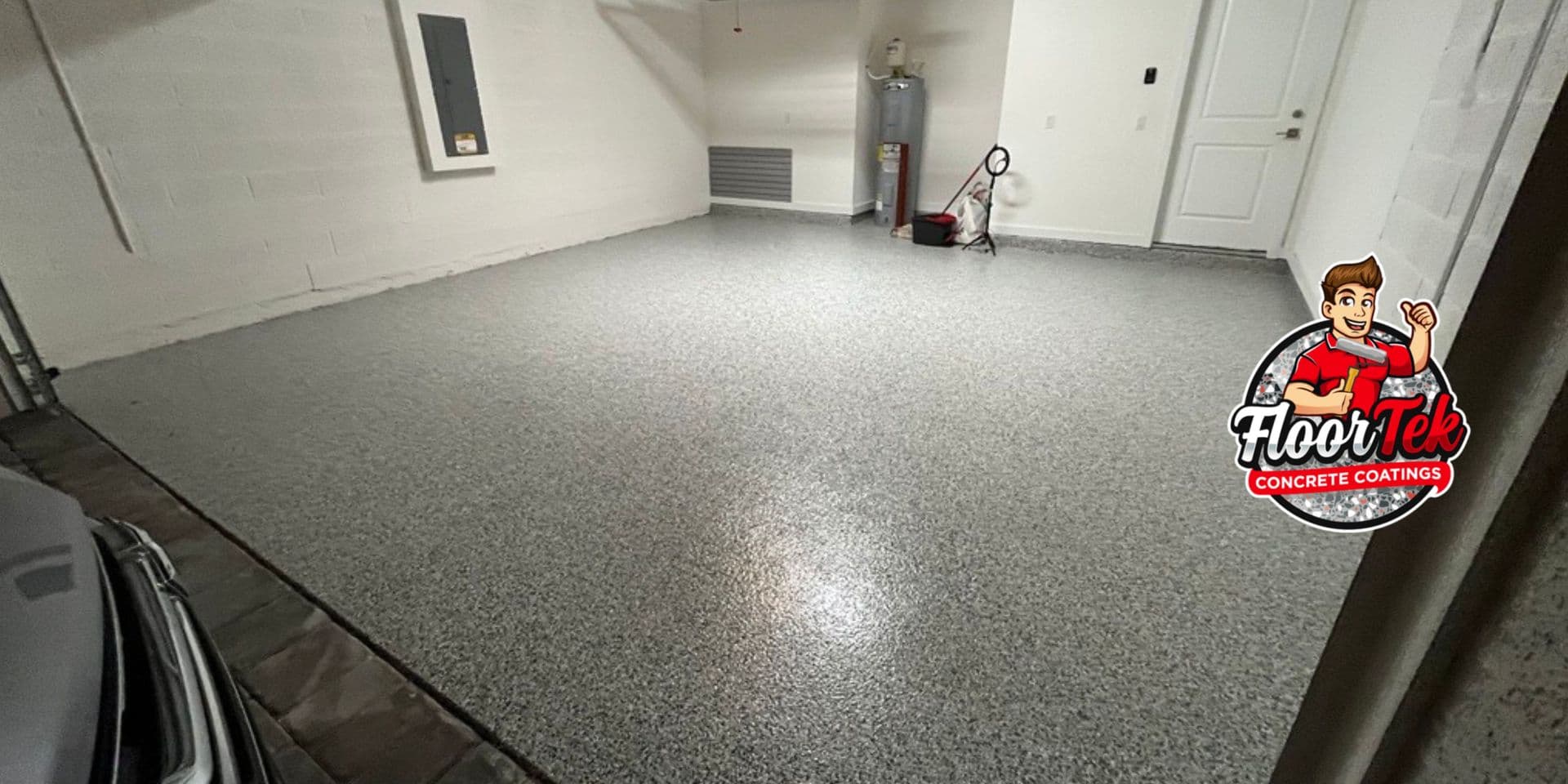
If you're researching a Polyaspartic vs Epoxy Garage Floor, you've probably realized your stained, dusty concrete garage floor just isn't working. You want a clean, durable, and beautiful space. As experts in concrete coatings with years of experience, we at Floortek Coatings have seen it all. We have a strong opinion in this debate because we used to install epoxy, but we stopped.
Why did we stop using epoxy? Because we witnessed its failures firsthand. We saw the peeling, the yellowing, and the frustrated homeowner calls. We understand the frustration and inconvenience these issues cause, and we're here to offer a better solution.
We switched to polyaspartic-polyurea coating systems because they are 10X better than epoxy. We believe you deserve a floor that lasts. In this article, we'll use our hands-on experience to show you the real-world differences and explain why our polyaspartic 1-day floor coatings are the only solution we trust for your home.
The Problems with Epoxy Floors We Saw Firsthand
Epoxy is the older, more common garage floor coating. It's basically a thick, plastic-like paint that sits on top of your concrete. For years, it was the only option. However, we, along with many other professionals, found it to have serious flaws, particularly given the wide-ranging climate in the United States.
These are the typical failures we were called to fix, which led us to stop using epoxy.
Epoxy's Biggest Failure: Hot-Tire Pickup
This is the number one complaint. You drive your car on a hot day, and your tires get very hot. You park in the garage, and that heat and pressure soften the epoxy. When you back your car out later, the epoxy sticks to your tires and rips right off the floor, leaving a bare patch of concrete.
Epoxy creates a weak, topical bond. It simply lacks the power to withstand the weight and heat of a modern vehicle. This problem is even more severe in hotter states, where asphalt and tires can reach incredibly high temperatures.
Yellowing from Sunlight
"Epoxy is not UV-stable. This means if any sunlight hits your floor—from a window or just from having your garage door open—the epoxy will yellow over time. This is called" ambering." The bright white and gray flakes you picked out will soon be sitting in a dull, yellowish-brown field. It looks old and dirty, even when it's clean.
The 5-Day Installation Nightmare
An epoxy installation is a considerable inconvenience. After the floor is prepped and the coating is applied, you have to wait. And wait.
Wait to walk: 24-48 hours.
Wait to park: 5-7 days.
For a whole week, your garage is unusable. Your cars are stuck in the driveway, and your garage is filled with strong chemical fumes (called VOCs, or Volatile Organic Compounds) that can seep into your home.
It's Brittle and Prone to chipping.
Epoxy cures into a rugged, brittle shell. While that sounds strong, it has no flexibility. When you drop a heavy wrench or a tool, it doesn't absorb the impact—it chips or cracks.
ground. This is a significant issue in colder climates. As the concrete beneath flexes with the freezing and thawing, the rigid epoxy can't move with it. This leads to cracking and delamination (peeling). We were constantly getting calls for Freeze-Thaw Concrete Damage Repair, a problem that polyaspartic systems handle with ease.
Why Our Polyaspartic System is the Superior Solution
After witnessing numerous epoxy failures, we recognized the need for a superior product to serve our customers. We found it in polyaspartic-polyurea. This is not just a 'better epoxy'; it's an entirely different and superior chemical formula. This is why it's the only system we install.
This is why it's the only system we install.
Welcome to Our 1-Day Floor Coatings
This is what homeowners love most about our service. We can transform your garage in a single day, saving you the inconvenience of a week-long project. Imagine waking up to a brand new garage floor the next day!
Morning: Our team arrives and preps the floor (we'll get to that).
Mid-day: We apply the polyaspartic base coat, flake, and top coat.
Evening: You can walk on your new floor just 4-6 hours after we finish the installation.
Next Day: You can park your car and use your garage again—fully.
That's it—no week-long wait. We also offer Winter Concrete Coating Installation, as our system can be applied in temperatures well below freezing, unlike epoxy, which requires a temperature range of 60-80°F.
It Bonds Into the Concrete (Goodbye, Hot-Tire Pickup!)
This is the most crucial difference in the polyaspartic vs epoxy garage floor discussion.
Epoxy sits on top of the concrete.
Polyaspartic wicks into the concrete.
During our prep, we diamond-grind the floor to open up the concrete's pores. When we apply the polyaspartic base coat, it soaks deeply into the concrete, creating a bond that becomes part of the concrete itself. The bond is so strong that the concrete will fail before the coating lets go. This eliminates hot-tire pickup. Your hot tires are no match for a Floortek floor.
This eliminates hot-tire pickup. Your hot tires are no match for a Floortek floor.
Stays Beautiful for Life (100% UV Stable)
Remember that ugly yellowing? Not with polyaspartic. Our system is 100% UV-stable, meaning it will never yellow or fade from exposure to sunlight. The color you pick is the color it will stay.
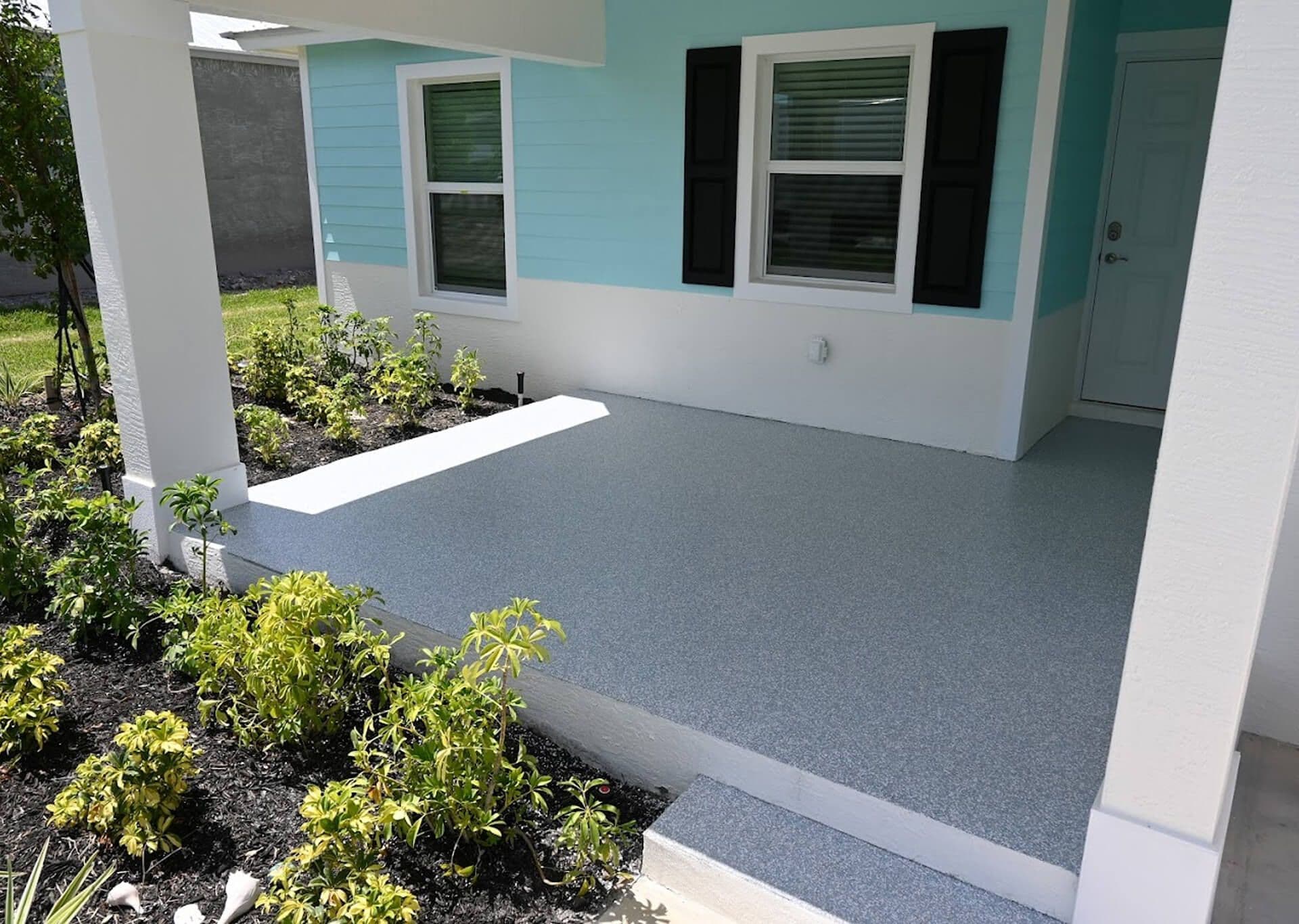
This is why we confidently install it on outdoor surfaces. It's the perfect solution for our patio coating service, pool decks coating service, and driveways coating service. It can handle direct, blazing sun and harsh weather without changing color.
It's Flexible and Stronger
Polyaspartic is 4x more abrasion-resistant than epoxy. It’s harder to scratch and scuff. But it's also more flexible. If you drop that wrench, the coating absorbs the impact, reducing the likelihood of chipping.
This flexibility makes it ideal for the extreme temperature swings across the United States. It expands and contracts in tandem with your concrete, preventing the cracking and damage that are so common with brittle epoxy.
Our Installation Process: The Floortek Difference
Do you know how we can accomplish this in one day? It's all about professional-grade Our Coating Products and a process we've perfected.
Diamond Grinding: We never acid etch. That's a DIY shortcut that guarantees failure. We use heavy, industrial diamond grinders to remove the top layer of concrete and open its pores for maximum bonding. This step is the most essential part of the entire installation.
Mending and Repair: We fill all cracks, pits, and spalls with a specialized mender. This creates a perfectly smooth and stable surface.
Base Coat Application: We apply the pigmented polyaspartic base coat. This is the layer that wicks deep into the concrete.
Complete Flake Broadcast: While the base coat is wet, we broadcast a thick layer of vinyl flakes. This gives the floor its color, texture, and durability. You can see all our Colors and Flake Options To match your home.
Scrape and Top Coat: After a short cure, we scrape off excess flakes and apply our crystal-clear, UV-stable polyaspartic top coat. This locks everything in and gives the floor its final, beautiful, and easy-to-clean finish.
You can see examples of this process and our finished work in our Gallery.
It's Not Just for Garages
The benefits of polyaspartic make it the ideal choice for any concrete surface, whether inside or outside. We regularly use this same system for:
sidewalk coating service
Patios and Porches
Pool Decks
It's durable enough for a driveway and beautiful enough for a basement. And since it's so easy to clean, you'll never worry about everyday household messes, whether it's from a Turkey Fryer or just a little grease. We even have a guide on how to protect the Patio from Grill Grease.
A polyaspartic floor is a great item to check off your End-of-Year Home Maintenance Checklist.
Your Questions About Polyaspartic vs. Epoxy Answered
We receive these questions frequently. Here are the honest answers.
Which lasts longer: a Polyaspartic or an Epoxy Garage Floor?
Polyaspartic lasts significantly longer than epoxy because it remains flexible. Floortek Coating creates a permanent bond that resists peeling. A Polyaspartic vs Epoxy Garage Floor comparison proves epoxy becomes brittle and cracks. Our polyaspartic formula offers manufacturer-direct value for every homeowner. We include a Life-of-home warranty on every installation. Check concrete durability guidelines for engineering standards.
Do Polyaspartic vs. Epoxy Garage Floors resist hot tire pickup?
Yes, polyaspartic eliminates the risk of hot tire pickup. Floortek Coating withstands high heat from vehicle tires effortlessly. When analyzing Polyaspartic vs Epoxy Garage Floor, epoxy often sticks to tires and peels. Our polyaspartic ensures your floor stays intact during the 2026 summer heat. Get 30% Off first installation for your new garage project today—reference tire-pavement interaction for thermal data.
How quickly can I use a Polyaspartic VVS? An Epoxy Garage Floor?
You can drive on a polyaspartic floor within 24 hours of application. Floortek Coating provides a rapid cure time for busy families. The Polyaspartic vs Epoxy Garage Floor difference is measured in days of downtime. Epoxy requires a full week before supporting vehicle weight safely. Our polyaspartic systems deliver manufacturer-direct value and professional speed. Review fast-cure polymer science for chemical details.
Will a Polyaspartic vs Epoxy Garage Floor yellow over time?
No, polyaspartic is 100% UV stable and will never turn yellow. Floortek Coating maintains color clarity even in direct sunlight. A Polyaspartic vs. Epoxy Garage Floor study shows epoxy chalking and fading. Our polyaspartic topcoat protects your investment from permanent sun damage. Every residential job is backed by our Life-of-Home warranty. See research on polymer weathering for material longevity.
Are Polyaspartic vs Epoxy Garage Floor surfaces safe when wet?
Yes, polyaspartic floors are safer because we integrate anti-slip textures. Floortek Coating prioritizes family safety with high-traction finishes. In a Polyaspartic vs Epoxy Garage Floor matchup, epoxy is notoriously slippery. Our polyaspartic keeps its grip even during heavy rain. Take 30% Off first installation to upgrade your home safety. Consult pedestrian floor safety for official traction standards.
Can a Polyaspartic vs Epoxy Garage Floor be installed in winter?
Yes, polyaspartic can be installed in temperatures as low as -20 degrees. Floortek Coating offers year-round application flexibility for all clients. The Polyaspartic vs Epoxy Garage Floor debate ends when temperatures drop. Epoxy fails to cure properly in cold environments. Our polyaspartic provides a built-in vapor barrier for all seasons. Check cold-weather construction for expert data.
Does a Polyaspartic vs Epoxy Garage Floor resist oil and gas?
Polyaspartic is highly resistant to corrosive automotive fluids and road salts. Floortek Coating creates an impermeable shield against harsh chemicals. Analyzing Polyaspartic vs Epoxy Garage Floor shows epoxy stains from gasoline spills. Our polyaspartic finish wipes clean with minimal effort. This represents true manufacturer-direct value for garage maintenance. Refer to the chemical resistance charts in the technical specifications.
Which has better concrete adhesion: Polyaspartic vs Epoxy Garage Floor?
Polyaspartic creates a superior mechanical bond by penetrating deep into concrete. Floortek Coating prevents delamination caused by rising ground moisture. The Polyaspartic vs Epoxy Garage Floor choice impacts long-term floor stability. Epoxy sits on top and eventually peels away. Our system includes a specialized vapor barrier for maximum protection. Visit concrete bonding studies for adhesive facts.
Is a Polyaspartic vs Epoxy Garage Floor flexible enough to resist cracks?
Yes, polyaspartic is four times more flexible than traditional epoxy. Floortek Coating moves with your concrete during natural temperature shifts. When comparing Polyaspartic vs Epoxy Garage Floor, epoxy is brittle and prone to snapping. Our polyaspartic prevents small cracks from telegraphing through the finish. We offer a Life-of-home warranty for your peace of mind—research flexible coating materials for engineering insights.
What provides more long-term savings: Polyaspartic vs Epoxy Garage Floor?
Polyaspartic offers better value because it never needs to be replaced. Floortek Coating is a one-time investment for your property. A Polyaspartic vs. Epoxy Garage Floor cost analysis favors polyaspartic for lifespan. Epoxy requires expensive re-coating every few years. Claim 30% Off first installation to secure your home’s future. Read about home improvement ROI for financial data.
Ready for a Floor That Actually Lasts?
When it comes to the Polyaspartic vs Epoxy Garage Floor debate, the choice is clear. You can have a temporary epoxy floor that chips, yellows, and peels. You can go, or you can have a permanent, beautiful, and durable polyaspartic floor from Floortek.
We’ve built our reputation on doing things the right way, not the easy way. We chose polyaspartic because it’s the best, and it's what our customers deserve. For a limited time, we are offering 30% off for all first-time installations. Don't settle for an inferior epoxy floor. Let us show you the Floortek difference with a Free Quote. Our team is ready to help you design the garage of your dreams.
Call us today at 844-844-4164 or contact us through our website to schedule your free, no-obligation consultation.
For more reading on this topic, check out our main blog post: Polyaspartic vs Epoxy Garage Floor.
External Resource References:
U.S. General Services Administration (GSA): Green Cleaning Guides
U.S. Department of Energy: Weatherize Your Garage (Discusses concrete and temperature extremes)
FREE In-Home Estimate
Plus 30% Off
Update Your Garage Today!
Get your new floor installed in just one day with Floortek’s garage floor resurfacing services! Call us today for a free quote!
Or contact us online to schedule your consultation!