The Ultimate Homeowner’s Guide: Polyaspartic Polyurea vs Epoxy Floor Coatings
If you're reading this, you’re probably tired of staring at your ugly, stained, or cracked concrete floor. You’re looking for a solution, and that search has likely left you debating the polyaspartic polyurea vs epoxy floor options. We get it. It isn’t very clear. You see DIY kits at the hardware store and hear various claims from different installers.
At Floortek Coatings, our experienced team has been protecting and enhancing concrete surfaces for years. Most of the information available compares a 1990s technology (epoxy) with a modern, advanced solution (polyaspartic polyurea).
While epoxy is our main competitor, we see it more as a temporary fix that we are often called in to replace. Our goal is to give you the real facts, in plain English, so you can make a choice that you’ll be happy with for decades.
The bottom line? Our polyaspartic system outperforms epoxy by a factor of 10.
To help you make the switch to a better floor, we are currently offering 30% off on your first installation project. Keep reading to understand why choosing polyaspartic polyurea is not just a decision for today, but a long-term investment in the future of your home.
What Is an Epoxy Floor? (The Outdated Competitor)
You’ve seen epoxy everywhere. It’s the shiny, paint-like coating that’s popular in DIY shows and hardware store kits. An epoxy floor is a mix of two parts: a resin and a hardener. When you mix them, a chemical reaction begins, turning the liquid into a hard, plastic-like shell that forms on top of your concrete.
Think of epoxy as a thick layer of glue. It’s hard, it’s shiny (at first), and it can look good when it’s brand new. For a long time, it was the only real option besides bare concrete.
The problem is that a hard, brittle shell is the last thing you want on a surface like concrete, which naturally expands and contracts with temperature changes. Epoxy doesn't move with it. It just cracks, chips, and peels.
What Is a Polyaspartic Polyurea Floor? (The Modern Floortek Solution)
Polyaspartic and polyurea coatings are the next generation of floor protection. A polyaspartic is a specific type of polyurea, modified to be the perfect topcoat.
Here’s the key difference: Instead of just sitting on top of the concrete like epoxy, our system is designed to penetrate the concrete. Our polyurea basecoat wicks deep into the concrete's pores, creating a bond that is three times stronger than epoxy. It doesn't just stick to the concrete; it becomes one with it.
Then we apply our polyaspartic topcoat, which is not only incredibly durable but also flexible and resistant to chemicals. It's a solution that's designed to stand the test of time, giving you peace of mind about the longevity of your new floor.
This system was initially designed for heavy-duty industrial uses—think bridges, factories, and stadium walkways—places where failure is not an option. We’ve taken that industrial-grade technology and perfected it for your home.
Best of all, our superior system allows us to offer 1-day floor coatings. We can fully prepare your floor, apply our multi-layer system, and have you walking on it in just a few hours. Your garage is back in service the very next day.
The Top 5 Reasons Epoxy Floors Fail (And Why We’re Called to Fix Them)
At Floortek, a big part of our job is removing failed epoxy floors. We repeatedly encounter the same problems. Here is precisely why epoxy fails, especially in the demanding U.S. climate.
1. Hot-Tire Pickup
This is the number one cause of damage to epoxy garage floors. Here’s what happens: You drive your car on a hot day. Your tires get very hot from the friction with the asphalt. When you park in your garage, those hot tires radiate heat, softening the "plastic" epoxy resin underneath them.
When you back out the next morning, the epoxy has cooled and re-bonded... but it has bonded to your tire, not your floor. It then peels right off, leaving a perfect, ugly tire mark of bare concrete.
The Polyaspartic Solution: Our polyaspartic system is chemically different. It has a much higher heat tolerance. Your hot tires will not affect it. It’s built to withstand the heat of a busy garage, which is a key consideration in the epoxy garage floor vs. polyaspartic Debate.
2. Yellowing and Fading from Sunlight
Epoxy is not UV stable. This is a scientific fact. Any exposure to sunlight will cause it to break down, fade, and turn a nasty, yellowish-amber color over time. It doesn’t even require direct sunlight; ambient light from a garage window is sufficient to initiate the process.
If you’re thinking about an epoxy coating for a patio or pool deck, it’s an absolute non-starter. It will look chalky and yellow within a year.
The Polyaspartic Solution: Our polyaspartic topcoat is 100% UV stable. It’s like sunscreen for your floor. It will never yellow or fade, period. Your floor will look just as clear and vibrant in 20 years as it did the day we installed it. This is why it’s the only solution we use for outdoor spaces.
3. Peeling and Chipping
Remember how epoxy is a hard, brittle shell? Your concrete foundation is not. Concrete expands and contracts in response to changes in temperature and humidity. In the cold of a U.S. winter, it shrinks. In the summer heat, it expands.
Epoxy is too rigid to handle this movement. It doesn't flex, so it cracks. When you drop a hammer or a heavy tool, the epoxy shatters and chips because it lacks elasticity, or "give."
The Polyaspartic Solution: Polyaspartic coatings are flexible and exhibit an elongation rate that is several times higher than that of epoxy. This means our floor flexes with your concrete. It moves as your foundation moves. When you drop a tool, the coating absorbs the impact and bounces right back. This is a significant factor in the polyaspartic vs epoxy floor coating Discussion.
4. Long Installation and Cure Times
A "professionally" installed epoxy floor is a significant hassle. It’s a 3- to 5-day process.
Day 1: Prep and Prime
Day 2: Basecoat and Flake
Day 3: Topcoat
Days 4-7: Curing. You can't walk on it. You definitely can't drive on it.
During this time, your garage is unusable, and the smell is overwhelming. Epoxy has high VOC (Volatile Organic Compounds) levels, which can produce unpleasant fumes that linger for days.
The Polyaspartic Solution: We revolutionized the process with our 1-day floor coatings.
Morning: We arrive, diamond-grind your floor, and repair all cracks.
Mid-day: We apply our fast-curing polyurea basecoat and flakes.
Afternoon: We scrape the flakes and apply the clear, low-VOC polyaspartic topcoat.
You can walk on your new floor just a few hours later and park your car back in the garage the very next day.
5. DIY Kits Are Set Up to Fail
Those $200 epoxy kits at the big-box store are the worst offenders. They fail for two main reasons:
The Product: It's often a "water-based" epoxy, which is essentially paint with a small amount of epoxy resin added. It's not a true, 100% solids coating.
The Prep: These kits include a bag of "acid etch" powder. This is a cheap and unreliable method for preparing the floor. It just roughs up the very top surface and doesn't fully open the concrete's pores for a strong bond.
These floors almost always peel up within 6-12 months, and now you have a bigger mess than you started with.
The Polyaspartic Solution: We use a professional process. The most crucial step is mechanical diamond grinding. We use 800-pound grinders to remove the old surface and open up the pores in the concrete. This ensures our basecoat gets that deep, permanent bond that acid-etched epoxy can never achieve.
The Polyaspartic Polyurea vs Epoxy Floor Comparison: A Clear Winner
When you compare polyaspartic polyurea and epoxy floors side by side, the choice becomes simple.
Durability and Strength
Epoxy: Brittle. It sits on the concrete. It chips from impacts and peels from hot tires.
Polyaspartic: Flexible and 4x more abrasion-resistant. It bonds with the concrete. It absorbs impacts and is unaffected by hot tires.
Installation Time
Epoxy: 3 to 7 days. Your garage is held hostage for a week.
Polyaspartic: 1 day. You get your space back almost immediately.
UV Resistance (Fading/Yellowing)
Epoxy: Fails in sunlight. It will fade and turn yellow, guaranteed. This is a well-documented weakness of the resin.
Polyaspartic: 100% UV stable. It will never yellow or fade, even in direct sunlight on a driveway coating service.
Climate and Application
Epoxy: Very fussy. You can't apply it if the weather is too hot, too cold, or too humid. This severely limits the installation window in most of the United States.
Polyaspartic: Can be applied in nearly any weather, from sub-zero temperatures to 100+ degrees. This means we can install your floor perfectly any time of year.
Long-Term Value
Epoxy: This is a cheap, short-term fix. You will need to replace it in 3-5 years.
Polyaspartic: This is a one-time, long-term investment. Our floors are designed to last for decades, and we back them with our Life-of-home warranty. This is the core of the polyaspartic is better than epoxy Argument.
Our Process: The Floortek Difference
How can we offer 1-day floor coatings without cutting corners? It's because we've perfected our process and use a superior product. An epoxy installer can't do this because their product cures too slowly.
Here’s what your installation day looks like:
Step 1: The Consultation and Free Quote
It all starts when you contact us. We’ll come to your home, measure your space, show you our Color and Flake Options, and provide you with an exact, no-pressure quote. This is the perfect time to claim 30% off your first installation.
Step 2: Professional Diamond Grinding
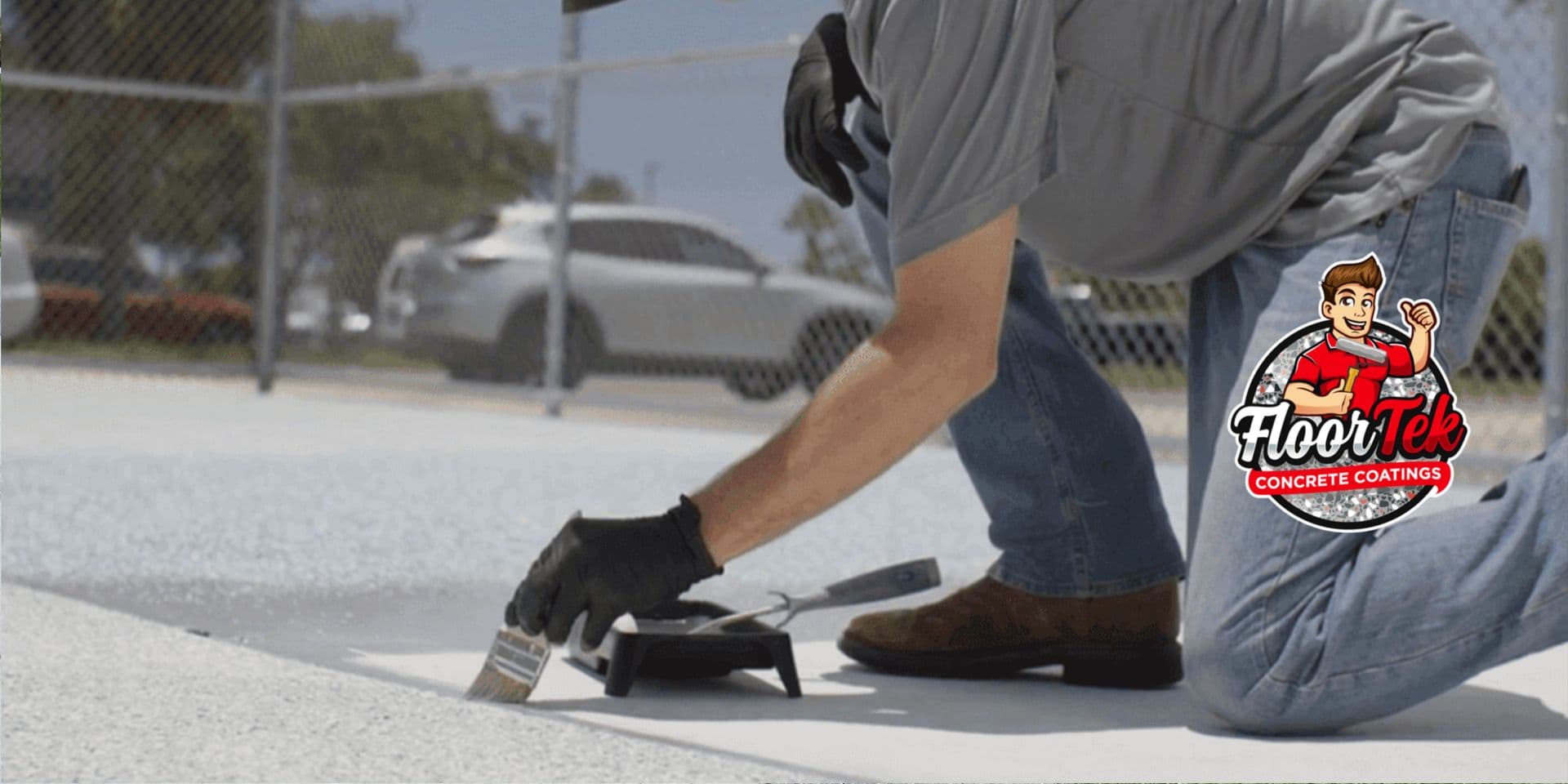
This is the most critical step. We don't use weak acid etching. We utilize industrial-grade grinders equipped with diamond-plated discs. This process levels the floor and, more importantly, opens up the concrete's pores, allowing our basecoat to form an unbreakable bond.
Step 3: Concrete Mending
We repair any cracks, pitting, or spalling in your concrete. We don't just "paint over" problems; we fix them first, ensuring your new floor is smooth and firm.
Step 4: The Polyurea Basecoat
We apply our 100% solids, self-priming polyurea basecoat. This is the layer that wicks deep into the concrete. It cures fast but bonds permanently.
Step 5: Full Flake Broadcast
While the basecoat is wet, we broadcast your chosen vinyl flakes until the floor is 100% covered. This "full rejection" broadcast is what gives your floor its color, texture, and deep, granite-like appearance.
Step 6: The Polyaspartic Clear Coat
After the basecoat cures, we scrape the floor to remove any excess, loose flakes. Then, we roll out our crystal-clear, 100% UV-stable polyaspartic topcoat. This final layer locks everything in, provides that beautiful shine, and creates a durable, easy-to-clean surface.
And that's it. A few hours later, you can walk on it. The next day, you can drive on it: no smell, no week-long hassle, just a beautiful, durable floor.
Beyond the Garage: Where Polyaspartic Shines
Because our polyaspartic system is 100% UV-stable and flexible, it’s the perfect solution for any concrete surface, both inside and out. Epoxy cannot compete in these areas.
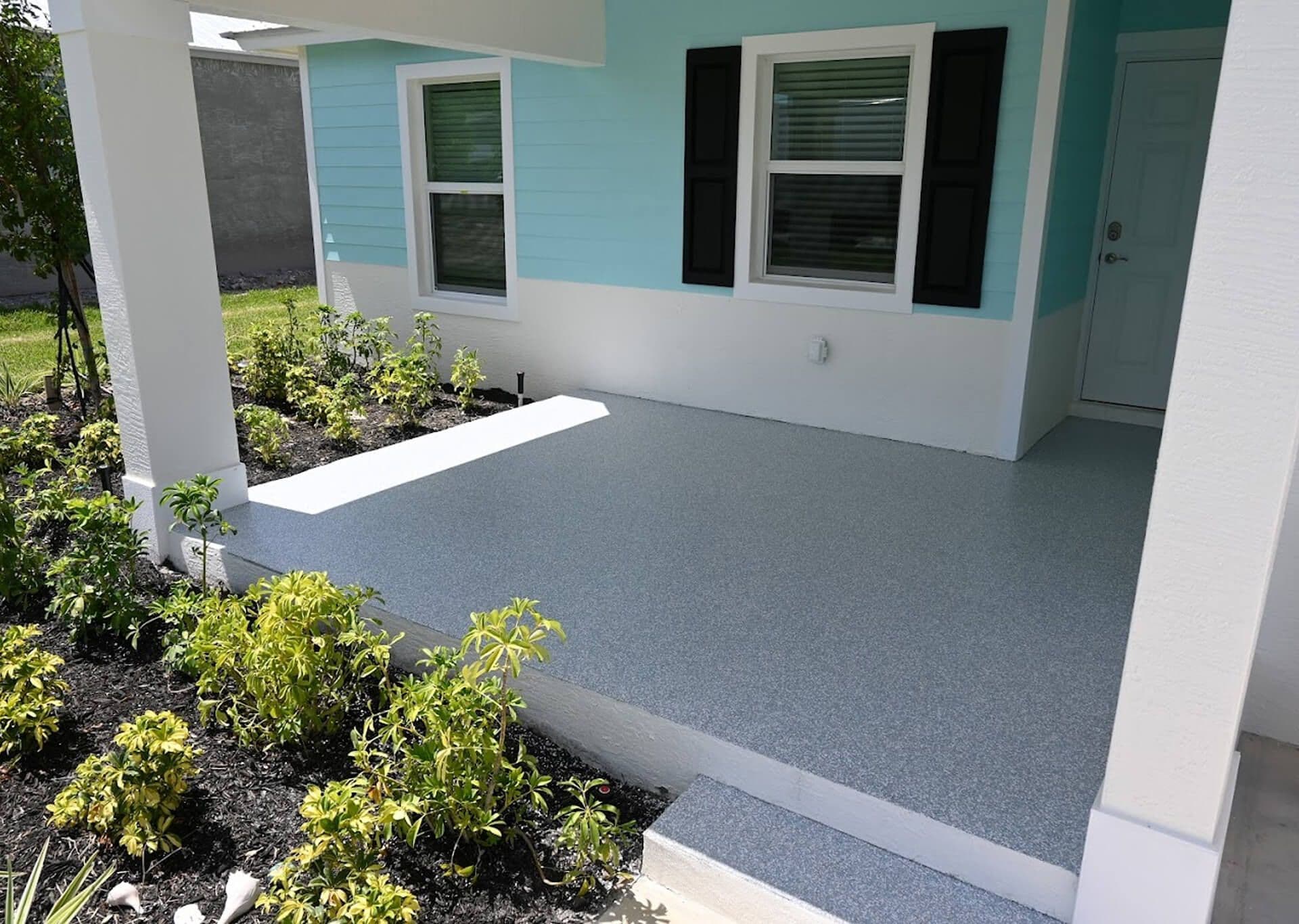
Patios: Imagine a beautiful, flake-finish patio coating service that won't fade in the sun or crack in the winter.
Pool Decks: We offer a textured pool deck coating service that looks amazing and withstands chlorine and constant sun exposure.
Driveways: Protect your driveway from snow, salt, and hot sun with our driveway coating service. It creates instant curb appeal that lasts.
Basements: Transform your dungeon into a living space. Unlike epoxy, our Basement coating service doesn't have harsh fumes, making it ideal for interior spaces.
Sidewalks: Our sidewalk coating service protects your walkways from salt and freeze/thaw damage.
In every one of these cases, the polyaspartic vs epoxy garage floor Logic applies. If epoxy can't even handle a garage, it definitely can't handle the direct assault of U.S. weather.
About Us: Why Choose Floortek Coatings?
We understand that this is a significant decision. At Floortek Coatings, we built our company on expertise and trust. Our About The Us page tells our whole story, but here’s what you need to know:
We are Specialists: We only work with polyaspartic and polyurea systems. We’re not a painting company that "also does floors." This is our entire focus.
We are Experienced: Our installers are factory-trained employees, not subcontractors. We’ve seen every type of floor and know how to handle it.
We are Transparent: We encourage you to look at our Gallery of real, local projects. We provide a Free Quote with no hidden fees and will explain every part of the polyaspartic vs epoxy cost Comparison.
We Stand By Our Work: We offer a Life-of-home warranty on our coatings. That’s how confident we are in Our Coating Products.
Polyaspartic Polyurea vs. Epoxy Floor: Expert Comparison FAQ
Which coating lasts longer: Polyaspartic Polyurea or Epoxy Floor?
Polyaspartic lasts significantly longer than traditional epoxy because it is four times more flexible. Epoxy becomes brittle and chips within a few years of regular residential use. Floortek Coating utilizes advanced polyaspartic to ensure your surface remains crack-free. This durability is the primary benefit of Polyaspartic Polyurea vs Epoxy Floor systems. Our Manufacturer-direct value includes a comprehensive Life-of-home warranty. New customers receive 30% Off first installation this month. See the National Institute of Standards and Technology for material strength data.
Can Polyaspartic Polyurea vs Epoxy Floor be installed in one day?
Yes, professional polyaspartic systems cure fully in just a few hours. Epoxy requires several days to dry before vehicles can enter the garage. Floortek Coating offers a rapid one-day installation to minimize disruption to your household. The application speed distinguishes Polyaspartic Polyurea from Epoxy Floor choices for busy homeowners. We offer Manufacturer-direct value' and a high-performance vapor barrier. Claim 30% Off first installation for your next project. Visit the Occupational Safety and Health Administration for floor safety standards.
Does Polyaspartic Polyurea vs Epoxy Floor yellow in the sun?
No, polyaspartic is 100% UV stable and will never discolor or peel. Epoxy coatings turn yellow and chalk when exposed to direct sunlight through open garage doors. Floortek Coating uses premium polyaspartic to maintain a crystal-clear, vibrant finish for decades. In the Polyaspartic Polyurea vs Epoxy Floor comparison, polyaspartic is the only sun-safe option. Every project includes a Life-of-Home warranty for peace of mind. Get 30% Off first installation today. Refer to the Environmental Protection Agency for coating emission standards.
Which handles moisture better: Polyaspartic Polyurea vs Epoxy Floor?
Polyaspartic offers superior adhesion that resists peeling caused by high concrete moisture levels. Epoxy frequently bubbles and delaminates when water vapor rises through the garage slab. Floortek Coating integrates a specialized vapor barrier to protect your floor from the bottom up. This moisture resistance is a key factor in Polyaspartic Polyurea vs Epoxy Floor performance. We provide a Life-of-home warranty on every professional install. Save money with our 30% Off first installation offer. Consult FEMA for moisture-resistant building materials.
Is Polyaspartic Polyurea vs Epoxy Floor resistant to hot tire pickup?
Yes, polyaspartic is chemically engineered to withstand the high heat of automotive tires. Epoxy often softens and peels away when hot tires park on the surface. Floortek Coating uses industrial-grade polyaspartic to ensure a permanent bond to your concrete. This prevents the common failure points found in Polyaspartic Polyurea vs Epoxy Floor tests. Our Manufacturer-direct value ensures you get the highest quality materials. Enjoy 30% Off first installation this season. Visit the Department of Transportation for information on tire safety and pavement interactions.
What is the chemical resistance of Polyaspartic Polyurea vs Epoxy Floor?
Polyaspartic provides an impenetrable shield against gasoline, oil, and harsh road salts. Epoxy stains easily and can be damaged by common household and automotive chemicals. Floortek Coating applies polyaspartic for maximum protection against corrosive spills and leaks. The chemical resilience of Polyaspartic Polyurea vs Epoxy Floor makes polyaspartic the professional choice. We offer a Life-of-home warranty against staining and peeling. New clients get 30% Off first installation today. See the Centers for Disease Control and Prevention for chemical handling guidelines.
Is Polyaspartic Polyurea vs Epoxy Floor safe for winter installation?
Yes, polyaspartic can be successfully applied in temperatures as low as -30 degrees Fahrenheit. Epoxy requires warm temperatures to cure and cannot be installed during the winter months. Floortek Coating offers year-round service regardless of the outside weather conditions. This seasonal flexibility is a major advantage for Polyaspartic Polyurea vs Epoxy Floor scheduling. We provide a built-in vapor barrier and Manufacturer-direct value. Claim your 30% Off first installation now. Reference the Cold Regions Research and Engineering Laboratory for low-temperature data.
Does Polyaspartic Polyurea vs Epoxy Floor provide better slip resistance?
Yes, polyaspartic systems use specialized vinyl flakes and traction agents for a safer surface. Epoxy is notoriously slick and dangerous when wet or covered in oil. Floortek Coating prioritizes family safety with a textured polyaspartic finish that reduces the risk of slips. Safety is the most important metric in the Polyaspartic Polyurea vs Epoxy Floor debate. We back our safety standards with a Life-of-Home warranty. Take 30% Off first installation this month. Visit the Consumer Product Safety Commission for home safety tips.
Which adds more home value: Polyaspartic Polyurea vs Epoxy Floor?
Polyaspartic adds more value because it is a permanent, maintenance-free flooring solution. Epoxy is often seen as a temporary fix that will require future replacement. Floortek Coating delivers Manufacturer-direct value that boosts your property’s overall market appeal. When evaluating Polyaspartic Polyurea vs Epoxy Floor, polyaspartic offers a much higher return on investment. Our floors come with a Life-of-home warranty for the next owner. Save 30% on the first installation. Check HUD.gov for home improvement valuation guides.
Why is Polyaspartic Polyurea vs Epoxy Floor easier to maintain?
Polyaspartic has a non-porous surface that prevents dirt and grime from sinking in. Epoxy is more porous and requires aggressive scrubbing to remove common garage stains. Floortek Coating makes cleaning easy with a simple mop and mild soap. This low-maintenance profile wins the Polyaspartic Polyurea vs Epoxy Floor comparison for busy homeowners. We include an advanced vapor barrier to ensure long-term cleanliness. Get 30% Off first installation today. Refer to Iowa State University for research on polymer maintenance.
Your Next Step: Get the Floor You Deserve
The debate over polyaspartic polyurea vs epoxy floor coatings is over. Epoxy is a temporary, "good enough" solution that will ultimately cost you more time and money. Polyaspartic polyurea is the modern, permanent solution that protects your investment and adds real value to your home.
Don't settle for a floor that will chip, fade, and peel. Choose the floor that is 10X better than epoxy.
We are ready to help you transform your space in just one day. Please take advantage of our 30% off on the first installation promotion while it lasts.
Call us right now at 844-844-4164, or click here to schedule your Free Quote.
Let Floortek Coatings give you a floor that you’ll be proud of for decades to come.