Polyaspartic vs Epoxy Cost: Why the "Cheaper" Floor Costs You More
When comparing the cost of polyaspartic vs. epoxy, it’s tempting to look at the initial price tags. We get it. As a homeowner, you want the best value. However, after years in this business, we at Floortek Coatings have observed a costly mistake that homeowners repeatedly make: choosing a "cheaper" epoxy floor, only to incur the costs many times over in repairs, frustration, and eventual replacement.
The honest discussion isn't about price; it's about long-term cost. That "bargain" epoxy job often becomes the most expensive floor you'll ever own.
We’re here to reveal the truth about the polyaspartic vs. epoxy cost debate. We want to explain why our advanced polyaspartic system, which is 10 times better than epoxy, is an actual one-time investment in your home. In contrast, epoxy is often just a temporary, failing paint job.
The Hidden Costs of That "Cheap" Epoxy Floor
Epoxy is our main competitor, and we are well aware of its weaknesses. The sticker price for an epoxy installation may seem attractive, but it conceals numerous hidden expenses that installers often fail to disclose.
The Cost of Your Time: A 5-Day Installation Nightmare
First, let's talk about the cost of your time. Most professional epoxy installations take three to five days. Your garage is entirely out of commission. You can't park in it, you can't walk on it, and you have to deal with the strong chemical smells for days. This can be a frustrating and inconvenient experience for any homeowner.
At Floortek, we understand the value of your time. That's why our advanced polyaspartic system is installed in a completely different way. We offer a convenient 1-day floor coating service. Our expert team arrives in the morning, prepares your concrete, applies our full-chip polyaspartic system, and is gone by the evening. You can walk on your new floor in just a few hours and park your cars on it the very next day. This level of convenience is a significant factor in the real polyaspartic vs epoxy cost comparison.
Which would you prefer? A floor that hijacks your home for a week, or one that’s ready for you tomorrow? Convenience alone is a significant factor in the real polyaspartic vs. epoxy cost comparison.
The Cost of Failure: Peeling and Hot-Tire Pickup
Here is the most significant "hidden cost" of epoxy: it fails. The most common complaint we hear from homeowners who went with epoxy is "hot-tire pickup."
Here’s what happens: You drive your car on a hot day. Your tires get hot. You park in your garage, and the heat from your tires, combined with the weight, softens the low-grade epoxy resin. When you back out the next day, a chunk of the coating peels off and sticks to your tire. Now you have an ugly, bare concrete patch on your floor.
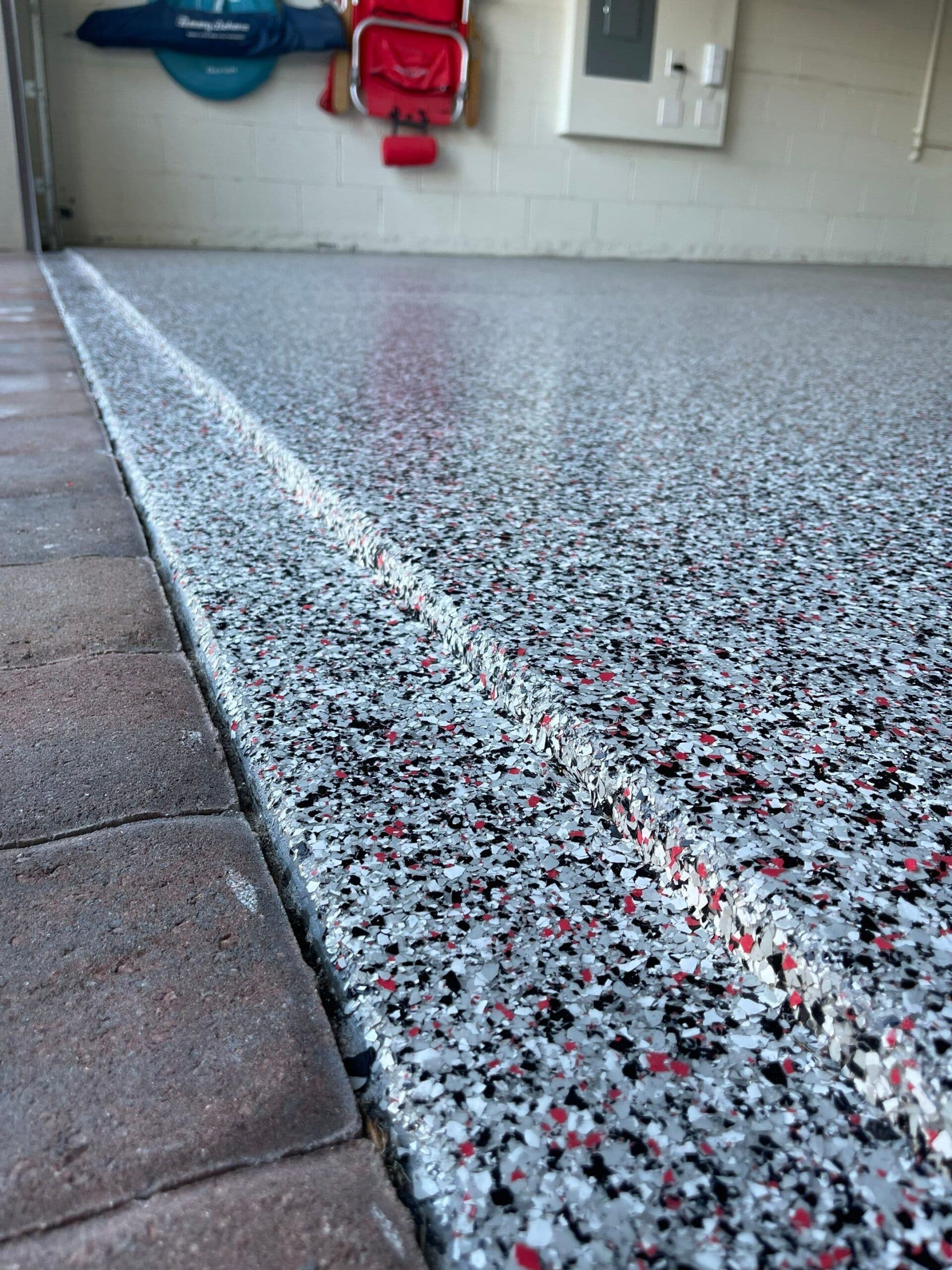
This happens because epoxy is a thick paint. It creates a weak, topical bond that sits on top of the concrete. Our polyaspartic system is different. It’s a "penetrating" coating. During our professional preparation, we diamond-grind your concrete, opening up the pores. The polyaspartic basecoat wicks deep into the concrete, chemically bonding with it. It doesn't just stick to the concrete; it becomes an integral part of it.
This molecular bond makes hot-tire pickup impossible. The only way to remove our coating is to grind the concrete itself away. When you compare a floor that peels off with one that’s permanent, the epoxy vs polyaspartic debate becomes very one-sided. With our polyaspartic system, you can be confident that your investment is secure and long-lasting.
The Cost of Ugliness: Yellowing and Fading
Does your garage, patio, or driveway get sunlight? If you install epoxy, it will turn yellow.
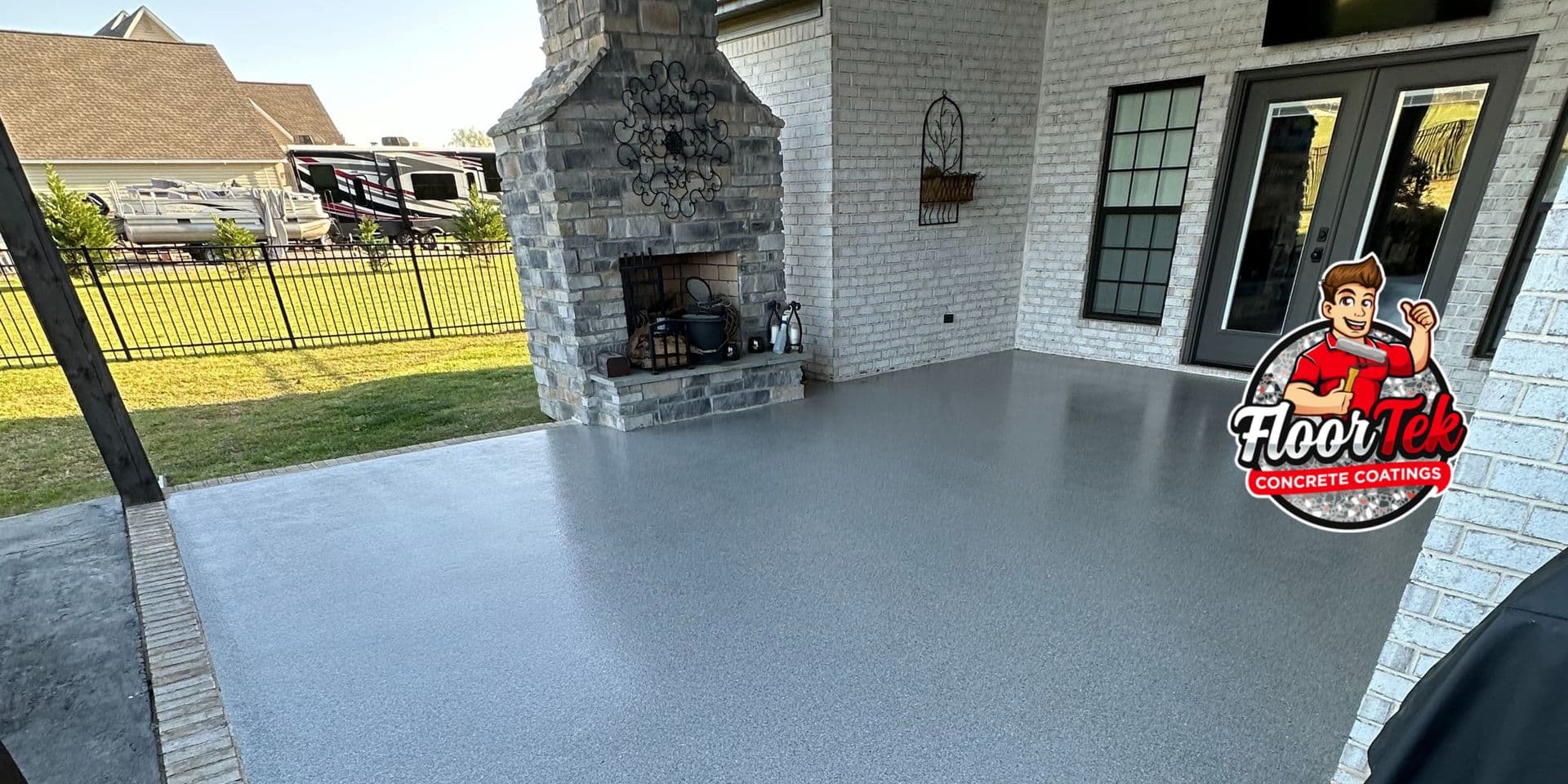
Epoxy is not UV stable. This means that direct sunlight will cause it to break down, fade, and take on a sickly amber or yellow tint within a year or two. This chemical breakdown is irreversible. This is a significant factor for any outdoor spaces. If you're considering a patio or pool deck coating service, using epoxy is a guaranteed way to fail.
Our polyaspartic coatings are 100% UV stable. They will never yellow, fade, or dull, even in the harshest direct sunlight. Your floor will look as bright and new in 20 years as it did the day we installed it. That’s why we are the top choice for everything from sunny garages to driveway coating services and sidewalk coating Services.
Why pay for a floor that will look old and dirty in just a couple of years? The polyaspartic vs epoxy cost isn't just about money; it's about lasting beauty. With our polyaspartic system, you can be assured that your floor will maintain its bright, new appearance for years to come, ensuring you're happy with your choice.
The True Cost: Re-Coating Every 3-5 Years
This is the most critical factor. A cheap epoxy floor has a lifespan of 3-5 years if you're lucky. When it starts to peel, yellow, and fail, your only option is to preplace it. That means paying for someone to come out, grind off all the old, failing epoxy, and reapply a new coat.
Suddenly, your 10-year polyaspartic vs epoxy cost looks like this:
Polyaspartic: One installation. One cost.
Epoxy: One installation, plus a second complete replacement, and a third.
When you consider long-term value, the 'cheap' epoxy floor costs two or three times as much as our premium polyaspartic system. It's the classic 'buy it nice or buy it twice' scenario. The conversation about epoxy garage floors vs. polyaspartic should always be about long-term value. Our polyaspartic system, with its lasting durability and beauty, clearly outshines epoxy in this aspect.
Why Polyaspartic is a 10X Better Investment
Now, let's talk about the solution. When homeowners ask us if polyaspartic is better than epoxy, our answer is a clear "yes." It’s not just a little better; it’s a modern, advanced technology that makes epoxy obsolete.
It Starts with Professional Concrete Prep
You cannot get a permanent floor from a DIY kit. The most crucial step in any floor coating job is preparation. Epoxy kits come with a small bottle of citric acid to "etch" the concrete. This is like using sandpaper on a wall you're about to paint—it’s a bare-minimum, surface-level prep that guarantees failure.
The Floortek team brings in industrial-grade diamond grinding machines. These machines remove the weak top layer of your concrete (called the "laitance") and open up the concrete's pores. This is the only way to create a profile that allows the coating to bond permanently.
This professional preparation is a significant part of the cost, and it's what separates our permanent floors from the temporary ones our competitors sell. When you're comparing polyaspartic vs. epoxy cost, you're also comparing a professional-grade mechanical grind to a weak acid wash.
Built for Durability and Flexibility
Epoxy is hard and brittle. When you drop a heavy tool on it, it can chip or crack. In cold climates, this is even worse. Our polyaspartic coatings are different. They are more flexible and have a higher abrasion resistance. This means they can absorb impacts without chipping.
This flexibility is also why our floors are perfect for the varied climates across the United States. In northern states, concrete goes through freeze-thaw cycles. Moisture in the slab expands and contracts, which can "pop" a rigid epoxy floor right off. Our flexible polyaspartic system moves with the concrete, maintaining its bond.
This is a key difference in the polyaspartic vs. epoxy floor-coating matchup. Epoxy cracks under pressure; polyaspartic endures.
A Beautiful Floor, Your Way
Your floor should be beautiful. We offer a wide range of Colors and Flake Options, perfectly suited to match your home's style. Whether you want a clean, modern look for your Basement coating service or a bright, custom look for your garage, we have a style for you.
And remember, thanks to 100% UV stability, the color will remain the one you chose. No yellowing, ever. You can see hundreds of real-world examples in our Gallery.
Understanding the Polyaspartic vs Epoxy Cost: Apples to Oranges
So, let's address the keyword head-on: polyaspartic vs epoxy cost. Yes, the upfront investment for a professional polyaspartic installation is higher than for an epoxy job.
You are not paying for the same thing.
With epoxy, you are paying for a temporary, low-tech, brittle "paint" that will fail.
With polyaspartic, you are paying for an advanced, flexible, and permanent flooring system.
When you get a Free Quote from us, your investment includes:
Advanced Materials: We use only Our Coating Products, which are industrial-grade polyaspartic polymers. This technology is far superior to basic epoxy resins.
Expert Installation: You are paying for a certified, trained Floortek team. You're paying for our industrial diamond-grinding equipment, our dust-collection vacuums, and our flawless 1-day installation process.
A Real Warranty: We stand behind our work with a Life-of-Home warranty. This warranty covers peeling, chipping, and fading of the product. Could you ask an epoxy installer for that? They will usually offer a 1- or 2-year limited warranty, and they'll have a long list of exclusions (like hot-tire pickup).
Our warranty is our promise to you. We do it right the first time, so you never have to think about your floor again.
Built for Your U.S. Climate
The extreme and varied climates across the United States are where epoxy floors fail the fastest, making the polyaspartic vs epoxy cost difference even more apparent.
For Hot, Sunny States (South/Southwest): The intense sun and heat are brutal. UV rays are a constant attack. As the U.S. Environmental Protection Agency (EPA) notes, UV radiation can degrade many artificial materials. Epoxy is one of them. It will yellow and chalk in as little as one year. Our 100% UV-stable polyaspartic is built for the sun. It won't fade or break down.
For Cold, Freezing States (North/Midwest): The biggest enemy here is the freeze-thaw cycle. When snow from your car melts, the water seeps into the concrete. As temperatures drop, this water freezes and expands, putting immense pressure on the bond. According to concrete experts at university extensions, this jacking effect is a primary cause of concrete damage. Rigid epoxy can't handle this movement and will flake or pop off. Our flexible polyaspartic expands and contracts with the concrete, maintaining a tight bond.
For Humid States (Southeast/Coastal): High humidity can be a nightmare for epoxy installation, as it traps moisture, leading to bubbles and blisters that cause early failure. Our polyaspartic systems are designed to be installed in a broader range of humidity and temperature conditions, ensuring a perfect bond every time.
Regardless of your location, our polyaspartic system is designed to withstand your local climate. Epoxy is not.
See the Floortek Difference for Yourself
Talk is cheap. We want you to see the results. When you visit our Gallery, you’re seeing real-world homes of customers who, like you, once debated the polyaspartic vs. epoxy cost. They chose to invest in a permanent solution, and the results speak for themselves.
Our team at Floortek is what truly sets us apart. You can learn more about our mission and our certified installers on our About The US page. We are not a franchise or a group of random subcontractors. We are a dedicated company of flooring experts who believe in doing the job right.
The polyaspartic vs epoxy garage floor Debate is one we have every day. And every day, we show homeowners that the "cost" of epoxy is far too high.
🔥 Special Offer: Get 30% Off Your First Installation!
We know that making a home improvement investment is a big decision. We want to make it easier for you to choose the right solution, not the "cheap" one.
For a limited time, we are offering 30% off on the first installation for new customers.
This is your chance to get the permanent, beautiful, and durable floor you've always wanted at an incredible value. Don't wait for a cheap epoxy job to fail. Start with the best and save money.
Call us today at 844-844-4164 or complete our online form to get in touch. We'll be sure to give you a Free Quote for your project, but you don't have to worry about that.
Frequently Asked Questions about Polyaspartic vs. Epoxy Cost
We receive numerous questions about this topic. Here are the answers to the most frequently asked questions.
Why does the Polyaspartic vs Epoxy Cost affect long-term floor durability?
Yes. Polyaspartic is four times more flexible than brittle epoxy. Floortek Coating Systems utilizes this flexibility to prevent peeling under heavy vehicle heat. The Polyaspartic vs Epoxy Cost reflects its superior resistance to hot-tire pickup. We offer a Life-of-home warranty for total peace of mind. Check Iowa State University for materials science data.
Is the Polyaspartic vs Epoxy Cost worth the investment for a residential garage?
Yes. Polyaspartic creates a permanent bond that outlives standard DIY epoxy kits. Floortek Coating provides Manufacturer-direct value by eliminating retail markups. Evaluating the Polyaspartic vs Epoxy Cost shows that epoxy requires frequent, expensive repairs. We are currently offering 30% Off first installation for new clients. Visit the University of Florida for cost-benefit studies.
Does the Polyaspartic vs Epoxy Cost include protection against UV yellowing?
Yes. Polyaspartic is 100% UV stable and will not turn yellow like epoxy. Floortek Coating maintains its high-gloss finish even in direct sunlight. The Polyaspartic vs Epoxy Cost represents a life-long aesthetic guarantee for your home. Our Life-of-home warranty covers all color fading issues. Refer to NIST.gov for information on polymer degradation.
How does the Polyaspartic vs Epoxy Cost address concrete moisture issues?
Hard fact: Polyaspartic acts as a superior vapor barrier against rising ground moisture. Floortek Coating penetrates deep into concrete pores to prevent delamination. Epoxy often fails when moisture levels rise, increasing the real Polyaspartic vs Epoxy Cost. This Manufacturer-direct value includes advanced moisture-wicking technology. Learn more at EPA.gov.
Can the Polyaspartic vs Epoxy Cost be justified by faster installation times?
Yes. Polyaspartic cures in hours, while epoxy takes several days to harden fully. Floortek Coating allows you to return your car to the garage within one day. Comparing the Polyaspartic vs Epoxy Cost reveals significant savings in time and labor. Claim 30% Off first installation to experience our rapid-cure system. Visit Purdue University for chemical engineering insights.
Does the Polyaspartic vs Epoxy Cost cover resistance to oil and chemical stains?
Yes. Polyaspartic is chemically resistant to gasoline, oil, and harsh road salts. Floortek Coating prevents permanent staining that often ruins cheaper epoxy surfaces. The Polyaspartic vs Epoxy Cost includes industrial-grade protection for residential settings. Our Life-of-Home warranty protects your floor from chemical damage. Check Virginia Tech for material testing results.
Does the Polyaspartic vs Epoxy Cost change based on winter installation requirements?
No. Polyaspartic can be installed at temperatures as low as 0°F. Floortek Coating professionals apply this material year-round without compromising the bond. Epoxy requires warm weather, making the Polyaspartic vs Epoxy Cost more favorable for winter projects. We provide Manufacturer-direct value year-round. Consult NOAA.gov for regional climate data.
Is slip resistance factored into the Polyaspartic vs Epoxy Cost?
Yes. Polyaspartic systems include textured vinyl flakes to ensure a non-slip surface. Floortek Coating prioritizes safety, unlike slick epoxy, which becomes dangerous when wet. When analyzing Polyaspartic vs Epoxy Cost, consider the value of family safety. Take 30% Off first installation for a safer, textured floor. Review safety standards at OSHA.gov.
Why is the initial Polyaspartic vs Epoxy Cost a misleading metric for homeowners?
Hard fact: Epoxy is a temporary fix that fails within three to five years. Floortek Coating is a permanent solution that increases your overall property value. The Polyaspartic vs Epoxy Cost is actually lower over time for polyaspartic. We offer Manufacturer-direct value to ensure the highest quality materials. Visit Texas A&M for asset management tips.
Does the Polyaspartic vs Epoxy Cost include a guarantee against floor peeling?
Yes. Floortek Coating creates a mechanical bond that is stronger than the concrete itself. Polyaspartic will not peel or flake like low-quality epoxy resins. The Polyaspartic vs Epoxy Cost reflects this industrial-strength adhesion. Every project comes with a Life-of-Home warranty for your protection. See the University of Minnesota for technical data.
Stop Paying for a Temporary Floor. Get Your Permanent Solution.
The debate over polyaspartic vs epoxy cost is over. The "cheaper" epoxy floor is a trap. It’s a short-term solution that will cost you more money, time, and frustration in the long run.
Don't settle for a floor that peels, yellows, and fails to perform.
Choose the permanent solution. Choose the 1-day floor coatings that are 10X better than epoxy. Choose the team that backs their work with a Life-of-Home warranty.
We want to show you the Floortek difference. Call us right now at 844-844-4164, or click the button below to schedule your Free Quote and claim your 30% Off on your first installation.
FREE In-Home Estimate
Plus 30% Off
Testimonials
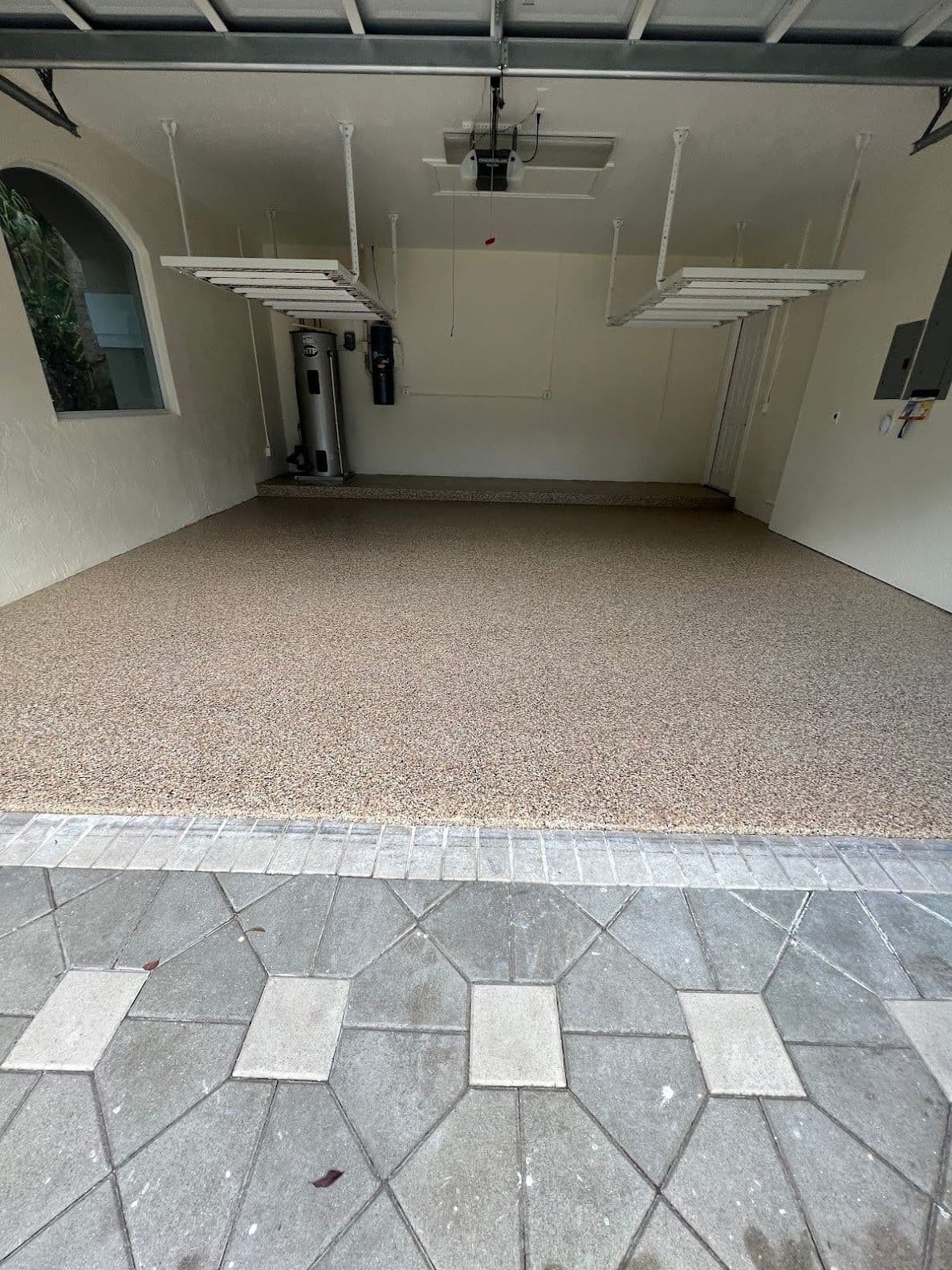
We had both of our garages done and an outdoor concrete platform. The crew was courteous and professional. Everyone from Nancy our salesperson to Patrick, the manager, Logan and his crew were outstanding. Our floors look fantastic and we were very happy we chose this company.
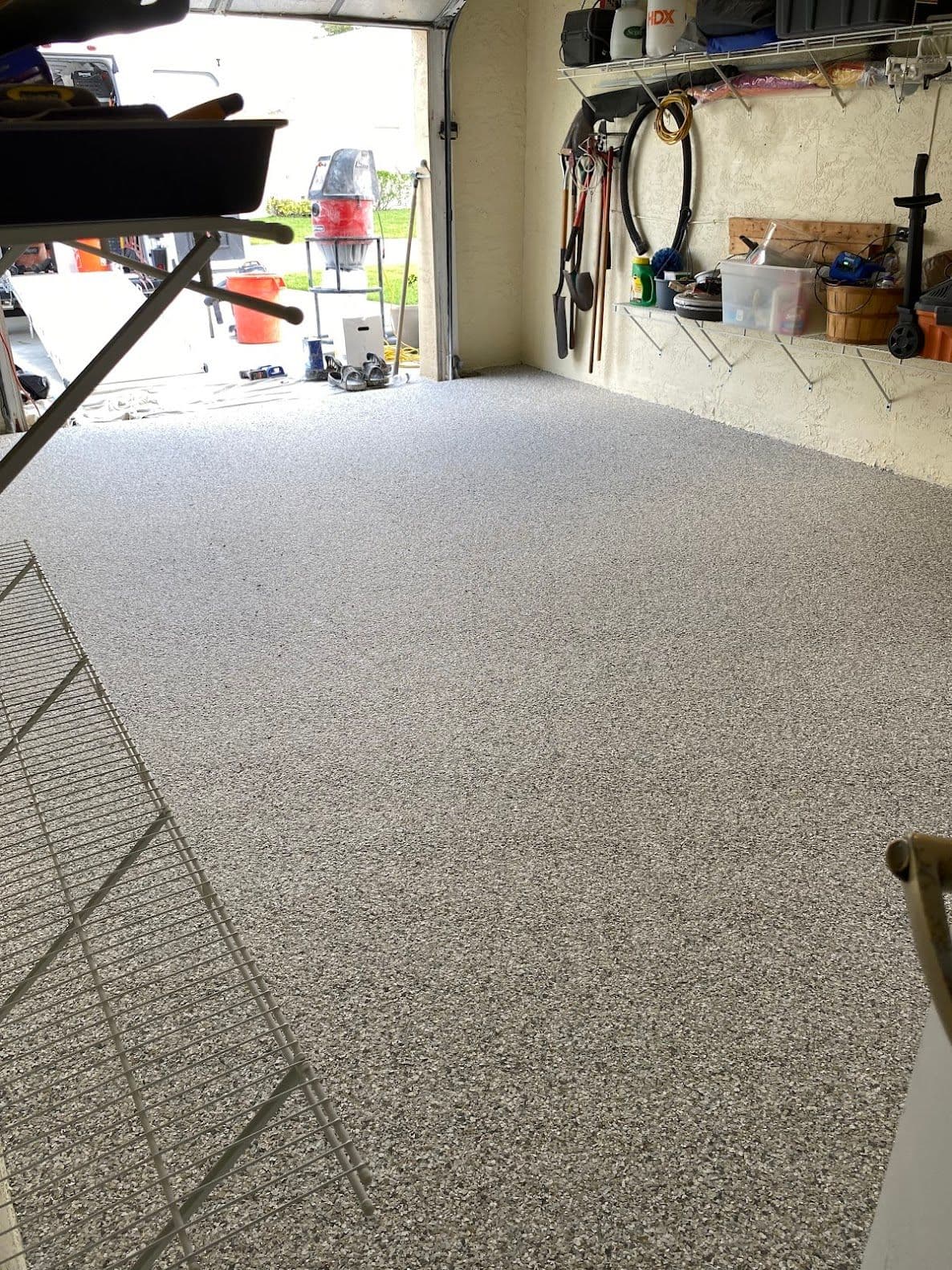
I am very pleased with the quality of work FloorTek has done for me. The two employees that did the actual work were very courteous, worked hard, and explained everything they were doing. Thank you for a great job.
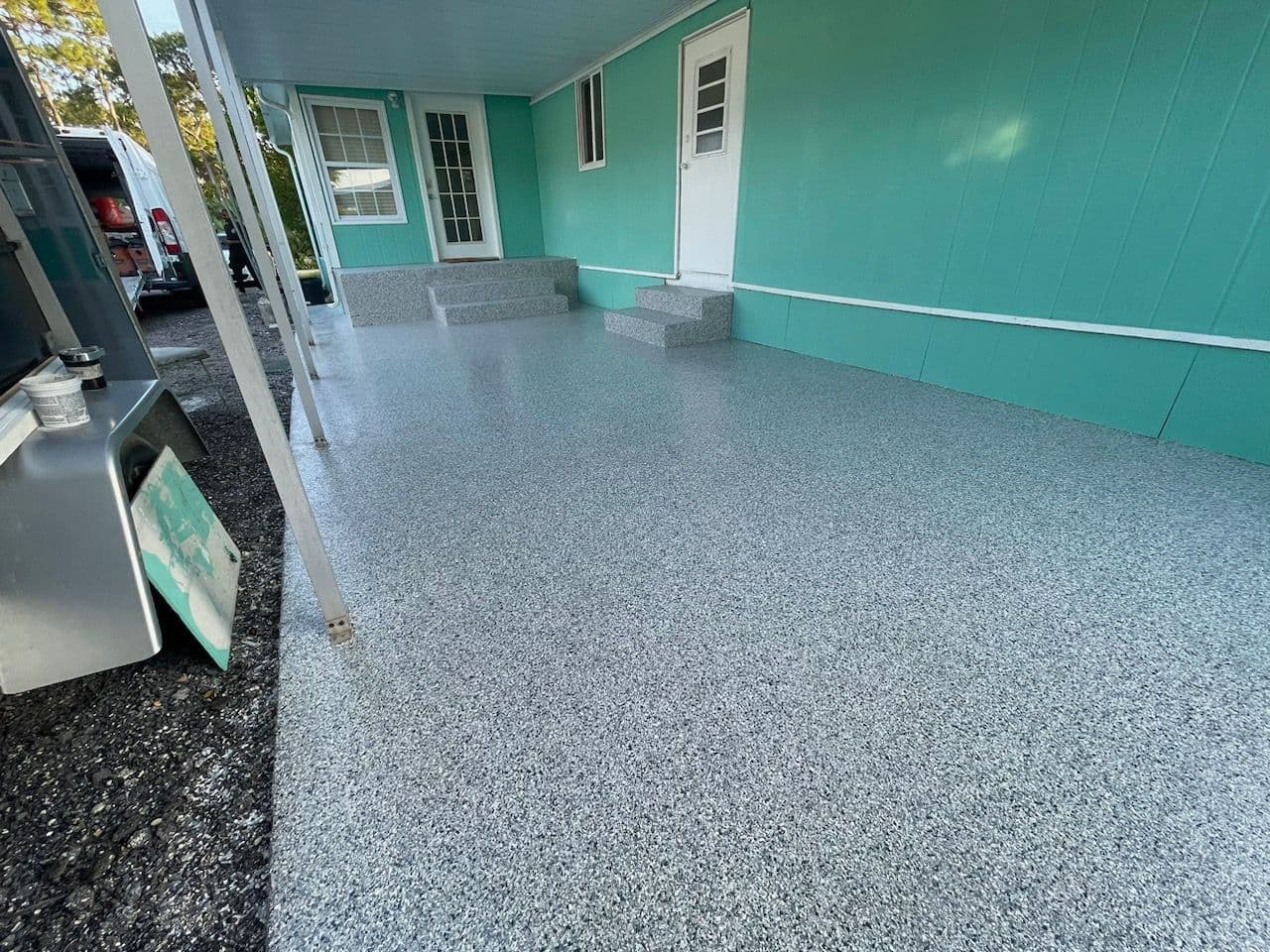
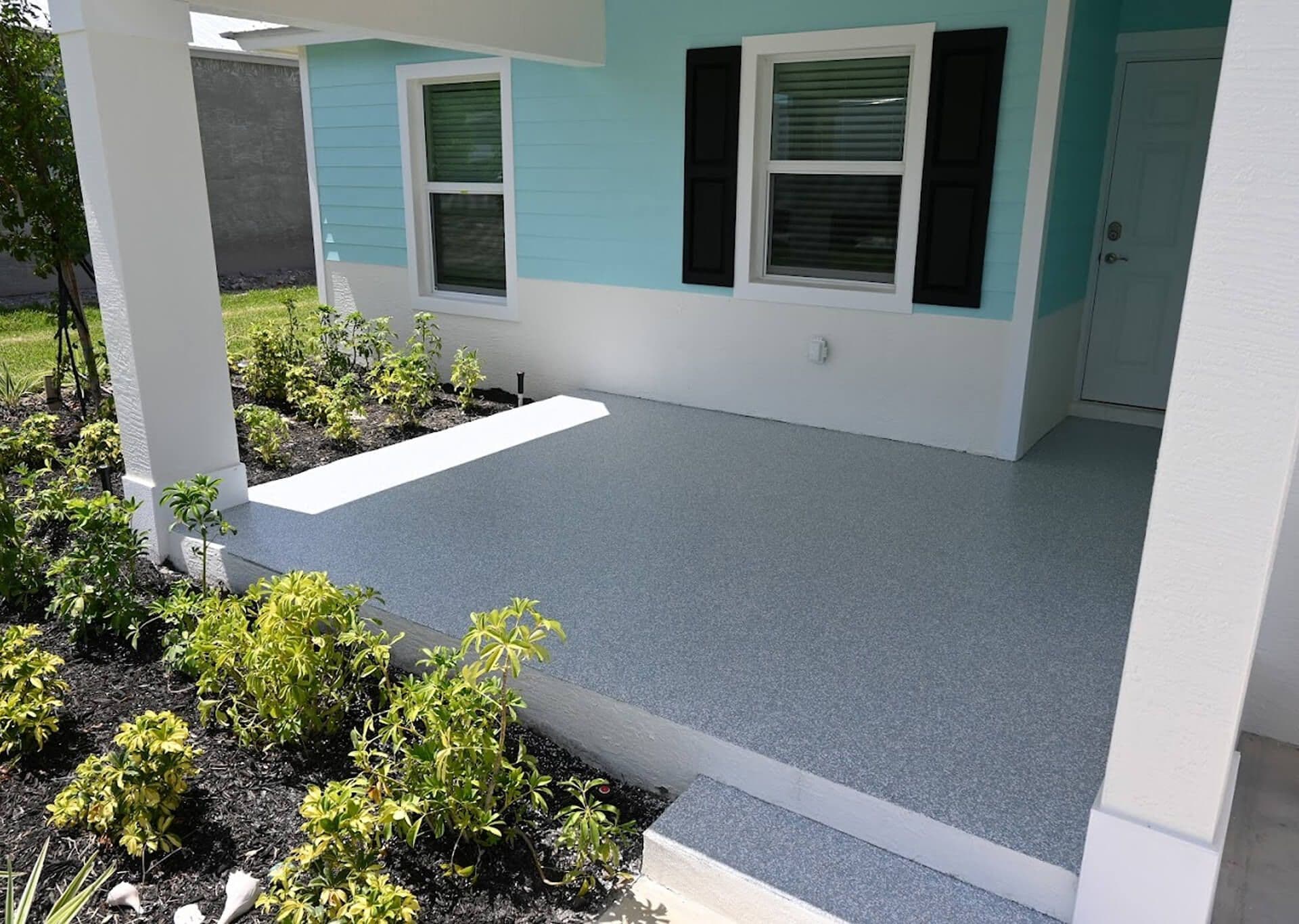
I was happy with the job Floortek did. Good customer communication and customer relationship. My old ugly porch was transformed and I love it. Nancy was very helpful throughout the process. Just know that rain may impact your schedule to make sure the products at highest quality during application.



Contact FloorTek Today