Epoxy vs. Polyaspartic: Why Your Garage Floor Deserves Better Than Epoxy
The epoxy vs polyaspartic debate is a big one for homeowners looking to upgrade their concrete floors. If you're tired of staring at stained, dusty, or cracked concrete, you've started researching coatings. For decades, epoxy was the go-to solution. It was the only real option available. But as you've likely seen, it comes with a long list of problems.
We're Floortek Coatings, and we specialize in polyaspartic coatings for a simple reason: they are 10X better than epoxy.
You shouldn't have to endure the frustration of replacing your garage floor coating every few years. The peeling, flaking, and unsightly yellowing of epoxy can be a constant source of annoyance. You deserve a solution that lasts. This guide will walk you through a real comparison of epoxy vs. polyaspartic, so you can see why many homeowners are finding relief in making the switch.
The Old Way: What’s the Deal with Epoxy?
Epoxy is a resin system that, when mixed, creates a chemical reaction that hardens it into a solid, plastic-like surface. It's been used for a long time as a basic coating. It looks good... at first.
However, if you speak with anyone who has had an epoxy floor for more than a few years, especially one made with a DIY kit, you’ll hear the same complaints.
The Big Problem: Peeling and Flaking
The single biggest failure of epoxy is that it does not create a mechanical bond. In simple terms, it just sits on top of the concrete like a hard shell. Your home's concrete is constantly expanding and contracting in response to temperature changes. Epoxy is brittle and rigid. It doesn't move with your concrete.
This is especially true with hot tires. When you pull your car into the garage after driving, your tires are hot. This heat softens the epoxy, and as the tires cool, they contract, literally pulling the epoxy coating right off the floor. This is known as "hot-tire pickup," and it's the primary reason epoxy floors fail.
It Takes Forever to Install
An epoxy installation isn't a weekend project. It’s often a week-long headache.
The installation requires multiple coats, and each coat needs 12-24 hours to dry before the next one can be applied. After the final coat, it can take another three to five days—sometimes longer in humid or cold weather—before it's "cured" enough to walk on, and even longer before you can park your car on it. You lose access to your garage for the better part of a week.
It Fades and Turns Yellow
Epoxy is not UV stable. This means direct sunlight will cause it to fade and take on an ugly, yellowish tint over time. If you have windows in your garage or plan to leave the garage door open, your floor will discolor. This also makes it a terrible choice for any outdoor space.
The Smell (VOCs)Most traditional epoxy systems are high in VOCs (Volatile Organic Compounds).
These are chemical-smelling fumes that are released during and after installation. The smell can be overwhelming and linger in your home for days. According to the US Environmental Protection Agency, VOCs encompass a range of chemicals that can have adverse health effects.
When comparing epoxy and polyaspartic garage floor options, critical factors to consider.
The Modern Solution: Why Polyaspartic is 10X Better
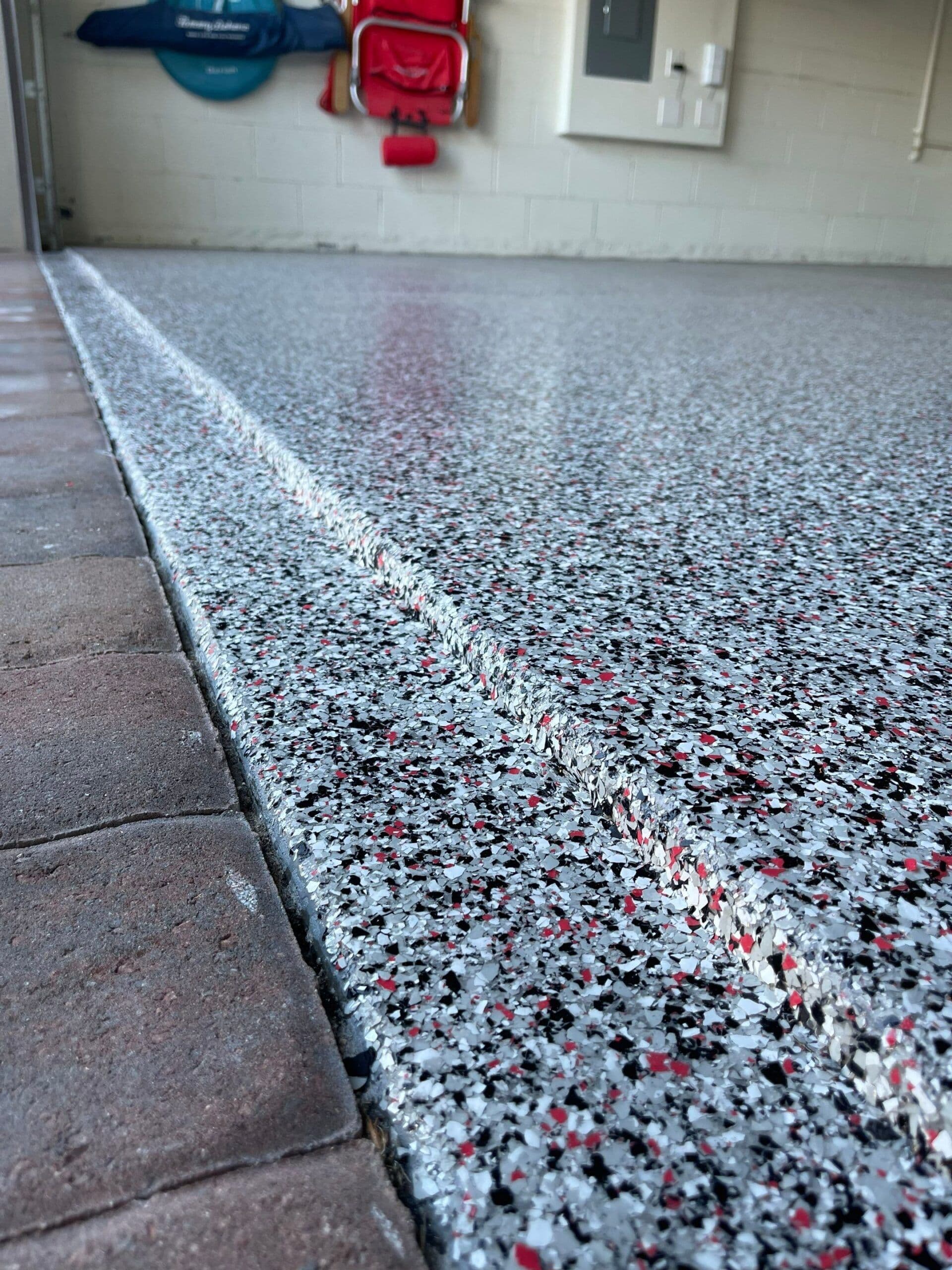
Polyaspartic coatings are a newer, more advanced technology. They are a type of polyurea (which answers the polyaspartic vs polyurea Question—polyaspartic is a specific, superior type of polyurea. Instead of just sitting on top of the concrete, polyaspartic forms a chemical bond. It wicks into the concrete, almost like a stain, and becomes a permanent part of it. This one difference solves nearly every problem epoxy has.
Benefit #1: A True 1-Day Installation
This is what stuns most homeowners. Our professional Floortek Coatings diamond-grind team can install your floor in one day. Morning: We arrive and start by preparing your concrete. We diamond grindersetch; we use industrial diamond grinders to open up the pores in the concrete. This is the most critical step for a permanent bond.
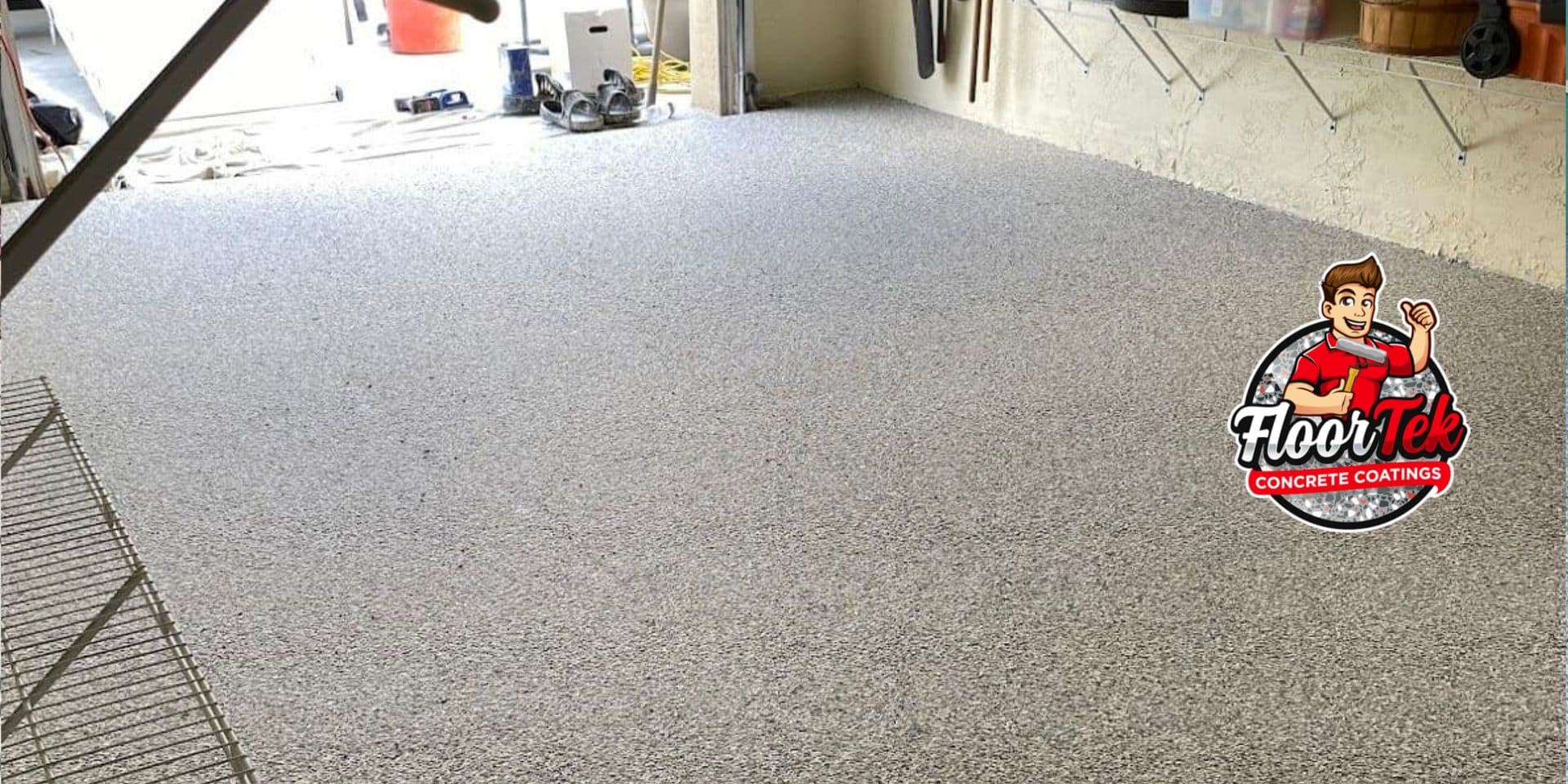
Mid-day: We apply our base coat and full-flake broadcast.
Afternoon: We apply our crystal-clear, 100% UV-stable polyaspartic topcoat.
Because it cures so quickly, you can walk on your new floor just a few hours later. You can park your car on it the very next day. You get your garage back immediately. This is the new standard, making the old, slow epoxy method obsolete.
Benefit #2: Flexibility and 4X Strength
Remember how epoxy is brittle and cracks? Polyaspartic is the opposite. It is incredibly flexible and 4X stronger than epoxy.
This flexibility is the key. Whether you live in the freezing winters of the Northeast or the intense summer heat of the South, your concrete will expand and contract. Polyaspartic moves with your floor, so it will never peel, flake, or crack. It permanently withstands hot-tire pickup.
This superior durability is the primary reason polyaspartic outperforms epoxy. Yes, by a mile. This is also why we back our Coating Products with a Life-of-Home warranty.
Benefit #3: It Will Never Turn Yellow
Polyaspartic coatings are 100% UV stable. You can leave your garage door open all day, every day. Sunlight from windows won't affect it. The color you pick is the color it stays—forever.
This UV stability also means it's the only wise choice for outdoor spaces. We'll talk about that more in a bit.
Benefit #4: Better for You and Your Home
Our polyaspartic system is low in VOCs. There's no lingering, toxic smell that seeps into your house. It's a safer, more modern solution for your family.
This is the clear-cut answer to the polyaspartic vs epoxy floor coating Question. One is an old, failing technology. The other is a modern, permanent solution.
Comparison: The Real Epoxy vs. Polyaspartic Garage Floor Comparison
Let's break down the epoxy vs. polyaspartic choice head-to-head.
- Durability and Strength: Epoxy Brittle Sits on top of the concrete. Prone to peeling from hot tires and cracking from temperature changes.Polyaspartic: Flexible and 4X stronger. It bonds with the concrete, becoming an integral part of it. It does not peel or crack. Installation and Cure Time: Epoxy: Takes 3 to 5 days, or even longer. You lose your garage for a week.
- We're in and out in one day. You can walk on it for hours and park the next day.UV Stability (Yellowing)sunlight. ClimateEpoxy: Will fade and turn yellow from sunlight. P
- 100% UV stable. It will never yellow or fade, even in direct sunlight. Climate Performance often struggles in real-world US climates. Epoxy: Struggles in real-world US climates. Extreme cold can make it more brittle and increase the likelihood of cracking—extreme heat can cause it to peel.
- Made for all climates. Its flexibility allows it to handle the expansion and contraction of concrete in any weather, from cold to scorching heat. According to Purdue University Extension, concrete expands and contracts, and your coating needs to accommodate this movement.
Chemical Resistance
Epoxy: Can stain from spilled gas, oil, or road salt.
Polyaspartic: Highly resistant to chemicals. Oil, gas, salt, and other spills wipe right up without staining, keeping your floor looking new.
The Value Discussion: Polyaspartic vs. Epoxy Cost
We need to address the polyaspartic vs epoxy cost Question. An epoxy kit or a cheap installation is less expensive upfront. But this is a classic "you get what you pay for" scenario.
When that epoxy floor fails in 2-3 years—when it starts peeling, flaking, and looking terrible—you will have to pay to have it all ground off and redone. A polyaspartic floor from Floortek is a one-time investment. It’s a permanent upgrade to your home that adds real value.
The polyaspartic garage floor coating vs epoxy Choice isn't about cost; it's about value. You can pay once for a floor that lasts, or you can pay over and over again for a floor that fails.
Beyond the Garage: Resurfacing Your Whole Home
Because our polyaspartic system is 100% UV stable and incredibly durable, it's the perfect solution for any concrete surface, especially outdoors, where epoxy is guaranteed to fail.
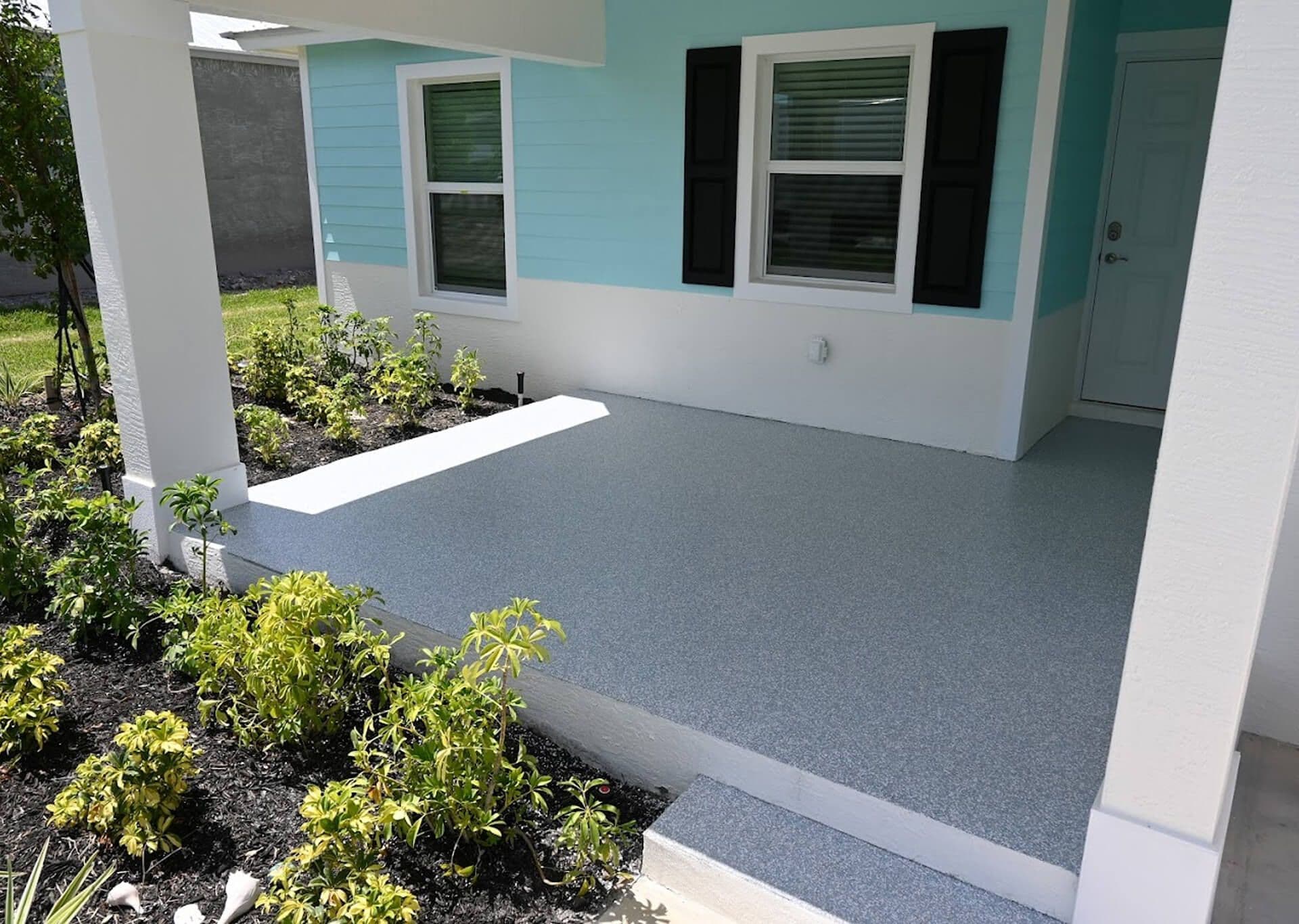
Patios: Our patio coating service transforms your outdoor living space. It’s easy to clean and won't fade in the sun.
Pool Decks: Stop burning your feet on hot concrete. Our pool deck coating service creates a beautiful, durable surface that stays cooler to the touch.
Driveways & Sidewalks: Ready for Exceptional Curb Appeal? Our driveway and sidewalk coating services can withstand heavy traffic, road salt, and snow shovels without damage.
Basements: Turn that dusty basement into a clean, finished living area. Our Basement coating service is a perfect, modern flooring solution.
You can see examples of all these applications in our Gallery.
The Floortek Difference: It's About Process
A great floor is about more than just great materials. It’s about the team and the process. The About Our page shows our commitment, but our process proves it.
The most crucial step in any floor coating process is preparation. Anyone who tries to sell you a "one-step" epoxy kit or acid-washes the floor is setting you up for failure.
We utilize industrial-grade diamond grinding machines to profile your concrete. This opens up the pores, removes any old coatings or sealers, and creates the perfect surface for our polyaspartic to bond with permanently. This step is non-negotiable, and it's why our floors last.
We also offer a vast range of Colors and Flake Options, so you can achieve the exact look you want.
When considering the entire polyaspartic polyurea vs. epoxy floor System, the choice is clear.
Stop Waiting and Start Enjoying Your Floor
You've seen the facts in the epoxy vs polyaspartic debate. Epoxy is an outdated, temporary fix that leads to peeling and frustration. Polyaspartic is a modern, permanent solution that adds value to your home.
Your home deserves better than failing epoxy. You deserve a beautiful, durable floor you can be proud of, installed in just one day.
Special Offer: 30% OFF Your First Installation!
There has never been a better time to upgrade. For a limited time, all new customers receive 30% off their first installation.
Don't wait for your epoxy to peel again. Let's do it right the first time.
Call us right now at (844) 844-4164, or fill out our simple online form to get your Free Quote.
Click Here to Get Your Free, No-Obligation Quote
Frequently Asked Questions (FAQ)
Here are some of the most frequently asked questions we receive about epoxy versus polyaspartic floors.
How long is the lifespan of Epoxy vs. Polyaspartic coatings?
Polyaspartic lasts significantly longer than traditional epoxy systems. It is four times stronger and far more flexible. A Floortek Coating bonds deep into concrete pores to prevent peeling. When comparing Epoxy vs. Polyaspartic, epoxy often chips within just a few years. Our polyaspartic system includes a Life-of-Home warranty for permanent peace of mind. Reference concrete durability standards for technical data.
Which coating handles sunlight better, Epoxy or Polyaspartic?
Polyaspartic is 100% UV stable and will never yellow from sun exposure. Epoxy coatings turn amber and become brittle under direct sunlight. A Floortek Coating maintains its high-gloss finish for decades. In the Epoxy vs. Polyaspartic debate, UV resistance is a major polyaspartic win. This ensures your Manufacturer-direct value remains protected. Consult UV radiation effects for environmental facts.
Is the installation time different for Epoxy vs. Polyaspartic floors?
Yes, polyaspartic cures much faster than traditional epoxy. A Floortek Coating allows you to drive on it within 24 hours. Epoxy requires several days of curing before any heavy use. When comparing Epoxy and Polyaspartic, speed is a major Life-of-Home advantage for homeowners. Get 30% Off first installation for a fast garage upgrade. See seasonal construction data for timing insights.
Does Epoxy vs. Polyaspartic offer better concrete adhesion?
Polyaspartic penetrates deep into the concrete pores for a permanent bond. Epoxy merely sits on top and can easily delaminate. A Floortek Coating creates a mechanical bond that resists hot-tire pickup. Comparing Epoxy vs. Polyaspartic shows that epoxy is prone to surface failure. Our polyaspartic technology includes a Life-of-home warranty. Review engineering standards for material science.
How do chemicals affect the surface of Epoxy vs. Polyaspartic?
Polyaspartic resists oil, gasoline, and harsh road salts much better than epoxy. Epoxy can stain or soften when exposed to automotive fluids. A Floortek Coating provides a non-porous shield against industrial spills. In the Epoxy vs. Polyaspartic comparison, polyaspartic offers superior chemical protection. This protects your Manufacturer-direct value long-term. Check chemical safety guidelines for details.
Can moisture issues be solved by choosing Epoxy vs. Polyaspartic?
Yes, a professional vapor barrier prevents ground moisture from destroying your floor—standard epoxy often bubbles when moisture rises through the concrete. Floortek Coating uses advanced chemistry to mitigate hydrostatic pressure. The Epoxy vs. Polyaspartic choice determines if your floor stays bonded. Enjoy a Lifetime Home warranty against moisture-related failure.—Reference hydrostatic pressure facts for clarity.
Which provides a better return on investment: Epoxy vs. Polyaspartic?
Polyaspartic offers significantly better long-term value than cheaper epoxy kits. Epoxy requires frequent repairs and total replacement every few years. A Floortek Coating is a permanent, high-performance solution for your home. When weighing Epoxy vs. Polyaspartic, the durability of polyaspartic saves money. Take 30% Off first installation for an affordable upgrade. See home improvement value for financial stats.
Does installation temperature matter for Epoxy vs. Polyaspartic?
Yes, polyaspartic can be installed in extreme cold or heat. Epoxy requires a very narrow temperature window to cure properly. A Floortek Coating installs year-round in temperatures as low as -20°F. The Epoxy vs. Polyaspartic difference allows for winter garage renovations. Our polyaspartic formula adapts perfectly to your local climate. Consult surface preparation tips for more.
Which is safer for wet garage floors: Epoxy vs. Polyaspartic?
Polyaspartic systems are engineered with anti-slip textures for maximum safety. Epoxy floors become dangerously slick when wet or oily. A Floortek Coating ensures a secure grip for your family. In the Epoxy vs. Polyaspartic safety review, polyaspartic is the clear winner. This adds Manufacturer-direct value to your home safety. Review workplace safety standards for more info.
Are there health concerns related to VOCs in Epoxy vs. Polyaspartic products?
Yes, polyaspartic is much safer for your family and pets. Epoxy often contains high VOCs that linger in the air for weeks. Floortek Coating uses low-VOC, eco-friendly materials for every installation. The Epoxy vs. Polyaspartic debate must include indoor air quality considerations. Polyaspartic is the responsible choice for your home. See indoor air quality info for safety tips.
FREE In-Home Estimate
Plus 30% Off
Testimonials
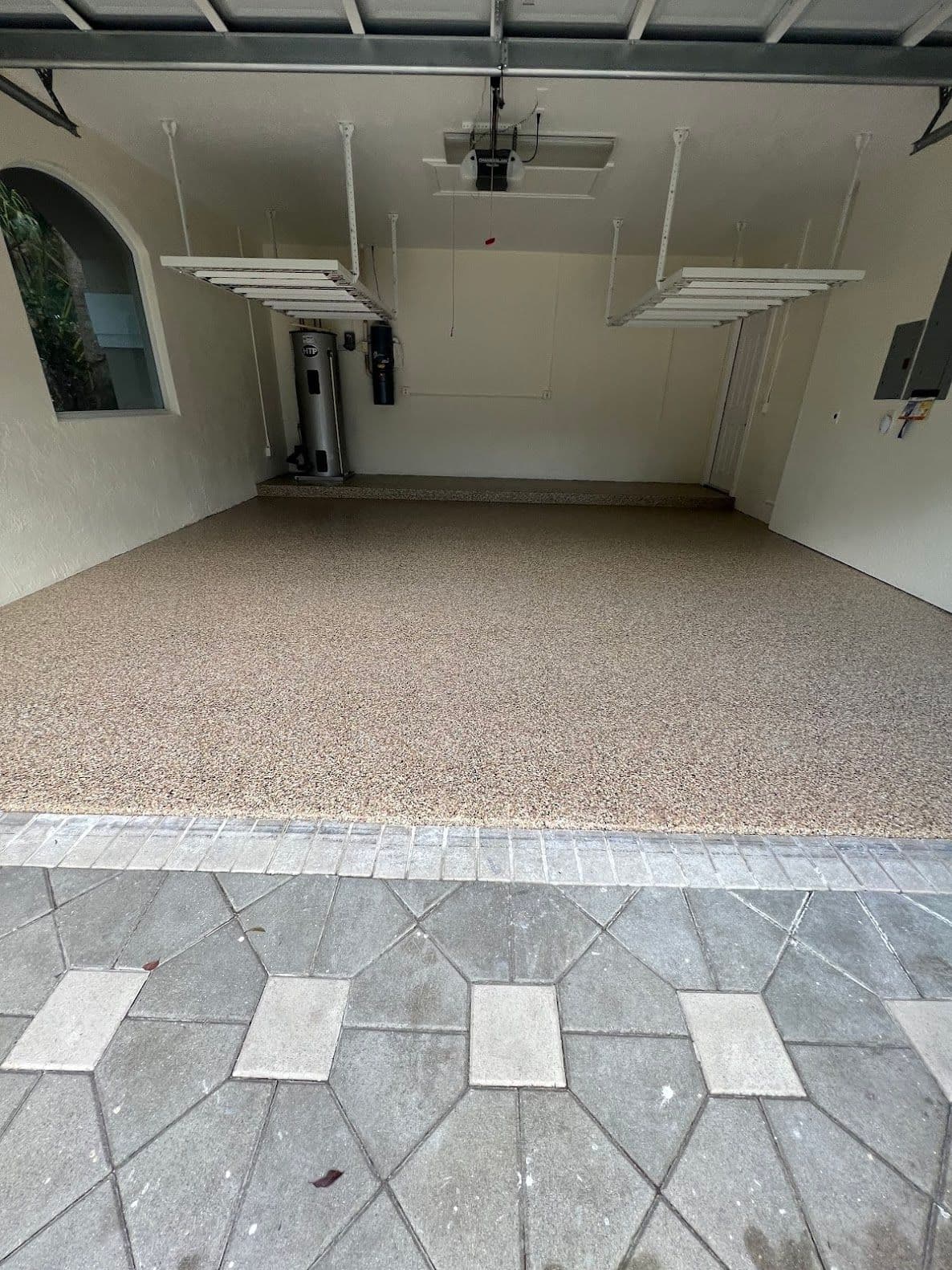
We had both of our garages done and an outdoor concrete platform. The crew was courteous and professional. Everyone from Nancy our salesperson to Patrick, the manager, Logan and his crew were outstanding. Our floors look fantastic and we were very happy we chose this company.
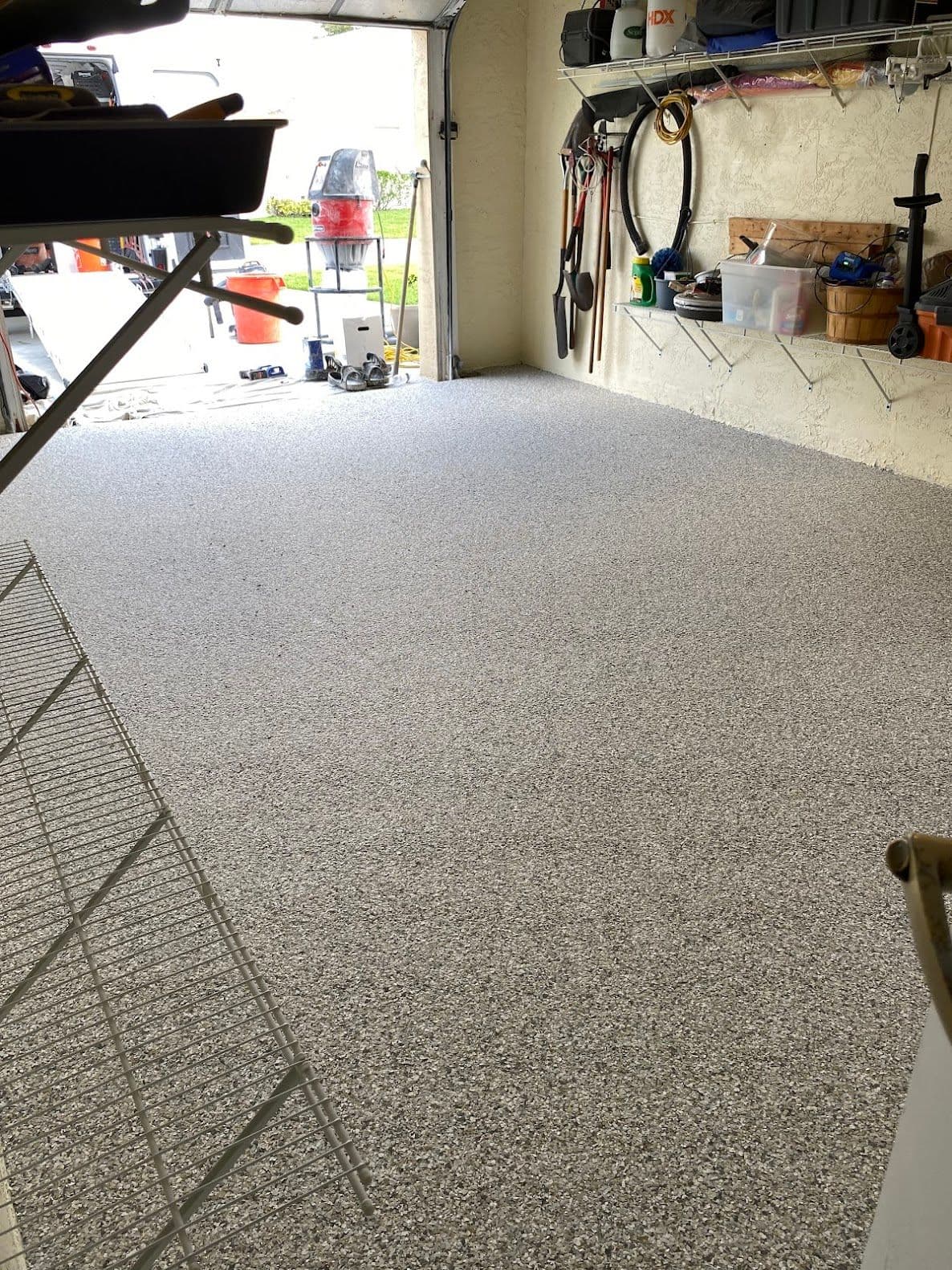
I am very pleased with the quality of work FloorTek has done for me. The two employees that did the actual work were very courteous, worked hard, and explained everything they were doing. Thank you for a great job.
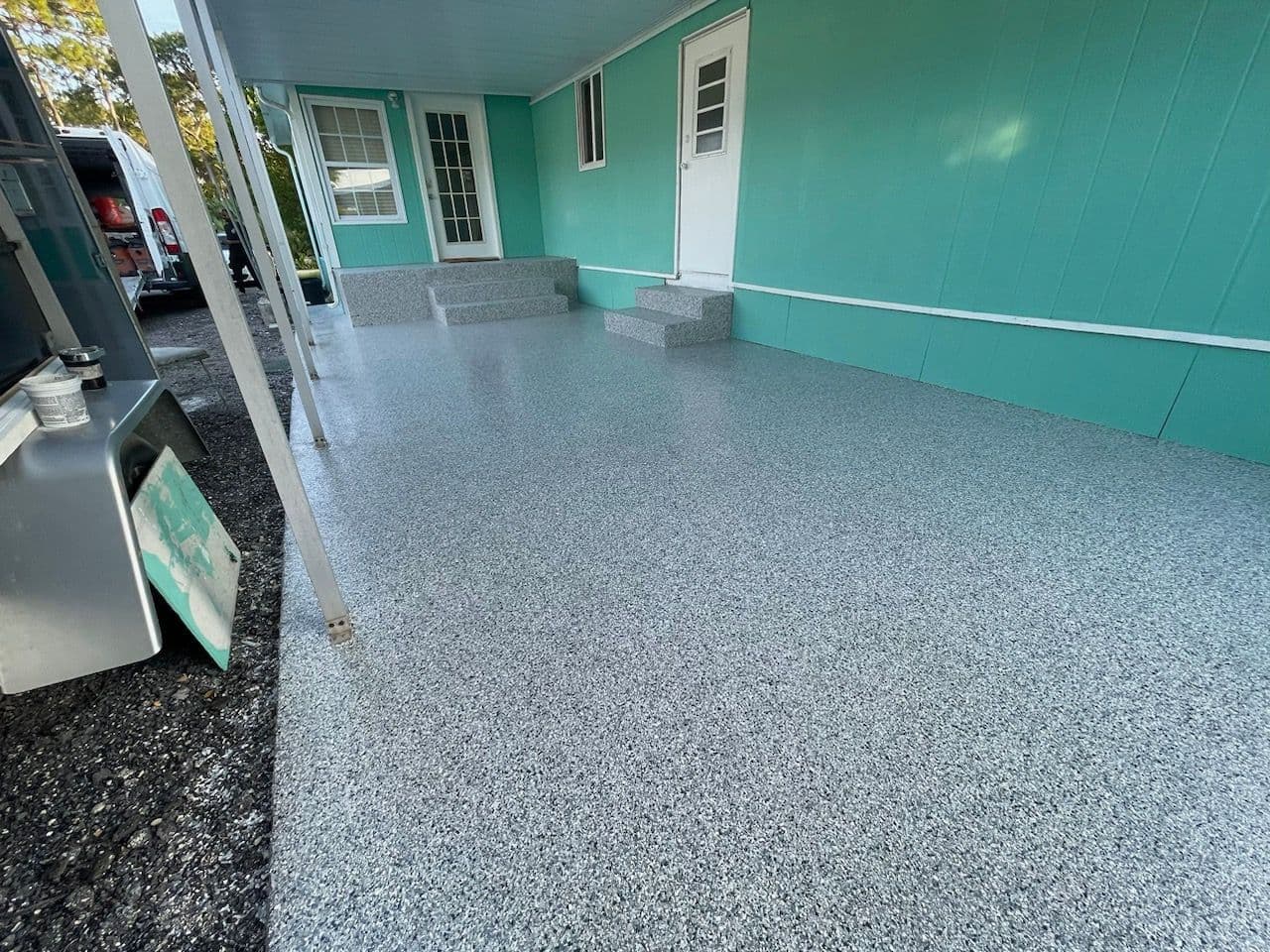
I was happy with the job Floortek did. Good customer communication and customer relationship. My old ugly porch was transformed and I love it. Nancy was very helpful throughout the process. Just know that rain may impact your schedule to make sure the products at highest quality during application.



Contact FloorTek Today