Epoxy Garage Floor vs Polyaspartic: An Honest Contractor's Guide
If you're searching for epoxy garage floor vs polyaspartic coatings, you're trying to answer a straightforward question: which one is actually better for your home? You’ve probably heard a lot of different claims, and frankly, it isn’t very clear.
At Floortek Coatings, we switched exclusively to bringing our professional expertise to the table. Having worked with all types of coatings, we're here to provide you with the honest, straightforward truth. For years, epoxy was the standard. However, with advances in technology and our experience in repairing failing epoxy floors, we switched to installing polyaspartic floor coatings.
That’s why we made the switch and now exclusively install polyaspartic floor coatings.
In this guide, we'll walk you through the real-world differences between these two products. We’ll show you why we believe our polyaspartic system is 10X better than epoxy and the only solution we trust for our customers.
Customers: Thank you, new customers. Thank you for reading. We're offering a special 30% off the first installation. Read on to see why you should never settle for an epoxy floor, and when you're ready, call us for a Free Quote.
What Is a Traditional Epoxy Floor? (The Old Standard)
You’ve seen epoxy floors everywhere. It’s a two-part resin system that, when mixed, creates a chemical reaction that hardens into a solid, plastic-like surface. For a long time, it was the go-to solution for covering up ugly, stained garage concrete.
It looks great... at first.
But if you've ever seen an epoxy floor after a few years of real-world use, you’ve seen the problems. We're talking about:
Peeling and lifting, especially where your car tires sit.
That ugly, faded yellow color in spots where the sun hits it.
Chips and scratches from a dropped wrench or a dragging garbage can.
The simple truth is that epoxy is an older technology. It’s a rigid coating that sits on top of your concrete, almost like a thick layer of paint. As we’ll explain, this "top-layer" approach is precisely why it fails.
What Is a Polyaspartic Floor? (The Modern Solution)
Polyaspartic is not just a "better epoxy." It's an entirely different and more advanced chemical technology. It's a type of polyurea, a material known for its extreme durability (you'll find it on bridges and in industrial settings).
Think of it this way: Epoxy sits on the concrete, but polyaspartic bonds with the concrete.
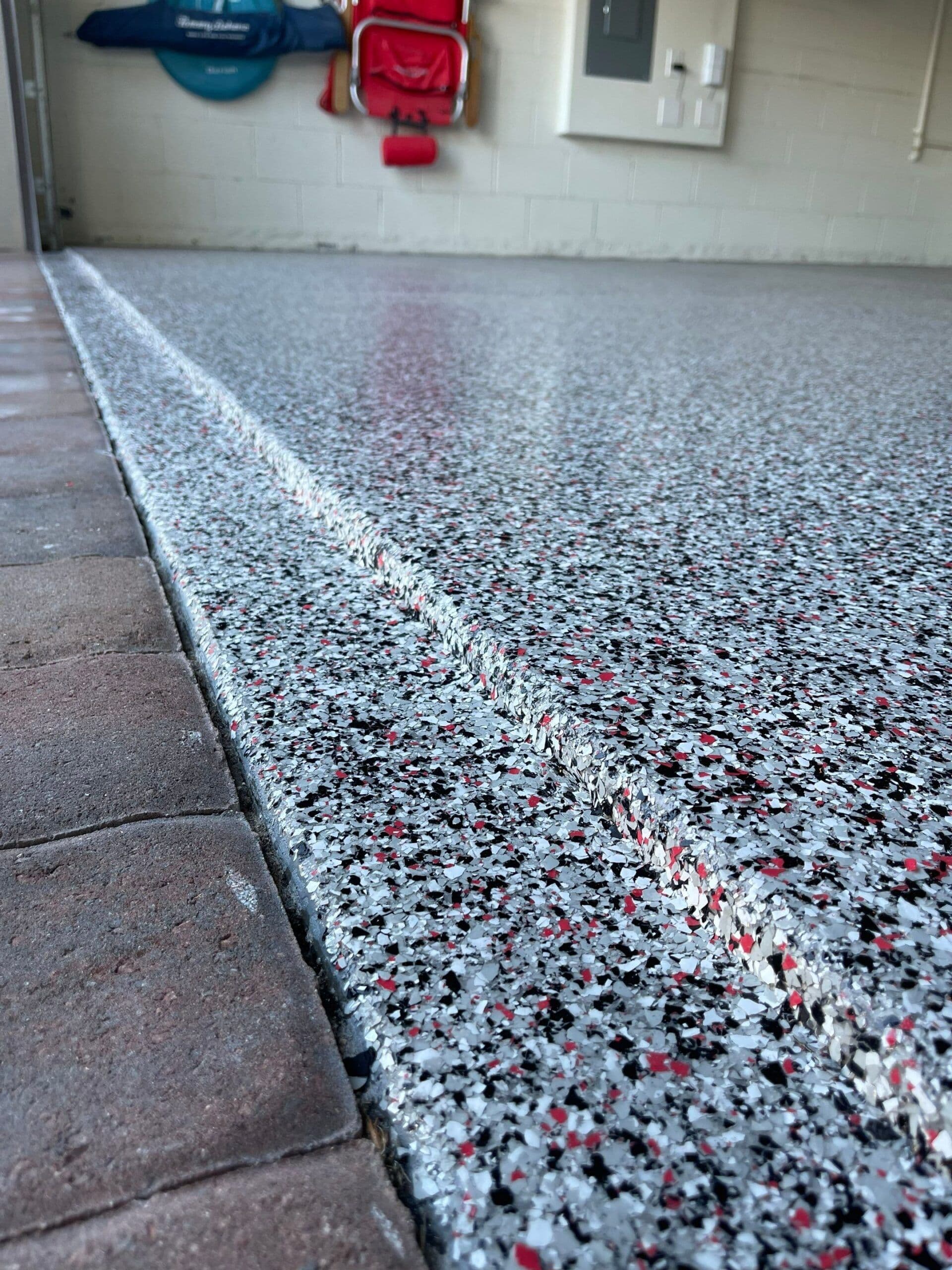
During our preparation process, we diamond-grind your concrete floor. This opens up the pores of the concrete. When we apply the polyaspartic basecoat, it dives deep into those pores and forms a permanent, molecular bond. It doesn’t just stick to the concrete; it becomes part of it.
This fundamental difference is why polyaspartic solves all the problems that plague epoxy floors. It’s the core of the epoxy vs. polyaspartic Debate, and it’s why we confidently back our floors with a Lifetime Home warranty, ensuring you the long-term value of your investment.
The Big Showdown: A Deeper Look at Polyaspartic vs. Epoxy
When you compare them side-by-side in the real world, the polyaspartic vs epoxy floor coating battle isn't even close. Let’s break down the key differences you, as a homeowner, will actually experience.
Installation Time: Get Your Garage Back in 24 Hours
This is one of the most significant advantages.
Epoxy: A typical epoxy installation typically takes 3 to 5 days. You have to apply a coat, wait 24 hours for it to "cure," apply another coat, wait again... all while your garage is completely unusable. This long cure time is also susceptible to temperature and humidity fluctuations, which can easily delay an installation.
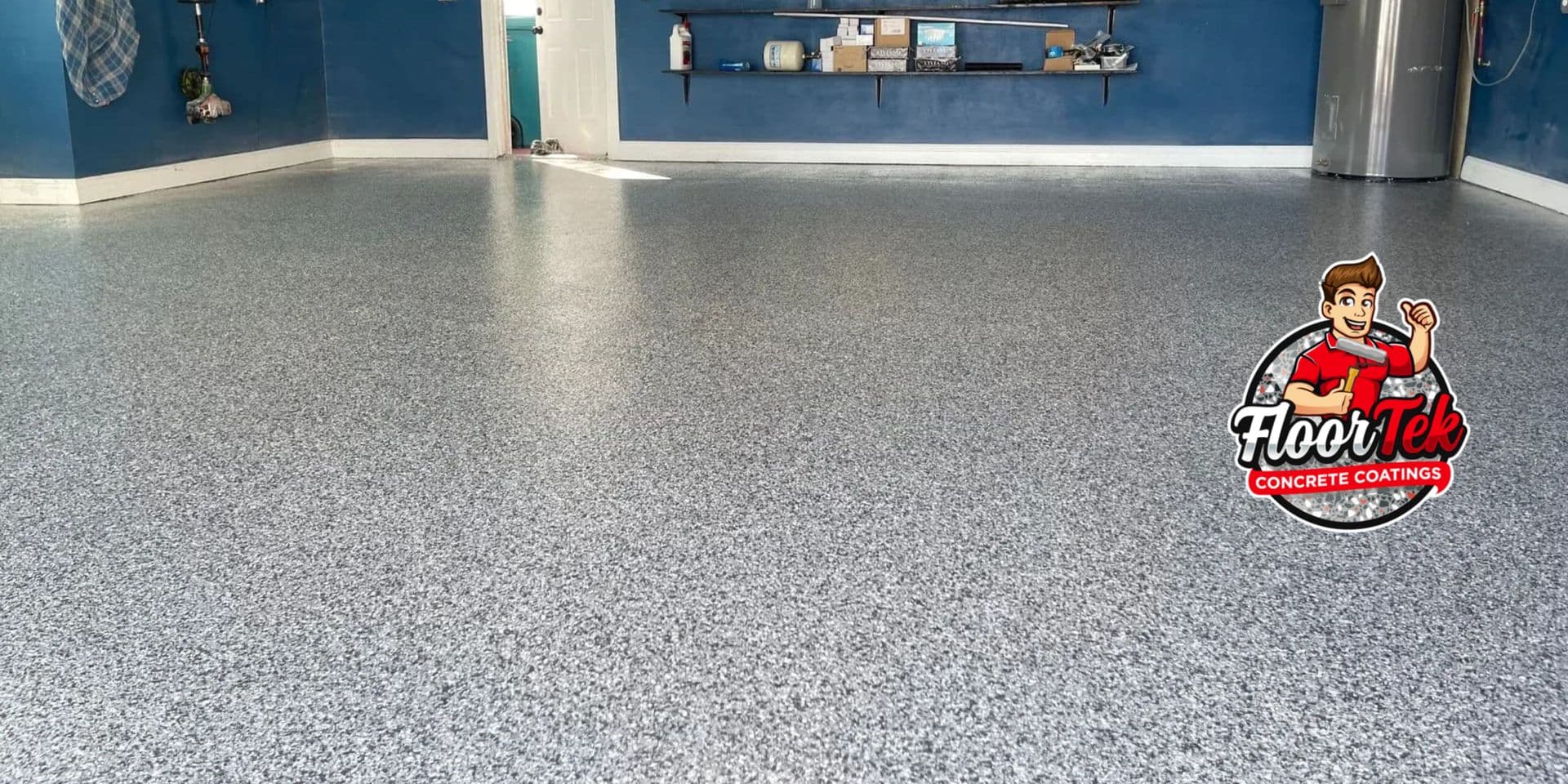
Our system is installed as a one-day floor coating. Our team arrives in the morning, preps your floor, applies the multi-layer system, and is gone by the afternoon. The coating cures incredibly fast, allowing you to walk on it in just a few hours and park your cars back in the garage the very next day, minimizing the disruption to your daily routine.
Durability: Hot Tires, Dropped Tools, and Daily Life
Your garage floor takes a beating. Here’s how each one holds up.
Epoxy: Epoxy is hard, but it's also brittle. A heavy, sharp impact (like a hammer) can cause it to chip or crack. Its most significant failure, however, is "hot tire pickup." When you drive, your tires get hot. Park on an epoxy floor, and that heat can soften the resin. When you back out the next day, the epoxy can stick to your tires and peel right off the floor, leaving a bare spot.
Polyaspartic: Polyaspartic is four times more abrasion-resistant than epoxy. It’s built to be industrial-grade tough. However, it’s also more flexible, allowing it to absorb impacts without chipping. Most importantly, it has an extremely high heat tolerance. You can park a hot car on it all day, even in a blazing hot garage, and it will never peel.
Sun & UV Rays: The Yellowing Problem
This is a critical factor, especially for any garage that gets sunlight.
Epoxy: Epoxy is not UV stable. Period. If you have windows in your garage or leave your garage door open, the sun's ultraviolet rays will break down the epoxy resin. It will fade and, in most cases, turn a sickly yellow color over time.
Polyaspartic: Our polyaspartic topcoat is 100% UV stable. It acts like a permanent sunscreen for your floor. The color you pick on day one is the color it will stay for decades, guaranteed. This is a vital difference in the epoxy vs polyaspartic garage floor Comparison for any home.
Flexibility & Climate: Handling America's Weather
From freezing winters to scorching summers, your concrete is always moving.
Epoxy: As a rigid, plastic-like shell, epoxy doesn't move. Your concrete, however, is constantly expanding and contracting with temperature changes. As the concrete shifts, the brittle epoxy can't flex with it. This stress leads to cracks, delamination, and peeling.
Polyaspartic: Polyaspartic is engineered to remain flexible. It expands and contracts in tandem with your concrete, maintaining its bond regardless of the season. Whether it's a brutal, icy winter or a humid, 100-degree summer, the bond holds. This is a key reason why polyaspartic is better than epoxy for all US climates.
Fumes and Chemicals (VOCs)
That "new floor smell" isn't always a good thing.
Epoxy: Many epoxy systems are high in solvents and VOCs (Volatile Organic Compounds). That strong chemical smell can linger in your home for days, and according to the U.S. Environmental Protection Agency (EPA), these fumes can impact indoor air quality.
Polyaspartic: Our system is ultra-low in VOCs. There's a faint smell during application, but it dissipates quickly as the product cures. It's a much safer and more pleasant option for your family.
Why Floortek Chose Polyaspartic (And Why You Should, Too)
We built Floortek Coatings on a simple promise: to provide the best-performing, longest-lasting floor coating on the market. You can learn more about us and our mission, but ultimately, it comes down to trust.
We could offer cheaper epoxy floors. But we would be installing a product we know will fail. We aren't interested in that. We're interested in solving your problem for good.
That's why we invested in Our Coating Products And the extensive training required to install polyaspartic systems correctly. The installation is highly technical and requires specialized equipment—it's not a DIY-friendly product. That's a good thing. It means it's a professional-grade solution that delivers professional-grade results.
When you see the stunning transformations in our Gallery, you're not just seeing a pretty floor. You're seeing a floor that will look just as good 20 years from now.
It’s Not Just for Garages: Upgrade Your Whole Home
This same durable, beautiful technology is the perfect solution for any concrete surface, both inside and outside your home. The debate over polyaspartic garage floor coating vs epoxy is settled, but the benefits don't stop at the garage door.
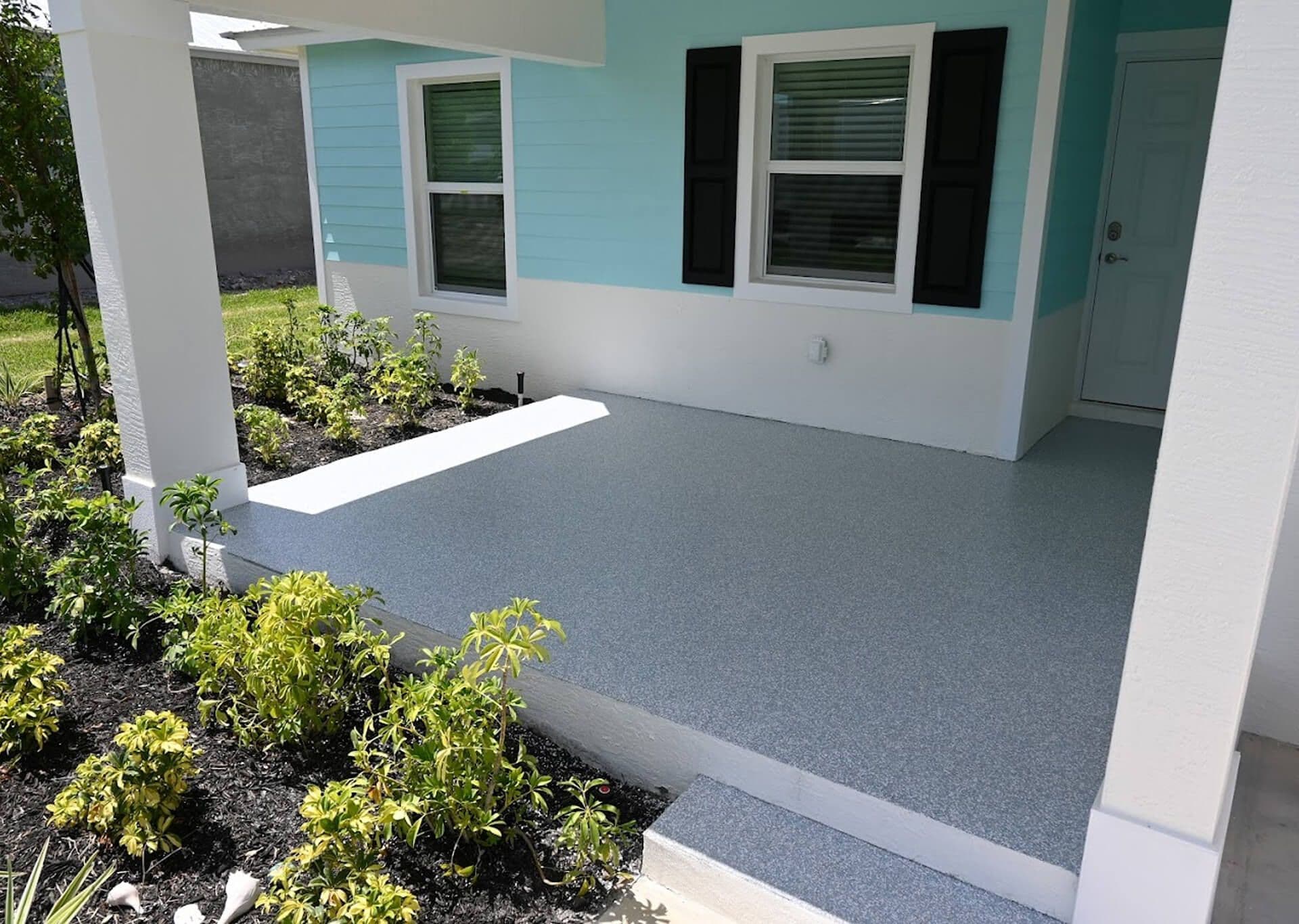
Patios: Our patio coating service transforms your outdoor space. It’s UV stable, so it will never fade in direct sunlight, and it's easy to clean.
Pool Decks: Achieve a beautiful, textured finish for your pool decks with our coating service, rather than concrete. It stays cooler on bare feet and can withstand constant exposure to water and sunlight.
Driveways & Sidewalks: Boost your curb appeal with our driveway coating service. It’s strong enough to handle vehicle traffic and is resistant to salt, oil, and gas. It’s also perfect for sidewalk-coating services.
Basements: Our Basement coating service creates a clean, bright, and beautiful floor for your living space.
With hundreds of Colors and flake options, we can create a custom look that perfectly matches your home's style.
Your Questions Answered: The Polyaspartic vs. Epoxy FAQ
We receive numerous questions about this topic. Here are the most common ones, answered in plain English.
Which material lasts longer in the Epoxy Garage Floor vs Polyaspartic debate?
Polyaspartic lasts significantly longer than traditional epoxy systems. It is four times more flexible than brittle epoxy coatings. Floortek Coating offers a life-of-home warranty for every residential installation. Traditional epoxy often peels under hot tires within three years. This makes the choice in Epoxy Garage Floor vs Polyaspartic clear for long-term value. Our polyaspartic provides manufacturer-direct value by using industrial-grade resins. Check out concrete durability studies at Purdue University.
Is there a speed difference for Epoxy Garage Floor vs Polyaspartic installations?
Yes, polyaspartic cures in just 24 hours for full vehicle traffic. Epoxy requires up to seven days to reach its full hardness. Floortek Coating specializes in one-day transformations for busy homeowners. The installation speed of Epoxy Garage Floor vs Polyaspartic is a major deciding factor. We use rapid-cure technology to minimize disruption to your household. You can return your car to the garage by the next morning. Reference workplace safety timelines at OSHA.gov.
Does sunlight cause Epoxy Garage Floor vs Polyaspartic to yellow?
Yes, epoxy yellows and chalks when exposed to direct UV rays. Polyaspartic is 100% UV stable and will never discolor or amber. Choosing Epoxy Garage Floor vs Polyaspartic depends heavily on your garage’s sun exposure. Floortek Coating maintains a crystal-clear finish for the life of the floor. This prevents the dull, aged look common in older epoxy floors. Our polyaspartic formula remains vibrant regardless of the weather. Learn about UV radiation effects at NASA.gov.
Can you manage concrete moisture with an Epoxy Garage Floor vs. a Polyaspartic?
Yes, but you must first integrate a specialized vapor barrier. Moisture trapped in concrete causes standard epoxy to bubble and fail. Floortek Coating technicians test every floor for moisture levels before application. The Epoxy Garage Floor vs Polyaspartic comparison must prioritize moisture mitigation. Our polyaspartic system penetrates deep into concrete pores for maximum adhesion. This creates a waterproof shield that prevents delamination. Find soil moisture maps at USDA.gov.
Which is more cost-effective, Epoxy Garage Floor vs Polyaspartic?
Polyaspartic offers the best long-term value due to its extreme durability. Epoxy requires frequent repairs and total replacement every few years. Floortek Coating provides manufacturer-direct value by cutting out middleman markups. The Epoxy Garage Floor vs Polyaspartic cost-benefit analysis favors the more durable option. We currently offer 30% Off first installation for new residential clients. Invest once in a high-performance floor that never needs replacing. Research consumer value trends at BLS.gov.
Why do tires peel Epoxy Garage Floor vs Polyaspartic differently?
Hot tire pickup causes epoxy to lift from the concrete surface. Polyaspartic withstands extreme heat and will not delaminate from tires—Floortek Coating bonds chemically to the slab, preventing unsightly peeling. In the Epoxy Garage Floor vs Polyaspartic match, heat resistance is vital. Our materials remain stable even after long drives in the summer. We ensure your floor stays intact through every season. Review tire safety data at NHTSA.gov.
Can you perform a winter installation for an Epoxy Garage Floor vs. a Polyaspartic?
Yes, polyaspartic can be installed in temperatures well below freezing. Epoxy requires warm temperatures to cure and will fail in the cold. Floortek Coating installs year-round, even in the middle of winter. This flexibility makes Epoxy Garage Floor vs Polyaspartic an easy choice for off-season upgrades. Your concrete receives immediate protection from winter salt damage. Our specialized winter formulas cure perfectly in any climate. Check local weather data at NOAA.gov.
Is slip resistance different for Epoxy Garage Floor vs Polyaspartic?
Yes, polyaspartic with added texture provides superior slip resistance over smooth epoxy. Epoxy becomes dangerously slick when wet or oily. Floortek Coating incorporates anti-slip additives for a much safer walking surface. Safety is a top priority when choosing between Epoxy Garage Floor and Polyaspartic. Our textured finish protects your family from accidental falls in the garage. This coating provides a secure grip even in rainy weather. Read about residential safety at CPSC.gov.
Do warranties cover Epoxy Garage Floor vs Polyaspartic the same way?
No, polyaspartic typically comes with a much stronger warranty. Floortek Coating offers a life-of-home warranty on every residential floor. Most epoxy contractors offer only a limited one- or two-year guarantee. Choosing polyaspartic in the Epoxy Garage Floor vs Polyaspartic debate ensures permanent protection. We stand behind our craftsmanship and material quality for decades. This gives you total peace of mind for your investment. Find consumer protection information at FTC.gov.
Which material handles concrete cracks better, Epoxy Garage Floor vs Polyaspartic?
Polyaspartic is flexible enough to bridge small hairline cracks in concrete. Epoxy is brittle and will crack along with any slab movement. Floortek Coating uses high-elongation materials to maintain a seamless, crack-free surface. In the Epoxy Garage Floor vs Polyaspartic match, flexibility prevents surface failure. We repair all existing cracks before applying the durable topcoat. This ensures a professional finish that stays smooth for years. Review building standards at HUD.gov.
Stop Waiting. Get Your Perfect Floor Today.
The epoxy garage floor vs polyaspartic debate is over. Don't settle for a cheap, temporary solution that will only give you headaches in a few years.
Your home deserves a floor that is both beautiful and durable, one that will last for years to come. A polyaspartic floor from Floortek is a one-and-done investment that adds value, style, and function to your space. And with our 1-day floor coatings, you don't have to wait to enjoy them.
Please take advantage of our limited-time offer for new customers: 30% off on the first installation!
It all starts with a simple conversation. Let us show you our Color and Flake Options. I would appreciate it if you could provide me with a quote. There's no pressure and no obligation.
Call us right now at 844-844-4164, or fill out our simple contact form. Please fill out the form to schedule your Free Quote today.
FREE In-Home Estimate
Plus 30% Off
Testimonials
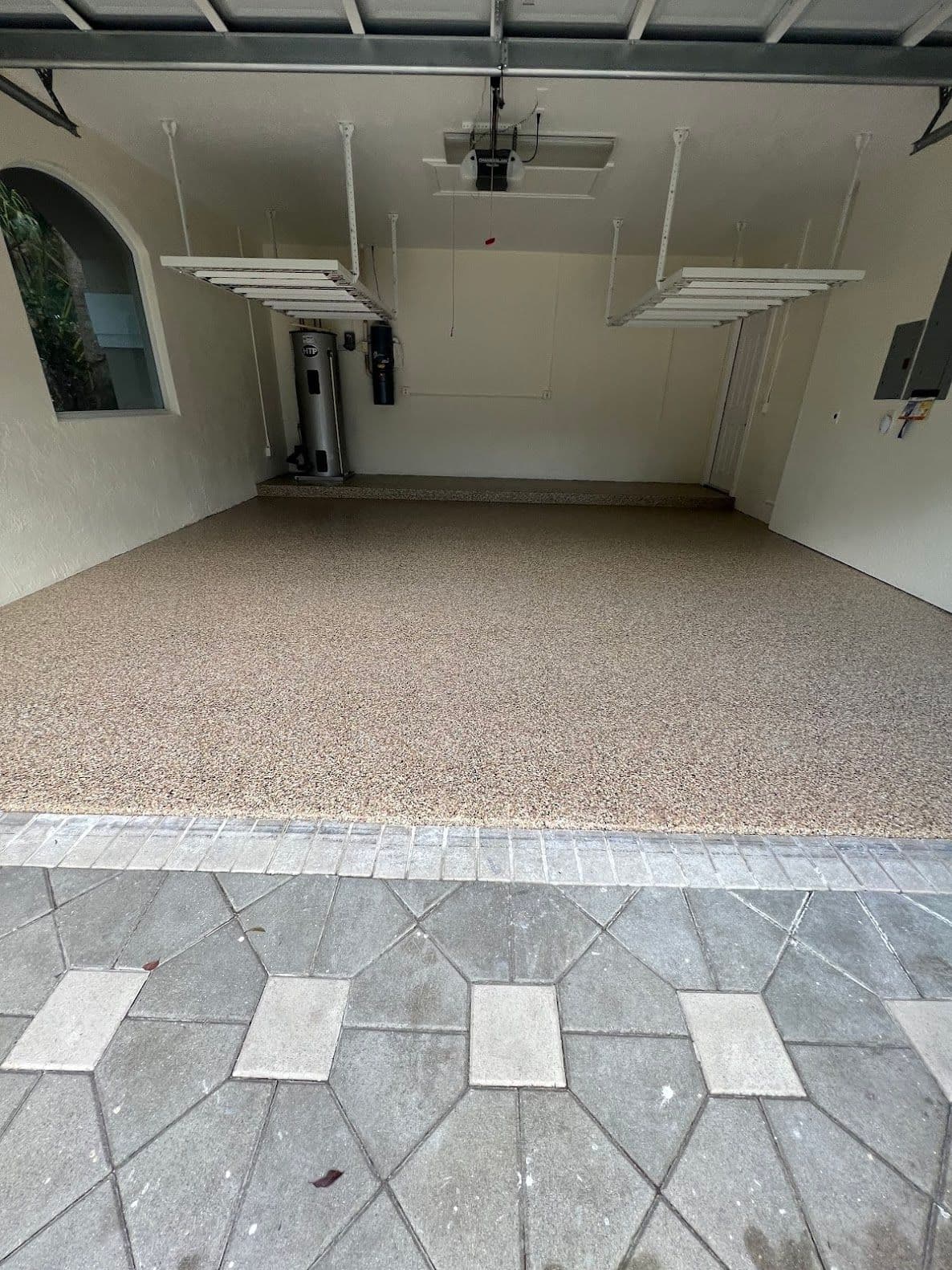
We had both of our garages done and an outdoor concrete platform. The crew was courteous and professional. Everyone from Nancy our salesperson to Patrick, the manager, Logan and his crew were outstanding. Our floors look fantastic and we were very happy we chose this company.
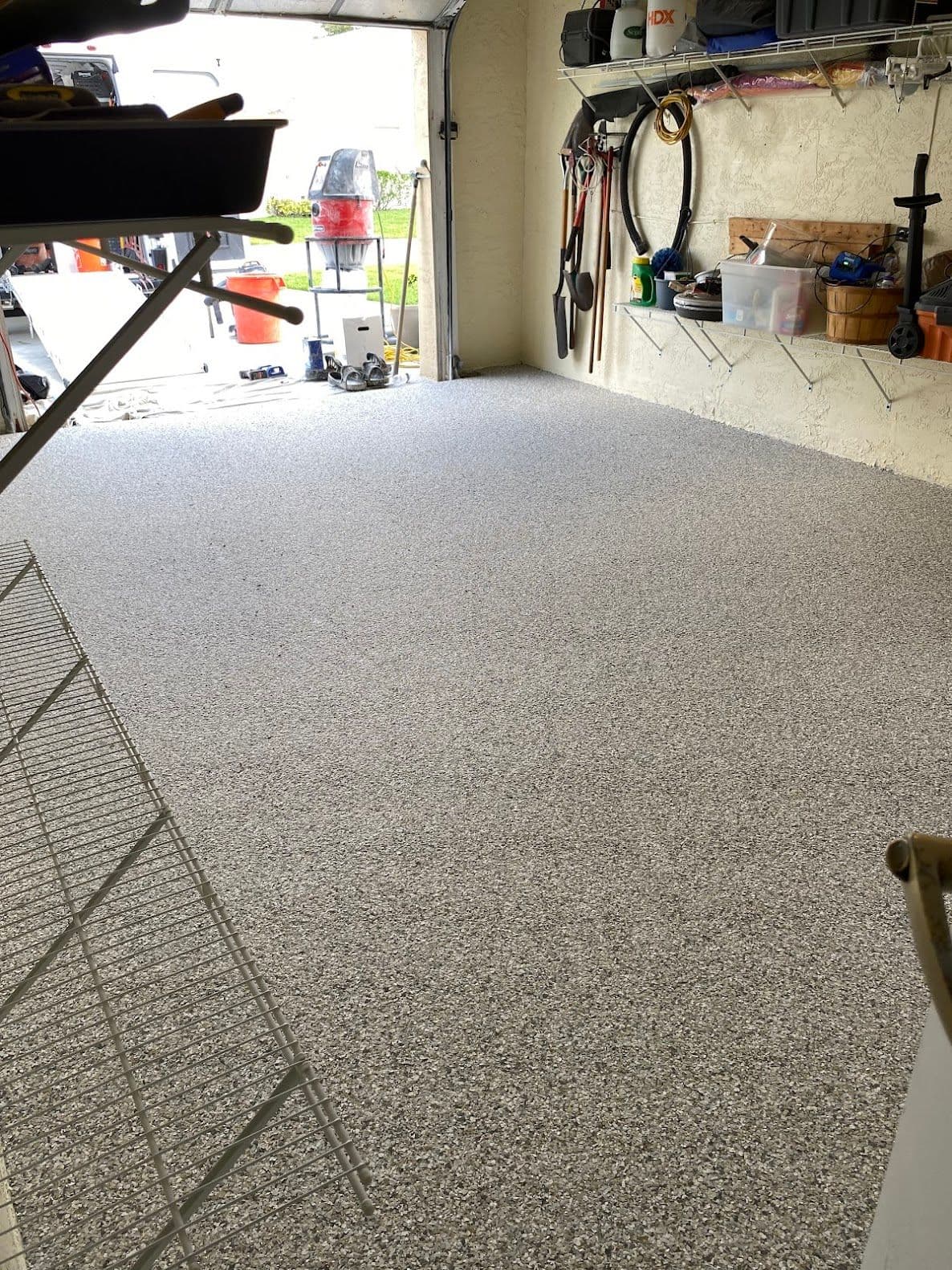
I am very pleased with the quality of work FloorTek has done for me. The two employees that did the actual work were very courteous, worked hard, and explained everything they were doing. Thank you for a great job.
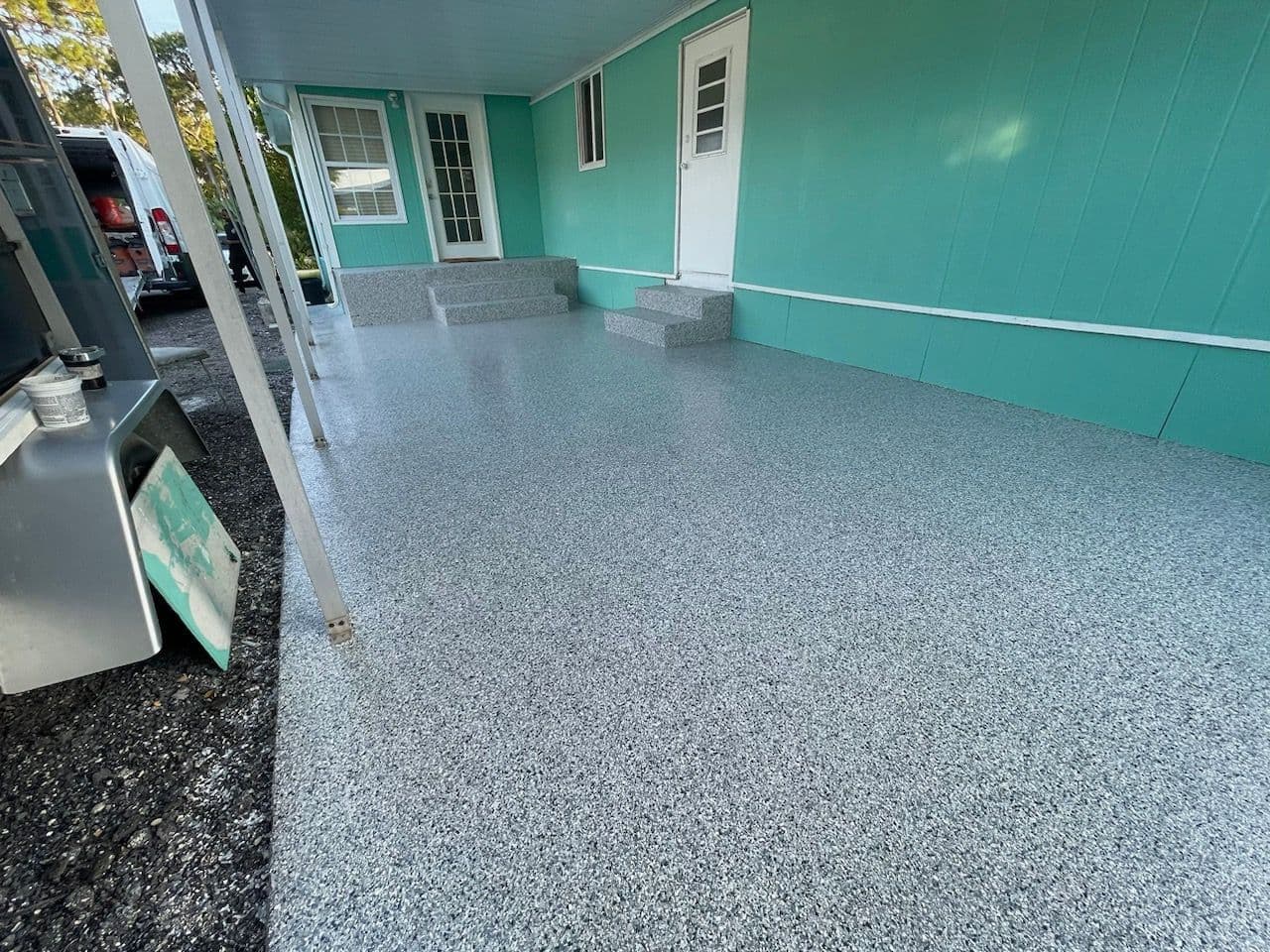
I was happy with the job Floortek did. Good customer communication and customer relationship. My old ugly porch was transformed and I love it. Nancy was very helpful throughout the process. Just know that rain may impact your schedule to make sure the products at highest quality during application.



Contact FloorTek Today