The Ultimate Guide: How Humidity and Heat Affect Concrete Floor Coatings
To understand how humidity and heat affect concrete floor coatings, property owners must first recognize that concrete is highly porous and constantly interacts with its surroundings. In Houston, Texas, and surrounding areas such as Katy, Cypress, The Woodlands, Sugar Land, Pearland, and Clear Lake, the climate is an extreme stress test for any flooring material. The combination of intense solar radiation and dense atmospheric moisture creates conditions that actively degrade outdated materials such as standard epoxy. At Floortek Coatings, we specialize in modern polyaspartic systems designed specifically to mitigate these severe environmental factors.
This comprehensive guide explains the technical reasons behind common coating failures and outlines why specialized materials are required for a lasting Floor Coating Service.
The Houston Climate Challenge: Heat, Humidity, and Concrete
The Gulf Coast climate presents a unique set of variables that complicate surface protection. Concrete behaves much like a rigid sponge. It absorbs moisture from the ground below and reacts to the temperature of the air above. When ambient temperatures rise, concrete expands. As humidity increases, concrete absorbs airborne moisture.
To deliver a reliable Floor Coating Service in Houston, Texas, a contractor must account for the region's specific dew points, high heat indices, and hydrostatic pressure. Traditional epoxy cannot withstand the structural expansion and constant moisture push experienced in South Texas. If you review the projects across our Floortek Locations, you will notice that managing these environmental stressors is the foundation of our application process.
How High Humidity Destroys Traditional Floor Coatings
Atmospheric moisture and ground moisture work together to compromise the chemical bond of standard floor applications. Understanding the mechanics of moisture intrusion is critical to preventing premature failure.
Moisture Vapor Transmission (MVT) and Sweating Slabs
Moisture Vapor Transmission (MVT) occurs when water from the soil beneath the concrete slab evaporates and travels upward through the concrete's porous capillary network. In high-humidity environments, the ground retains significant moisture. As the sun heats the concrete, the water vapor attempts to escape into the atmosphere. If a low-quality coating is applied over the concrete, the vapor becomes trapped.
This trapped vapor creates immense hydrostatic pressure beneath the surface. Over time, this pressure forces the coating to detach from the concrete. To prevent moisture damage, we basically have to add an extra layer called a vapor barrier. This specialized moisture-mitigating primer prevents upward vapor from breaking the bond. This is especially critical when performing a Basement Floor Coating Service in Houston,n Texas, where subterranean moisture is constantly pressing against the concrete foundation.
Amine Blush and Cloudy Finishes
Standard epoxy materials rely on a chemical reaction between a resin and an amine hardener. When these outdated materials are applied in high-humidity conditions, the moisture in the air reacts with the amine hardener before the coating can fully cure. This chemical reaction produces a sticky, cloudy, or white film on the surface known as amine blush.
Amine blush ruins the floor's aesthetic appeal and acts as a barrier that prevents subsequent topcoats from adhering properly. Consequently, the entire flooring system becomes structurally compromised. Polyaspartic coatings bypass this issue entirely because their chemical curing process is fundamentally different and is not disrupted by ambient humidity.
Blistering, Bubbling, and Delamination
When high humidity introduces excess moisture into the concrete pores just before or during an application, the trapped moisture expands as temperatures rise. This expansion forces air and water vapor upward, creating visible blisters and bubbles on the floor surface.
Once blistering occurs, delamination follows. Delamination is the physical separation of the coating from the concrete substrate. Traditional epoxy is highly susceptible to this because it lacks the flexibility to accommodate the pressure. A modern polyaspartic application is designed to improve adhesion by deeply penetrating the concrete capillaries, displacing the air, and locking into the substrate.
The Effects of Extreme Heat on Concrete Slabs
While humidity attacks the bond from below, extreme heat attacks the application process and the coating's physical integrity from above.
Premature Curing and Application Issues
Heat accelerates the chemical curing process of resins. For traditional epoxy, high ambient temperatures drastically reduce the material's "pot life" or working time. If a contractor attempts an application on a 95-degree afternoon, the epoxy will begin to harden in the bucket before it can be properly rolled onto the floor.
When a coating cures too quickly, it fails to penetrate the pores of the concrete. Without deep penetration, the coating sits on the surface, resulting in weak mechanical adhesion. Polyaspartic technology is formulated to enable rapid, controlled curing while achieving maximum penetration, making it highly effective even during the intense summer months. If you need a reliable Sidewalk Floor Coating Service in Houston, Texas, the material must cure properly under direct sunlight.
The "Hot-Tire Pickup" Phenomenon
One of the most common reasons homeowners seek a Garage Floor Coating Service in Houston, Texas, is to resolve hot-tire pickup. When you drive your vehicle on hot Texas asphalt, the tires can reach internal temperatures exceeding 140 degrees Fahrenheit. When you park a vehicle in a garage, heat transfers from the rubber tires directly to the floor.
Standard epoxy undergoes thermal softening at these elevated temperatures. The heat softens the epoxy, and as the tires cool, the rubber contracts and grips the softened coating. When you back your car out the next day, the tires literally tear the epoxy right off the concrete. Polyaspartic resin is 10X stronger than epoxy and boasts a much higher heat tolerance. This advanced formulation easily withstands the extreme heat transfer from vehicle tires, making it the superior choice for any one-day garage floor coating.
Thermal Expansion and Concrete Cracking
Concrete expands under high heat and contracts as it cools. This constant thermal cycling creates immense stress within the slab, inevitably leading to cracks. When the concrete shifts, the surface protection must be flexible enough to move with it. Epoxy is rigid and brittle; when the concrete cracks, the epoxy cracks right along with it.
Polyaspartic systems maintain a high degree of elastomeric flexibility. This means the material can stretch and bridge minor micro-fractures as the concrete expands and contracts. However, major structural damage requires proper mending first. If you are wondering, "Can You Coat a Severely Cracked Concrete Driveway?", the answer is yes, provided the cracks are routed, cleaned, and filled with an industrial-grade polyurea crack mender before the basecoat application. This ensures long-term stability for projects like a Driveway Floor Coating Service in Houston, Texas.
The Invisible Enemy: Dew Point and Condensation
The dew point is the atmospheric temperature at which air becomes saturated with moisture, resulting in condensation. In Houston, the dew point is frequently high. If the temperature of the concrete slab is at or below the dew point of the surrounding air, invisible condensation will form directly on the concrete surface.
Applying any floor resin over invisible condensation guarantees immediate adhesion failure. The moisture acts as a physical barrier between the pores in the concrete and the resin. Professional installers must use digital hygrometers and surface thermometers to precisely measure ambient temperature, relative humidity, and the concrete surface temperature. The concrete must be at least five degrees above the dew point before any material is mixed. Managing the dew point is exceptionally critical for exterior spaces, which is why we meticulously monitor the weather for any Patio Floor Coating Service in Houston, Texas.
Polyaspartic vs. Outdated Materials: Which Survives Texas Weather?
When investing in your property, relying on standard epoxy is an outdated approach that often results in peeling, chipping, and fading. At Floortek, we utilize polyaspartic technology because it typically outperforms traditional methods across every measurable metric.
Here is why polyaspartic is the definitive solution for high-heat and high-humidity environments:
Tensile Strength: Polyaspartic is strictly tested and proven to be 10X stronger than epoxy, providing superior resistance to impacts, abrasions, and heavy vehicle traffic.
Installation Speed: Our efficient process allows for a complete 1-Day installation. You do not have to wait days for layers to cure in the humid air, significantly reducing the window for moisture contamination.
Solar Protection: Polyaspartic is completely UV Stable. Unlike epoxy, which turns yellow and brittle when exposed to the Texas sun, our clear topcoats remain crystal clear for decades. This is an essential feature for outdoor applications, such as a Pool Deck Floor Coating Service in Houston, Texas.
Chemical Defense: The non-porous finish is Chemical Resistant, protecting the concrete beneath from oil spills, battery acid, brake fluid, and harsh cleaning solvents.
Longevity: Because it is designed to flex with the concrete and block moisture vapor, we proudly back our system with a comprehensive Life-of-home warranty. You can review the details of our guarantee on our Floor Coating Warranties page.
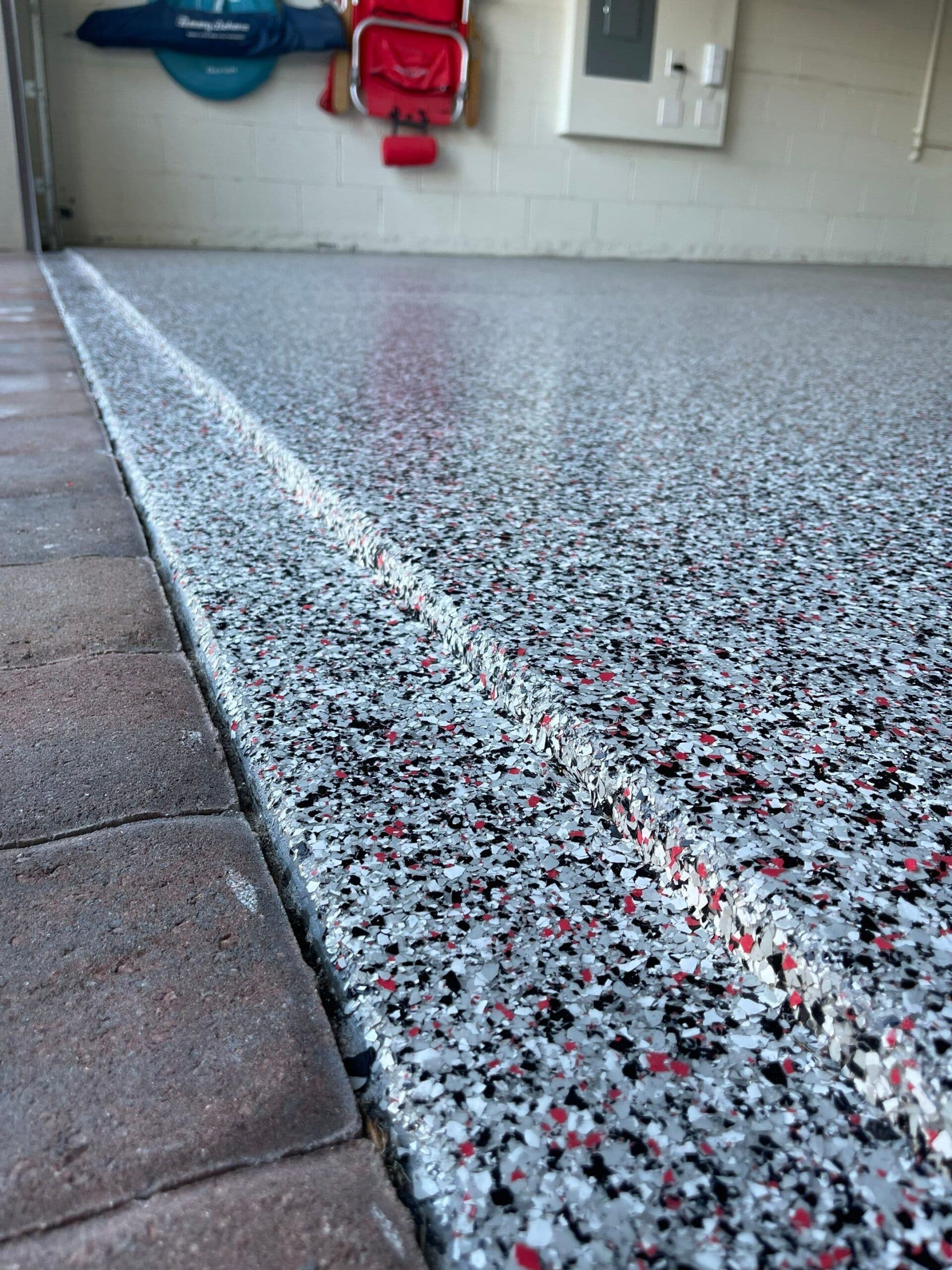
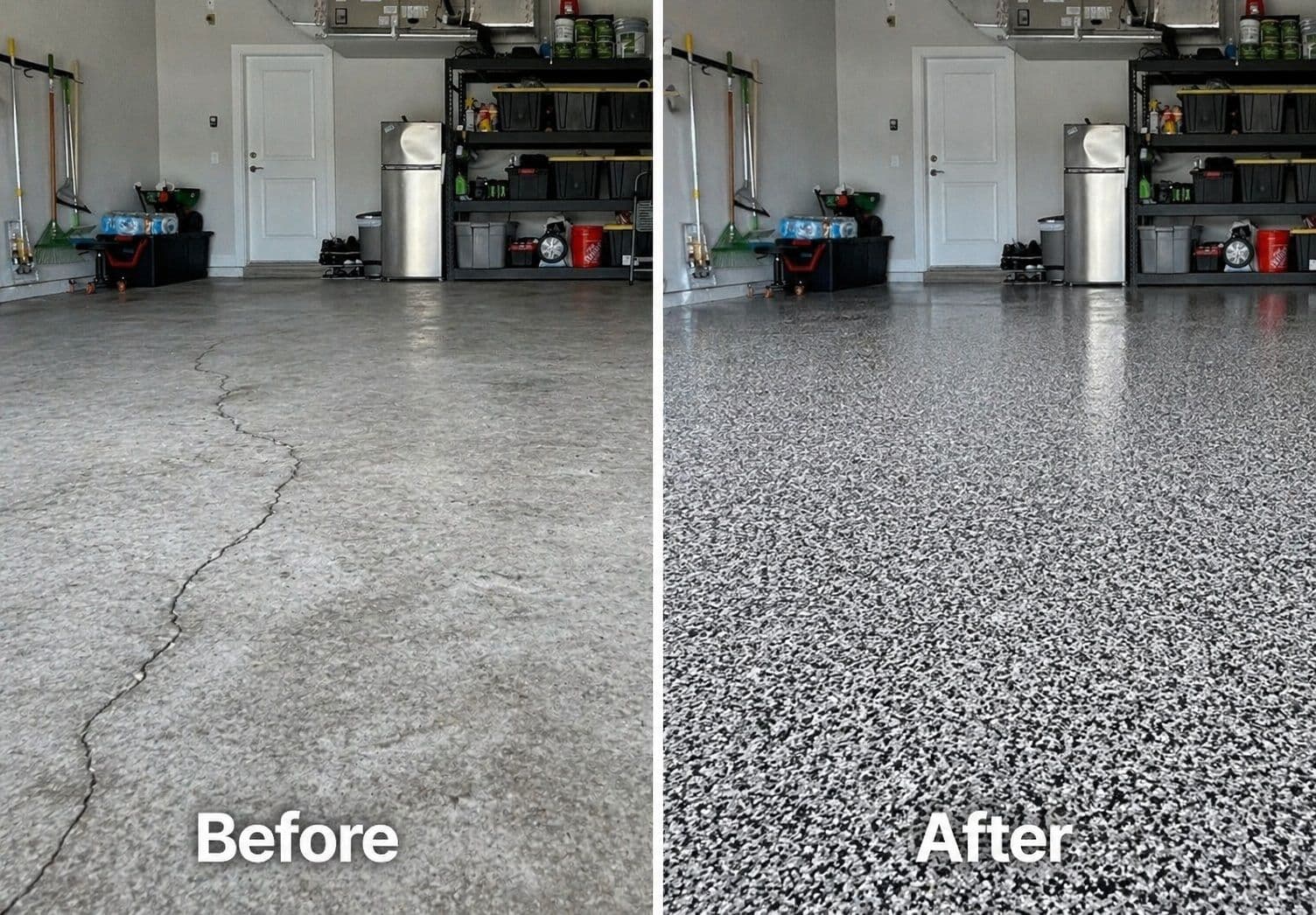
You can view the dramatic visual differences and the high-gloss finish of our installations by visiting the Floortek Gallery.
Best Practices for Coating Concrete in High Heat and Humidity
To achieve a permanent bond, the installation process must be executed with scientific precision. Our technicians follow a strict protocol designed specifically for the Gulf Coast climate.
Strict Moisture Testing and Surface Prep
Before any coating is applied, we conduct rigorous moisture testing. Using calcium chloride tests or in-situ relative humidity probes, we determine the exact moisture vapor emission rate of the slab. Once tested, the concrete is mechanically prepared using heavy-duty diamond grinders. Grinding removes the top layer of smooth concrete, opening the pores and creating a rough profile that allows our specialized basecoats to penetrate deeply. You can explore the specific basecoats and primers we utilize on our Coating Products page.
Controlling the Environment
In enclosed spaces, controlling the microclimate is essential. We utilize high-capacity industrial fans to establish cross-ventilation, which helps regulate ambient heat and removes stagnant, humid air. In situations with extreme moisture readings, commercial dehumidifiers may be deployed to lower the relative humidity within the space to acceptable levels before the application. To learn more about our operational standards, you can read About Us
Timing the Installation
Because heat drastically affects the curing window, timing is everything. We schedule our surface grinding and patching early in the morning when the concrete is cool. By the time the ambient temperature peaks, our highly trained crews are efficiently applying the basecoats and broadcasting the chosen flakes. The rapid cure time of our polyaspartic topcoat allows the entire process to be finalized within hours. This precision timing is what makes our One Day Floor Coating Service possible without sacrificing quality.
Customers can choose from a wide range of aesthetic styles to match their home. You can view the available combinations on our Colors and Flake Options page.
Conclusion
Understanding How Humidity and Heat Affect Concrete Floor Coatings is the first step toward making an informed upgrade for your property. Traditional epoxy cannot cope with moisture vapor transmission, high dew points, or the extreme thermal expansion common in the Houston area. By choosing advanced polyaspartic technology, you ensure that your floor remains durable, UV-stable, and Chemical-Resistant for the life of your home.
To ensure your new surface stays in pristine condition, we recommend following our Polyaspartic concrete coatings Care and Maintenance Guide.
Floortek is committed to providing Manufacturer-direct value without the hidden markups. Right now, we are offering an exclusive 30% off on the first installation for new clients in the Houston area. Stop settling for failing epoxy and upgrade to a floor designed to conquer the Texas climate.
Ready to transform your concrete? Contact us today. Call our primary line at 844-844-4164 or reach our local dispatch at 1-346-550-9307 to secure your one-day installation.
Frequently Asked Questions:
What are the common problems with concrete floor coatings, and how to avoid them when considering How Humidity and Heat Affect Concrete Floor Coatings?
YES. Common problems include delamination, blistering, and hot-tire pickup. These failures happen when excess moisture gets trapped beneath outdated epoxy or when extreme heat softens the resin. You avoid these issues by using specialized polyaspartic systems designed to handle high moisture and thermal expansion.
To fully mitigate these issues, contractors must perform rigorous moisture testing and apply a proper vapor barrier. The rapid curing process of a polyaspartic application prevents ambient humidity from ruining the chemical bond. For a permanent solution, consult with Floortek Coating.
Citation: Environmental Protection Agency - Moisture Control
Can high ambient moisture prevent a floor coating from curing properly when evaluating How Humidity and Heat Affect Concrete Floor Coatings?
YES. High atmospheric moisture severely disrupts the curing process of traditional epoxy, leading to a cloudy, sticky film known as amine blush. This chemical disruption ruins adhesion and leaves the surface structurally weak. Using advanced polyaspartic materials completely bypasses this specific chemical vulnerability.
Because polyaspartic chemistry relies on a different catalytic process, it cures evenly and deeply regardless of standard ambient humidity spikes. This ensures a hard, resilient finish that protects the concrete slab. Discover the difference at Floortek Coating.
Citation: University of Minnesota - Moisture Causes and Solutions
Does hot weather cause hot-tire pickup in garages, proving How Humidity and Heat Affect Concrete Floor Coatings?
YES. Extreme Texas heat transfers from hot car tires directly into the floor. Standard epoxy softens under this thermal stress, allowing the cooling rubber tires to grip the material and rip it from the concrete. This thermal failure is entirely avoidable.
By utilizing a premium polyaspartic topcoat, the floor gains an incredibly high heat tolerance. The material remains rigid and stable beneath scorching tires, ensuring your garage floor stays intact for decades. Upgrade your surface with Floortek Coating.
Citation: Federal Highway Administration - Concrete Pavement Stress
Is a vapor barrier necessary to stop peeling based on How Humidity and Heat Affect Concrete Floor Coatings?
YES. A vapor barrier is strictly required to block moisture vapor transmission. As groundwater evaporates and rises through the concrete, it exerts intense hydrostatic pressure that literally pushes standard epoxy off the slab. A moisture-mitigating primer stops this upward force.
When installing a high-quality polyaspartic system, applying this protective layer ensures the basecoat anchors deeply into the concrete pores. This permanent bond guarantees the floor will not bubble or delaminate. Learn about our process at Floortek Coating.
Citation: Ohio State University - Moisture Vapor Emission Control
Will intense sunlight cause outdoor floor coatings to turn yellow, demonstrating How Humidity and Heat Affect Concrete Floor Coatings?
YES. Standard epoxy resins are highly susceptible to photodegradation. The intense ultraviolet radiation from the sun breaks down the polymer chains in epoxy, causing the floor to turn a chalky yellow color and become brittle within a few months of exposure.
Conversely, a high-grade polyaspartic topcoat is engineered to be 100% UV stable. It will maintain its clear, high-gloss finish and vibrant color flakes despite years of direct sunlight and high ambient heat. View our outdoor solutions at Floortek Coating.
Citation: University of Memphis - Curing and Concrete Durability
Does invisible condensation cause adhesion failure, and how do humidity and heat affect concrete floor coatings?
YES. Invisible condensation forms when the temperature of the concrete surface is below the atmospheric dew point. If an installer applies resin over this microscopic layer of water, the coating will never bond to the concrete's pores, resulting in immediate structural failure.
Professional polyaspartic installers strictly monitor environmental metrics using digital hygrometers to ensure the slab is above the dew point before application. This precise environmental control prevents costly delamination. Trust the experts at Floortek Coating.
Citation: National Institute of Standards and Technology - Moisture in Concrete
Are blistering and bubbling caused by ground moisture, highlighting How Humidity and Heat Affect Concrete Floor Coatings?
YES. Blistering occurs when trapped moisture in the concrete slab expands as temperatures rise. The expanding water vapor creates immense pressure that forces standard epoxy upward, resulting in unsightly bubbles that eventually crack and peel away.
A professional polyaspartic application requires heavy mechanical grinding to open the concrete capillaries, followed by a deep-penetrating vapor-blocking primer that seals the surface against upward moisture pressure. Get a flawless finish with Floortek Coating.
Citation: University of Arizona - Structural Concrete Vapor Barriers
Does high heat shrink the installation window, affecting how humidity and Heat Affect Concrete Floor Coatings?
YES. Elevated temperatures accelerate the chemical curing process of resins. Outdated epoxy will begin to harden in the mixing bucket on a hot day, drastically reducing the working time and preventing the material from properly penetrating the concrete surface.
Modern polyaspartic chemistry is formulated specifically to handle rapid curing without sacrificing deep concrete penetration. This allows professional crews to efficiently complete high-quality applications even during the peak of summer heat. Book your installation at Floortek Coating.
Citation: East Mississippi Community College - Concrete Installation Specs
Will concrete thermal expansion crack standard floor coatings? How do humidity and Heat Affect Concrete Floor Coatings?
YES. Concrete slabs naturally expand and shift as ambient temperatures rise. Rigid materials like standard epoxy lack the necessary flexibility to accommodate this structural movement, causing the floor coating to snap, crack, and separate along the stress lines.
A premium polyaspartic coating possesses elastomeric properties, meaning it can stretch and flex in tandem with the concrete slab. This flexibility ensures the floor remains seamless and protected throughout decades of extreme thermal cycling. Fix your cracked floor at Floortek Coating.
Citation: Federal Highway Administration - Pavement Thermal Expansion
Is chemical resistance affected by improper humidity during curing, as linked to "How Humidity and Heat Affect Concrete Floor Coatings"?
YES. If high humidity disrupts the initial curing phase of an inferior coating, the resulting chemical matrix is fundamentally compromised. This weakened state drastically reduces the floor's ability to resist oil, battery acid, and corrosive household chemicals.
Because a polyaspartic system cures effectively regardless of humidity, its chemical bonds remain incredibly dense. This creates a highly chemical-resistant surface that effortlessly repels harsh spills and automotive fluids. Protect your investment with Floortek Coating.
Citation: Columbia University - Epoxy Resin Chemical Resistance Standards
FREE In-Home Estimate
Plus 30% Off
Testimonials
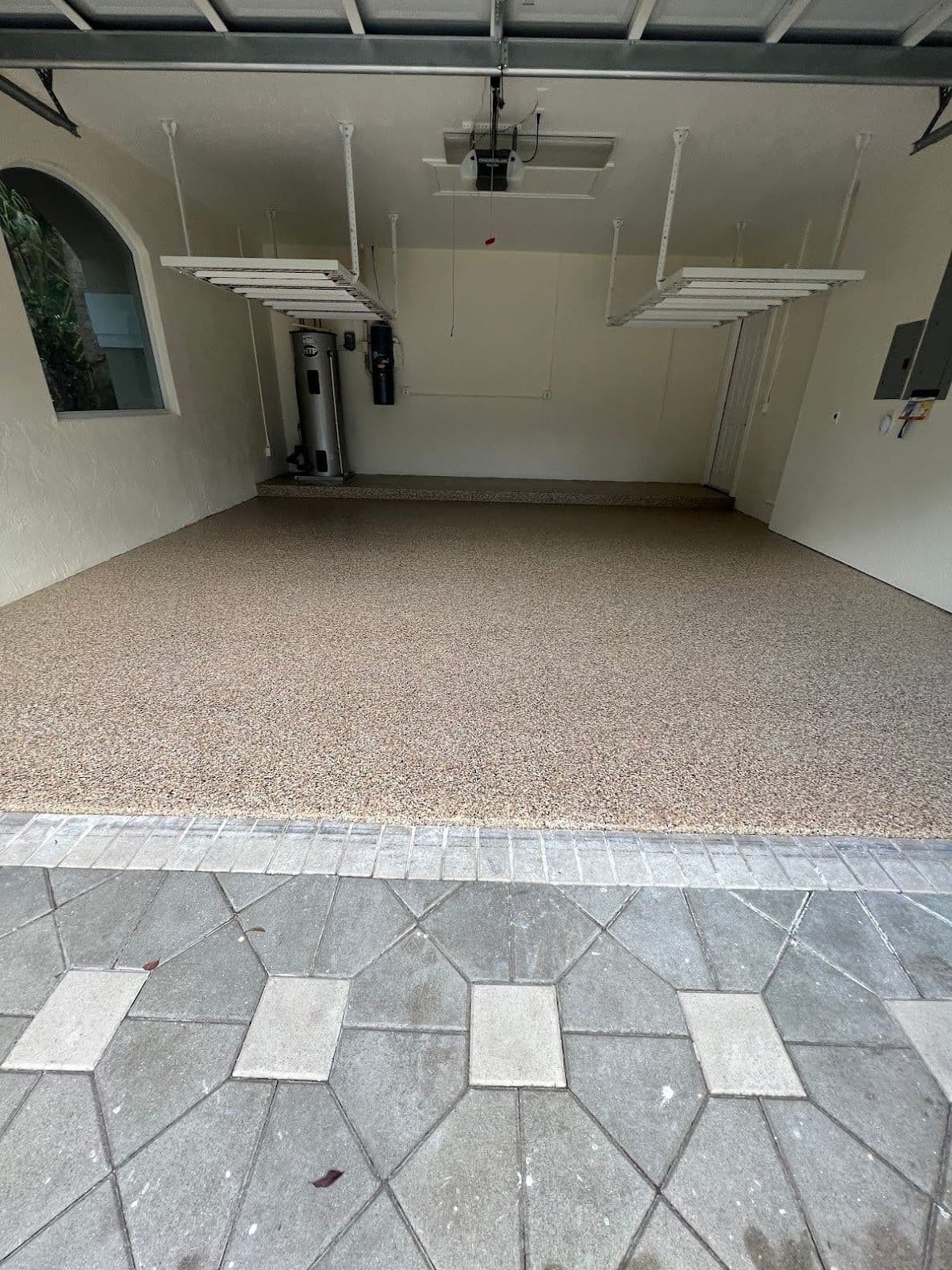
We had both of our garages done and an outdoor concrete platform. The crew was courteous and professional. Everyone from Nancy our salesperson to Patrick, the manager, Logan and his crew were outstanding. Our floors look fantastic and we were very happy we chose this company.
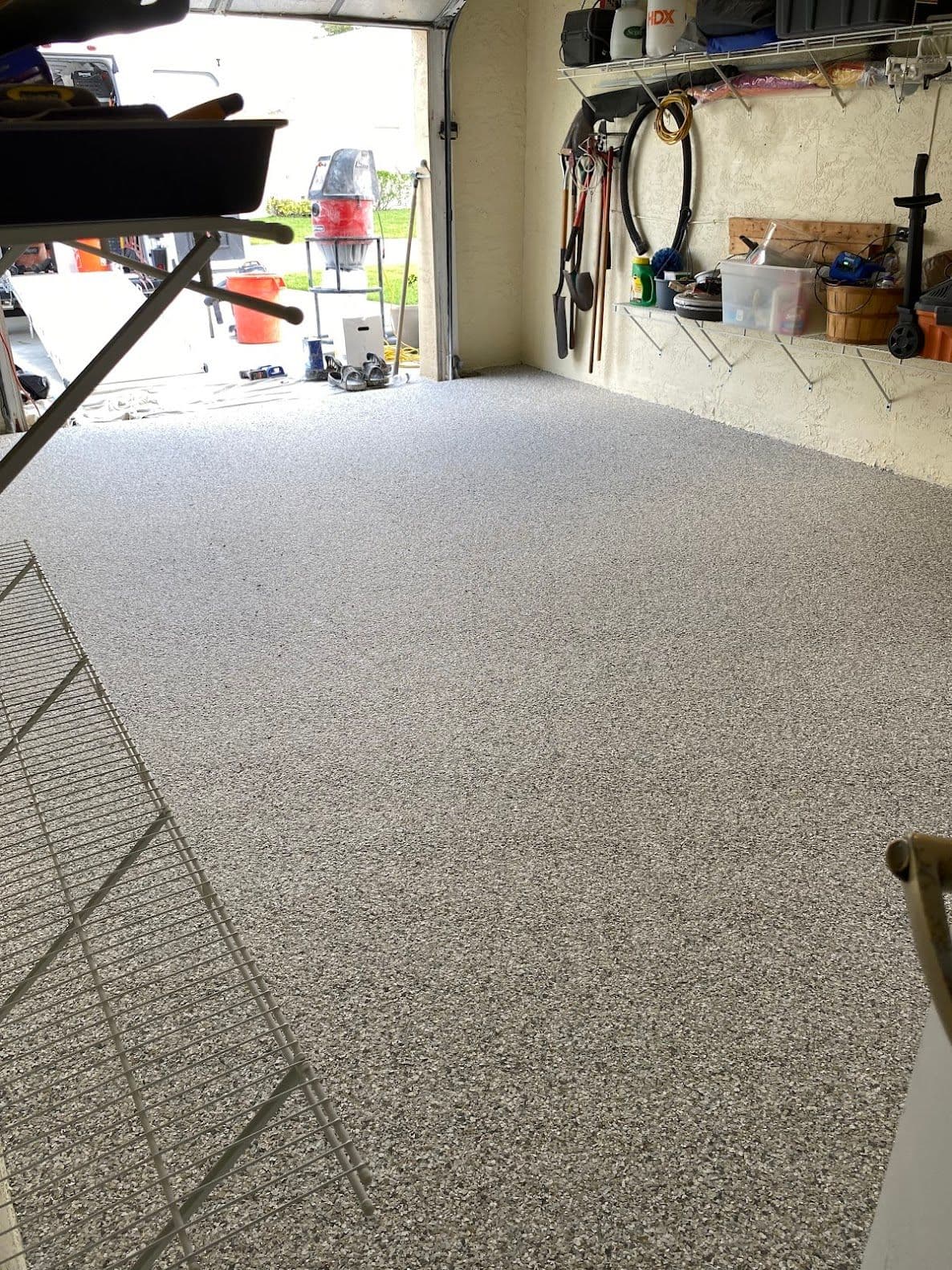
I am very pleased with the quality of work FloorTek has done for me. The two employees that did the actual work were very courteous, worked hard, and explained everything they were doing. Thank you for a great job.
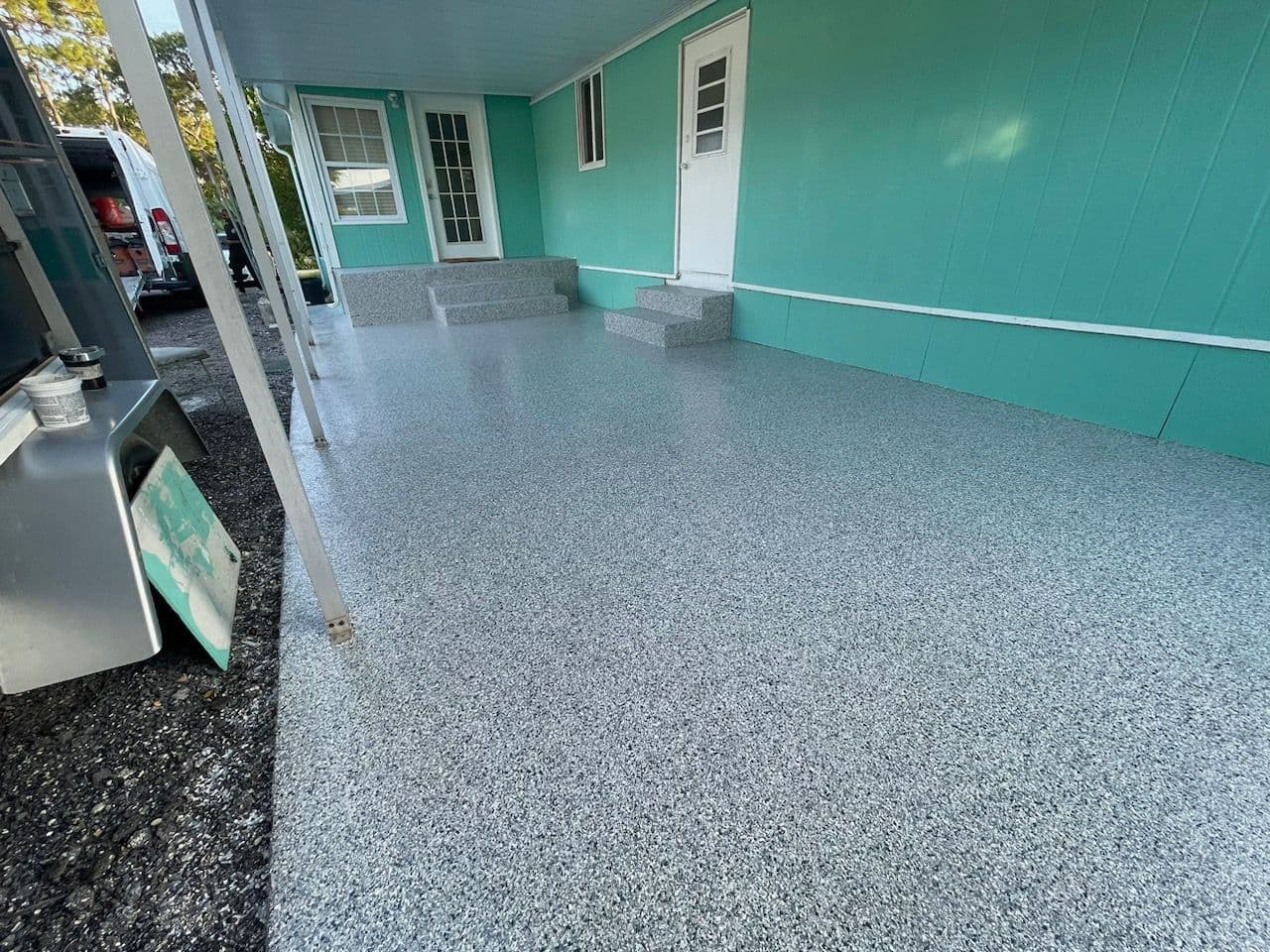
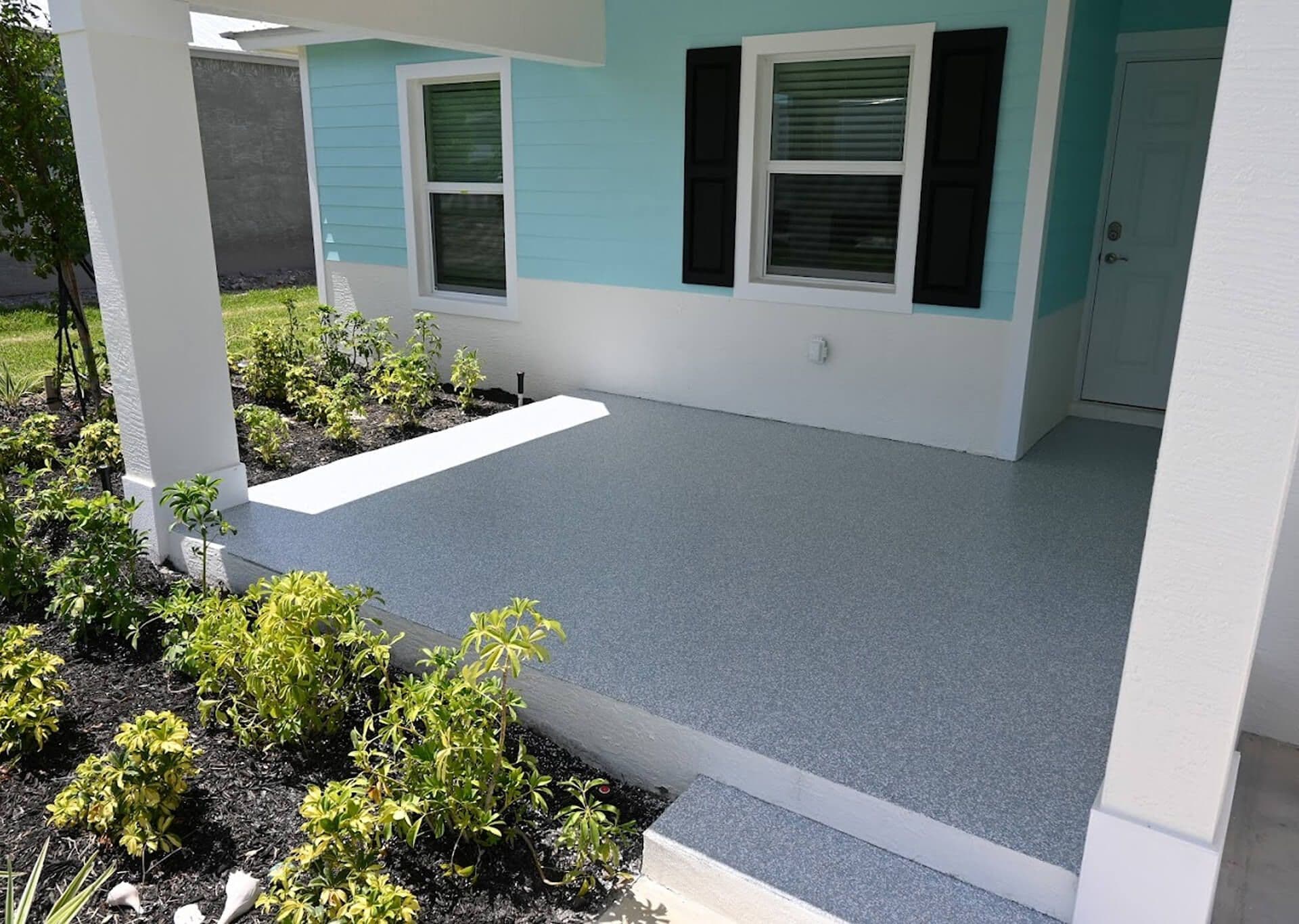
I was happy with the job Floortek did. Good customer communication and customer relationship. My old ugly porch was transformed and I love it. Nancy was very helpful throughout the process. Just know that rain may impact your schedule to make sure the products at highest quality during application.



Contact FloorTek Today