Ultimate Guide to High-Performance Driveway Floor Systems in Houston, Texas
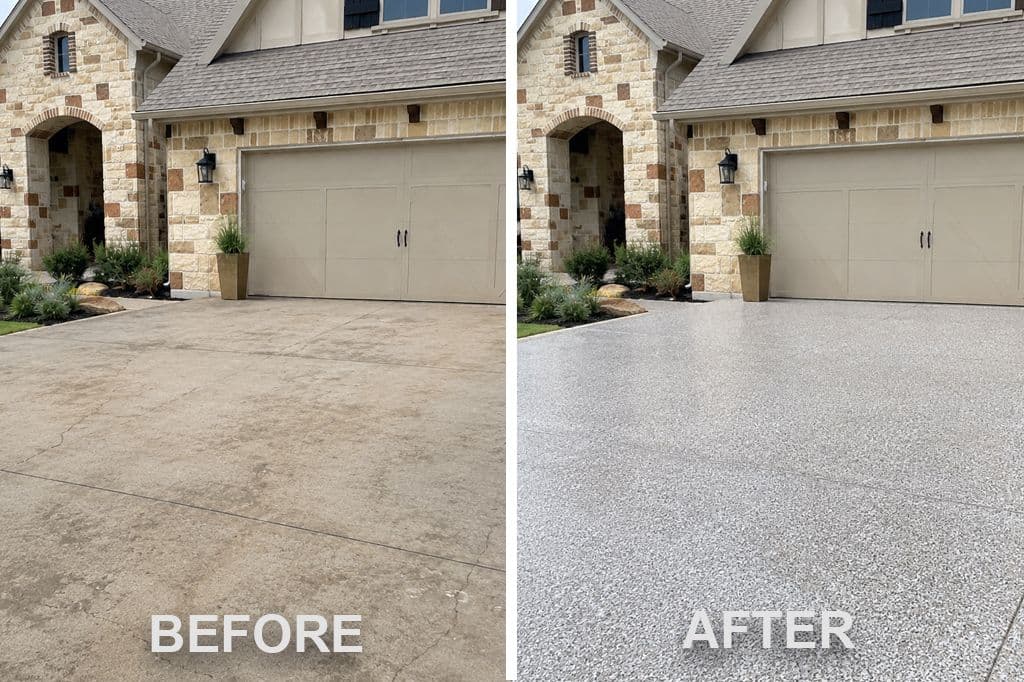
Homeowners and property managers across Southeast Texas often face cracked, stained, and spalling concrete surfaces. Upgrading your driveway with Floortek's advanced polyaspartic coating system offers a durable, high-performance solution that withstands heavy vehicle traffic and extreme weather conditions. Unlike traditional options like standard epoxy, our modern multi-layer coatings deliver long-term results, making them the top choice for regional properties.
The Houston Concrete Challenge: Soil Movement and Environmental Stressors
Black Gumbo Clay and Foundation Shifting in Southeast Texas
The geological profile of Southeast Texas presents severe structural challenges for exterior concrete installations. Subsurface soils across regions like Katy, Cypress, and Sugar Land consist largely of high-plasticity clay, colloquially known as Black Gumbo. This soil type exhibits significant shrink-swell behavior, expanding dramatically when exposed to heavy rain and contracting during dry summer spells.
As the ground shifts, it creates uneven voids beneath unreinforced or standard concrete slabs. This continuous movement subjects the overhead slab to immense flexural stress, resulting in structural cracks and surface displacement. A rigid surface coating applied to this type of concrete will quickly rupture unless the material has sufficient elongation to accommodate subgrade movement. Property owners must select a surface solution that accommodates these inevitable geological shifts without sacrificing adhesion. You can review regional soil profile analyses and data through the Texas A&M University Department of Soil and Crop Sciences.
Ambient Humidity and Substrate Moisture Vapor Transmission
Coastal regions such as Pearland, League City, and Clear Lake experience high relative humidity year-round. This atmospheric moisture, combined with a shallow water table, keeps local concrete slabs saturated with water molecules. Concrete is inherently porous, acting like a dense sponge that absorbs groundwater through capillary action.
When solar radiation heats the slab's surface, it draws trapped subsurface moisture upward as vapor. This phenomenon, known as moisture vapor transmission, creates substantial hydrostatic pressure directly underneath any topical sealer or coating. If the surface application lacks a specialized breathable matrix or a dedicated mitigation system, the building pressure will physically detach the coating from the aggregate base. This localized failure leads to unsightly bubbling, blistering, and full-surface delamination across the driveway footprint.
Analyzing Substrate Chemistry: Why Traditional Coatings Underperform
The Molecular Limitations of Standard Epoxy Systems
Standard epoxy coatings have been the default option for residential garages and light commercial spaces for decades. However, the molecular structure of standard epoxy makes it poorly suited for demanding outdoor environments. Epoxy is an amine-cured resin system that forms a highly rigid, tightly cross-linked polymer network upon curing.
While this rigidity provides decent initial hardness, it results in a brittle material that lacks tensile elasticity. When a concrete slab undergoes micro-movements due to vehicular loads or soil shifting, the brittle epoxy layer cannot flex. Instead, the material shears at the bond line or develops hairline fractures that allow water infiltration. Furthermore, epoxy has poor thermal compatibility with concrete, meaning it expands and contracts at a markedly different rate from the underlying aggregate as temperatures fluctuate.
Polyaspartic Technology as the Advanced Engineering Solution
To address the limitations of traditional resin systems, Floortek's advanced Floor Coating Service in Houston, Texas, utilizes aliphatic polyaspartic technology. Our team's expertise ensures a surface that is '10X stronger than epoxy' in impact resistance and tensile adhesion, providing a reliable upgrade for your driveway that can flex with shifting soils and temperature changes. Our coatings are also 'UV Stable' and 'Chemical Resistant,' ensuring long-lasting performance in Houston's demanding environment.
This chemical formulation yields a surface that is "10X stronger than epoxy" in terms of impact resistance and tensile adhesion. The material exhibits elongation, allowing it to stretch and flex in tandem with the concrete substrate during temperature spikes and shifting soil conditions. Additionally, our polyaspartic coatings are completely "UV Stable" and "Chemical Resistant," ensuring they will endure harsh sunlight and automotive fluids without degrading or fading, reinforcing their long-term value.
The Mechanical Preparation Process for a Long-Lasting Driveway Floor
Industrial Diamond Grinding versus Acid Etching
Achieving a permanent mechanical bond between a polyaspartic coating and a concrete slab requires meticulous surface preparation. Many amateur installers attempt to prepare concrete by chemically etching the surface with muriatic acid. This method is highly problematic because it introduces massive volumes of water into an already saturated slab, compounding moisture vapor issues. Acid etching also fails to effectively remove deep-set oils, tire polymers, or existing sealers.
We reject acid etching in favor of mechanical planetary diamond grinding. Our crews utilize heavy industrial grinding machinery equipped with metal-bond diamond segments to abrade the entire surface. This process removes the weak top layer of concrete laitance, exposes the strong aggregate underneath, and creates a specific profile resembling medium-grit sandpaper. Proper mechanical preparation ensures a durable bond, giving property owners confidence in the coating's long-term performance.
Repairing Spalling, Cracks, and Pitting in Houston Concrete
Years of heavy vehicular traffic, combined with regional weather cycles, leave many driveways in areas like The Woodlands and Conroe severely degraded. Spalling, pitting, and open linear cracks compromise both the appearance and the structural longevity of the concrete. Applying any protective coating directly over these defects will only highlight the problems and lead to premature failure.
Our preparation protocol includes a comprehensive surface restoration phase before any liquid product is applied to the slab. Technicians utilize advanced dual-component polyurea repair mortars to fill and stabilize every fracture and pitted zone. These specialized repair materials feature an ultra-low viscosity, allowing them to sink deep into the tightest cracks and cure rapidly, forming a compound that binds the separated concrete sections. Once cured, the repaired zones are ground perfectly flush with the surrounding slab, establishing a seamless, uncompromised foundation for the subsequent polyaspartic layers.
Mitigating Substrate Moisture: The Role of the Vapor Barrier
Managing Moisture Transmittance in Gulf Coast Environments
Given the extreme moisture conditions present across Spring, Pasadena, and the broader Houston metroplex, managing subsurface water migration is a critical step in surface engineering. When a non-porous coating is applied over raw concrete, it halts the natural evaporation of subsurface water vapor. Without a mitigation strategy, the accumulating moisture will destroy the bond at the concrete interface.
To prevent moisture damage, we basically have to add an extra layer called a vapor barrier. This specialized base layer is engineered with advanced moisture-blocking polymers that isolate the upper decorative and protective coatings from the migrating groundwater. The barrier chemically fuses with the damp concrete capillaries, resisting substantial hydrostatic pressures and ensuring the exterior multi-layer system remains anchored throughout its service life. Detailed technical guidance on concrete moisture mitigation and residential infrastructure durability is available on the U.S. Department of Energy website.
Step-by-Step Installation of Advanced Polyaspartic Overlays
Once the substrate is mechanically prepared and the moisture mitigation layer is integrated, the primary application process commences. The installation follows a highly coordinated multi-step sequence to ensure uniform material thickness and optimal aesthetic density:
Base Coat Application: Technicians apply a self-leveling polyaspartic base layer using professional squeegees and rollers to achieve complete coverage and deep pore penetration.
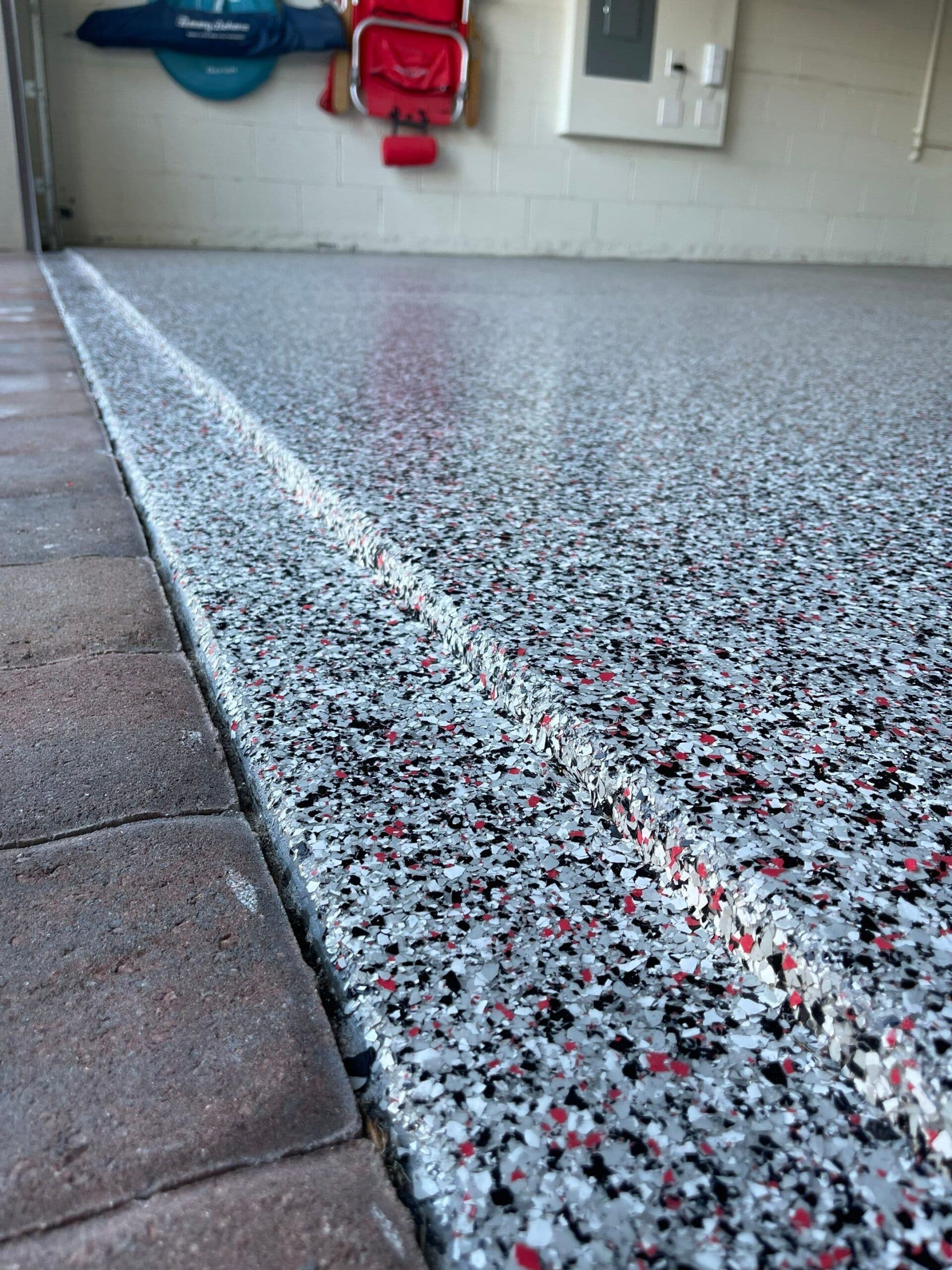
Flake Broadcast: Colored vinyl chips are broadcast by hand across the entire wet base coat until full saturation, or "rejection," is reached, ensuring no bare spots remain.
Cure Time and Recovery: The layer is allowed to cure completely, a process that occurs rapidly due to the product's advanced fast-cure catalyst chemistry.
Scraping and Vacuuming: Technicians utilize flat steel scrapers to remove any vertically oriented or loose flakes, followed by a thorough vacuuming process to clear all micro-debris.
Topcoat Sealing: A premium, clear aliphatic polyaspartic topcoat is applied over the flattened flake layer to lock the system together and provide a smooth, resilient shield.
Evaluating Lifetime Performance Dynamics: Polyaspartic vs Epoxy
Thermal Expansion and Ultraviolet Stability Under the Texas Sun
Exterior surfaces in Texas face relentless solar exposure and dramatic thermal cycles. On a typical summer afternoon in regions like Kingwood or Missouri City, bare concrete surface temperatures can reach extreme levels. Standard epoxy resins break down quickly under these conditions due to their lack of ultraviolet stability. The solar radiation alters the epoxy molecules, causing the surface to turn a cloudy yellow color, chalk, and lose its glossy finish within months of exposure.
Our polyaspartic coatings are custom-formulated to remain completely unaffected by ultraviolet radiation. The aliphatic chemistry prevents the polymer chain from breaking down when exposed to sunlight, ensuring the finish retains its original color, clarity, and gloss for decades. Furthermore, the inherent elasticity of the polyaspartic matrix matches the thermal expansion coefficient of concrete, allowing the coating to expand and contract smoothly alongside the slab as day turns to night.
Long-Term Integrity and Chemical Resistance Profiles
A driveway surface must endure a constant barrage of harsh automotive chemicals, heavy static loads, and dynamic friction. When vehicles park on standard coatings after extended highway driving, tire heat can soften the resin, causing it to pull away from the concrete as the car moves. This common issue, known as hot-tire pickup, is a leading cause of standard epoxy failure.
Our premium polyaspartic systems eliminate this vulnerability. The cross-linked polymer design delivers exceptional thermal resistance, ensuring the coating never softens or deforms under hot tires. The surface also exhibits a "Chemical Resistant" profile that prevents staining and structural degradation from common garage and driveway contaminants:
Motor oil and transmission fluid
Gasoline and diesel fuel
Brake fluid and power steering lubricants
Battery acid and corrosive cleaning agents
Industrial road salts and hard water deposits
Maximizing Investment Value with Advanced Surface Engineering
The Efficiency of a 1-Day Installation Timeline
Traditional multi-coat epoxy systems demand an extended, multi-day schedule to complete an installation. Epoxy requires long curing windows between layers, meaning a residential driveway could remain out of service for up to a week, forcing homeowners to park their vehicles on the street. This extended downtime introduces significant logistical headaches and increases the risk of debris blowing into the wet coating.
Our advanced product line enables an ultra-efficient One-Day Floor Coating Service timeline. The rapid cross-linking chemistry of our polyaspartic formulas allows our trained technicians to complete the entire mechanical preparation, base application, flake broadcast, and topcoat sealing process within a single day. Homeowners can walk on their new surface just a few hours after completion and return to full vehicular use within 24 hours, minimizing disruption to their daily routines.
Manufacturer-Direct Value and Long-Term Warranty Protection
Investing in a permanent protective coating for your concrete should provide long-term peace of mind without hidden retail markups. By choosing Floortek, property owners benefit from Our Coating Products delivered with clear manufacturer-direct value, ensuring that every dollar spent goes directly toward the highest-grade industrial materials and expert labor rather than third-party distributors.
We stand behind the engineering of our polyaspartic systems by offering a comprehensive Floor Coating Warranties package, featuring a definitive "Life-of-home warranty." This coverage guarantees that your exterior surface upgrade will typically outperform traditional alternatives and will not peel, flake, or delaminate from the concrete base. To make this high-performance upgrade even more accessible, we are currently offering 30% off the first installation for new clients across the region.
Architectural Aesthetics: Customizing Your Driveway Floor
Decorative Flake Systems and Multi-Layer Finishes
While structural durability remains paramount, a premium exterior surface must also enhance your home's visual presentation. Plain, stained concrete driveways diminish the overall aesthetic value of an otherwise immaculate property. Our multi-layer polyaspartic flake systems replace dull grey concrete with a rich, multi-dimensional texture that instantly modernizes the property exterior.
Our Colors and Flake Options are engineered to blend seamlessly with a range of architectural styles, from classic brick estates to contemporary stucco designs. The multi-colored vinyl flakes create a visual depth that hides dust, minor slab deviations, and organic debris between routine cleanings. Property owners can select from an array of designer blends featuring neutral earth tones, deep granites, or bright contemporary mixtures to complement their personal design palette.
Enhancing Curb Appeal in Major Houston Suburbs
The exterior entrance of a property sets the tone for its entire architectural identity. A beautifully coated driveway creates a clean, polished look that unifies the landscaping, walkways, and main structure. Whether your home is in the master-planned communities of Cypress, the historic neighborhoods of Houston, or the growing suburbs of Sugar Land, upgrading the entryway instantly boosts curb appeal.
By eliminating stained, cracked, and dusty concrete, our polyaspartic systems establish a premium finish that reflects the care and value of the entire estate. This long-term aesthetic improvement protects the structural concrete foundation while providing an upscale, low-maintenance surface that holds up beautifully against the heavy traffic demands of active Texas households.
Frequently Asked Questions:
Can a polyaspartic coating fix a cracked driveway floor?
YES. A professionally applied polyaspartic coating system restores the structural appearance of a cracked concrete surface. Technicians first mechanically grind the slab and fill fissures with dual-component polyurea compounds, creating a smooth layer before applying the high-performance decorative flake and topcoat system.
Polyurea flooring materials cure quickly within the concrete substrate. These specialized compounds bridge minor gaps caused by soil movement. The resulting driveway floor withstands heavy vehicle traffic without fracturing. You can verify concrete stress management protocols via the Federal Highway Administration.
How long does a polyaspartic application take to cure on a residential driveway floor?
One day. A polyaspartic installation cures fast enough to allow foot traffic within a few hours and vehicle traffic after twenty-four hours. This fast chemical cure minimizes downtime for homeowners compared to standard coatings, which require several days of drying.
Our team completes the entire floor coating application process in a single day. The underlying polyaspartic layers cross-link rapidly to establish optimal tensile strength. This rapid installation prevents prolonged disruptions to your daily routine on the driveway. Detailed research into rapid-cure polymers is available through North Carolina State University.
Will hot tires cause peeling or delamination on a polyaspartic driveway floor?
NO. High-performance polyaspartic systems do not suffer from hot-tire pickup or heat-induced delamination like lower-grade coatings. The advanced chemical bond penetrates deep into the prepared concrete capillaries, ensuring the material remains fused to the driveway floor even under extreme tire friction.
Standard coatings like epoxy often fail when hot tires park on the surface. Our Floortex floor coating system features superior thermal tolerance properties. The polyaspartic formula withstands extreme heat without softening or losing its adhesion on the driveway floor. Learn more about polymer thermal thresholds at the National Institute of Standards and Technology.
Is a polyaspartic coating better than epoxy for an outdoor driveway floor?
YES. Polyaspartic technology outperforms standard epoxy because it is highly flexible and completely resistant to solar radiation. Epoxy coatings often chalk, yellow, and crack when exposed to the elements, while a polyaspartic driveway floor maintains long-term structural integrity.
Choosing a high-performance PennTek floor coating option ensures your exterior concrete remains protected. The aliphatic polyaspartic chemistry does not degrade under heavy sunlight exposure. This makes it the ideal candidate for a harsh outdoor driveway floor environment. Review polymer durability assessments from the U.S. Department of Energy.
What are the common problems with concrete floor coatings, and how can they be avoided in a driveway?
Delamination and blistering. These common coating failures happen when installers skip mechanical preparation or fail to manage subsurface moisture vapor transmission. You can completely avoid these problems by hiring certified technicians who execute diamond grinding and apply a specialized vapor barrier.
A typical one-day epoxy garage floor system frequently suffers from moisture-related lifting. Our heavy-duty polyaspartic installation utilizes advanced moisture-mitigating base layers. This process stops ground moisture from destroying the coating bond on your driveway floor. Study concrete moisture migration through the Iowa State University Center for Transportation Research.
How do you maintain and clean a coated driveway floor over time?
Simple rinsing. Maintaining a coated concrete surface requires nothing more than a standard garden hose, a mild biodegradable cleanser, and a soft-bristled broom. The non-porous finish prevents oils, grime, and environmental dirt from permanently staining the underlying concrete substrate.
Investing in next-level concrete coatings eliminates the need for intensive pressure washing. The polyaspartic top layer repels automotive fluids and dirt, reducing accumulation on the driveway floor. Regular sweeping keeps the surface looking completely pristine. Find maintenance recommendations for high-performance surfaces at Texas A&M University.
Can extreme Texas heat cause discoloration on a polyaspartic driveway floor?
NO. Industrial polyaspartic materials are formulated with aliphatic chemistry, which helps prevent discoloration under intense ultraviolet exposure. Unlike standard epoxy systems that rapidly fade or turn amber, a polyaspartic driveway floor retains its vibrant color profile through decades of direct sunlight.
Finding elite floor coating companies near me ensures you receive authentic UV-stable products. This specialized coating acts as a shield against solar radiation. Your exterior concrete driveway floor stays bright and visually appealing for its entire lifespan. Technical details on ultraviolet stability are available from the U.S. Environmental Protection Agency.
Why does standard epoxy peel off a concrete driveway floor?
Lack of flexibility. Epoxy forms a rigid, brittle polymer structure that cannot accommodate the expansion and contraction of concrete. When the slab experiences thermal shifts or vehicular loads, the epoxy bond breaks and begins to peel away from the surface.
Upgrading to a premium one-day garage floor system solves these fundamental durability issues. The advanced polyaspartic base layer penetrates deep into the concrete pores for maximum adhesion. It moves naturally with the driveway floor rather than resisting it. Read about material fatigue and adhesion mechanics on the U.S. Geological Survey database.
What type of surface preparation is required before coating a concrete driveway floor?
Mechanical diamond grinding. Technicians must use heavy-duty planetary diamond grinders to remove old sealers and open the concrete pores. This creates a profile resembling medium-grit sandpaper, allowing the coating to form a permanent mechanical bond with the slab.
Successful one-day flooring installation services depend entirely on this critical preparation step. Acid washing is never an acceptable alternative for an exterior driveway floor. Diamond grinding guarantees a clean, uncompromised substrate for the polyaspartic layers. Explore Purdue University Engineering's industrial surface-preparation guidelines.
Does a polyaspartic coating protect a driveway floor from automotive chemical spills?
YES. Polyaspartic coatings provide outstanding chemical resistance against motor oil, power steering fluid, gasoline, and battery acid. Spills remain pooled on top of the dense, non-porous barrier, allowing easy cleanup without any risk of permanent staining or chemical etching.
Applying specialized driveway and garage coatings helps prevent corrosive fluids from degrading your concrete. The polyaspartic cross-linked structure shields the driveway floor from deep chemical absorption. This layer maintains its aesthetic appearance despite regular automotive use. Chemical resistance standards for infrastructure coatings can be verified at the U.S. Department of Transportation.
If you are ready to permanently upgrade your concrete with a beautiful, industrial-strength surface built for the Texas climate, the team at Floortek is standing by to help. Connect with us to explore our customizable design options and claim your 30% discount on your first installation. Reach out to our technical specialists directly at 1-346-550-9307 or toll-free at 844-844-4164 to review your project needs and schedule your rapid, single-day professional installation. You can also read more about us or submit an online request directly through our Contact Us portal to secure your lifetime home warranty protection today.
FREE In-Home Estimate
Plus 30% Off
Update Your Driveway Today!
Get your new driveway installed in just one day with Floortek’s driveway resurfacing services! Call us today for a free quote!
Or contact us online to schedule your consultation!
Testimonials
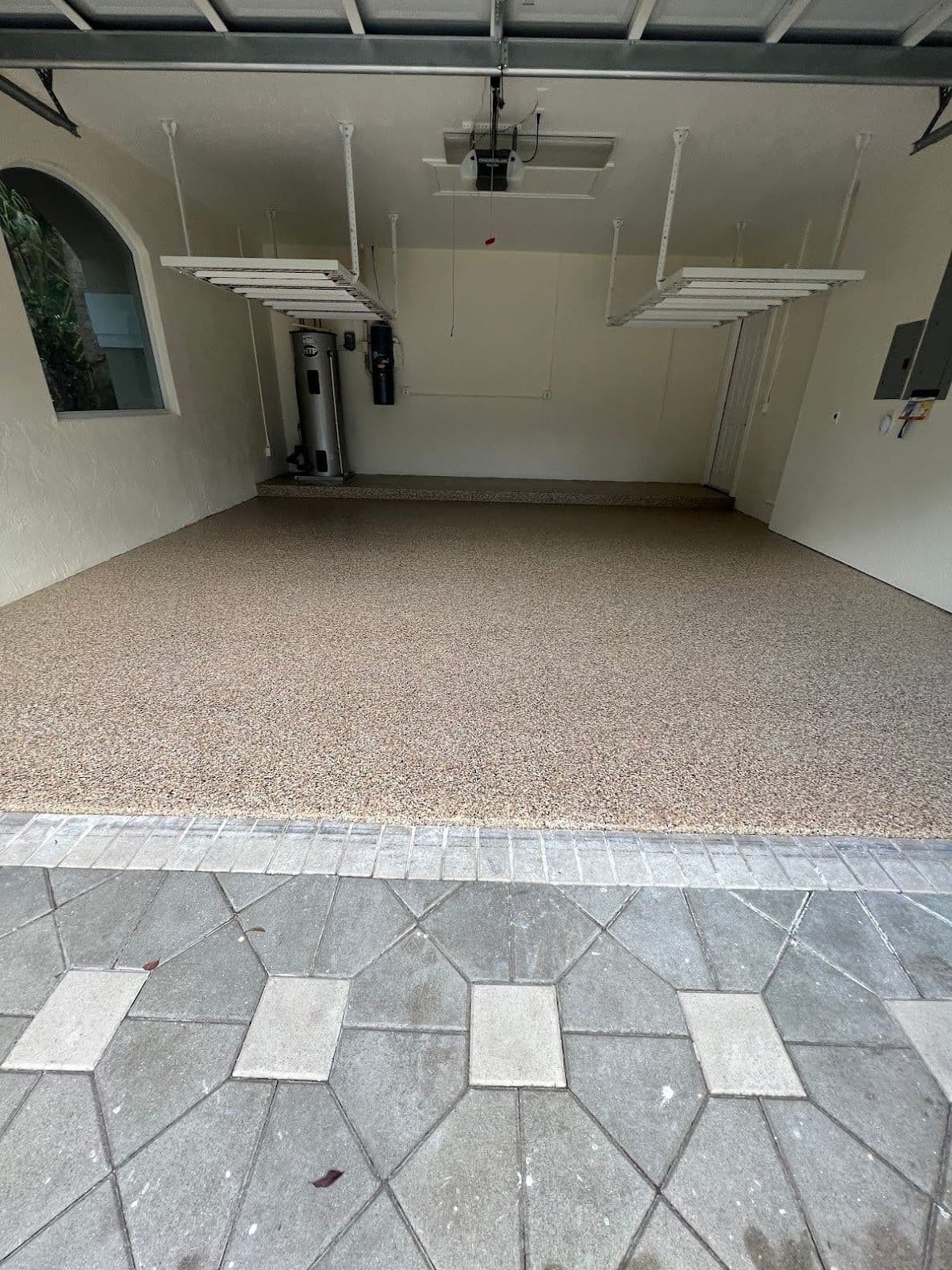
We had both of our garages done and an outdoor concrete platform. The crew was courteous and professional. Everyone from Nancy our salesperson to Patrick, the manager, Logan and his crew were outstanding. Our floors look fantastic and we were very happy we chose this company.
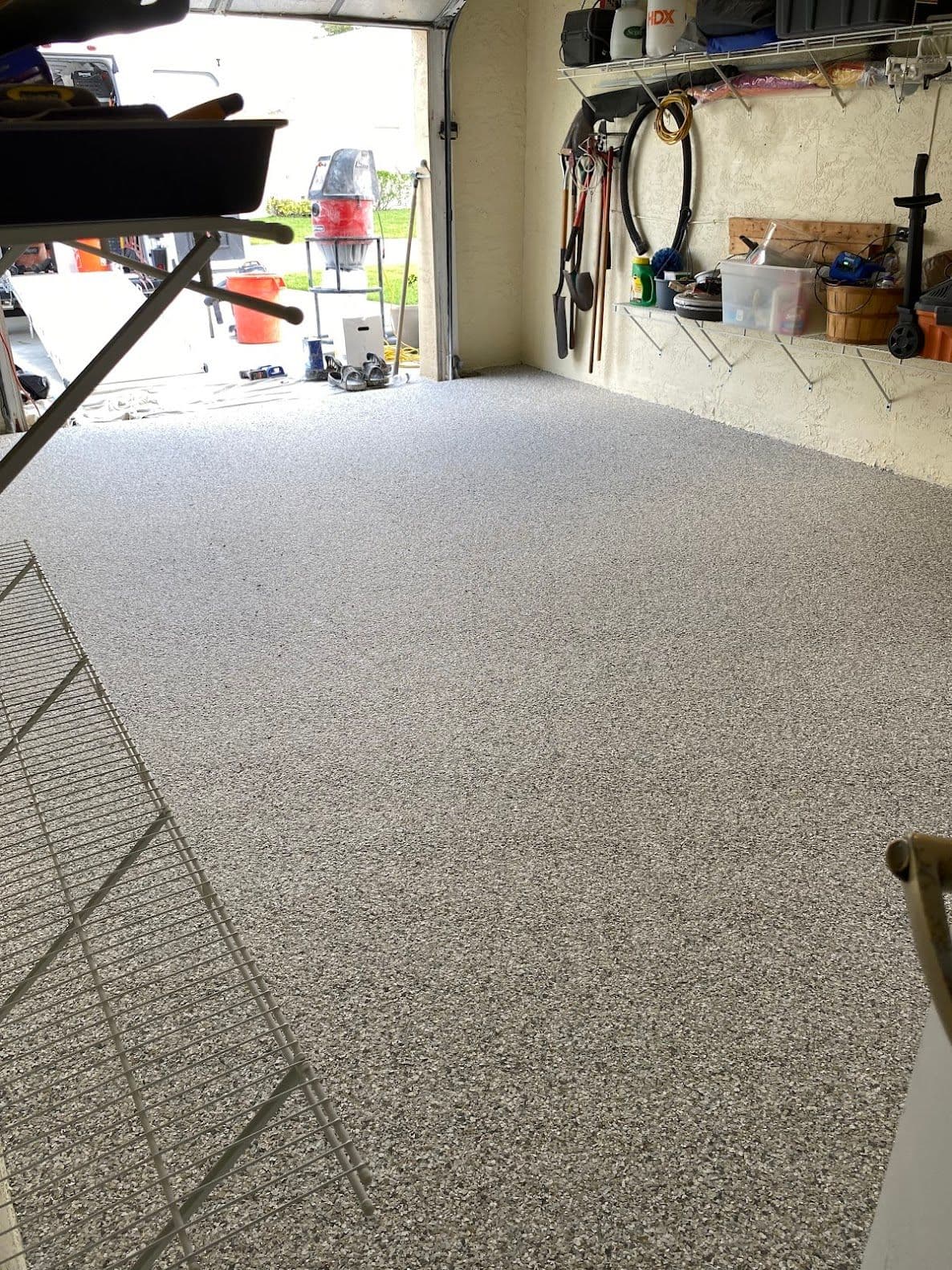
I am very pleased with the quality of work FloorTek has done for me. The two employees that did the actual work were very courteous, worked hard, and explained everything they were doing. Thank you for a great job.
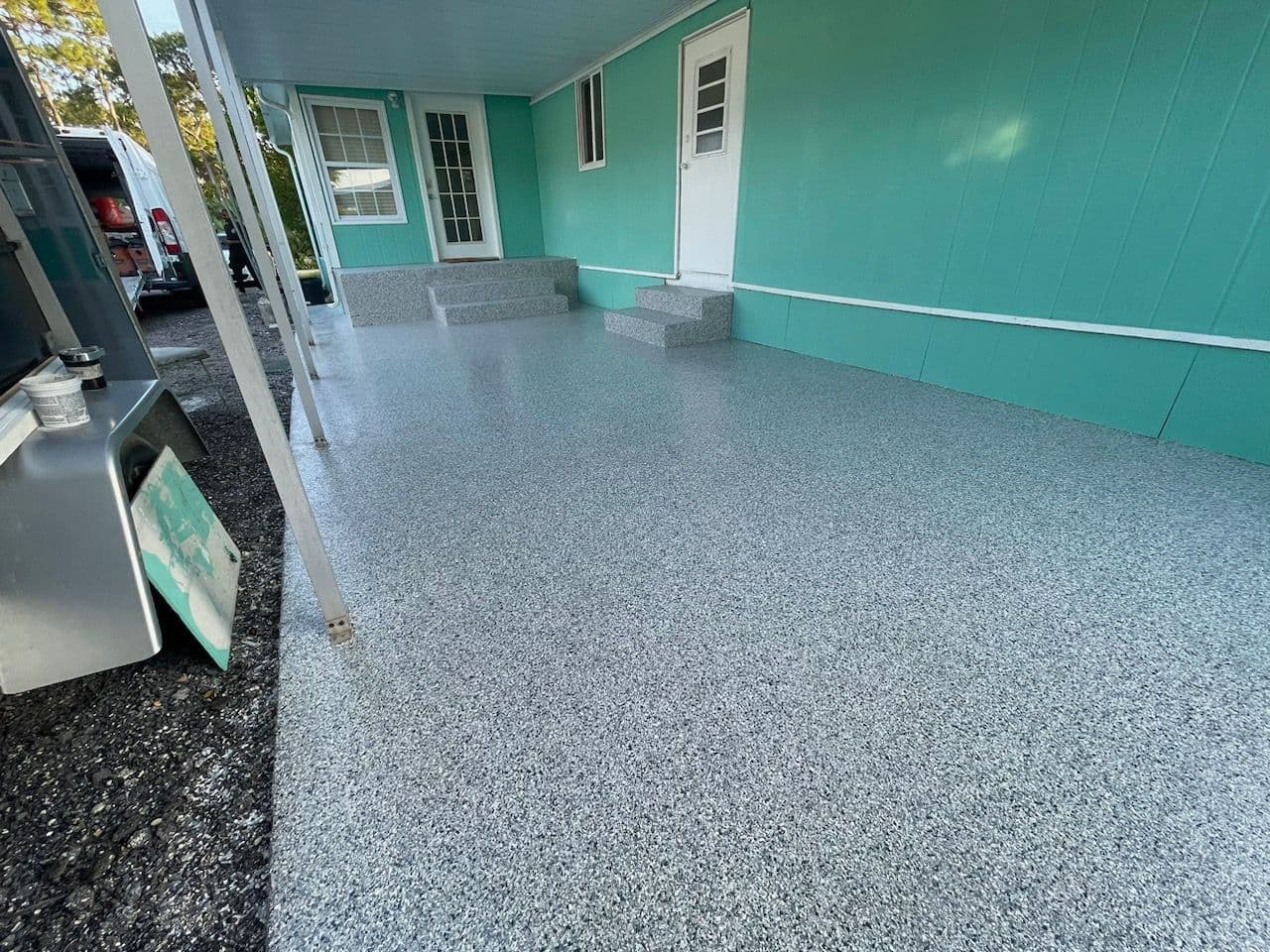
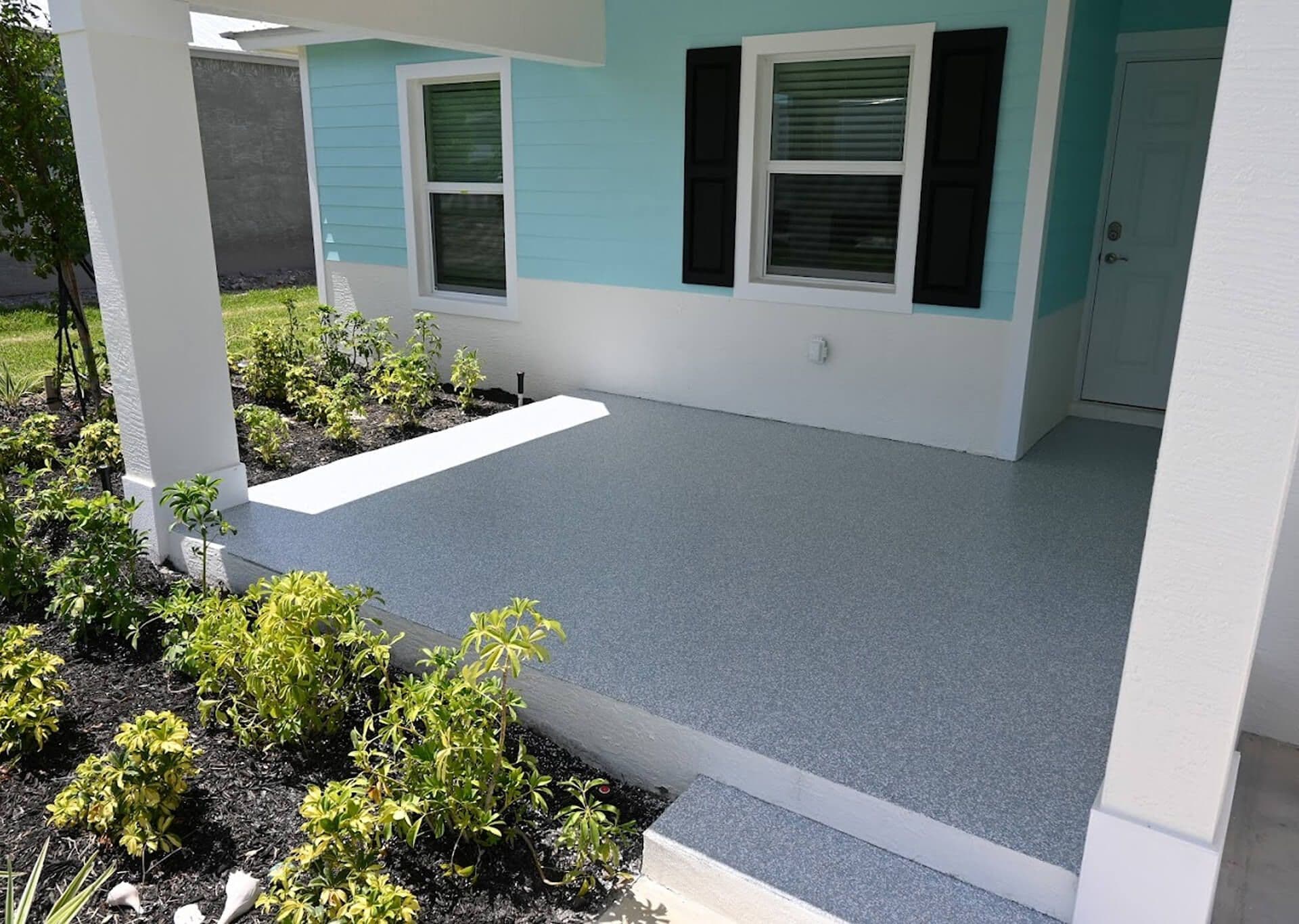
I was happy with the job Floortek did. Good customer communication and customer relationship. My old ugly porch was transformed and I love it. Nancy was very helpful throughout the process. Just know that rain may impact your schedule to make sure the products at highest quality during application.



Contact FloorTek Today