High-Performance Driveway Concrete Coatings for Houston Residential Infrastructure
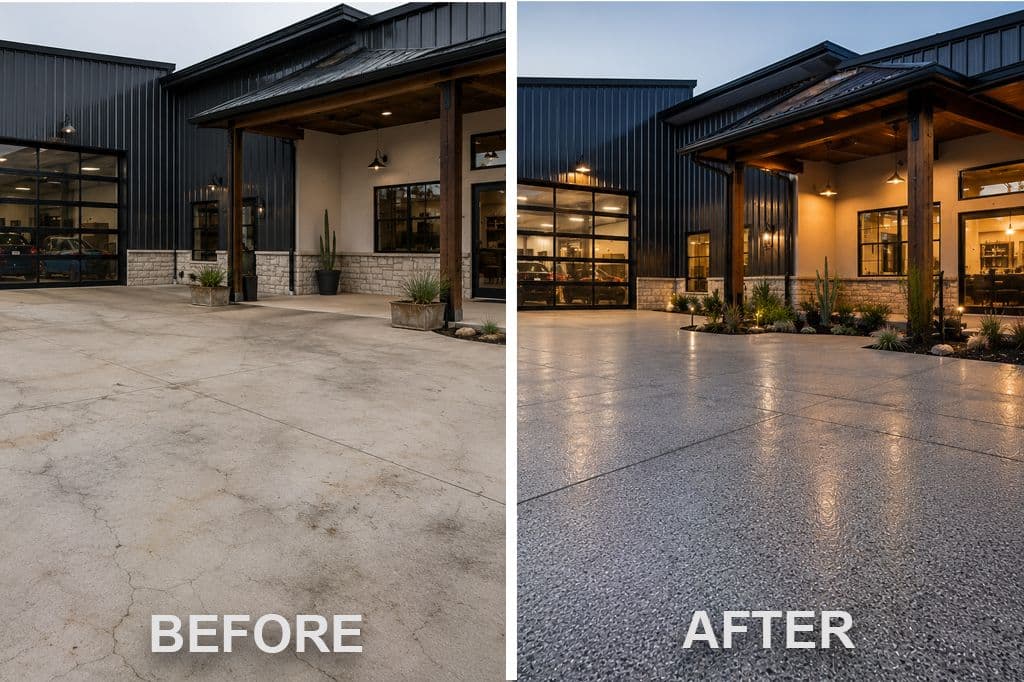
Our coatings offer customizable design options that enhance your home's curb appeal while providing long-lasting protection against environmental stresses.
By utilizing manufacturer-direct value, our factory-trained installation specialists deliver a permanent solution that typically outperforms outdated surface treatments. Our systems provide an advanced layer of defense that modern properties require to maintain structural integrity and visual appeal over many years, reducing the need for frequent repairs or re-coating.
The Houston Concrete Problem: Why Driveways Fail in Southeast Texas
Exterior concrete slabs in Southeast Texas operate under some of the most punishing climate and geological conditions in the United States. Driveways in cities like Katy, Sugar Land, The Woodlands, Cypress, and Pearland face a combination of extreme heat, seasonal downpours, and severe soil movement. Without an advanced floor coating, bare concrete rapidly degrades, leading to deep structural failures and costly aesthetic depreciation.
Local Climate Pressures on Exterior Concrete
The subtropical climate of the Texas Gulf Coast subjects outdoor surfaces to prolonged periods of intense heat and solar radiation. Ambient temperatures regularly exceed 100°F during the summer months, driving surface temperatures on unshaded driveways significantly higher. This extreme thermal loading causes the concrete matrix to expand.
When afternoon thunderstorms drop cold rain on the heated slab, rapid thermal shock occurs, forcing the concrete to contract abruptly. This continuous cycle of expansion and contraction introduces micro-fractures along the surface. Over time, these small cracks widen, allowing rainwater and debris to infiltrate the slab and thereby accelerate internal degradation, according to structural concrete studies conducted by the University of Kentucky.
Geotechnical Subgrade Shifting in Harris County
The underlying soil profile across Houston consists primarily of expansive clay, often referred to as Houston black clay or gumbo soil. This type of soil undergoes drastic volumetric changes depending on its moisture content. During heavy rain events, the clay absorbs vast amounts of water and expands with immense upward pressure.
Conversely, during hot, dry summer spells, the soil loses moisture and shrinks away from the underside of the concrete slab, leaving unsupported voids. As heavy passenger vehicles or trucks park on the driveway, the concrete flexes over these underground voids. Because concrete possesses high compressive strength but very low tensile flexibility, this structural movement causes deep, through-slab cracking that standard topical sealers cannot fix or bridge.
The Threat of Surface Scaling and Spalling
Another major challenge for local driveways is concrete carbonation and chemical weathering. Atmospheric carbon dioxide reacts over time with the calcium hydroxide inside the concrete paste, forming calcium carbonate. This chemical transition lowers the concrete's natural pH, making it increasingly porous and physically weaker near the surface.
As a result, the top layer of the slab begins to flake, crumble, and scale away under vehicle traffic. This process, known as spalling, leaves an unappealing, rough, and dusty surface that accumulates oil stains and organic growth, such as mildew. Applying professional driveway concrete coatings is designed to halt this surface degradation by completely sealing the open pores of the concrete substrate against external atmospheric reactants.
Evaluating Driveway Surface Protection: Epoxy vs. Polyaspartic Technology
When property owners research options for surface restoration, they often consider traditional driveway and garage coatings as a permanent solution. For decades, standard epoxy was the primary material utilized for residential garage floors and commercial applications. However, modern polymer engineering has revealed severe physical and chemical limitations when standard epoxy systems are used in demanding exterior environments such as driveways.
Key Deficiencies of Standard Epoxy Chemistry
Standard epoxy resins are inherently rigid, thermosetting polymers that lack the performance characteristics required for outdoor survival.
Epoxy exhibits very low elongation properties, meaning it cannot flex or stretch when the underlying concrete shifts due to expansive clay movement.
Epoxy cures through a slow chemical reaction that remains highly sensitive to ambient humidity and concrete moisture content during application.
Epoxy lacks resistance to ultraviolet radiation, causing it to amber, chalk, and lose its physical bond strength when exposed to direct sunlight.
Epoxy has a high thermal expansion coefficient that does not match concrete, leading to delamination during rapid temperature drops.
Because of these molecular vulnerabilities, installing an epoxy coating on an outdoor driveway typically results in premature failure, blistering, and peeling within the first few seasons of exposure.
The Polyaspartic Breakthrough in Floor Coating Technology
To address the systemic failures of standard epoxy, Floortek Coatings employs advanced aliphatic polyaspartic technology. Originally developed to protect industrial steel structures and bridge decks in harsh marine environments, polyaspartic esters represent a major evolutionary leap in polymer science. This material features a unique molecular structure that combines extreme tensile strength with elastomeric flexibility.
Our specialized polyaspartic formula is engineered to penetrate deeply into the concrete's microscopic pores, creating a mechanical root system that fuses directly with the slab. This advanced bond ensures that the coating typically outperforms standard materials by remaining fully adhered, even under intense vehicular shear forces and shifting subgrade conditions.
Material Testing and Performance Comparisons
Rigorous laboratory testing and field assessments conducted by federal highway researchers show that polyaspartic polyurea coatings exhibit superior durability over standard epoxy finishes. According to technical documentation from the Bureau of Transportation Statistics, modern multilayer polymer coatings provide significantly greater resistance to environmental penetration and physical degradation.
Bond Strength: Polyaspartic coatings achieve a concrete adhesion value that often exceeds the concrete's cohesive strength, meaning the concrete will tear apart before the coating loses its grip. Epoxy coatings often fail adhesively at the interface line when moisture or heat builds up.
Flexibility: Our polyaspartic systems deliver excellent elongation properties, allowing the material to flex dynamically with the concrete during thermal cycles. Epoxy remains completely rigid, cracking under identical mechanical stress.
Cure Time: Polyaspartic chemistry enables rapid cross-linking, achieving full cure within hours rather than days. This enables a complete 1-Day installation that returns the driveway to service rapidly, whereas epoxy requires up to a week of drying time before vehicle traffic can resume.
The Science of Durability: Why Polyaspartic Options Outperform Outdated Epoxy
To understand why our polyaspartic concrete driveway coatings deliver superior performance, one must consider the specific chemical challenges an outdoor driveway faces daily. Vehicles tracking across a driveway introduce heat, mechanical friction, oils, and chemical compounds that quickly destroy low-grade surface treatments.
Resistance to Chemical Spills and Fluids
Driveways are constantly exposed to automotive fluids, including motor oil, power steering fluid, transmission fluid, gasoline, and glycol-based anti-freeze solutions. Standard concrete readily absorbs these low-viscosity fluids due to its porous, capillary-rich structure, resulting in deep, permanent staining that weakens the concrete matrix.
Our polyaspartic systems are strictly engineered to be completely chemical-resistant. The high cross-linking density of the cured polyaspartic membrane acts as an absolute barrier against fluid migration. Spilled fluids pool on the coating rather than being absorbed into the substrate, allowing for easy cleanup with basic household detergents without damaging the underlying concrete or staining the finish.
Understanding UV Stability and Color Retention
The sun over regions like Pasadena, Memorial, Kingwood, and Spring emits continuous, high-energy ultraviolet (UV) radiation. When UV rays hit standard epoxy coatings, they break down the polymer chains in a process known as photodegradation. This molecular fracturing causes the epoxy to turn yellow or brown, lose its gloss, and become extremely brittle.
Our advanced formulas are entirely UV Stable. The aliphatic chemical backbone of polyaspartic technology does not absorb or degrade under UV radiation. This ensures that the custom flake patterns and colors maintain their deep clarity and visual appeal for decades without fading, yellowing, or losing structural strength under the Texas sun.
Hot Tire Pickup and Plasticizer Migration
One of the most common causes of driveway coating failure is hot tire pickup, a phenomenon that routinely destroys standard epoxy floors. When a vehicle drives on hot Houston highways, its tires absorb significant heat. When the car parks on the driveway, the hot tires transfer this heat directly to the floor coating, causing standard epoxy to soften.
Furthermore, modern tires contain chemical compounds called plasticizers, which are added to keep the rubber flexible. Under heat and pressure, these plasticizers migrate out of the tire and chemically bond with standard epoxy. When the vehicle drives away, the tire lifts the softened epoxy completely off the concrete.
Our advanced polyaspartic system is completely immune to hot tire pickup. The material features an exceptionally high glass transition temperature, meaning it does not soften or react with tire plasticizers under normal vehicular operating conditions.
Step-by-Step Breakdown: The FloorTek 1-Day Installation Engineering Process
Achieving a flawless, long-lasting finish requires a combination of elite chemical engineering and meticulous mechanical preparation. At Floortek, we follow a highly structured, multi-phase application protocol that transforms your worn slab with an efficient One-Day Floor Coating Service. Our team executes this comprehensive process within a compressed timeframe without sacrificing structural quality.
Phase 1: Mechanical Profiling via Diamond Grinding
The absolute most critical step in applying professional driveway concrete coatings occurs before any liquid material touches the surface. All existing dirt, old sealers, oil deposits, and weak laitance must be mechanically removed. We utilize heavy, industrial-grade planetary diamond grinding machinery equipped with integrated HEPA-filtered dust extraction.
We grind the entire concrete surface to achieve a specific Concrete Surface Profile (CSP) layer, typically matching a CSP 2 or CSP 3 benchmark. This grinding process opens the concrete's microscopic pores, creating a clean, rough texture that allows our polyaspartic basecoat to achieve deep mechanical anchorage. We never utilize acid etching, as it introduces destructive moisture and chemical residues deep into the concrete slab.
Phase 2: Structural Repair and Crack Filling
Once the mechanical profiling phase is complete, our team inspects the entire driveway for structural defects, deep pitting, and active cracks. We open all visible cracks with specialized diamond-blade chase saws to remove loose debris and create clean, vertical walls.
We then apply a rapid-curing, high-solids polyurea joint filler to pack the cracks and voids. This material cures harder than the concrete itself within minutes, after which we grind it perfectly flush with the surrounding slab. This critical repair phase stabilizes the concrete surface, ensuring that the final driveway-concrete-resurfacing coat appears completely uniform, monolithic, and structurally sound.
Phase 3: Basecoat Application and Full Flake Broadcast
With the substrate fully prepped and repaired, we apply our premium, deeply penetrating polyurea basecoat. This material is mixed on-site and applied with specialized squeegees and rollers to ensure uniform thickness throughout the slab. Immediately after applying the base layer, our technicians perform a full broadcast application of our premium vinyl color chips.
We broadcast the flakes by hand until the entire floor is completely saturated, ensuring that the basecoat is hidden. This full-chip layer provides essential physical properties:
It increases the overall thickness of the entire coating system.
It adds significant structural impact resistance against dropped tools or heavy mechanical loads.
It hides minor pre-existing subfloor irregularities and cosmetic deviations in the concrete.
It provides a beautiful, multi-dimensional aesthetic pattern that complements your home's exterior design.
Phase 4: Scrape and High-Solids Polyaspartic Topcoat Application
After the basecoat has fully cured, our team re-enters the driveway to reclaim all unbonded vinyl flakes using high-volume vacuum systems. We then utilize flat steel scrapers to shave down the broadcast layer in multiple directions. This mechanical scraping step eliminates any vertical standing or sharp-edged flakes, ensuring a smooth, pleasant texture across the floor.
Finally, we apply our clear, high-solids polyaspartic topcoat over the flattened flake layer. This topcoat seals the vinyl chips, forming a dense, clear, and durable shield that is completely UV-stable and chemical-resistant. Thanks to this fast-acting chemistry, your new driveway achieves structural readiness within hours, allowing for regular foot traffic and vehicle use much faster than any alternative system.
Managing Underground Moisture Dynamics: The Role of a Vapor Barrier
Groundwater management represents an essential aspect of successful exterior coatings engineering along the Texas Gulf Coast. Because the water table in areas surrounding Clear Lake, League City, and Galveston is exceptionally shallow, concrete slabs are constantly subjected to vapor pressure from below. Failing to address this sub-slab moisture is a primary reason why low-grade DIY coatings rapidly fail and peel.
Hydrostatic Pressure and Capillary Action
Concrete is highly porous and functions like a dense, hard sponge, containing thousands of microscopic capillary pathways formed during its initial hydration and curing. Groundwater beneath the driveway travels upward through these tiny paths via capillary action. As solar energy heats the top of the open driveway slab, it creates a powerful thermal vacuum that draws moisture out through the concrete surface.
When an unvented or non-breathing topical layer is applied over the concrete, rising moisture vapor becomes completely trapped beneath the coating, building up high hydrostatic pressure. If the coating's bond strength is lower than the vapor pressure, moisture will physically tear the coating from the concrete, resulting in unsightly bubbles, blisters, and delamination.
Mitigating Delamination with Moisture Vapor Retarders
To prevent moisture damage, we basically have to add an extra layer called a vapor barrier. This specialized coating component is engineered to penetrate deep into the concrete's lower capillaries, creating a dense, cross-linked crystalline block that restricts the upward movement of water molecules.
By installing this specialized barrier layer beneath our high-performance polyaspartic topcoats, we manage high moisture vapor transmission rates. This defensive layer ensures that your driveway floor coatings remain permanently bonded to the slab and are completely unaffected by heavy seasonal rains or rising coastal water tables. Proper utilization of these advanced moisture management protocols aligns with standard residential foundation recommendations highlighted by the U.S. Department of Energy.
Architectural Versatility: Customizing Design Elements for Texas Homes
While structural durability is our main focus, our advanced coating systems also deliver a massive improvement to your home's curb appeal. A stained, cracked concrete driveway detracts from the visual value of an otherwise immaculate property. Our decorative multi-layer systems allow you to customize your exterior surfaces to complement your home's architectural style.
Enhancing Curb Appeal Across Diverse Neighborhoods
Whether you live in a traditional brick estate in The Woodlands, a modern home in Houston Heights, or a sprawling property in Cypress, your driveway makes up a significant portion of your home's front facade. Our high-performance driveway concrete coatings elevate standard gray concrete into an intentional design feature.
By browsing our extensive Floortek Gallery, property owners can discover how matching the driveway finish with the home's exterior trim, brick accents, or stonework creates a cohesive look that significantly enhances property value and marketability.
Full-Chip Systems vs. Monolithic Colors
We provide an exceptional array of Colors and Flake Options to accommodate any aesthetic goal. Our full-chip broadcast systems are the most popular option for outdoor driveways because their multi-tonal blends mimic the appearance of natural granite, quartz, or terrazzo stone. These systems are highly effective at masking daily dirt, dust, and minor vehicle tracking between washes.
For property owners seeking a cleaner look, we also provide solid, monolithic color finishes. No matter which design pathway you select, every system we install incorporates our elite aliphatic topcoats to ensure absolute clarity and performance for decades to come.
Long-Term Performance: Maintenance Protocols and Manufacturer-Direct Value
Investing in a premium floor upgrade requires long-term peace of mind and an easy maintenance regimen. Unlike bare concrete or interlocking pavers, which constantly require pressure washing, weed killing, and joint sanding, our finished surfaces are designed for maximum lifespan with minimal effort.
Routine Cleaning Recommendations for Homeowners
Maintaining your new polyaspartic floor is incredibly straightforward. Because the cured topcoat is completely non-porous, everyday debris, leaf stains, and soil cannot penetrate or stain the surface. For routine maintenance, simply blowing off loose leaves with a standard leaf blower or rinsing the surface down with a regular garden hose is typically sufficient.
For occasional deeper cleanings to remove tracked mud or tire dust, we recommend reviewing our comprehensive Polyaspartic concrete coatings Care and Maintenance Guide. Using a soft-bristled broom with a pH-neutral cleaner mixed with water will easily break down surface grime without dulling the clear topcoat finish.
Maximizing Investment Protection via Warranties
At Floortek, we believe in providing absolute transparency and undeniable value to our local community. We control every stage of our supply chain and installation process, enabling us to pass significant savings and quality assurance directly to our customers through direct-from-manufacturer value. To celebrate our local expansion, we are currently offering 30% off the first installation for new driveway clients.
Furthermore, because we maintain complete confidence in our materials and industrial preparation techniques, we back every residential installation with an industry-leading Life-of-home warranty. This comprehensive warranty ensures that your investment remains fully protected against peeling, blistering, delamination, and UV degradation for as long as you own your home.
Frequently Asked Questions:
What are the common problems with concrete floor coatings, and how can they be avoided?
The most common problems include delamination, blistering, and UV yellowing, which typically occur when using inferior materials like standard epoxy. To completely avoid these failures, Floortek Coating utilizes advanced aliphatic polyaspartic chemistry preceded by mandatory industrial diamond grinding to open the concrete's pores. According to federal coating durability evaluations published by the Bureau of Transportation Statistics, proper substrate profiling combined with UV-stable formulations prevents chemical separation and surface wear.
How long does it take to apply professional driveway concrete coatings?
A professional installation typically requires only a single day to complete from start to finish. Our team at Floortek Coating utilizes advanced, rapid-curing polyaspartic technology that eliminates the multi-day drying periods required by outdated epoxy materials. This rapid cross-linking allows us to grind, repair, basecoat, flake, and topcoat your driveway concrete coatings in a compressed timeframe, as detailed by concrete preservation standards from the University of Kentucky.
Will heavy trucks damage these driveway concrete coatings over time?
No, these high-performance coatings are specifically engineered to withstand massive mechanical loads and continuous heavy vehicular traffic without cracking. The polyaspartic formulations applied by Floortek Coating bond directly into the concrete matrix, creating a surface layer that is 10X stronger than epoxy. Academic research from Missouri S&T indicates that dense, polymer-reinforced concrete structures exhibit significantly enhanced resistance against compressive failure and surface abrasion.
Can driveway concrete coatings withstand the intense summer heat in Houston?
Yes, our specialized exterior finishes are formulated to withstand extreme temperature fluctuations without blistering or peeling. Floortek Coating applies aliphatic polyaspartic driveway coatings that offer exceptional thermal stability and flexibility, mirroring concrete's natural movement. National testing data hosted by the NCBI confirm that polyurea-based variants possess the ideal physical properties to withstand high thermal stress without structural degradation.
Do driveway concrete coatings fade or turn yellow when exposed to direct sunlight?
No, premium polyaspartic surface treatments will not change color or turn amber when exposed to continuous solar radiation. The advanced aliphatic chemistry used by Floortek Coating ensures our driveway concrete coatings remain stable under intense ultraviolet exposure. Structural maintenance guides from the University of Kentucky confirm that high-grade topcoats protect outdoor concrete from weathering while permanently retaining their original color and gloss.
How soon can I drive my car onto the new driveway with concrete coatings?
You can safely park your vehicles on the coated surface approximately twenty-four hours after our installation process concludes. The rapid-cure polyaspartic systems deployed by Floortek Coating cure much faster than standard retail sealers or epoxy options. This advanced chemistry enables your driveway concrete coatings to reach full mechanical hardness rapidly, as verified by infrastructure repair models at Iowa State University.
How do you prepare the concrete before applying the driveway concrete coatings?
We prepare the concrete by performing heavy mechanical profiling with specialized planetary diamond-grinding machinery equipped with integrated dust vacuums. Floortek Coating avoids acid washing entirely, as it injects destructive moisture into the slab before installing driveway concrete coatings. According to foundational moisture guidelines from the U.S. Department of Energy, avoiding liquid chemicals during prep is vital to ensure proper polymer adhesion to the substrate.
What happens to existing cracks when you install driveway concrete coatings?
Every pre-existing surface crack is mechanically opened, cleaned, and packed with an industrial polyurea filler before coating. Floortek Coating grinds these repairs completely flush to create a smooth, unified foundation for your final driveway concrete coatings. Studies conducted by the Bureau of Transportation Statistics show that filling concrete defects with flexible polyurea compounds effectively prevents future structural spalling and water infiltration.
Do driveway concrete coatings require frequent resealing or heavy maintenance?
No, these premium structural coatings represent a permanent surface solution that never requires periodic reapplication or resealing. The non-porous polyaspartic barrier applied by Floortek Coating keeps contaminants locked on the surface for basic cleaning. Maintenance research shared by the Department of Energy demonstrates that dense protective barriers eliminate the need for recurrent topical chemical treatments.
Can you apply driveway concrete coatings over old, stained, or ugly concrete?
Yes, our multi-layer installation system is explicitly designed to resurface and fully conceal severely worn or heavily stained slabs. Floortek Coating uses diamond grinders to cut past the stained profile, creating a pristine layer for your new driveway concrete coatings. Infrastructure research from Missouri S&T indicates that applying structural polymer overlays effectively restores old concrete while preventing future deterioration.
If your concrete surface is showing signs of scaling, cracking, or deep discoloration, waiting will only allow subsurface moisture and seasonal thermal shock to expand these flaws into deeper structural failures. You can safeguard your home's exterior surfaces right now with a permanent, high-performance polyaspartic system engineered specifically for the demanding environment of Southeast Texas.
Discover how our factory-certified team can completely revitalize your property in less than twenty-four hours. Review our structural options by reading About Us or checking our local Floortek Locations page. To claim your limited-time promotional discount of 30% off your first installation along with our comprehensive Life-of-home warranty, connect with our main office at 844-844-4164 or our local Houston line at 1-346-550-9307. You can also visit our regional headquarters at 4109 Katy Hockley Rd #1, Katy, TX 77493, or use our web form to contact us online and secure your free, comprehensive on-site engineering assessment today.
FREE In-Home Estimate
Plus 30% Off
Update Your Driveway Today!
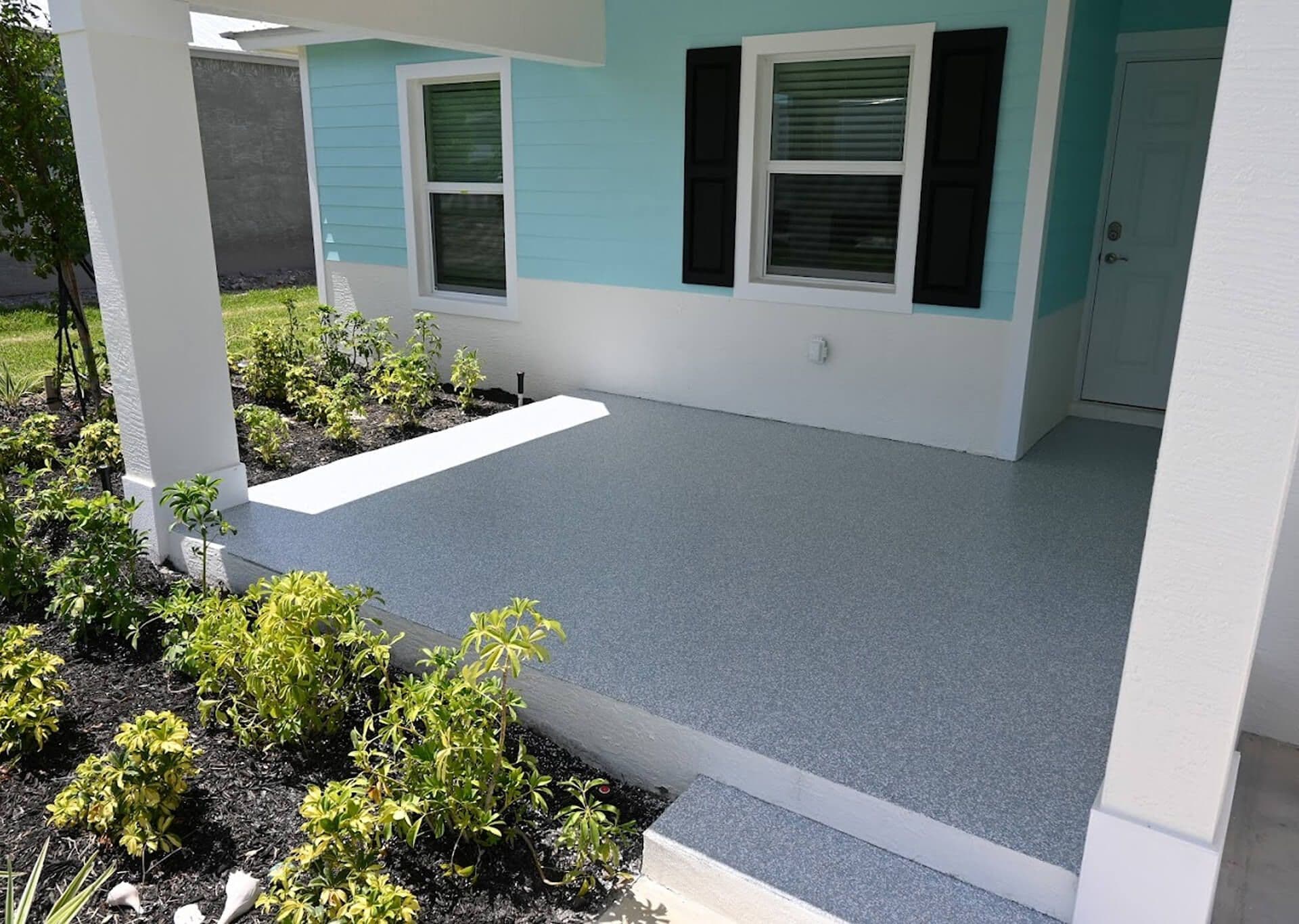
Get your new driveway installed in just one day with Floortek’s driveway resurfacing services! Call us today for a free quote!
Or contact us online to schedule your consultation!