The Real Life of Concrete:
A Homeowner's Guide to Making It Last

We get asked all the time about concrete's actual life. As a homeowner, you look at your driveway, patio, or garage floor and wonder, "How long will this last before it cracks and looks terrible?" You've probably heard all kinds of answers, from 20 years to 100 years.
The truth is, the concrete lifespan Depends entirely on how it was installed and, more importantly, how you protect it. Many people think a quick coat of epoxy is the answer, but that's often the start of a whole new set of problems.
We're Floortek Coatings We're confident in our extensive experience as specialists in concrete protection. With our knowledge, we’ve seen what works and what fails. We're here to guide you on what truly determines concrete's lifespan and how to protect your investment for decades, especially in the harsh United States climate.
Your concrete is the foundation of your home's curb appeal and function. It's a significant investment. Understanding its lifespan helps you <b>feel empowered</b> to protect it from weather, salt, and daily wear and tear. It's about learning how to win the battle against wear and tear.
What is the Real Life of Concrete? (The Expert Answer)
Let’s get the big question out of the way. How long should concrete last?
Concrete Driveways & Patios: A properly installed slab in a mild climate can last 30 to 50 years.
Concrete Foundations & Basements: These can last 100 years or more.
Concrete Garage Floors: These should last 25-50 years, but they often fail much faster because they are subjected to the most abuse.
But here in the United States, we don't live in a "perfect" world. The life of concrete is a range, not a guarantee. That 50-year driveway might only last 15 years if it's not protected.
Why does concrete last longer or shorter? Focusing on four key factors helps homeowners understand what influences durability and how to protect their investment.
1. The Installation (The "Good Bones")
You can't control this on an existing home, but it's the #1 factor. A great install means the contractor compacted the dirt and gravel sub-base properly. If they didn't, the ground would shift, and the concrete would crack. It also means they used the right "mix." A 4000 PSI (pounds per square inch) mix is much stronger and more durable for a driveway than a cheaper 2500 PSI mix, but you'dn't know just by looking at it.
2. The Climate (America's #1 Concrete Killer)
This is the big one. The life of concrete is shortest in places with extreme weather, which covers most of the United States.
Northern & Midwest States (Freeze-Thaw): This is the worst enemy of concrete. Water is a concrete killer. It soaks into the tiny pores of your concrete. When the temperature drops, that water freezes and expands by about 9%. As the National Institutes of Health (NIH) explains This expansion acts like a tiny, powerful wedge, causing cracks in the surface of your concrete. This is what causes spalling, pitting, and flaking.
Coastal & Northern States (De-Icing Salts): You know that salt you throw on your driveway? Or the salt the plows spray on the roads that drips off your car in the garage? It’s poison. As the Federal Highway Administration (FHWA) notes De-icing chemicals are a significant factor in the deterioration of concrete. They chemically attack the cement paste that binds the rocks, turning your solid slab into a crumbling mess.
Southern & Western States (Sun & Heat): In places like Texas, Arizona, and Florida, the relentless sun poses a significant challenge. UV rays break down weak sealers and can even cause the concrete itself to crack due to thermal expansion and contraction.
3. The Load (What You Put On It)
Your concrete's lifespan is also about what it has to handle. A patio that only sees foot traffic will last longer than a driveway that receives heavy traffic from SUVs or delivery trucks daily. This daily stress creates tiny micro-fractures that, over time, become big problems.
4. The Maintenance (Your Role)
This is the one factor you can control. Sealing concrete with advanced protective coatings prevents water, salt, and oil from breaking down the concrete, significantly extending its lifespan.
The American Cement Association Confirms that sealing concrete is key to preventing staining and damage. Proper maintenance can extend a concrete's life from 20 to 50 years. But beware: epoxy is a short-term fix that can give homeowners a false sense of security, leading to disappointment.
Concrete vs. Epoxy: Why "Protection" Is Not Created Equal
When homeowners notice their concrete starting to pit, stain, or crack, they seek a solution. And the most common "fix" you'll find at the big-box store is a DIY epoxy kit.
Let's be very clear: Epoxy is our primary competitor, and we believe in transparency. It is not a long-term solution, and we won't mislead you about that.
Epoxy is a plastic resin. It's basically a very thick, challenging paint that you roll onto your floor. It sits on top of the concrete. It does not become part of the concrete.
And that's the problem. Because epoxy only sits on top, it's a temporary layer that will eventually fail, leaving your concrete vulnerable and requiring costly repairs.
The Myth: "Epoxy Protects Your Floor"
People often ask us how long epoxy Lasts, all the time, expecting us to say 20 years. The real answer? You’ll be lucky to get 3-5 years before the problems start.
If you’ve ever had an epoxy floor, you know exactly what we’re talking about.
Problem 1: Hot-Tire Pickup. This is the #1 complaint. You drive home on a hot day. Your tires are hot from the road. You park in your garage. The heat and weight of your car tires soften the epoxy resin. Later, when you back your car out, the epoxy has cooled and chemically bonded to your rubber tires, ripping them right off the floor. You'll see big, peeled patches where your tires used to be.
Problem 2: Peeling & Bubbling. Concrete is a porous sponge. Moisture from the ground is always slowly moving up through the slab (it’s called moisture vapor transmission). Since epoxy is just a plastic sheet on top, that moisture gets trapped. It builds up pressure until it "pops" the epoxy off the floor, creating bubbles that turn into giant peeling flakes.
Problem 3: Fading & Yellowing. Epoxy is not UV-stable. That window in your garage? Or the part of the floor near the garage door that gets sunlight? Over the course of 6-12 months, it will turn a chalky, sickly yellow.
Problem 4: The "Fix" is a Nightmare. Once your epoxy floor fails, you can't just "paint over it." The only way to fix it is to rent a massive diamond grinder and spend a weekend in a cloud of dust, scraping and grinding all the old, peeling epoxy off. It's a horrible, expensive job. You have to do all that work to get back to the bare concrete you started with.
Epoxy doesn’t improve the life of concrete; it just hides it for a little while. It's a short-term fix that creates a long-term headache. We see it every single day. If you wonder how long epoxy floors last The answer is "not long enough."
Our Solution: Polyaspartic Coatings (This Isn't Epoxy)
At Floortek Coatings We would never put epoxy on your floor. We use an advanced polyaspartic coating system from Our Coating Products.
This is an entirely different technology, and it's 10X better than epoxy.
Polyaspartic isn't just a "top coat." It's a system that bonds with your concrete on a chemical level. Here’s how our process works:
We Prepare the Concrete. We don't just sweep the floor. We use industrial-grade, concrete grinders with diamond-tipped blades. This is crucial. This process opens up the "pores" of your concrete, making it like a fresh sponge, ready to accept our coating.
We Bond With the Concrete. We apply our basecoat, which is designed to penetrate deeply into the concrete and bond chemically. It doesn't sit on top; it becomes part of the concrete slab itself. This means it can never be peeled off by moisture from below.
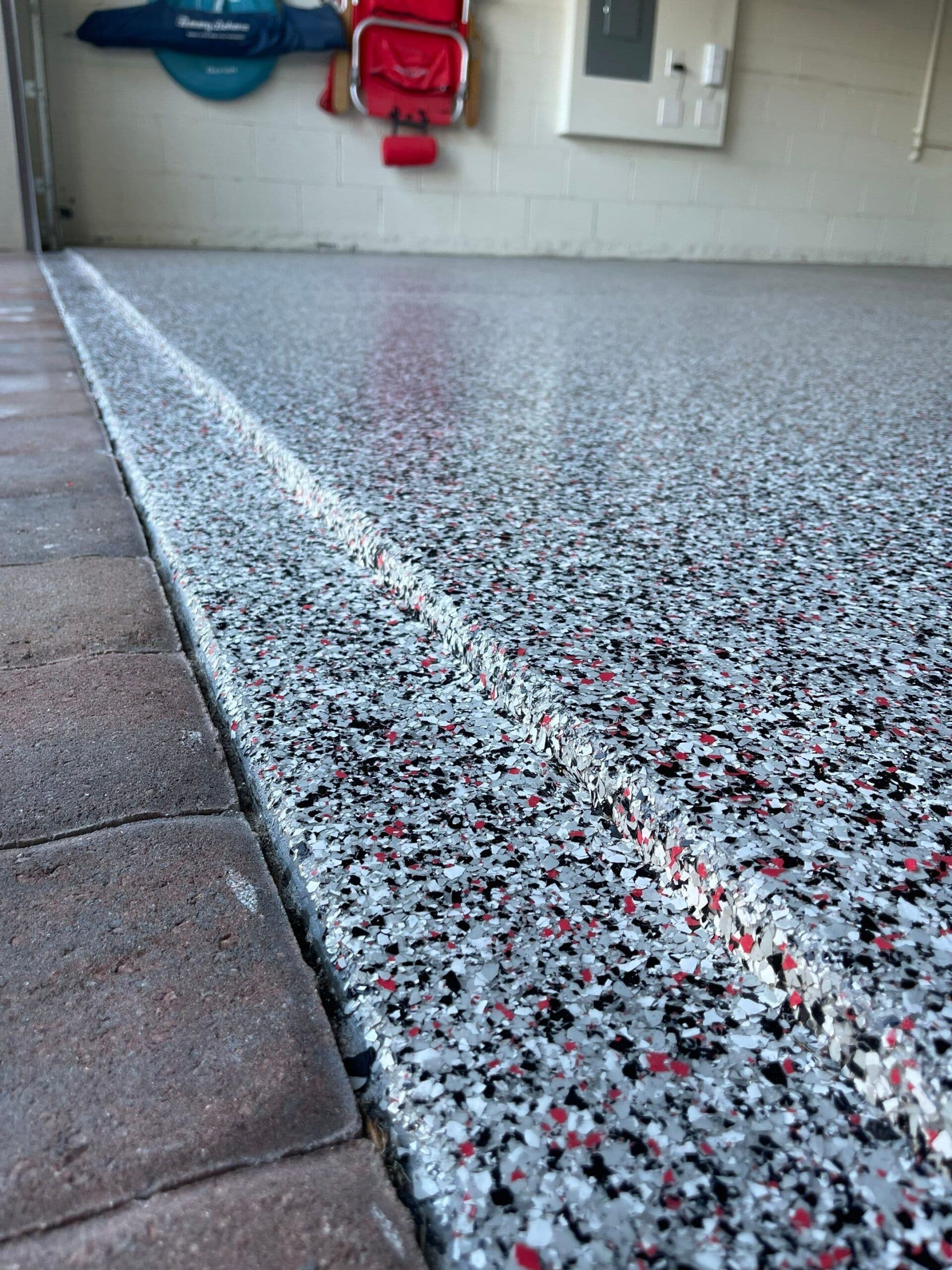
We Add the Flake. While the basecoat is wet, we broadcast a complete layer of our beautiful chips. You can see all our Colors and Flake Options To match your home.
We Seal It Forever. We finish with a clear polyaspartic topcoat that locks everything in.
This system directly solves every single problem that epoxy has:
No Hot-Tire Pickup. Ever. Our polyaspartic system is 100% resistant to hot-tire pickup. It has a much higher heat tolerance. You can park your hot car with total confidence.
No Peeling or Bubbling. Because it fuses with the concrete, moisture can't push it off. It's there to stay.
100% UV Stable. Our topcoat will never yellow or fade from sunlight. The color you pick is the color it will stay.
Better Durability. It's more flexible than epoxy, so it's more resistant to chipping and impacts. It's also more resistant to chemicals, salt, oil, and gas.
The Best Part? It's Done in 1 Day.
An epoxy job can take 3 to 5 days to install, and then you must wait an additional 3-5 days for it to fully cure before driving on it.
We install our complete 1-day floor coatings in, well, one day. Our team arrives in the morning, and by the time we leave, your floor will be complete. You can walk on it just a few hours later and drive on it the very next day.
A polyaspartic coating maximizes the life of concrete. It completely seals the surface, preventing water, salt, oil, and chemicals from ever coming into contact with the slab. This is how you protect your foundation. This is how you make it last.
And right now, for your first project, we are offering 30% off on the first installation!
Maximizing the Life of Concrete in Every Part of Your Home
This level of protection isn't just for the garage; it's also for the home. It's the answer to maximizing the life of concrete everywhere on your property.
Garage Floors: This is the most common use. It turns a dusty, cracked, stained garage into a clean, bright, and functional part of your home. It adds value and makes the space one you're proud of. Stop wondering how long epoxy lasts on the garage floor And get a permanent solution.
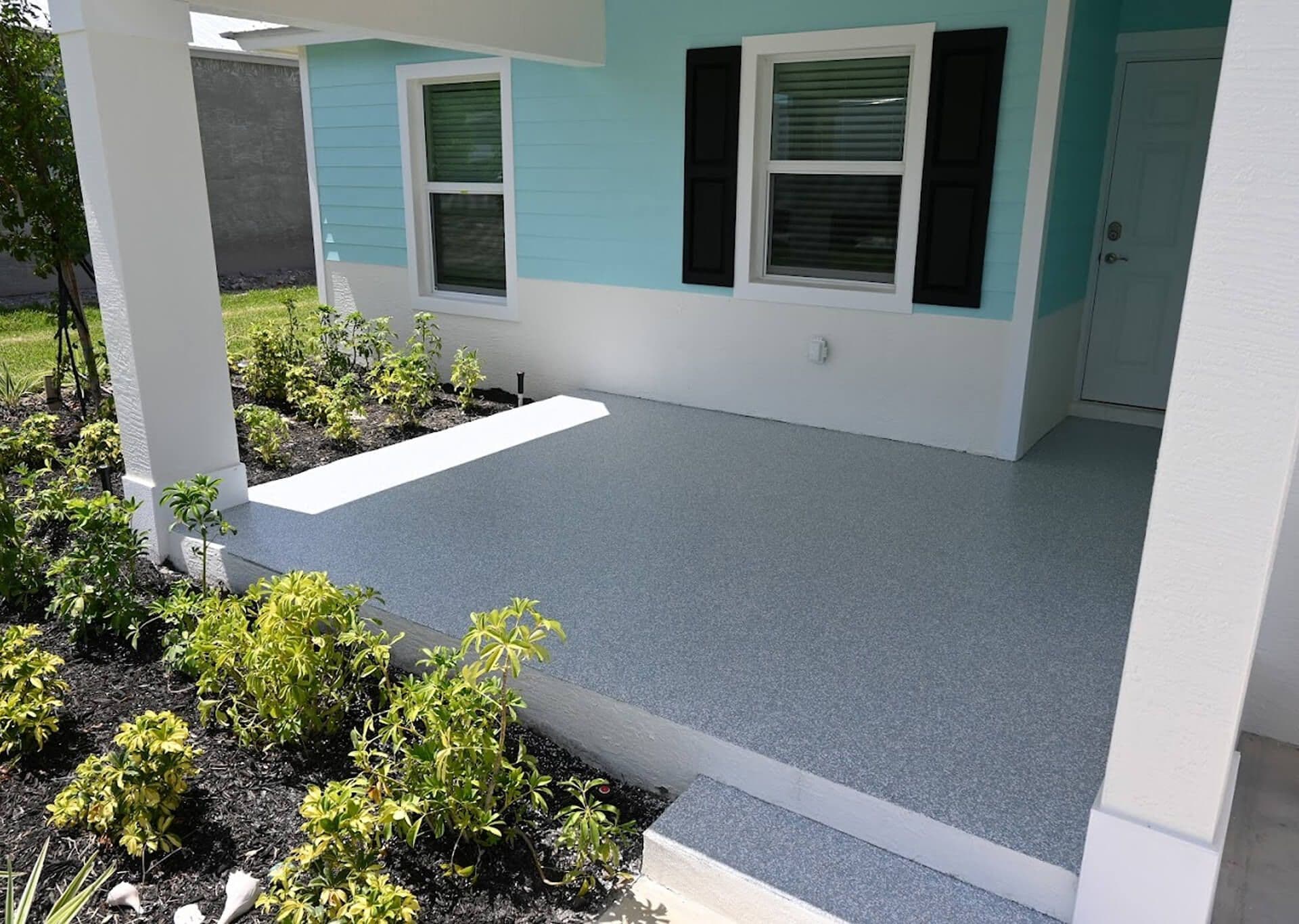
Patios: Our patio coating service It is perfect for outdoor spaces. It protects the concrete from sun fading, rain, and damaging freeze-thaw cycles. It's also beautiful, turning a boring slab into an outdoor oasis.
Pool Decks: Stop burning your feet on hot, cracked concrete. Our pool deck coating service Offers a stunning, durable finish that withstands the harsh effects of pool chemicals and constant sunlight.
Driveways: Your driveway is the first thing people see when they arrive. Why let it be a cracked, salt-pitted mess? Our driveways coating service It is the ultimate defense against salt, ice, and snow. It stops the damage before it starts.
Sidewalks: Don't forget your walkways. Protecting your sidewalk coating service Link makes your entire property look unified and pristine, shielding it from the same salt and ice that affect your driveway.
Basements: Our Basement coating service Link provides a clean, finished look that's easy to maintain and perfect for a home gym, workshop, or playroom.
You can see hundreds of examples of our work in our Gallery. We're a local company, and we take pride in our work. You can read more about us And our commitment to quality.
Don't Guess About Your Concrete's Lifespan—Guarantee It.
The lifespan of concrete It can range from 100 years to 10 years. The difference is protection.
You can choose to do nothing and watch the salt, ice, and sun slowly destroy your investment.
You can choose epoxy, a cheap, temporary "fix" that will peel, fade, and have you grinding your floor in a few years, costing you more in the long run.
Or you can choose to fix it once and fix it right.
A Floortek polyaspartic system is a one-time investment for the life of the concrete. It's a permanent solution that stops damage, looks incredible, and is backed by our Life-of-home warranty.
Stop searching for."how long can concrete last" and start deciding how long you want it to last. A properly coated floor from Floortek changes the whole equation of the life of concrete.
Understanding the concrete lifespan This is the first step. Protecting it is the next step.
Your Concrete Is Your Foundation. Let's Protect It.
Would you be ready to see the difference? Your concrete is the foundation of your home. Let's protect it together.
Get your Free Quote today.
Our team is ready to visit your home for a complimentary, no-obligation consultation. We'll show you how our 1-day floor coatings can transform your space. And don't forget to ask about your 30% off on the first installation!
Call us now at 844-844-4164 or contact us You can schedule your consultation on our website.
Frequently Asked Questions About the Life of Concrete
1. What is the average life of concrete?
The average lifespan of concrete for a driveway or patio is approximately 30 to 50 years, provided it is well-maintained. In harsh climates with freezing and thawing and the use of road salt, an unprotected slab can fail in as little as 10 to 15 years.
2. How can I make my concrete last longer?
The single most effective way to extend concrete's lifespan is to seal it. You must prevent water, salt, and chemicals from soaking in. A high-quality polyaspartic coating is the best, most permanent way to protect it.
3. Why does my concrete crack?
Concrete cracks for many reasons. The most common causes are a poorly compacted base, freeze-thaw cycles (where water expands as it freezes), and simple shrinkage as the concrete cures. While you can't stop all cracks, you can prevent them from getting worse by sealing the surface.
4. Is epoxy a good way to protect concrete?
No. Epoxy is a temporary, "topical" paint. It is notorious for failing due to hot tires (hot-tire pickup) and peeling as moisture rises from the concrete. It doesn't truly protect concrete; it just covers it up for a short time.
5. How long does epoxy last?
You'll be lucky to get 3-5 years from a DIY or "professionally" installed epoxy floor before it starts to peel, chip, or yellow from sunlight. We know how long epoxy lasts, and it's not long enough.
6. What is better than epoxy for a garage floor?
Polyaspartic coatings are far superior. They are 10X better than epoxy because they chemically bond to concrete, are 100% UV-stable (won't yellow), and are not damaged by hot tires.
7. Does salt from roads damage concrete?
Yes. This is one of the fastest ways to destroy your concrete. De-icing salts chemically attack the cement paste, causing pitting and spalling. A Floortek coating makes your surface entirely resistant to salt.
8. How does the life of concrete change with the climate?
Drastically. The life of concrete is shortest in areas with freeze-thaw cycles (the North and Midwest). The expanding ice breaks the concrete from within. In the South, the sun's UV rays and high humidity are the biggest enemies. Our coatings are designed for every U.S. climate.
9. What is a polyaspartic coating?
It's an advanced, professional-grade coating that is stronger, more flexible, and bonds better than epoxy. It's the modern, permanent solution for protecting concrete.
10. How long does a Floortek coating take to install?
This is the best part. We are experts in 1-day floor coatings. Our team completes the entire job—from grinding to topcoat—in a single day. You can walk on it for hours and park your car on it the very next day.
FREE In-Home Estimate
Plus 30% Off
Testimonials
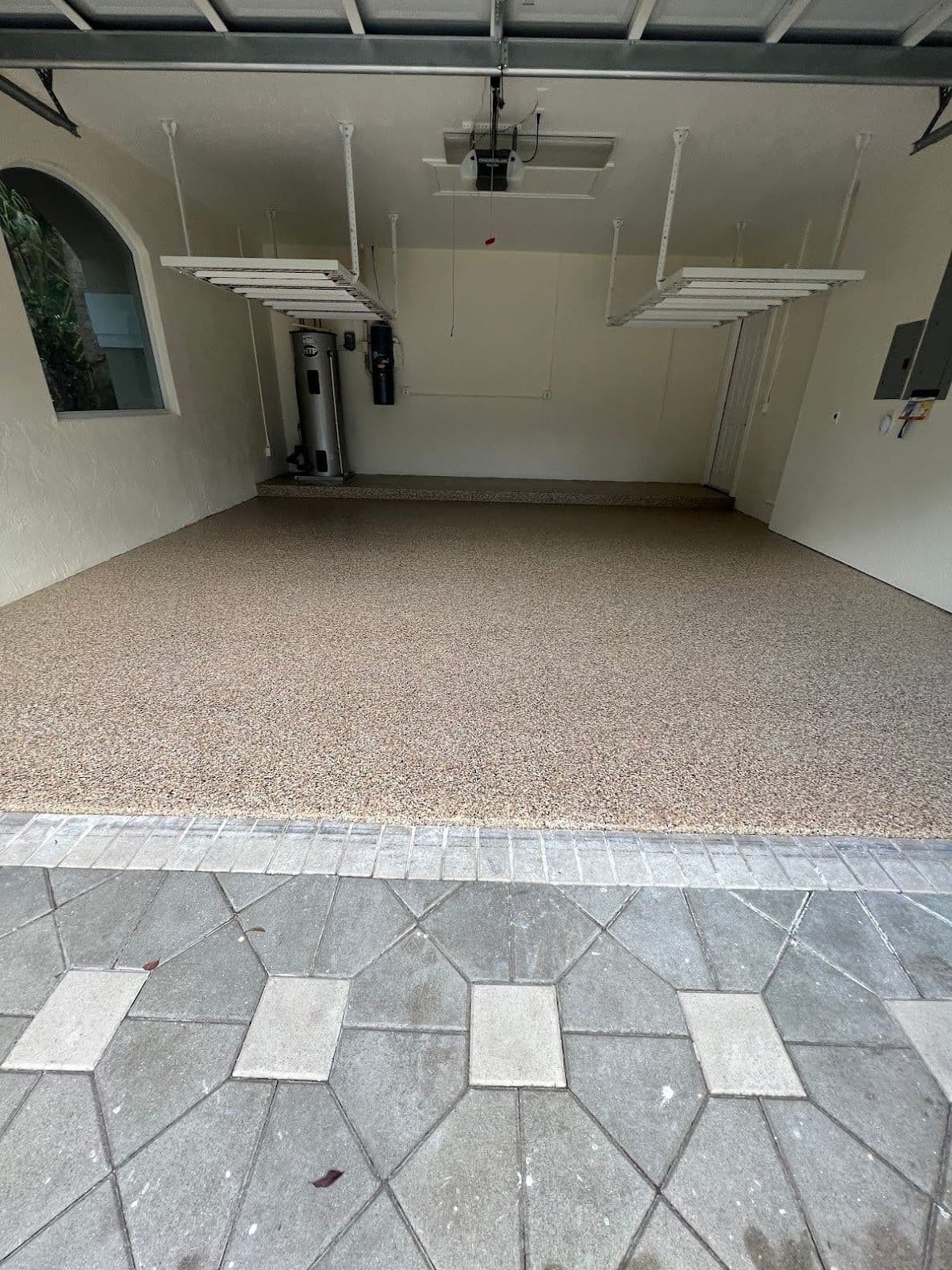
We had both of our garages done and an outdoor concrete platform. The crew was courteous and professional. Everyone from Nancy our salesperson to Patrick, the manager, Logan and his crew were outstanding. Our floors look fantastic and we were very happy we chose this company.
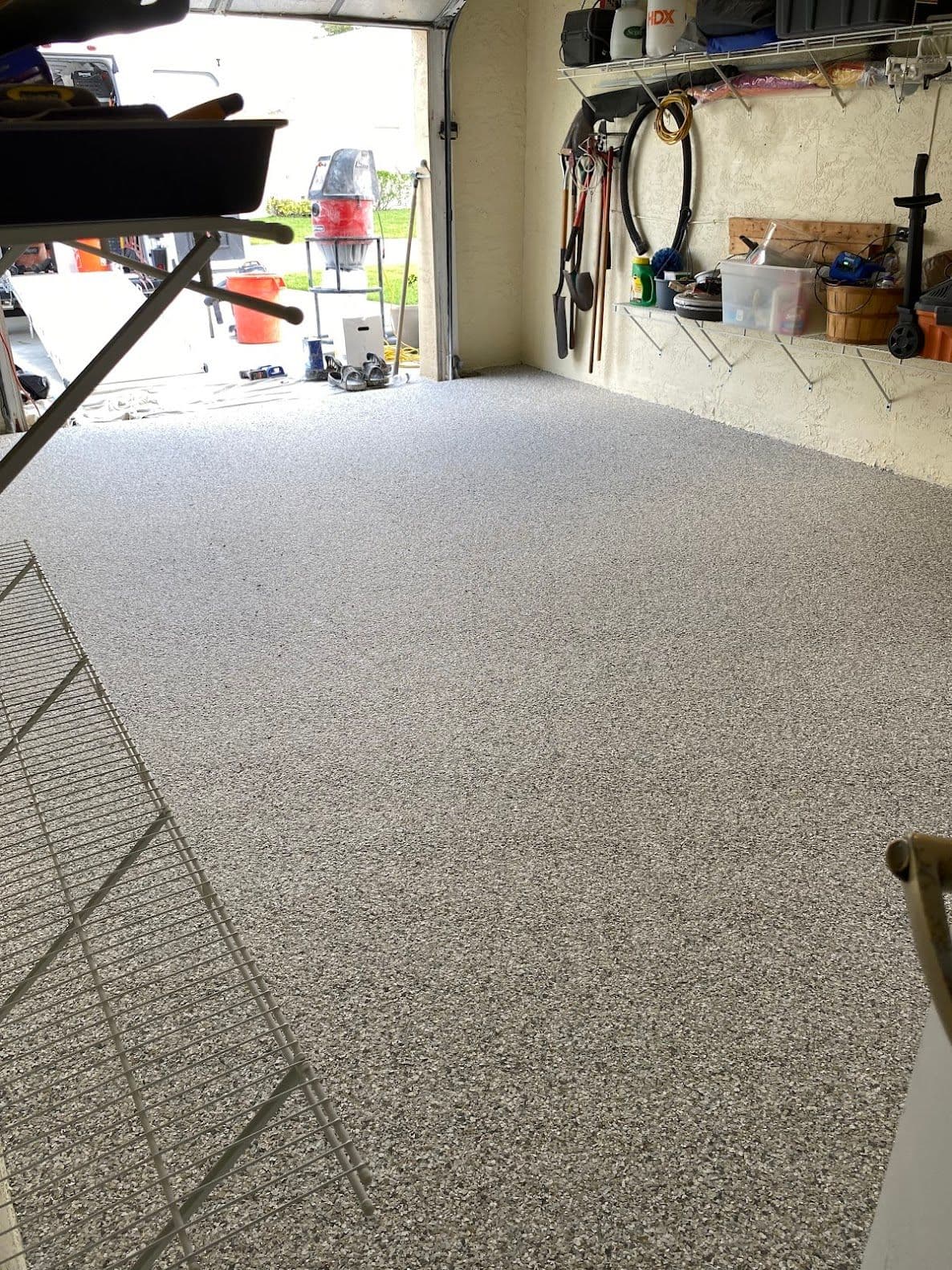
I am very pleased with the quality of work FloorTek has done for me. The two employees that did the actual work were very courteous, worked hard, and explained everything they were doing. Thank you for a great job.
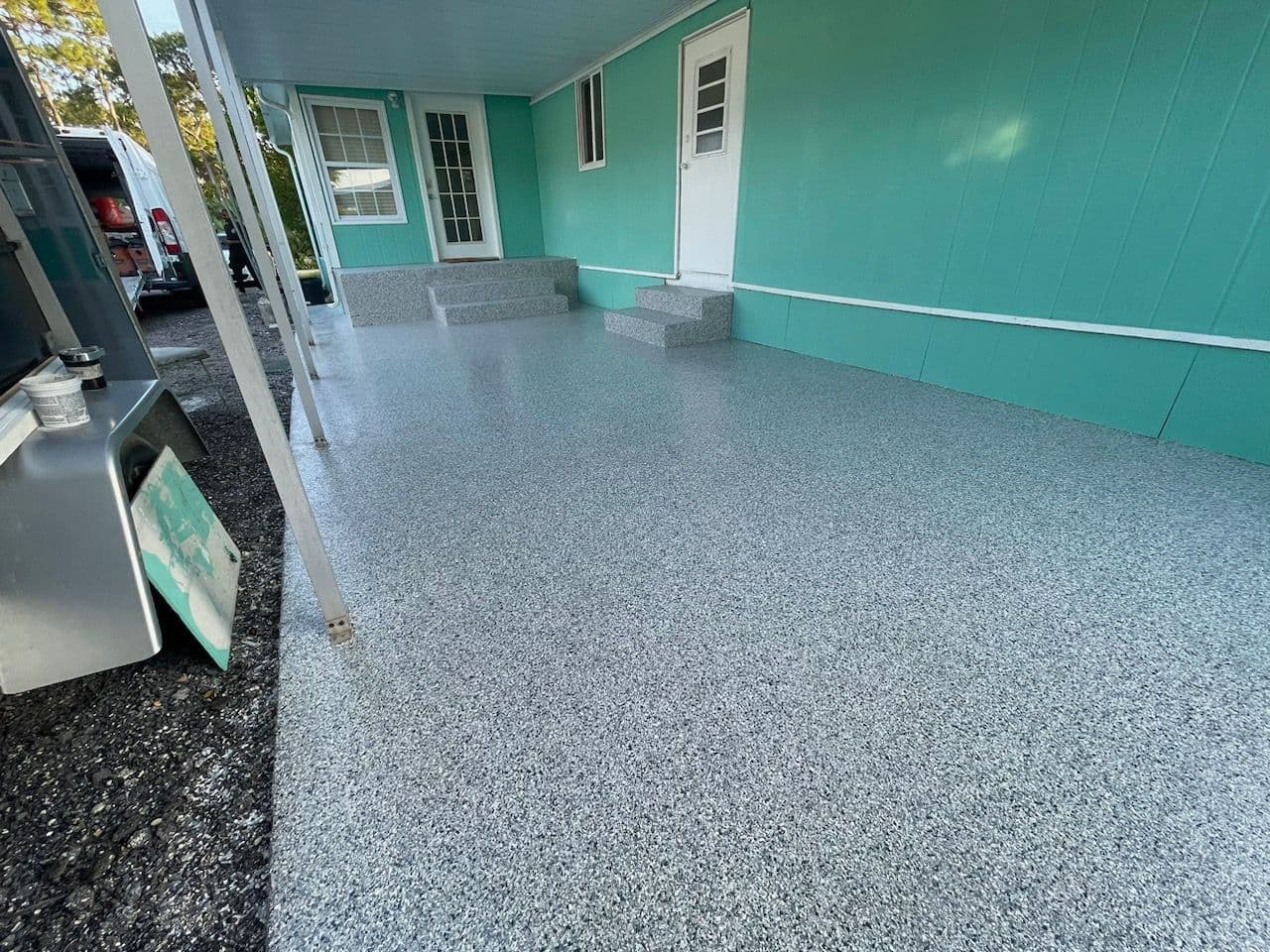
I was happy with the job Floortek did. Good customer communication and customer relationship. My old ugly porch was transformed and I love it. Nancy was very helpful throughout the process. Just know that rain may impact your schedule to make sure the products at highest quality during application.



Contact FloorTek Today