Epoxy vs. Polyurea: Why Your Local Climate Demands a Better Floor Coating
When you're in the market for a floor coating, the epoxy vs polyurea debate is likely one of the first hurdles you'll face. For years, epoxy was the default choice for concrete floors. You’ve probably seen it in a neighbor’s garage or at a big-box home improvement store. However, as homeowners, we’ve experienced the frustration of seeing epoxy, which works well in mild, dry climates, fail spectacularly under the specific pressures of our local weather conditions. Here at Floortek, we understand this all too well. Your home deserves a solution that’s engineered not just to cover your concrete, but to protect it for life, whether you're dealing with the sun and humidity of the South or the harsh winters of the North.
Your garage, patio, and basement floors are more than just functional surfaces; they are the foundation of your home’s busiest spaces. They face constant abuse from hot tires, dropped tools, chemical spills, and heavy foot traffic. More importantly, they face a relentless attack from the environment. In places like Stuart, Florida, the intense UV radiation and oppressive humidity work to yellow, weaken, and peel traditional coatings. Meanwhile, in Birmingham, Alabama, the combination of heat and moisture creates a challenging environment for many materials to bond correctly. Head north to Detroit, and the challenge becomes road salt and the freeze-thaw cycle, where moisture seeps into concrete, freezes, expands, and causes cracks—a problem that brittle coatings can't handle. This is where the conversation about epoxy vs polyurea becomes critical for making a wise, long-term investment in your home.
The Problem with Traditional Epoxy Coatings
For decades, epoxy has been marketed as the primary solution for concrete floors. It’s a two-part resin system that hardens into a solid, plastic-like surface. And while it can look good initially, its chemical structure comes with inherent weaknesses that are exposed by the very climates we live in. Homeowners often call us after a DIY epoxy kit or even a professionally installed epoxy floor has started to fail within just a couple of years. The issues are almost always the same.
First, epoxy is incredibly rigid. It has very little flexibility, which means when the concrete underneath it shifts or expands—as it naturally does with temperature changes—the epoxy can’t move with it. This is a major issue in areas with significant temperature fluctuations, such as Detroit. According to researchers at institutions like the University of Massachusetts Amherst, the expansion and contraction of concrete during freeze-thaw cycles puts immense stress on any coating bonded to it. A brittle epoxy coating will inevitably crack, chip, and flake away, leaving your concrete exposed.
Second, most epoxy coatings are not UV stable. The chemical bonds that make epoxy hard are broken down by ultraviolet light from the sun. If you live in Florida or Alabama and like to keep your garage door open, you’ll notice the floor begins to take on a yellowish, amber hue. This isn't just a cosmetic issue; it's a sign that the coating is degrading and becoming weaker. The vibrant colors you chose will fade into something you didn’t sign up for.
Finally, the epoxy installation process is long and inconvenient. It typically requires several days to install and cure thoroughly. During this time, your space is unusable, and the process can release high levels of volatile organic compounds (VOCs), which can be harmful to breathe. The long cure time also makes epoxy highly susceptible to moisture issues during application. In a humid climate, this can compromise the bond to the concrete, leading to bubbles and peeling over time. This is a crucial point of failure in the polyaspartic vs. epoxy floor coating discussion.
The Modern Solution: Our Advanced Polyurea System
This is where polyurea comes into play as a modern, superior alternative. At Floortek, we specialize in a pure polyurea system, a type of elastomer renowned for its remarkable durability and flexibility. Think of it this way: if epoxy is like a sheet of hard glass, polyurea is like shatterproof, flexible plexiglass. It's a technology that is simply 10X better than epoxy.
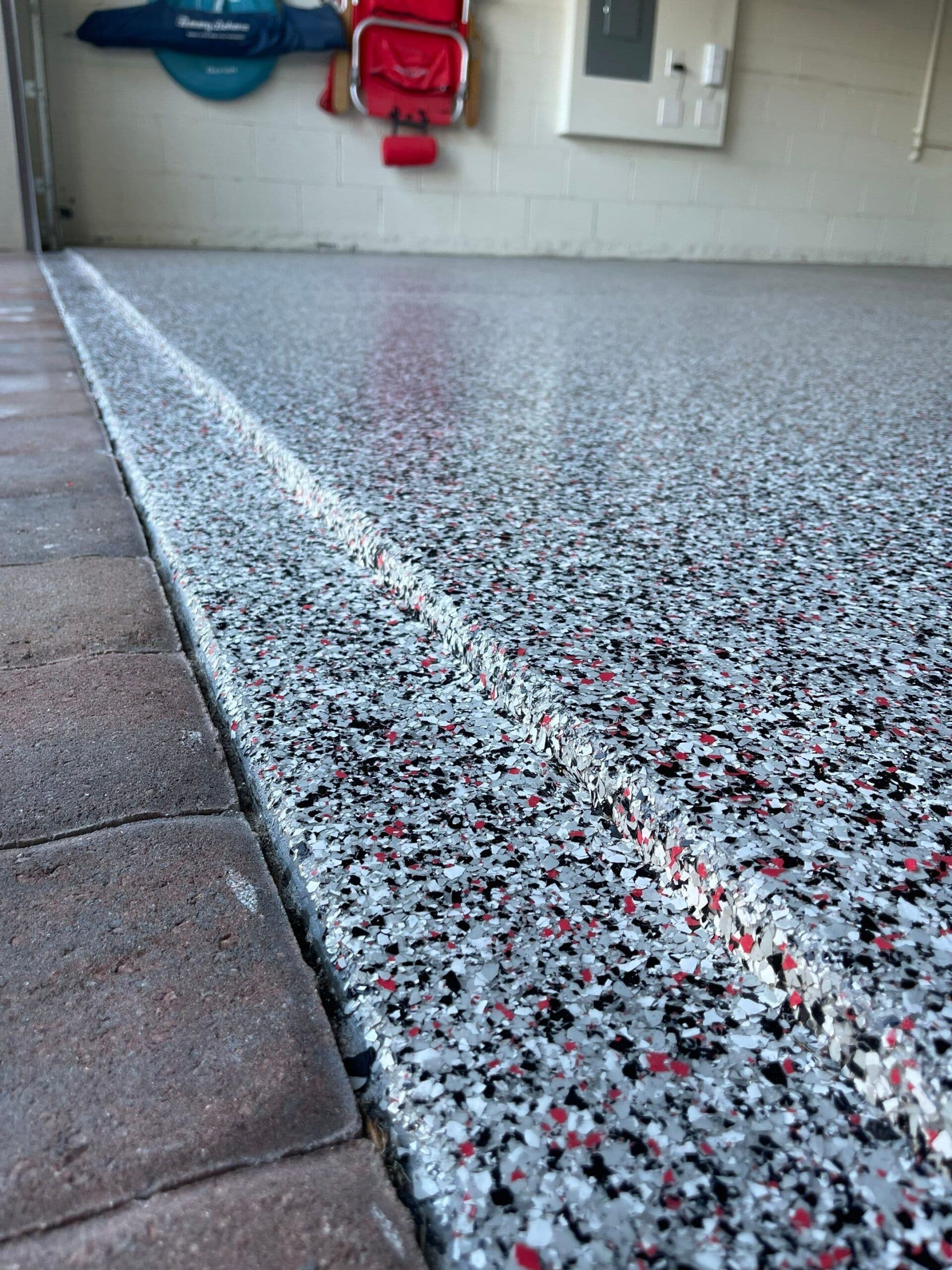
Our polyurea coatings are lab-formulated for durability. They are nearly four times as strong as epoxy in abrasion resistance and over 98% more flexible. This flexibility is the key to a long-lasting floor. It allows the coating to expand and contract with the concrete through every season, from a sweltering Florida summer to a frigid Detroit winter, without cracking or peeling. This addresses the primary failure point in rigid epoxy systems, giving you peace of mind that your floor is secure and long-lasting.
Furthermore, Our Coating Products are 100% UV stable. The chemistry is designed to resist the sun's damaging rays, ensuring that the color you select from our wide range of Colors and Flake options remains vibrant and accurate for the life of your home. You can leave your garage door open with confidence, knowing your floor won't yellow or fade.
The most significant advantage for you as a homeowner is our installation process. We offer 1-day floor coatings. Our certified technicians can prepare your concrete and install a complete polyurea system in just one day. You can walk on your new floor in as little as 4-6 hours and park your car on it the very next day. This 1 day coating solution minimizes disruption to your life. It gets you back to using your space faster than any epoxy product on the market, leaving you feeling relieved and satisfied.
A Deeper Look at the Epoxy vs. Polyurea Comparison
When you break it down factor by factor, it becomes clear why homeowners are moving away from outdated epoxy and choosing polyurea's advanced technology for their floors.
Durability in Your Specific Climate
The battle of epoxy vs polyurea is often won or lost based on flexibility. In a place like Detroit, winter brings snow, ice, and road salt. That salt gets carried into your garage on your car's tires. Salt and moisture seep into the pores of a weak coating, and when the temperature drops, the coating freezes and expands, creating immense pressure that causes the epoxy to pop and crack. Our polyurea system is densely packed and non-porous, preventing this intrusion. Its flexibility means that even as the concrete beneath shifts and moves with the seasons, the coating stays perfectly intact. For homeowners considering Alabama, this same flexibility prevents cracks from forming due to the shifting, heavy soil.
Superior Chemical and Stain Resistance
While basic epoxy provides some protection, it can be permanently stained by automotive fluids such as oil, brake fluid, and gasoline. More importantly, it can be chemically damaged by the road salt used in northern climates. Polyurea, on the other hand, is a non-porous material that is highly resistant to a much wider range of chemicals. Oil, gas, salt, and even harsh cleaners can be wiped away easily without staining or damaging the surface. This makes it the ideal choice for a working garage or any high-traffic area.
The Health and Environmental Advantage
Many older epoxy formulations contain high levels of VOCs, which can degrade indoor air quality as the floor cures. Our polyurea system is formulated to be low in VOCs, making it a safer choice for you and your family. The rapid cure time means any odors dissipate quickly, unlike the lingering chemical smell associated with a multi-day epoxy cure. This commitment to better products is part of what we stand for. You can learn more about us and our dedication to quality and safety.
A Permanent Bond to Concrete
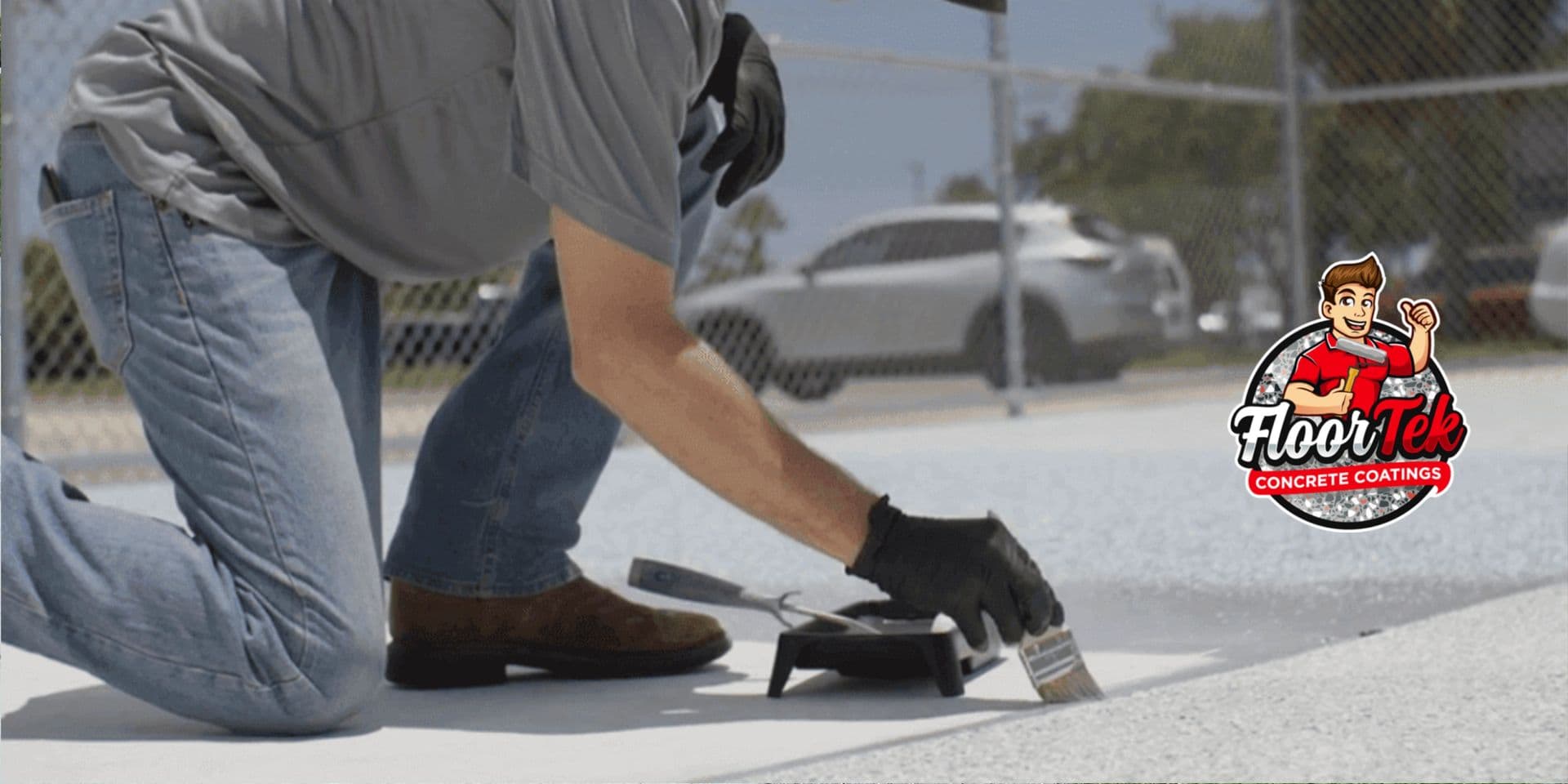
The biggest reason DIY epoxy kits fail is improper surface preparation. Painting epoxy over a smooth, sealed, or dirty concrete floor is a recipe for peeling. At Floortek, our process begins with diamond grinding the concrete. This removes any previous coatings and opens the concrete's pores, creating a rough, clean profile for our polyurea base coat to penetrate deeply and form an unbreakable mechanical bond. This step cannot be replicated with the acid etching kits sold in stores. The result is a floor that becomes a permanent part of your concrete, backed by our Life-of-the-Home Warranty.
Why Professional Installation is Non-Negotiable
You might be tempted by the apparent low cost of a DIY epoxy kit, but this is one area where "doing it yourself" almost always leads to disappointment. The product in those kits is often little more than a fortified paint. It lacks the thickness, strength, and chemical composition of a professional-grade, 100% solids polyurea system.
The difference lies in both the materials and the method. Our technicians are highly trained and certified. They use industrial-grade equipment to prepare your floor, ensuring the concrete is ready to receive the coating. They understand how to properly mix our multi-layer system—a moisture-mitigating primer, a pure polyurea base coat, a full broadcast of decorative flakes, and a tough-as-nails polyaspartic topcoat—for a flawless, durable finish. There is no substitute for this level of expertise. You can see the difference for yourself in our Gallery of completed projects. The choice between a DIY peeling floor and a permanent, professional solution is a crucial aspect of the epoxy vs. polyurea decision.
More Than Just Garages: Transforming Your Entire Home
The benefits of our polyurea system extend far beyond the garage. Its durability, UV stability, and textured finish make it the perfect solution for a variety of spaces around your home. We offer a full range of services to protect and beautify all your concrete surfaces.
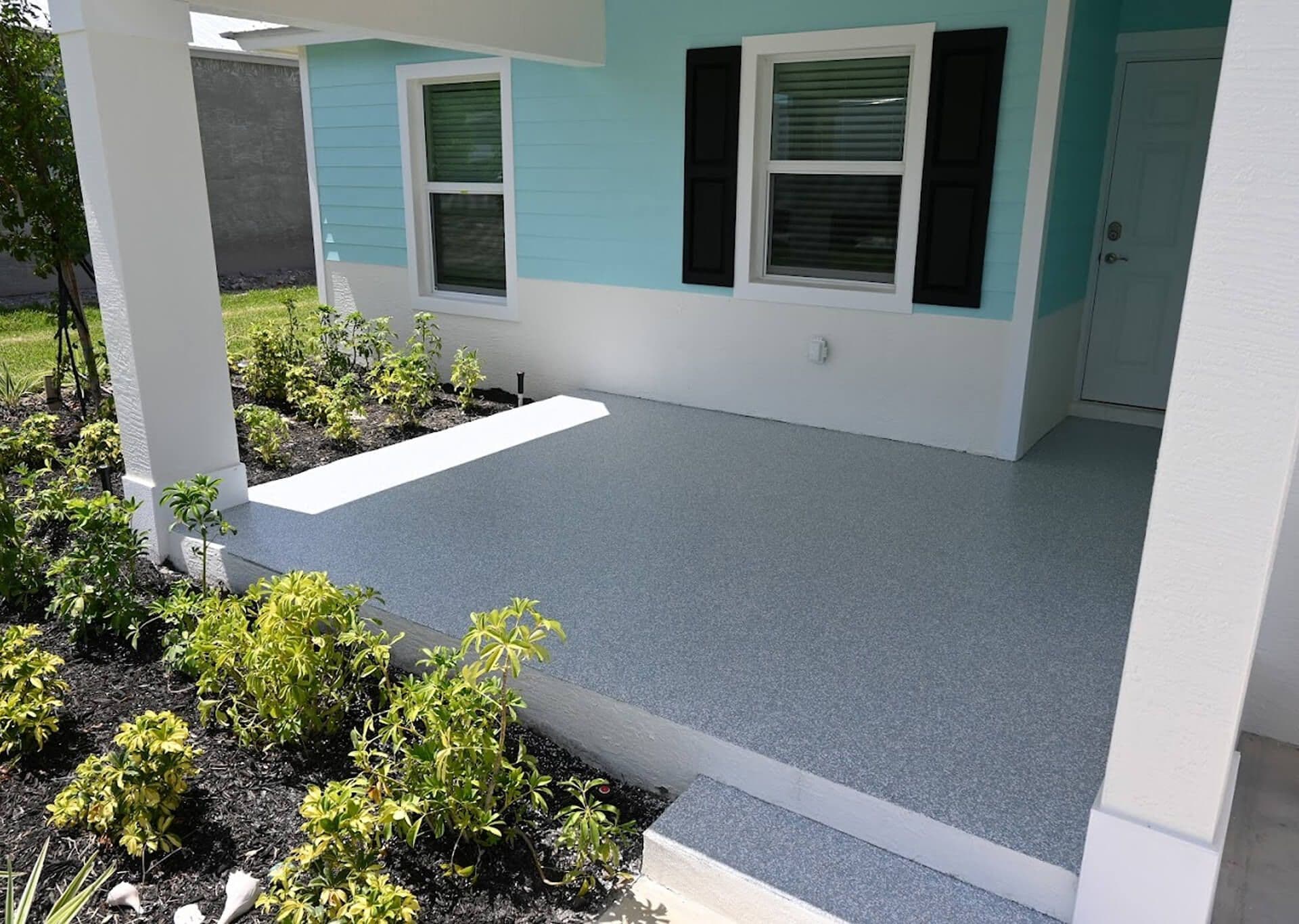
Patios and Pool Decks: For homeowners in Florida and Alabama, a patio coating service or pool deck coating service is essential. Our UV-stable system won't fade in the relentless sun, and the textured surface provides more comfortable, secure footing around wet areas. Imagine a beautiful, long-lasting surface for your pool deck floor coating in Helena, Alabama.
Driveways and Sidewalks: Enhance your home's curb appeal with our driveway and sidewalk coating services. These coatings protect against salt damage, oil stains, and cracking, keeping the entrance to your home looking clean and new. We provide expert sidewalk floor coating in Birmingham, Alabama, and in Helena, Alabama, as well as a dedicated sidewalk floor coating service in Bessemer, Alabama.
Basements: Transform your damp, dusty basement into a bright, usable living space with our Basements coating service. Our system creates a seamless, easy-to-clean surface that helps manage moisture and enhances the room's appearance. It's one of the best basement floor coatings on the market.
Whether you need a 1-day garage floor or a complete exterior concrete makeover, we have the right solution.
Serving Our Local Communities with Pride
We are proud to be a part of your community. We understand the specific needs of homeowners because we live and work here as well. We provide Manufacturer-Direct Value, cutting out the middleman to give you the best possible product.
For our customers in Florida, please call us at (772) 758-7215 for a complimentary consultation.
For our customers in Alabama, please call us at (205) 476-3232 to discuss your project.
If your area is not listed, please don't hesitate to contact us. We are constantly expanding. We also have opportunities for entrepreneurs looking to join a winning team. Find out how you can Become A Dealer and bring these superior products to your community.
Now is the perfect time to make the upgrade. We are currently offering a 30% discount on first-time installations. Don't settle for a failing epoxy floor. Make a permanent investment in your home's value and durability.
Frequently Asked Questions about Epoxy vs. Polyurea
1. Which floor coating is more durable for high-traffic garage floors?
Polyaspartic is more durable. It offers 4x the flexibility of epoxy, preventing cracks during concrete expansion. Floortek Coating utilizes polyaspartic to eliminate "hot tire pickup," a common failure in the Epoxy vs Polyaspartic debate. For technical durability standards, see ASTM D4060 for abrasion resistance.
2. Can a polyaspartic floor coating be installed in a single day?
Yes. Polyaspartic cures in hours, while epoxy requires 24–72 hours to harden. Floortek Coating provides "one-day" installations, allowing homeowners to return vehicles to the garage the next morning. This rapid return-to-service is a primary differentiator when comparing the efficiency of Epoxy vs Polyaspartic.
3. Does epoxy or polyaspartic offer better UV resistance for outdoor areas?
Polyaspartic is superior for UV resistance. Epoxy resins lack UV stability and will "amber" or yellow under sunlight. Floortek Coating recommends polyaspartic for sun-exposed areas to maintain color clarity. Consult the NIST.gov materials database for data on polymer photodegradation.
4. Is polyaspartic more expensive than epoxy flooring?
Yes, initially. Polyaspartic materials cost more, but lower labor hours and longer lifespans often reduce total ownership costs. Floortek Coating helps clients calculate the 15-year ROI of Epoxy vs Polyaspartic to justify the upfront investment.
5. Which coating has better adhesion to concrete surfaces?
Polyaspartic typically bonds better. It has a lower viscosity, allowing it to "wet out" and penetrate deeper into concrete pores. Floortek Coating uses mechanical grinding to ensure maximum mechanical bond for both Epoxy and Polyaspartic systems.
6. Can I install epoxy or polyaspartic in freezing temperatures?
Polyaspartic is the only option for cold weather. It cures in temperatures as low as -30°F, whereas epoxy requires at least 50°F. Floortek Coating performs winter installations using the climate-versatile properties of Epoxy vs Polyaspartic technology.
7. Are epoxy floor coatings more chemically resistant for workshops?
Yes, for specific heavy acids. Epoxy is often preferred in battery rooms or heavy industrial labs for sustained chemical submersion. However, Floortek Coating finds polyaspartic sufficient for 95% of residential and commercial chemical spills in the Epoxy vs Polyaspartic comparison.
8. Which floor coating is more scratch-resistant for pets or tools?
Polyaspartic offers higher scratch resistance. Its elastic nature allows it to absorb impacts that would chip or scratch brittle epoxy surfaces. Floortek Coating installs polyaspartic in high-activity zones where the Epoxy vs Polyaspartic durability gap is most visible.
9. Is there a difference in VOC emissions between these coatings?
Yes. Modern high-solids polyaspartic coatings are often "Zero-VOC," making them safer for indoor air quality than older solvent-based epoxies. Floortek Coating prioritizes health-safe formulations when evaluating Epoxy vs Polyaspartic for residential basements.
10. How long will a polyaspartic floor last compared to epoxy?
Polyaspartic lasts 15–20 years. Standard epoxy typically requires recoating every 5–7 years due to wear and brittle failure. Floortek Coating provides extended warranties because polyaspartic outlasts epoxy in almost every residential Epoxy vs Polyaspartic application.
Need a custom solution?
Contact us for a free consultation! Your home deserves the best protection available. Choose Floortek for a floor built to last.
FREE In-Home Estimate
Plus 30% Off
Testimonials
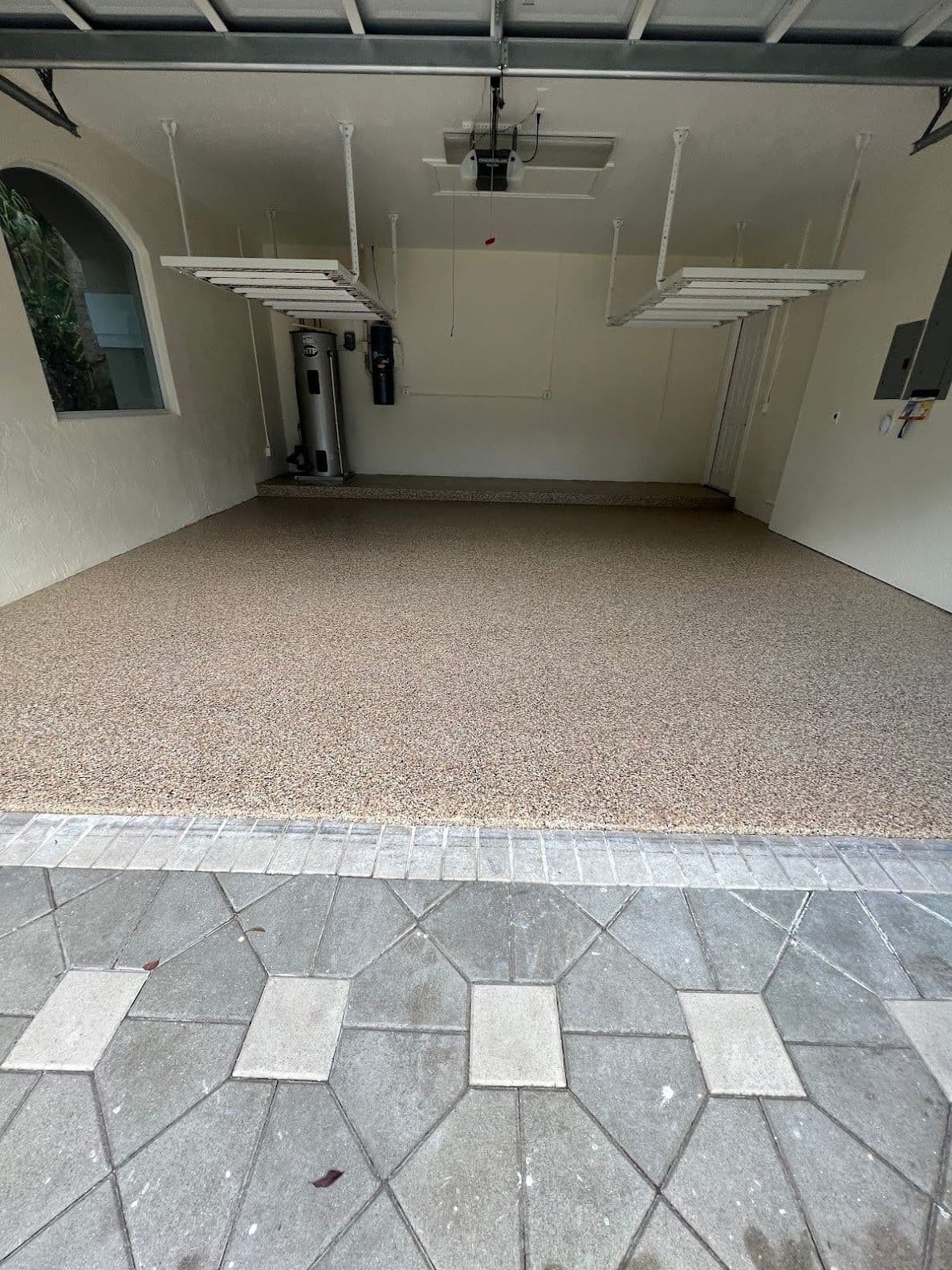
We had both of our garages done and an outdoor concrete platform. The crew was courteous and professional. Everyone from Nancy our salesperson to Patrick, the manager, Logan and his crew were outstanding. Our floors look fantastic and we were very happy we chose this company.
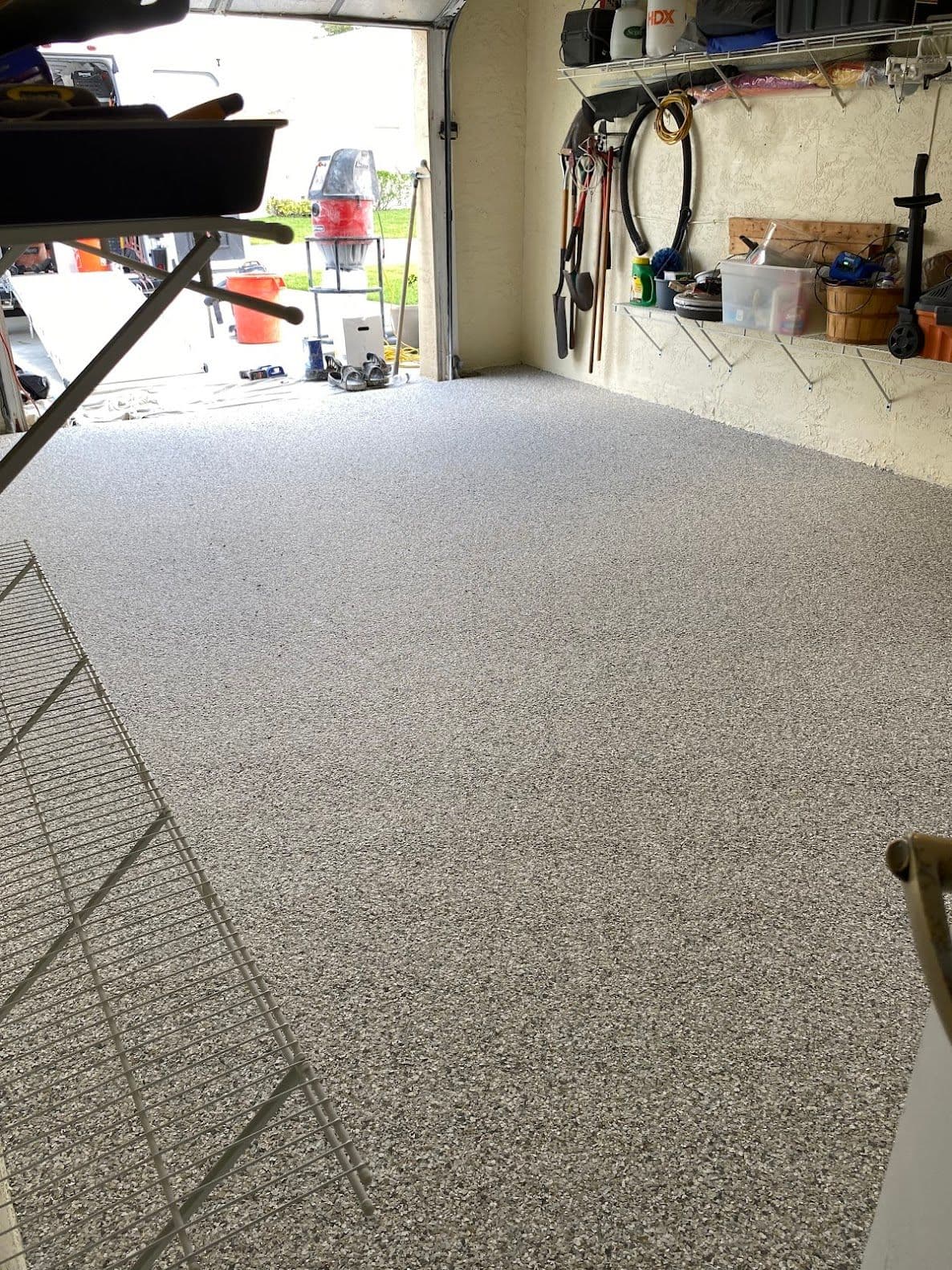
I am very pleased with the quality of work FloorTek has done for me. The two employees that did the actual work were very courteous, worked hard, and explained everything they were doing. Thank you for a great job.
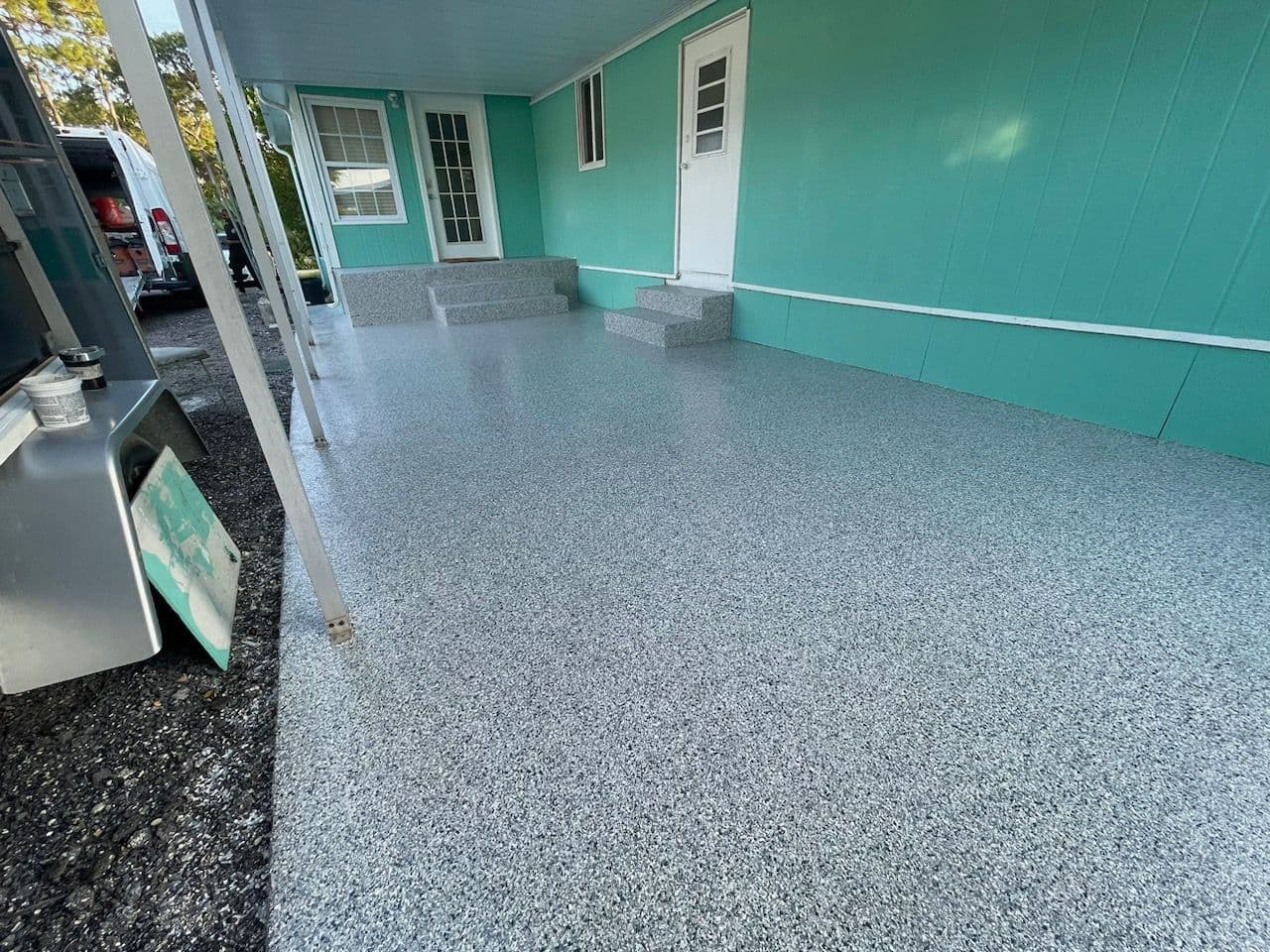
I was happy with the job Floortek did. Good customer communication and customer relationship. My old ugly porch was transformed and I love it. Nancy was very helpful throughout the process. Just know that rain may impact your schedule to make sure the products at highest quality during application.



Contact FloorTek Today