5 Types of Garage Floor Coatings Explained: Why Epoxy Is No Longer King
When you start researching the different types of garage floor coatings, the sheer number of options can feel overwhelming. You want a clean, nice-looking floor that protects your concrete, but you are bombarded with chemistry terms and confusing marketing. At Floortek CoatingsWe understand this frustration because we talk to homeowners across the United States every day who are tired of dusty, cracked concrete.
Your garage is more than just a place to park your car. It is the main entryway for many families, a workshop, or even a home gym. Yet, most people treat the floor as an afterthought until it becomes a problem. If you are looking for floor coating options That actually lasts, you have come to the right place.
In this guide, we will break down the five most common solutions. We want to show you how modern coatings like Polyaspartic and Polyurea provide lasting protection, saving you from future headaches and costly repairs.
The Problem with Raw Concrete
Before we dive into the coatings, we would like to talk about why you are here. Raw concrete is porous. It acts like a hard sponge. When you drive your car in from the rain or snow, that moisture seeps into the concrete. In colder US climates, that water freezes and expands, causing cracks (pitting). In hotter climates, heat causes concrete to shift.
On top of that, untreated concrete creates dust. That fine white powder covering your stored boxes? That is your floor slowly disintegrating. You need a barrier. But not all barriers are created equal.
1. Concrete Paint (The "Band-Aid" Solution)
The most basic option you will see at your local hardware store is latex or acrylic concrete paint. It is cheap and easy to roll on. Many homeowners try this first because it seems like a quick fix.
The problem is that paint merely sits on top of the concrete; it does not bond with it. It is fragile. Once you park a hot car on it, the heat transfers from your tires to the paint. This causes the paint to soften and stick to your tires rather than the floor. When you back out, you pull the paint right off. This is called "hot tire pickup," and it ruins your floor's appearance in just a few weeks.
2. DIY Epoxy Kits (The Weekend Trap)
If you walk down the aisle of a big-box store, you will see boxes promising a professional look for a couple of hundred dollars. These are DIY epoxy kits.
The issue with these kits is the solids content. Most DIY epoxy is water-based. It is roughly 50% solids and 50% water. When you apply it, the water evaporates, leaving you with a skinny layer of protection. It does not have the strength to handle heavy traffic or the chemical resistance to stop oil and gas stains.
Furthermore, these kits usually instruct you to clean your floor with acid (acid etching) before applying. Acid etching rarely cleans the concrete deep enough for a proper bond. This is why we constantly get calls to fix peeling DIY jobs.
3. Traditional Professional Epoxy (The Former King)
For a long time, professional epoxy garage floor coverings Were the standard. This is different from the DIY kits. It is a thermosetting resin that creates a hard shell. It is definitely better than paint or water-based kits.
However, traditional epoxy has significant flaws that modern technology has solved.
First, epoxy is brittle. As the ground under your home shifts with the changing US seasons, your concrete slab moves slightly. Because epoxy cures so hard, it cannot move with the concrete. It snaps and cracks.
Second, epoxy is not UV stable. If you leave your garage door open on a sunny day, the UV rays will cook the epoxy. Over a few years, your beautiful gray floor will turn an ugly shade of amber or yellow.
Finally, epoxy takes a long time to dry. It can take 3 to 5 days before you can even walk on it, and longer before you can park. In our busy world, losing your garage for a week is a significant inconvenience.
4. Polyurethane (The Industrial Helper)
You might hear about polyurethane as an option. It is often used as a topcoat over epoxy to improve scratch resistance. While it is tougher than epoxy, it is rarely used as the base coat for a garage floor.
Polyurethane is highly sensitive to humidity during installation. If the humidity is too high—which is common in many parts of the country—the coating can bubble or fail to cure properly. It also creates strong fumes (VOCs) that can linger in your attached garage and enter your home.
5. Polyaspartic & Polyurea (The New Standard)
This brings us to the superior choice. If you want a floor that is 10X better than epoxy, you want a Polyurea base coat with a Polyaspartic top coat. This is what we use at Floortek.
Initially developed for industrial use (like lining truck beds and protecting bridges), this material is now available for your home. It creates a chemical bond with the concrete that is nearly unbreakable.
Why Polyaspartic is the Best of the Types of Garage Floor Coatings
It is Flexible: Unlike brittle epoxy, Polyurea has "elongation." This means it is flexible. When your concrete expands in the summer heat or contracts in the winter freeze, the coating stretches with it. It stays bonded where epoxy would pop off.
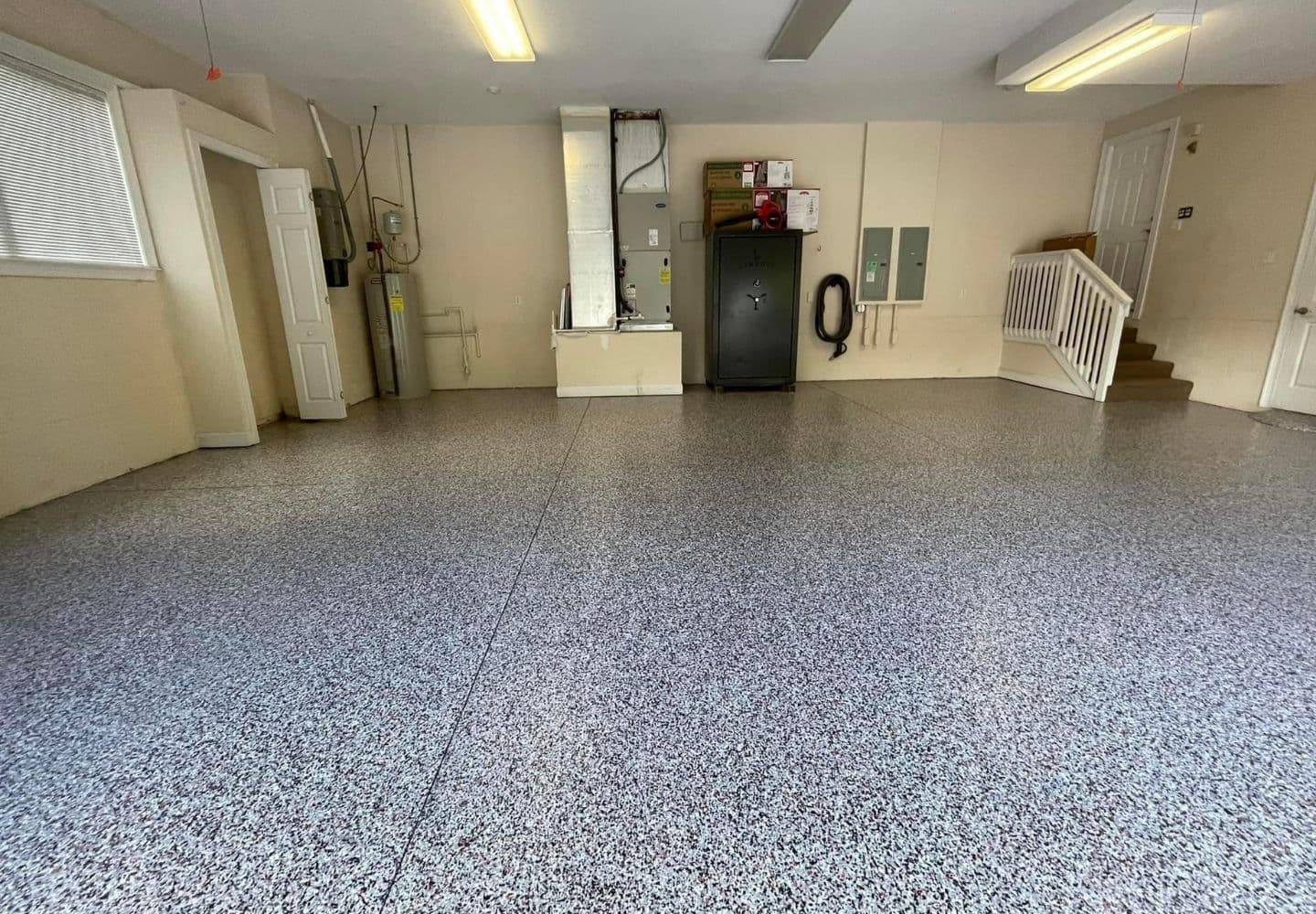
It is UV Stable: This coating will never yellow. Ten years from now, the color you chose will be the color you see. You can explore our Gallery To this day, see how crisp and clear these floors look years after installation.
1-Day Installation: This is the game-changer. We can install these 1-day floor coatings and have you walking on them in about 6 hours. You can park your car on the floor 24 hours a day—no more parking on the street for a week.
Chemical Resistance: Oil, gas, road salt, and transmission fluid wipe right up without leaving a stain.
Knowing the application process is just as important as choosing the right coating. Our expert team ensures proper preparation and installation, giving you peace of mind about your floor's durability.
Knowing the types of garage floor coatings It is only half the battle. The application is just as important. Many garage floor covering companies Cut corners on preparation, but we do not.
Step 1: Mechanical Preparation
We do not use acid. We use massive industrial grinders with diamond tooling to grind the top layer of your concrete. This opens the "pores" of the floor so our base coat can soak in and bond to the slab.
Step 2: Repairing the Damage
We use specialized menders to fix cracks and divots. We make the floor smooth before we even start coating.
Step 3: The Base Coat and Flakes
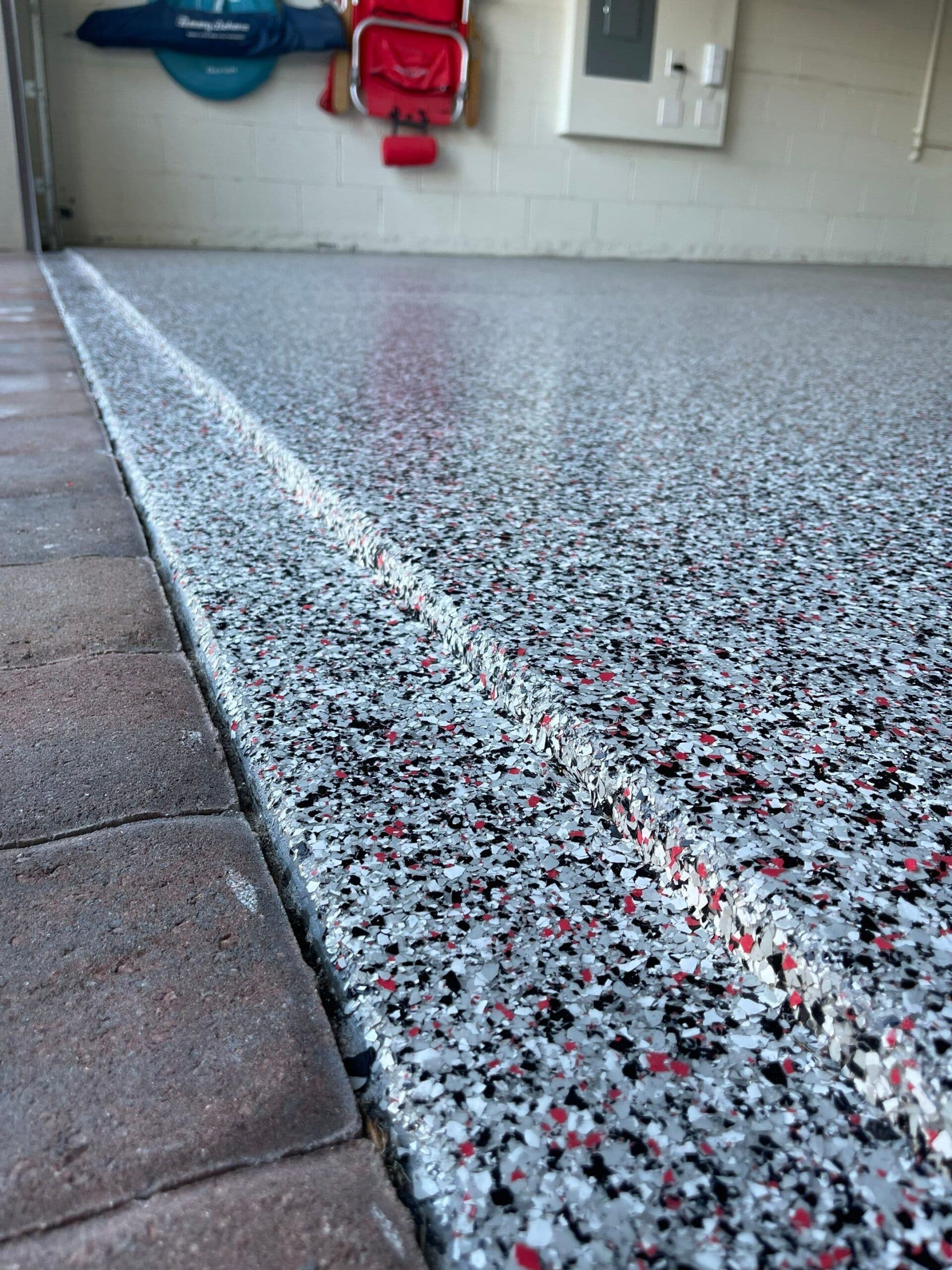
We apply the Polyurea base coat, then broadcast vinyl flakes onto it until the floor is completely covered. This adds texture and style. You can choose from a vast variety of Colors and Flake Options To match your car or your favorite sports team.
Step 4: The Clear Coat
Finally, we apply a clear polyaspartic topcoat. This seals the flakes and creates a sanitary, easy-to-clean surface.
Beyond the Garage: Versatility of Polyaspartic
While we are discussing garage floor coating typesYou should know that this technology works all around your home. The UV stability makes it perfect for outdoor areas where epoxy would fail immediately.
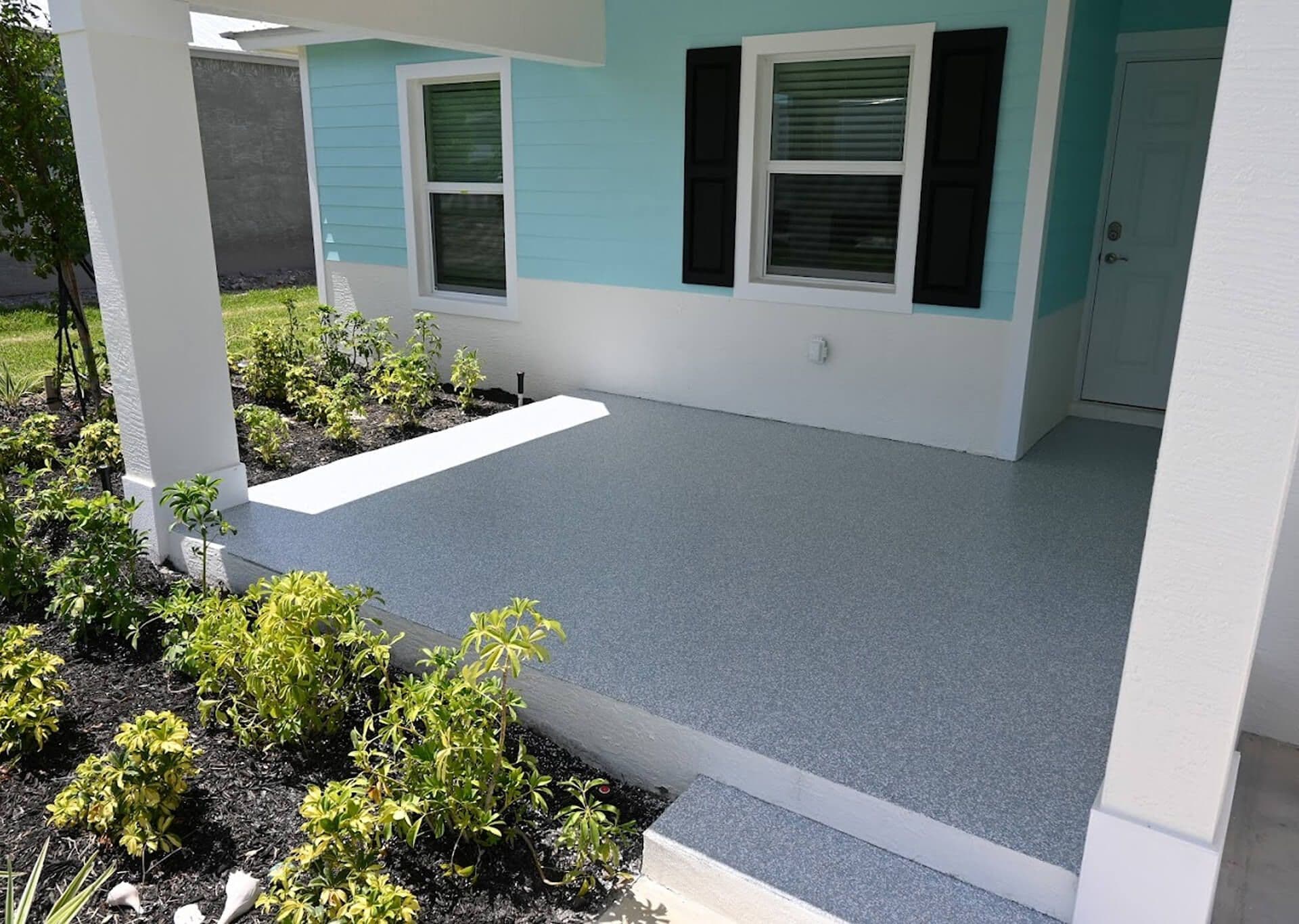
Patios: Upgrade your backyard with our patio coating service. It is much easier to keep clean than raw concrete or pavers.
Pool Decks: Our pool decks coating service Provides a surface that is cooler to the touch than dark concrete and adds texture for safety near the water.
Driveways: Give your home massive curb appeal with our driveways coating service. It protects the slab from road salts and oil leaks.
Sidewalks: First impressions matter. Our sidewalks coating service I'd appreciate it if you could make your walkway inviting.
Basements: Transform a dark storage area into a bright living space with our Basement coating service.
Why "Good Enough" Isn't Good Enough
When you search for a garage floor coating business or a garage floor painting companyThe lowest price might tempt you wide. But you have to ask yourself: Do you want to pay a little less now and redo the floor in two years? Or do you want to pay for quality once and never worry about it again?
Low-quality coated garage floor Applications peel. They stain. They look cheap. We offer a Life-of-home warranty because we know our product lasts. We are not just a "man with a van." You can learn more about our history and values on our About us Page.
Comparing Durability in US Climates
The United States has extreme weather. We have blistering heat in the South and freezing winters in the North. When considering types of garage coatingYou'll need to account for this.
Generic epoxy becomes rigid in the cold. If you live in an area with freeze-thaw cycles, the ground moves. Rigid coatings crack. Polyaspartic remains flexible even in freezing temperatures.
In the heat, cheap epoxy softens. This leads to the hot tire pickup we mentioned earlier. Polyaspartic has a much higher heat tolerance. It will not stick to your tires.
According to the General Services Administration (GSA)Removing failed coatings is difficult and costly. It is always better to choose the right material from the start rather than trying to fix a failed DIY experiment later.
Making the Right Choice for Your Home
If you are looking for polyshield floors near me Or researching garage floor coating, the answer remains the same. The modern standard is Polyurea/Polyaspartic.
We encourage you to look at the best epoxy garage floor covering Could you compare the options to what we offer? The difference in longevity and performance is undeniable. Our clients often tell us they wish they hadn't wasted money on garage floor finishing companies That used outdated materials.
You can view the full range of Our Coating Products To see the technical specs, but the bottom line is simple: we provide a floor that handles real life.
Frequently Asked Questions (FAQs)
1. What are the best types of garage floor coatings for hot climates?
Polyaspartic coatings are the best choice for hot climates because they are 100% UV-stable and will not yellow or soften under hot tire temperatures, unlike epoxy, which can fade and peel.
2. How long do different types of garage floor coatings last?
DIY paint lasts about 1 year. Epoxy lasts 3 to 5 years before showing wear. Polyurea and Polyaspartic coatings can last 15 to 20 years or more with proper care.
3. Why is my epoxy floor peeling up where I park my car?
This is called hot tire pickup. When your tires are hot from driving, they soften the epoxy. When the tires cool, they contract, pulling the coating off the concrete. Polyaspartic coatings do not have this problem.
4. Can I install garage floor coatings in the winter?
You cannot install epoxy in the cold because it will not cure. However, Polyurea and Polyaspartic coatings can be applied in temperatures as low as -30°F, making them perfect for winter installation.
5. Are all types of garage floor coatings slippery?
They can be, but they don't have to be. We add vinyl chips and texture to our coatings to provide grip. This makes them safer to walk on than smooth paint or plain concrete.
6. Is Polyurea more expensive than epoxy?
The upfront investment for Polyurea is higher than that for epoxy. However, because it lasts a lifetime and does not require re-coating every few years, it is much cheaper in the long run.
7. How do I clean a polyaspartic garage floor?
Maintenance is easy. You can use a squeegee, a soft broom, or a hose. For dirty areas, a little mild soap and water are all you need. You do not need harsh waxes or chemicals.
8. Do I need to etch my floor before coating it?
No, acid etching is not enough. For professional results, the concrete must be mechanically ground with diamond tooling to ensure the coating bonds to the concrete's pores.
9. Can I coat a damaged concrete floor?
Yes. Part of the professional installation process involves repairing cracks, pits, and spalls using specialized menders before the base coat is applied.
10. What is the difference between Polyurea and Polyaspartic?
Technically, Polyaspartic is a type of aliphatic Polyurea. It allows for a slightly slower cure time than pure Polyurea, which gives the installer enough time to apply it perfectly while still drying in hours, not days.
Ready to Transform Your Garage?
Stop settling for dusty concrete or peeling paint. Join the thousands of happy homeowners who have upgraded to the best type of garage floor coating.
At Floortek, we want to make this decision easy for you. We are offering 30% off on your first installation so you can experience the quality difference yourself.
Don't wait until your concrete cracks further. Please feel free to contact us today for a Free Quote.
Call us now at 844-844-4164 Or visit our Contact us Page to get started. Let's get your floor done right, once and for all.
FREE In-Home Estimate
Plus 30% Off
Update Your Garage Today!
Get your new floor installed in just one day with Floortek’s garage floor resurfacing services! Call us today for a free quote!
Or contact us online to schedule your consultation!
Testimonials
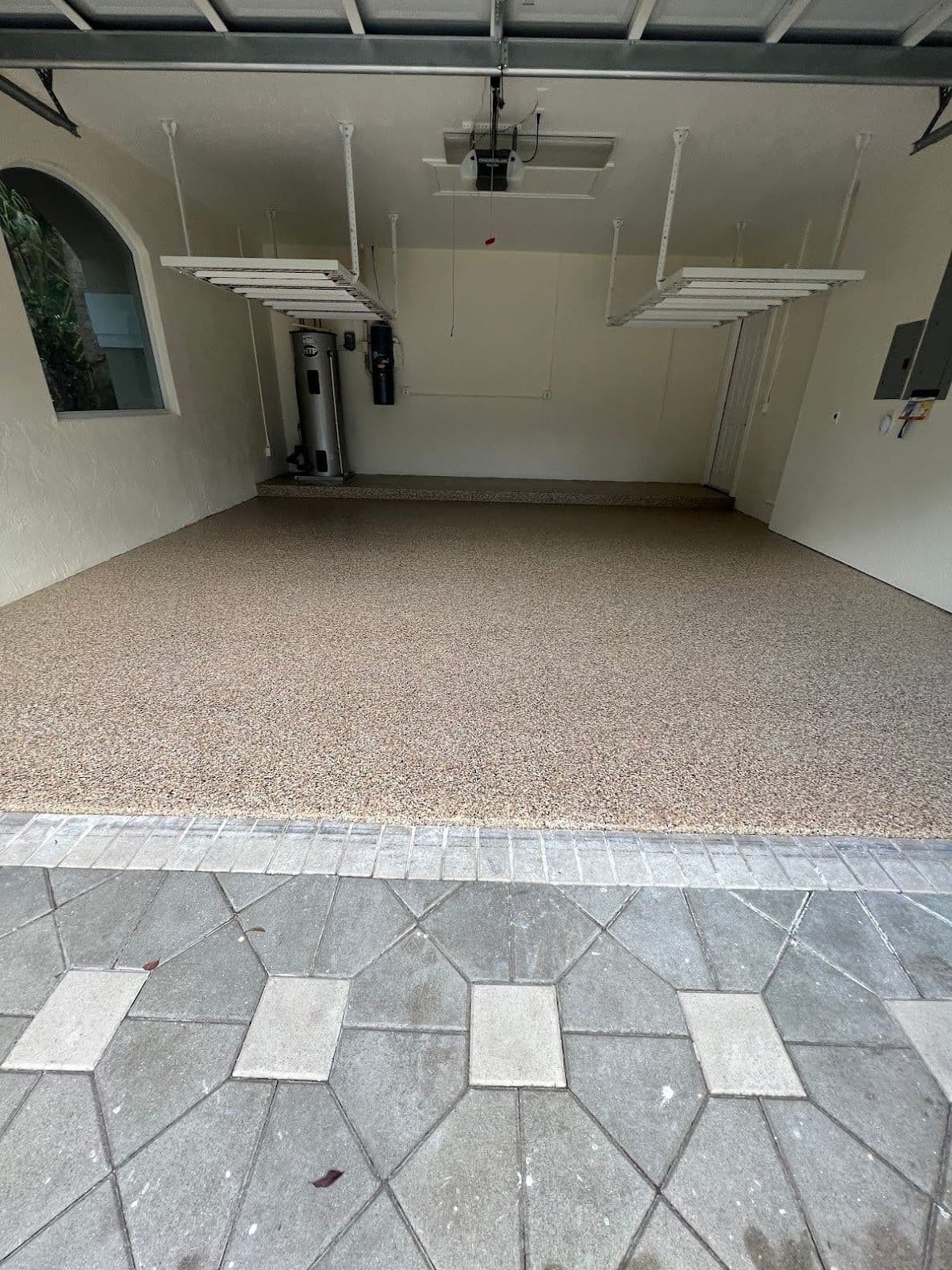
We had both of our garages done and an outdoor concrete platform. The crew was courteous and professional. Everyone from Nancy our salesperson to Patrick, the manager, Logan and his crew were outstanding. Our floors look fantastic and we were very happy we chose this company.
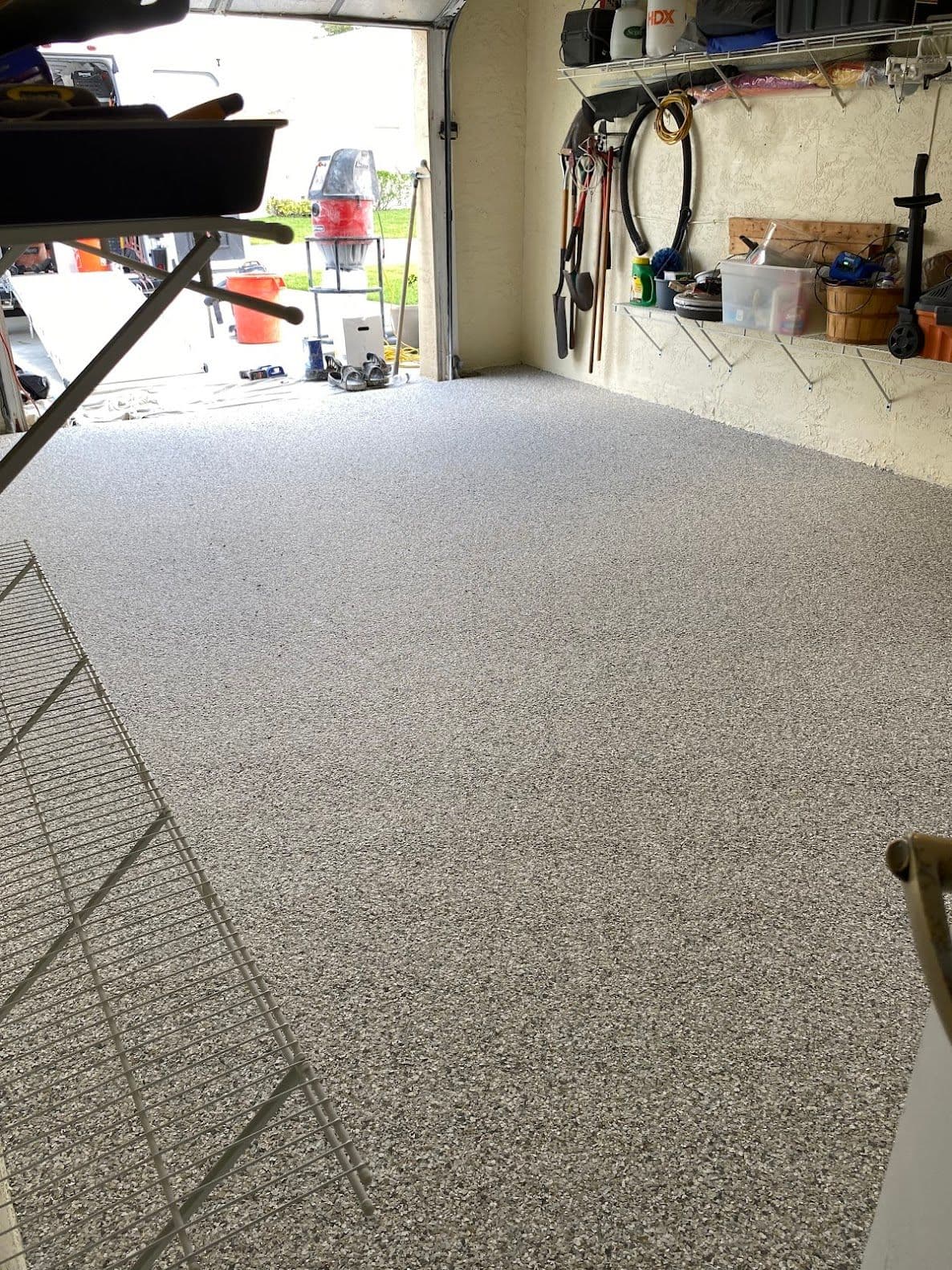
I am very pleased with the quality of work FloorTek has done for me. The two employees that did the actual work were very courteous, worked hard, and explained everything they were doing. Thank you for a great job.
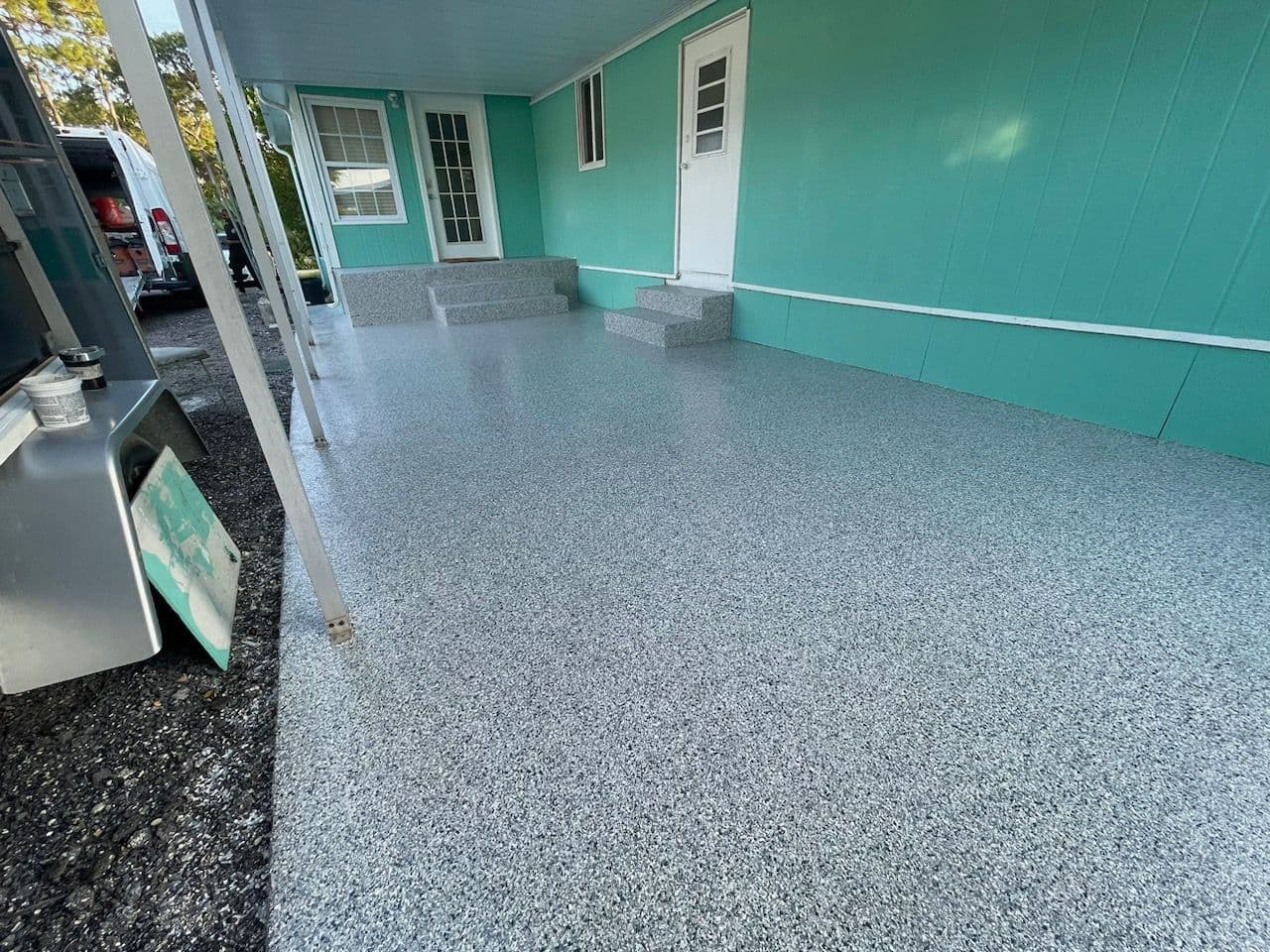
I was happy with the job Floortek did. Good customer communication and customer relationship. My old ugly porch was transformed and I love it. Nancy was very helpful throughout the process. Just know that rain may impact your schedule to make sure the products at highest quality during application.



Contact FloorTek Today