Polyaspartic vs. Epoxy in Houston, Texas:
The Truth in Heat & Humidity
When you start researching polyaspartic vs epoxy in Houston, Texas, you are looking for a solution that can handle our extreme environment. Living here means dealing with intense UV rays, sudden rainstorms, and suffocating humidity. At Floortek Coatings, we know that choosing the right floor coating is not just about aesthetics; it is about survival against the elements.
We want to show you why polyaspartic is the superior choice for your home, offering long-lasting durability and saving you money over time.
The Battle of Chemistry: Why Material Matters
To understand the debate over polyaspartic vs. epoxy in Houston, Texas, you have to look at the chemistry. Epoxy is the "old guard." It is a resin that hardens over time. While it works well in climate-controlled warehouses in the North, it struggles in the South.
Polyaspartic is different. It is an aliphatic polyurea. In simple terms, this means it is a flexible, rubber-like material that hardens like concrete but retains the ability to stretch. It was initially designed to protect steel bridges from corrosion and seawater. If it can preserve a bridge, it can certainly protect your garage.
When you look at our coating products, you will see that we prioritize materials that bond deeply into the concrete rather than just sitting on top. This is the fundamental difference. Epoxy sits; polyaspartic bonds.
The Houston Humidity Problem
We all know the saying: "It’s not the heat, it’s the humidity." In Houston, moisture is always present. Concrete is like a hard sponge; it holds moisture from the ground.
epoxy's When you apply epoxy in a high-humidity environment, you risk a chemical reaction called "amine blush." This happehen the moisture in the air reacts with the curing agent. The result? A cloudy finish, bubbles, or a coating that never fully hardens.
Polyaspartic does not have this weakness. It cures rapidly and is not sensitive to ambient humidity during application, unlike epoxy. This ensures a crystal-clear, rock-hard finish, whether we are working in Katy or Cypress on a muggy July morning.
Heat and the "Hot Tire" Effect
One of the biggest complaints we hear regarding epoxy garage floor houston tx in houston texas Involves peeling where the car tires sit.
Imagine driving on I-10 or the 610 Loop in the middle of summer. The asphalt is scorching, and your tires heat up significantly. When you pull into your garage and park, those hot tires transfer heat directly into the floor coating.
Epoxy is a thermosetting resin, but it has a low heat tolerance. The heat from your tires softens the epoxy. As the tires cool, they contract, pulling the softened epoxy along with them. When you back out the next morning, the tire pulls the coating right off the concrete. This is called "hot tire pickup."
Because polyaspartic has a much higher heat tolerance and forms a chemical bond with the concrete, it is immune to hot tire pickup, making it the better choice for Houston drivers compared to epoxy, which softens under heat, ensuring your chosen color remains vibrant and free from yellowing for the life of the floor.
The Speed of Installation: 1-Day vs. 1-Week
We value your time. In the traditional epoxy method, the process is slow. You grind one day, prime the next, apply a base coat, apply a top coat, and then wait days for it to cure. You could be without your garage for a week.
At Floortek, we specialize in 1-day floor coatings. Because polyaspartic cures quickly, we can complete the entire process—from prep to clear coat—in a single day.
Here is what our day looks like:
Prep: We grind the concrete to open the pores.
Repair: We fix cracks and divots.
Base Coat: We apply the polyaspartic base.
Flake: We broadcast your choice of flakes.
Scrape: We smooth out the surface.
Clear Coat: We apply the final UV-stable polyaspartic layer.
You can walk on your new floor in 4 to 6 hours and park your car on it 24 hours later. This efficiency is why many choose us over a DIY kit from a big box store or traditional floor and decor houston texas Options that rely on slower materials.
UV Stability: The Yellowing Effect
Have you ever seen a garage floor that looks distinctively yellow near the garage door but grey in the back? That is UV damage. Standard epoxy is not UV stable. Over time, exposure to sunlight causes the chemical structure of epoxy to break down, turning it an ugly shade of amber or yellow.
Polyaspartic is 100% UV stable. It will never yellow. The color you choose from our Colors and Flake Options is the color you will keep for the life of the floor. This is vital for outdoor applications, not just garages.
Beyond the Garage: Versatility Around the Home
While the garage is the most common place for coatings, the durability of polyaspartic makes it perfect for exterior surfaces where epoxy would fail immediately.
Patios and Outdoor Living
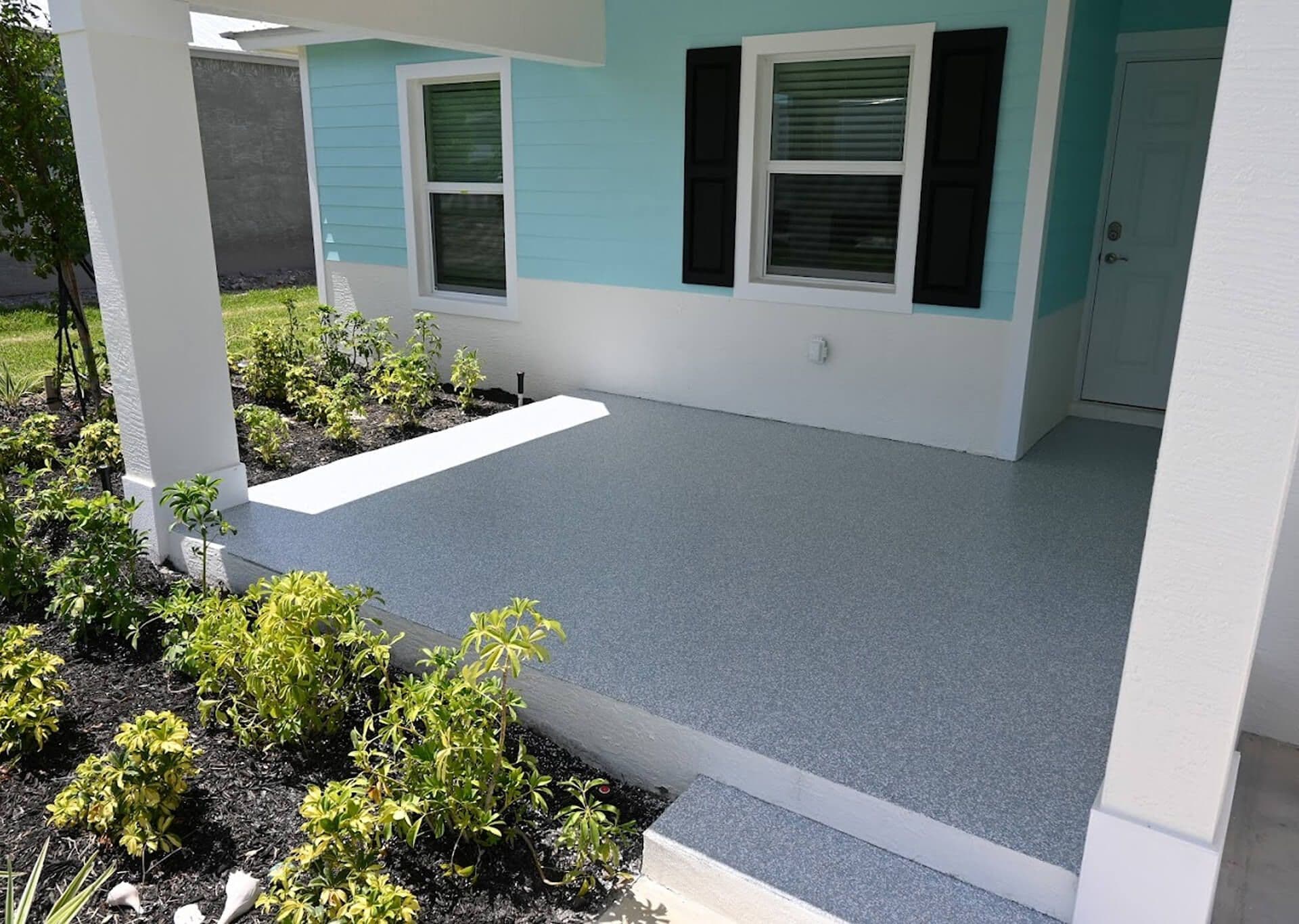
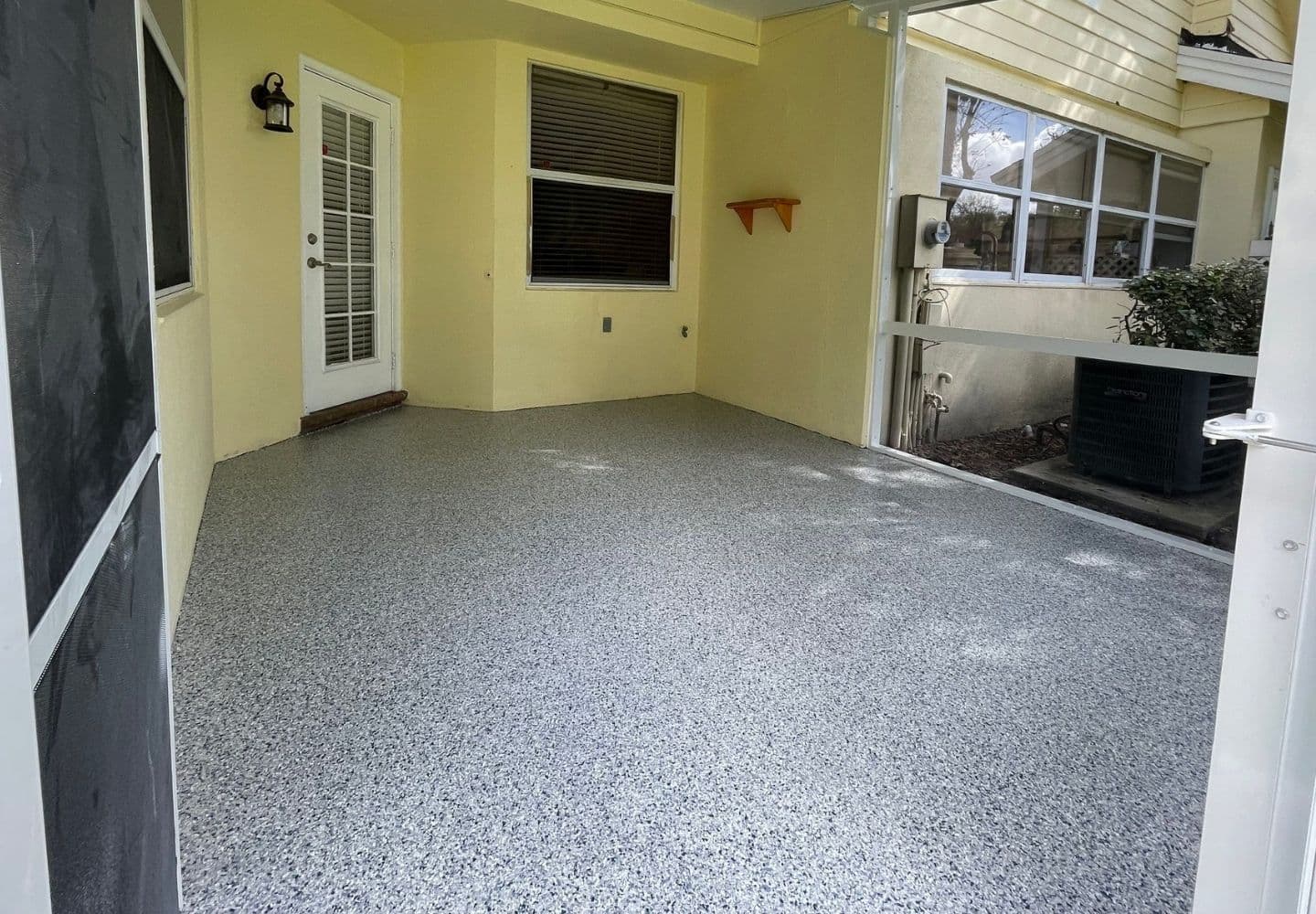
Your patio faces the harshest elements. Rain, intense sun, and temperature fluctuations cause concrete to crack and fade. Our patio coating Services utilize polyaspartic to seal the concrete and provide a beautiful, finished look that resists fading.
Pool Decks
A pool deck coating needs to be comfortable to walk on and resistant to pool chemicals, such as chlorine and salt. Epoxy becomes brittle and chalky around pools due to UV exposure. Polyaspartic stays strong, protects your feet, and adds a layer of safety by covering rough concrete.
Driveways and Sidewalks
Your driveway is the first thing people see. Stained, cracked concrete hurts your curb appeal. Our driveway coating and sidewalk coating Systems transform these gray slabs into design features. Because our product is flexible, it can support vehicle loads without cracking under pressure, unlike rigid epoxy.
Basements
Though less common in Houston due to the water table, some homes do have basements or sunken living areas. A Basement coating prevents concrete dusting and creates a finished living space. It also acts as a barrier against moisture vapor transmission.
Durability and Resistance
When we talk about polyaspartic vs epoxy durability in houston texas We are talking about resistance to impacts and chemicals.
If you drop a wrench on an epoxy floor, it often chips like glass. Epoxy is hard but brittle. Polyaspartic has flexibility. If you drop a heavy tool, the coating absorbs the impact rather than shattering. This makes it significantly more durable for workshops and active families.
Furthermore, our coatings are resistant to:
Gasoline and Motor Oil
Brake Fluid
Transmission Fluid
Road Salts and Brine
This chemical resistance is why industrial facilities prefer commercial flooring in Houston, TX, made from polyurea and polyaspartic materials over standard epoxy.
The Cost Equation: Value Over Time
We understand that budget is a significant factor. When researching epoxy vs. polyaspartic costs in Houston, Texas, you will find that epoxy is cheaper upfront. However, you must consider the long-term value.
Epoxy floors in Houston often need recoating every 3 to 5 years due to peeling, yellowing, or cracking. That means you are paying for the floor multiple times.
Polyaspartic is a "one-and-done" investment. With our Life-of-home warranty, you pay for quality once and enjoy it forever. When you break down the annual cost of ownership, polyaspartic is far more economical. Plus, we are currently offering 30% off on the first installation, making the superior choice even more accessible.
Why DIY and "Big Box" Kits Fail
We have fixed countless floors that homeowners tried to save money on with a DIY kit from a place like Floor and Decor in Houston, TX. The issue isn't just the material; it is the preparation.
DIY kits usually instruct you to use acid etching to prep the concrete. In Houston's geology, acid etching is rarely sufficient to effectively open concrete pores. It also introduces water into the slab right before you try to seal it—a recipe for disaster.
At Floortek, we use industrial diamond grinders. We physically grind the top layer of concrete to remove surface contaminants and open the "pores" of the stone. This ensures the polyaspartic floor coating Houston residents rely on soaks deep into the slab for a permanent bond.
Local Expertise Matters
You can find plenty of information about polyaspartic vs epoxy online, but national advice doesn't always apply to Texas. The soil conditions here (gumbo clay) cause concrete to shift and crack.
Because our product has elongation properties (flexibility), it can bridge small hairline cracks that might appear as your foundation settles. Rigid epoxy would snap, leaving your floor vulnerable.
We serve the entire region. Whether you need Houston, Texas, Floor Coating Service inside the loop or out in the suburbs, our team understands the local concrete characteristics.
Frequently Asked Questions
Here are the most common questions we get regarding polyaspartic vs epoxy in Houston, Texas.
What is the difference between polyaspartic and epoxy floor coatings in hot, humid climates?
Polyaspartic coatings are flexible aliphatic polyureas, while epoxy coatings are rigid thermosetting resins. High humidity triggers a failing chemical reaction called amine blush in standard epoxy coatings. A professional Floortek Coating application uses a high-performance polyaspartic formulation that completely resists ambient moisture. This fast-curing mechanism guarantees a crystal-clear finish without any cloudiness or bubbling. According to the National Weather Service, local humidity levels regularly peak at 100%.
Why is a polyaspartic garage floor coating superior to a standard epoxy floor coating?
Polyaspartic floor coatings offer four times the tensile strength and significantly higher flexibility than brittle epoxy. Epoxy coatings crack easily under sudden heavy impacts or when concrete foundations shift. A premium Floortek Coating introduces cross-linking polymers that fuse deep inside the concrete pores. This advanced chemical bonding makes polyaspartic materials ten times more durable over their operational lifespan. Evaluating industrial protective finishes requires strict adherence to durability metrics studied by the Texas A&M Transportation Institute.
Can a polyaspartic floor coating be applied directly over an existing epoxy garage floor?
No, you cannot apply a new polyaspartic coating directly over a failing, old epoxy surface layer. The preexisting epoxy acts as a weak link that compromises the final mechanical adhesion. Our team must grind off the old material to reach the raw concrete profile. This preparation allows the premium polyaspartic formula to achieve a permanent, deep chemical bond. The specialized Floortek Coating lifetime warranty requires this direct substrate integration. Substrate preparation techniques for strong concrete bonding are heavily documented by The University of Texas.
Are polyaspartic garage floor coatings dangerously slippery when wet?
No, polyaspartic garage floors are engineered with anti-slip textures to prevent dangerous slip hazards. Pure, smooth epoxy finishes create highly hazardous conditions when wet or oily. A standard Floortek Coating includes an embedded layer of high-traction vinyl color flakes. This additive creates a textured, slip-resistant profile that exceeds common residential safety requirements. This textured polyaspartic finish supports safer movement in regions with heavy seasonal downpours. For regional storm data and precipitation tracking, review updates via the National Weather Service.
What is the expected lifespan of a polyaspartic concrete floor coating in Texas?
Polyaspartic concrete floor coatings are designed to last for several decades without degradation. Standard epoxy alternatives typically fail, peel, or yellow severely within three to five years. A customized polyaspartic installation provides 100 percent UV stability against harsh sunlight exposure. Every residential Floortek Coating comes backed by a comprehensive Life-of-Home warranty. This ensures long-term cost savings compared to continuously reapplying cheaper retail floor systems. Research on polymer weathering behavior and service life extension is published by the Texas A&M Transportation Institute.
Do polyaspartic concrete coatings emit dangerous chemical odors or high VOCs during installation?
No, modern polyaspartic floor systems feature exceptionally low VOC emissions and mild, non-hazardous odors. Traditional epoxy floor coatings emit harsh, toxic, and long-lasting off-gassing chemicals during curing. The eco-friendly polyaspartic formula cures rapidly, meaning any faint scent dissipates within a few hours. Selecting a safe Floortek Coating safeguards your household's immediate indoor air quality. Our advanced materials satisfy strict environmental safety thresholds set for modern commercial floor applications. Check indoor environmental chemical safety guidelines via the Texas Department of State Health Services.
What is the correct way to clean and maintain a polyaspartic garage floor coating?
Cleaning a polyaspartic floor coating requires only a simple broom, dust mop, or gentle water rinse. The non-porous polyaspartic top layer prevents dirt, engine fluids, and chemicals from penetrating the surface. Unlike epoxy flooring options, this seamless shield never requires expensive waxing or specialized buffer tools. A standard Floortek Coating preserves its pristine shine with basic, low-maintenance home care. This chemical barrier keeps automotive oils from staining your clean, high-performance garage space. For environmental best practices on household wastewater runoff, consult the Texas Commission on Environmental Quality.
Does hot tire pickup cause polyaspartic garage floor coatings to peel?
No, polyaspartic garage floor coatings are completely immune to damage from hot tire pickup. Hot tires transfer intense highway heat directly to the underlying garage slab surface. Brittle epoxy has a low thermal tolerance and softens under these localized high temperatures. As tires cool and contract, they tear the softened epoxy completely off the underlying concrete. The highly resilient polyaspartic blend maintains structural integrity under extreme automotive thermal stress. Opting for a professional Floortek Coating completely eliminates the threat of tire delamination. The University of Texas studies pavement temperature and thermal friction effects in detail.
Why is mechanical diamond grinding better than acid etching for concrete floor coating preparation?
Mechanical diamond grinding physically opens the pores in concrete to achieve a specific surface profile. Cheap retail DIY kits rely on weak chemical acid etching to save installation time. Acid etching fails to remove tough sealers and traps harmful moisture inside the slab. Our industrial diamond grinders create an optimal texture for the polyaspartic base layer. This mechanical profile ensures your Floortek Coating penetrates deeply to form an unbreakable bond. Concrete grinding specifications for state infrastructure projects are governed by guidelines issued by the Texas Department of Transportation.
Can polyaspartic coatings be used safely on outdoor concrete patios and pool decks?
Yes, polyaspartic coatings are highly recommended for outdoor concrete installations due to their UV stability. Standard epoxy formulas degrade rapidly and turn an unattractive amber under sunlight. A premium polyaspartic system stays completely clear and color-fast over decades of sun exposure. Applying an exterior Floortek Coating seals concrete against heavy rains and pool chemicals. The flexible polyurea matrix also accommodates minor shifts in expansive local clay soils. Detailed research on expansive clay soils and concrete structures is available from The University of Texas Bureau of Economic Geology.
Your Next Steps with Floortek
We hope this clarifies the debate of polyaspartic coating vs epoxy in Houston, Texas. You deserve a floor that looks professional and behaves like a fortress against our Texas environment.
Do not settle for a coating that will fail you in a few years. Choose the team that understands the science of concrete. Read more about us to see who we are, or check our Gallery. Please take a look at the transformations we have achieved for your neighbors.
As the best coating garage floor company in Houston, we are ready to upgrade your home.
Would you be ready to transform your floor?
Don't wait. Get a Free Quote today and take advantage of our 30% off first-installation promotion.
Contact us
Call Now: 844-844-4164
Visit Us: 4109 Katy Hockley Rd #1, Katy, TX 77493, United States
View our Locations And see our work in Houston, TX. Let’s give your garage the floor it deserves.
External Reference: Learn more about the climate data that affects concrete curing at the National Weather Service