Basement Floor Coating Stuart | 1-Day Polyaspartic Coatings
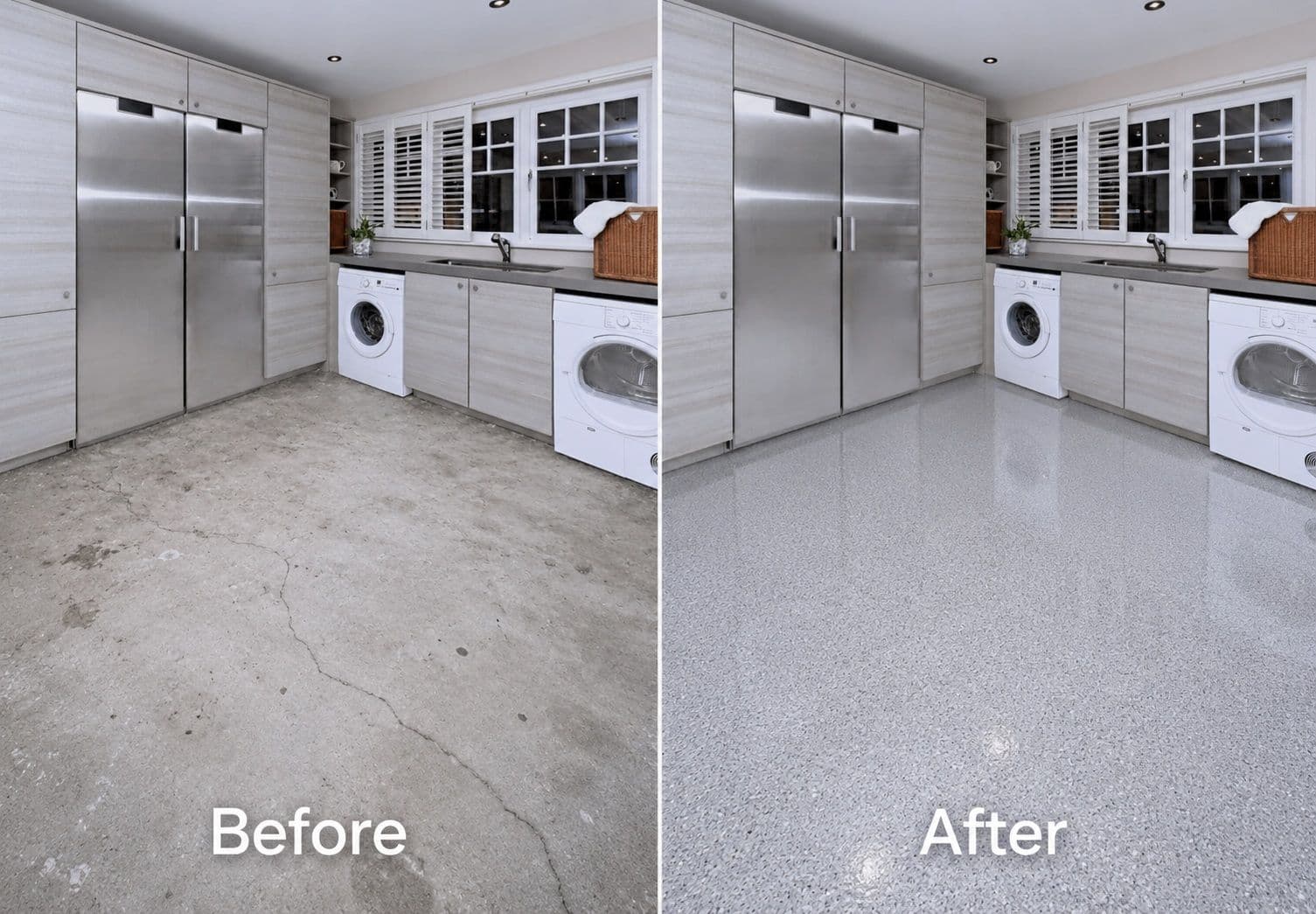
Installing a high-performance basement floor coating that Stuart property owners can rely on requires choosing materials engineered for heavy ground dampness and coastal humidity. Can epoxy flooring be done in one day? Standard epoxy formulations typically require multi-day application schedules and cure slowly. In contrast, professional polyaspartic systems allow rapid turnarounds, often completed in as little as one day for most residential jobs. Is polyaspartic an effective alternative to epoxy? Learn how the systems compare in durability, flexibility, UV stability, curing time, and everyday performance.
While most homes in coastal Stuart, Florida sit directly on ground-level concrete slabs without traditional below-grade basements, specialized sub-grade storage cells, commercial utility basements, and walk-out ground rooms face extreme subterranean moisture pressure. At FloorTek Coatings, we manufacture what we install. Our factory-direct, USA-made coatings give home and business owners superior protection against local soil dampness, high water tables, and continuous wear. While our primary regional hub operates locally at 3050 SE Federal Hwy, Stuart, FL 34994, our specialized installation crews bring these same slab-sealing technologies to regional properties, drawing structural expertise from work across damp environments in cities like Houston, Austin, and San Antonio, Texas.
What Is a Polyaspartic Basement Floor Coating?
A polyaspartic basement floor coating is an advanced aliphatic polyurea resin system that Stuart property owners choose. It bonds directly with raw concrete substrates at a microscopic level.
Unlike traditional paints or basic surface sealers, polyaspartic coatings cure through chemical cross-linking. This reaction creates a dense, continuous protective film over ground-level and subterranean concrete slabs.
Polyaspartic vs. Generic Epoxy Technology
Generic epoxy resins have long served as a basic floor covering. However, polyaspartic polymer technology offers distinct chemical advantages for Florida structures:
Flexibility: Polyaspartic coatings remain flexible over time. They absorb minor slab movement without cracking or peeling.
Cure Speed: Polyaspartic systems cure rapidly through atmospheric moisture. This allows property owners to return to full floor use in 24 hours.
UV Stability: Polyaspartic resins are naturally aliphatic. They will not yellow or amber when exposed to direct sunlight near basement windows or exterior entryways.
Chemical Resistance: Polyaspartic topcoats resist household chemicals, motor oil, bleach, and standing water.
Temperature Tolerance: Polyaspartic materials tolerate extreme indoor temperature shifts without softening or becoming tacky.
The Mechanics of FloorTek Coatings
As a manufacturer-direct supplier, FloorTek Coatings formulates resins specifically for high-moisture environments. We eliminate third-party supply markups and maintain total quality control over every batch.
Our systems use LAB-TESTED materials built to withstand heavy physical impacts and abrasive soil conditions. By controlling the chemistry from raw material synthesis to surface application, we deliver consistent, long-lasting surface protection for every residential and commercial project.
Why Stuart Slabs Need Heavy-Duty Moisture Protection
Concrete is naturally porous. In coastal environments like Stuart, ground-level and subterranean concrete slabs continually absorb ambient moisture from the ground.
Without proper surface prep and sealing, rising water vapour creates hydrostatic pressure beneath surface coatings. This pressure forces lower-quality materials to lift, bubble, and separate from the concrete base.
Tackling Hydrostatic Pressure and Soil Dampness
Hydrostatic pressure occurs when water accumulates around a foundation slab. Soil moisture pushes upward through the tiny capillary pores inside the concrete.
To prevent moisture damage, we add an extra layer called a vapour barrier. This moisture vapour mitigation barrier blocks rising moisture before the decorative topcoats are applied. Blocking subterranean dampness protects utility basements, storage cells, and lower-level rooms from moisture-related floor failure.
Moisture Testing Before Installation
Before applying any protective layer, professional installers check slab moisture conditions using calibrated testing instruments:
Relative Humidity (RH) Probe Testing: Measures moisture levels inside the concrete slab according to ASTM F2170 Standards.
Calcium Chloride Testing: Calculates the rate of water vapour emissions coming off the slab surface following ASTM F1869 Guidelines.
Electronic Surface Meters: Identify localized wet spots and damp concrete pockets before mechanical prep begins.
The 6-Step Installation Process for Basement Floors
Achieving a durable finish requires precise mechanical preparation and structured material application. Our trained field technicians execute a systematic installation method designed to protect sub-grade slabs for decades, completing most residential installations in as little as one day, depending on slab condition and square footage.
Step 1: Surface Inspection and Moisture Diagnostics
We evaluate the concrete substrate to determine its structural integrity, age, and internal moisture content. Technicians check for existing sealers, soft concrete layers, or previous coating failures.
Step 2: Mechanical Diamond Grinding
We never use acid etching to prepare concrete. Acid washing introduces excess water into the slab and leaves dangerous chemical residues behind.
Instead, our crews use heavy industrial diamond grinders attached to pulse-cleaning HEPA dust extractors. Diamond grinding removes old finishes, opens concrete pores, and creates a Concrete Surface Profile 2 or 3 (CSP-2 to CSP-3) as defined by the International Concrete Repair Institute (ICRI).
Step 3: Crack, Joint, and Spall Repair
Every structural crack, pop-out, and expansion joint is cleaned and filled with high-strength polyurea mender compounds.
Cracks are routed open to remove loose debris.
Polyurea mender is injected deep into the void.
The repaired area is ground flush with the surrounding concrete matrix.
This process ensures a smooth, unbroken foundation layer across the entire floor.
Step 4: Moisture Vapor Barrier Basecoat Application
Our technicians mix and apply our deep-penetrating basecoat. This layer wicks deep into the diamond-ground concrete pores. It creates a powerful mechanical anchor while locking out subterranean moisture emissions.
Step 5: Full Vinyl Flake Broadcast
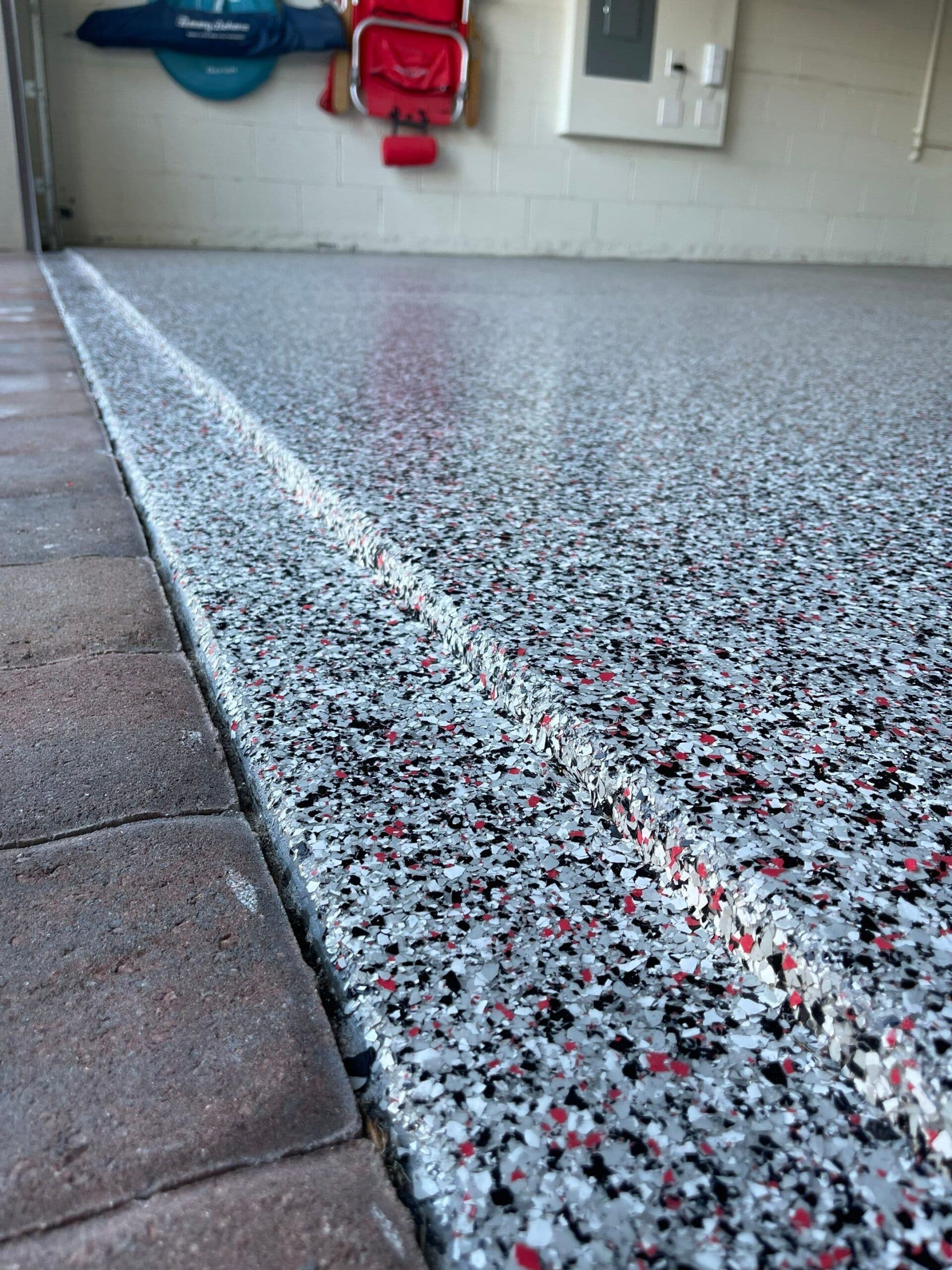
While the basecoat remains wet, custom vinyl color flakes are broadcast across the floor to total saturation.
This full-flake layer adds visual depth, conceals minor concrete imperfections, and enhances impact resistance. Once cured, we scrape off excess flakes and thoroughly vacuum them away.
Step 6: Clear Polyaspartic Protective Topcoat
The final step is applying our high-solids, clear polyaspartic topcoat. This shield encapsulates the vinyl flakes, sealing the entire floor system against chemicals, water, abrasion, and daily traffic.
FloorTek Warranties: Long-Term Protection Defined
Investments in home infrastructure deserve clear, long-term written protections. FloorTek Coatings stands firmly behind every residential and commercial installation with structured warranty coverage.
One Floor. Two Guarantees. Guaranteed not to peel for the life of your home. Guaranteed not to fade for fifteen years. Both in writing.
Our warranties are divided into two distinct protections based on material science and direct manufacturing control:
Our coatings are covered by the Life of Home warranty against peeling and delamination.
And because we manufacture our own coatings, they also carry a 15-year no-fade warranty, a second guarantee covering a different kind of failure.
These warranties ensure that your floor investment remains protected against material defects, bond loss, and color degradation over time.
Surface Comparison: Polyaspartic vs. Alternative Coatings
Selecting the right sub-grade floor material requires evaluating long-term performance factors. The list below outlines how professional polyaspartic compares against alternative floor coverings:
Polyaspartic Floor Systems
Primary Material: 100% solids aliphatic polyaspartic polyurea.
Installation Time: Completed in as little as one day for most jobs.
Return to Usage: Walk-on ready in as little as 4 to 8 hours; full return to use in 24 hours.
Moisture Resistance: High resistance when paired with a dedicated vapor barrier basecoat.
UV/Fading Resistance: Complete resistance to UV yellowing and color fading.
Maintenance Needs: Simple sweeping and damp mopping with neutral cleaners.
Professional Epoxy Coatings
Primary Material: Standard two-part bisphenol epoxy resins.
Installation Time: Requires 2 to 4 days of multi-step application.
Return to Usage: Requires 3 to 7 days before light foot or heavy traffic.
Moisture Resistance: Moderate; prone to blistering under sustained hydrostatic pressure.
UV/Fading Resistance: Poor; turns amber and yellow when exposed to light.
Maintenance Needs: Periodic recoating required after surface wear or dulling occurs.
DIY Floor Coating Kits
Primary Material: Water-based acrylic or low-solids epoxy paint.
Installation Time: Variable; typically a 2-day home installation process.
Return to Usage: Requires 5 to 7 days to dry completely.
Moisture Resistance: Low; frequently peels when exposed to minor dampness.
UV/Fading Resistance: Very low; degrades quickly under light exposure.
Maintenance Needs: Frequent patching, scrubbing, and total touch-ups required.
Interlocking Floor Tiles & Vinyl
Primary Material: Polypropylene plastic or PVC composite strips.
Installation Time: 1 to 2 days of manual snapping and trimming.
Return to Usage: Immediate use after physical layout.
Moisture Resistance: Traps moisture beneath tiles, encouraging mould and bacterial growth.
UV/Fading Resistance: Moderate; plastic can warp under heat.
Maintenance Needs: Requires lifting tiles to clean trapped dirt and standing water underneath.
Factors Influencing Your Overall Project Quote
Several concrete slab variables determine final project costs:
Concrete Condition: Slabs requiring extensive crack routing, spall repairs, or deep pitting restoration require additional prep time and repair resins.
Moisture Mitigation Needs: High moisture readings mandate an extra application of a specialized vapor barrier basecoat before topcoat installation.
Previous Coating Removal: Slabs covered with old paint, glue, or failed epoxy require heavy diamond grinding to strip the surface down to bare, porous concrete.
Vertical Surfaces & Edges: Coating stem walls, stairs, and vertical footers requires hand-tooling and vertical-grade resin formulations.
Specialty Color Blends: Custom vinyl flake selections or specialized metallic chips alter total material costs.
To receive an accurate, written estimate tailored to your slab, schedule a free on-site estimate through our Contact Us page.
Maintenance and Care for Polyaspartic Floors
Maintaining a polyaspartic basement floor coating installation in Stuart is straightforward. The non-porous finish prevents dirt, oil, and liquid spills from penetrating the concrete beneath.
Daily and Weekly Cleaning Routines
Dust Mopping: Sweep away loose dirt, dust, and sand using a soft-bristle push broom or microfiber dust mop.
Damp Mopping: Wash the floor periodically using warm water and a neutral pH cleaner.
Spot Cleaning: Wipe up oil, grease, or household chemical spills using a soft rag or paper towel.
Avoid Damaging Cleaners and Tools
Avoid Harsh Acids: Do not use citrus-based cleaners, pure ammonia, or concentrated acid washes.
Skip Abrasive Pads: Avoid wire brushes or harsh scouring pads that can dull the clear topcoat finish over time.
No Waxes Needed: Polyaspartic topcoats maintain their finish naturally without wax treatments or topical polishes.
For additional care guidelines or to view installed finish styles, visit our Colors and Flake Options page or browse our completed projects on the Floortek Gallery.
Specialized Coating Services for Residential Properties
In addition to transforming lower-level spaces and utility rooms, our installation teams apply protective coatings across all exterior and interior concrete surfaces.
Each area faces distinct environmental exposures, from harsh sunlight and automotive fluids to standing pool water. Explore our specialized local service offerings across Stuart, Florida below:
Protect your main vehicle storage areas against hot-tire pickup and oil leaks with our high-durability one-day garage floor coating options.
Upgrade outdoor living spaces, screen enclosures, and lanais with our UV-stable patio coating service.
Keep pool surrounds cool, textured, and slip-resistant with our specialized pool deck coating service.
Enhance curb appeal and prevent concrete cracking along entryways with our heavy-duty driveway coating service.
Seal outdoor walkways and garden paths against rain damage using our professional sidewalk coating service.
Seal indoor concrete slabs and utility zones against soil moisture using our dedicated Basement coating service.
Frequently Asked Questions
What are the common problems with concrete floor coatings and how to avoid them?
Common concrete coating problems include peeling, bubbling, cracking, and yellowing. Peeling and bubbling usually occur when installers fail to run moisture tests or use acid etching instead of diamond grinding. Yellowing happens when low-grade epoxy resins degrade under UV exposure.
You can avoid these issues by choosing a professional FloorTek Coating polyaspartic system. Our technicians use industrial diamond grinding to prepare the slab and apply moisture-mitigating polyurea basecoats.
Proper mechanical preparation ensures deep mechanical adhesion that prevents surface lift, while our aliphatic polyaspartic topcoats maintain optical clarity without fading or ambering. According to research published by the Federal Highway Administration (FHWA), mechanical surface preparation significantly enhances thin-polymer coating adhesion on concrete structures.
Can a polyaspartic basement floor coating stuart be installed over damp concrete?
No floor coating should ever be applied directly over active standing water or saturated concrete. However, polyaspartic systems can handle higher concrete moisture levels than standard epoxy when combined with a dedicated vapor barrier basecoat.
Our technicians perform relative humidity (RH) testing on every slab before applying a FloorTek Coating. If high moisture vapor emissions are detected, we apply an engineered moisture mitigation layer that locks out ground dampness.
This process protects the polyaspartic topcoat from hydrostatic pressure buildup beneath the slab. Diagnostic standards established by ASTM International recommend comprehensive moisture testing before placing non-porous floor coverings on concrete.
How long does a basement floor coating Stuart project take to install?
A complete residential polyaspartic coating project is typically completed in as little as one day, depending on square footage and prep requirements. Our fast-curing polyurea resins allow technicians to prep, repair, basecoat, flake, and topcoat your floor in a single operational visit.
Homeowners can safely walk on their new FloorTek Coating floor in as little as 4 to 8 hours after the final topcoat is applied. Full return to heavy use, furniture placement, and equipment storage generally occurs within 24 hours.
In contrast, standard epoxy systems require multi-day drying periods between coats, keeping your space off-limits for up to a week. Research from the National Institute of Standards and Technology (NIST) highlights how rapid-curing polymers streamline building maintenance cycles.
How does a polyaspartic basement floor coating stuart handle hot and humid climates?
Polyaspartic coatings handle heat and humidity exceptionally well because of their superior thermal stability and flexible molecular structure. Unlike traditional epoxy coatings, which can soften, blister, or become tacky under high heat, polyaspartic materials maintain structural strength across extreme temperature fluctuations.
Applying a high-solids FloorTek Coating creates an impermeable surface shield that resists ambient moisture absorption and humidity damage. Polyaspartic topcoats also resist hot-tire pickup, preventing tires from pulling the coating off the concrete floor.
Studies by the U.S. Army Corps of Engineers (USACE) confirm that polyurea and polyaspartic formulations maintain excellent adhesion and elastomeric performance in harsh tropical environments.
Is a polyaspartic basement floor coating stuart slip-resistant?
Yes, polyaspartic floor systems provide excellent slip resistance when applied with a full vinyl flake broadcast and textured topcoats. The vinyl flake layer creates a slightly raised, uniform surface profile that offers reliable foot traction even when damp.
For high-moisture zones, we can incorporate specialized anti-slip additives directly into your clear FloorTek Coating topcoat to boost grip further. This ensures a safe walking surface for utility spaces, storage rooms, and ground-level floors.
The Occupational Safety and Health Administration (OSHA) highlights proper floor slip resistance as a critical step in preventing slip-and-fall injuries across commercial and residential spaces.
Will a polyaspartic basement floor coating turn yellow or fade over time?
No, polyaspartic floor coatings will not yellow, fade, or amber over time. Polyaspartic resins are naturally aliphatic, meaning their molecular structure is completely stable under exposure to ultraviolet (UV) radiation.
Even when exposed to direct sunlight near windows, walk-out doors, or open bays, a clear FloorTek Coating topcoat remains clear and glossy. Standard epoxy resins are aromatic, which causes them to chalk, darken, and turn yellow over time when exposed to UV rays.
Material research from the National Renewable Energy Laboratory (NREL) demonstrates that aliphatic polymer backbones resist solar photo-degradation far better than standard aromatic epoxy resins.
How do I prepare my home for a basement floor coating Stuart installation?
Preparing your home for installation simply requires clearing all personal items, equipment, and storage boxes off the concrete surface. The floor must be completely bare so our technicians can operate diamond grinding machinery across every square foot.
Once the area is clear, the FloorTek Coating installation crew handles all surface preparation, including mechanical grinding, crack repairs, vacuum cleaning, and coating application.
You do not need to wash or acid-etch the concrete beforehand, as our industrial diamond grinders strip the slab down to clean, porous concrete. Guidelines from the American Concrete Institute (ACI) emphasize that professional mechanical surface preparation is essential for long-term coating performance.
Can a polyaspartic basement floor coating stuart fill minor cracks and surface pits?
Yes, we repair minor cracks, surface pits, and spalls as part of our standard preparation process before applying basecoats. Our field technicians route out small cracks and inject high-strength polyurea mender resins into concrete voids.
This repair compound cures quickly and is ground completely flush with the surrounding slab, creating a smooth foundation for your FloorTek Coating. Addressing structural imperfections before basecoat application prevents cracks from telegraphing through your finished floor.
Technical manuals published by the U.S. Department of Transportation (DOT) support using polymer repair materials to restore concrete surfaces before applying protective overlays.
What chemicals can a polyaspartic basement floor coating stuart resist?
Polyaspartic floor coatings resist a wide variety of harsh household chemicals, fluids, and cleaning agents. The non-porous clear topcoat prevents motor oil, brake fluid, gasoline, household bleach, battery acid, and standing water from staining or damaging the concrete beneath.
Applying a chemical-resistant FloorTek Coating ensures that spills can sit on the surface without breaking down the resin film or causing discoloration.
Chemical resistance testing documented by the Environmental Protection Agency (EPA) shows that cross-linked polyaspartic polymers create effective secondary containment barriers against chemical leaks and spills.
Is a polyaspartic basement floor coating stuart safe for indoor air quality?
Yes, polyaspartic floor coatings are safe for indoor residential spaces because they contain low volatile organic compounds (VOCs). Traditional solvent-based epoxy paints off-gas toxic fumes and harsh chemical odors that linger in closed spaces for days.
In contrast, our eco-friendly FloorTek Coating formulations minimize air quality impacts during application and cure rapidly without leaving strong fumes behind. This allows occupants to use their properties safely shortly after installation.
The California Department of Public Health (CDPH) maintains strict low-VOC testing standards to ensure indoor building materials maintain safe, healthy indoor air quality.
Transform Your Concrete Slabs with FloorTek Coatings
Upgrade your subterranean spaces, utility rooms, and concrete floors with a durable, lab-tested polyaspartic coating engineered for coastal environments. Contact FloorTek Coatings today at 844-844-4164 or (866) 301-7714 to discuss your project.
Visit our local showroom or regional service office at 3050 SE Federal Hwy, Stuart, FL 34994 to see physical floor samples and speak with our concrete specialists. You can also review our complete line of regional service offerings across our Floortek Locations page or request your free on-site estimate today!
FREE In-Home Estimate
Plus 30% Off
Update Your Basement Today!
Get your new floor installed in just one day with Floortek’s garage floor resurfacing services! Call us today for a free quote!
Or contact us online to schedule your consultation!
Testimonials
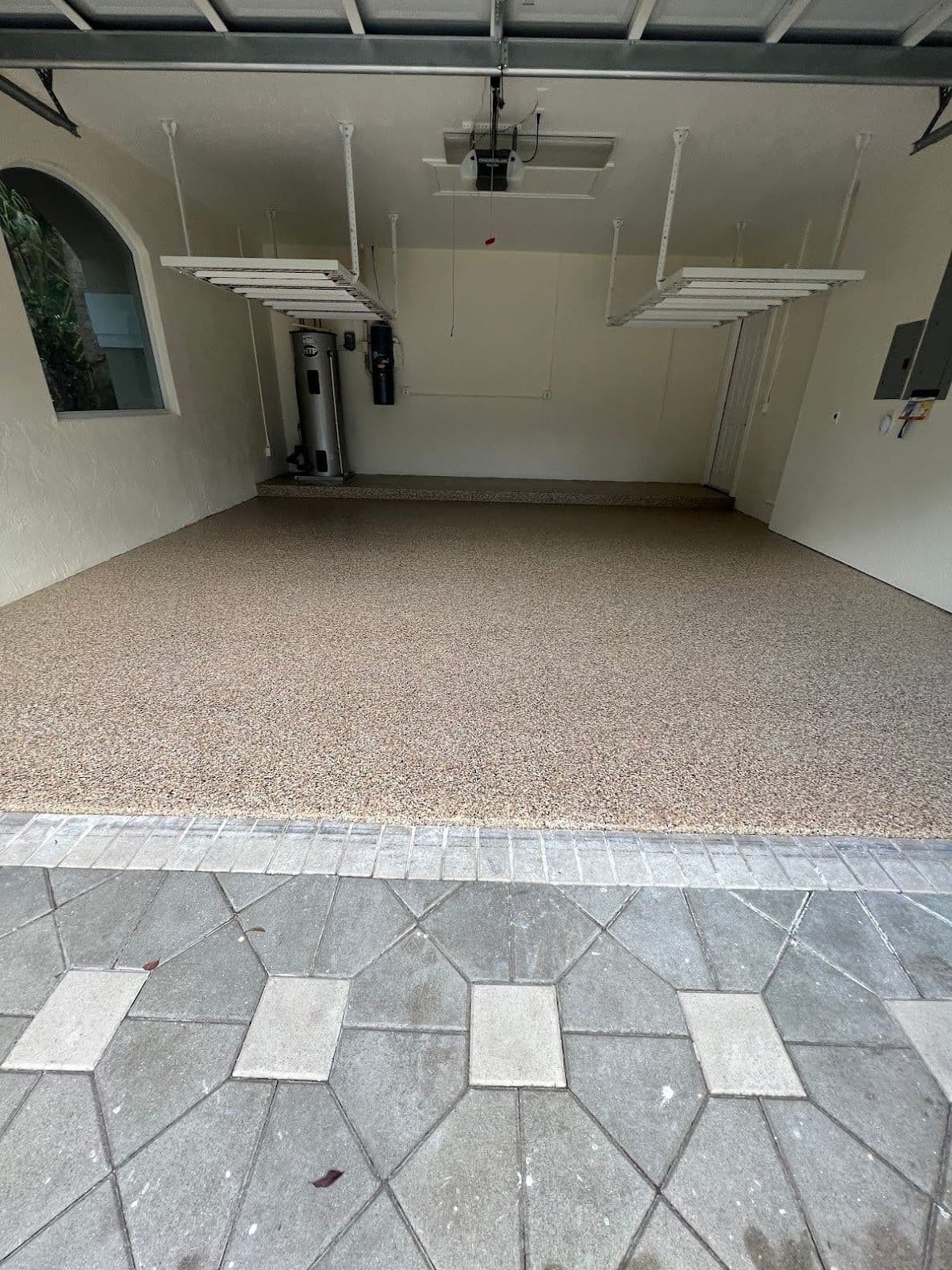
We had both of our garages done and an outdoor concrete platform. The crew was courteous and professional. Everyone from Nancy our salesperson to Patrick, the manager, Logan and his crew were outstanding. Our floors look fantastic and we were very happy we chose this company.
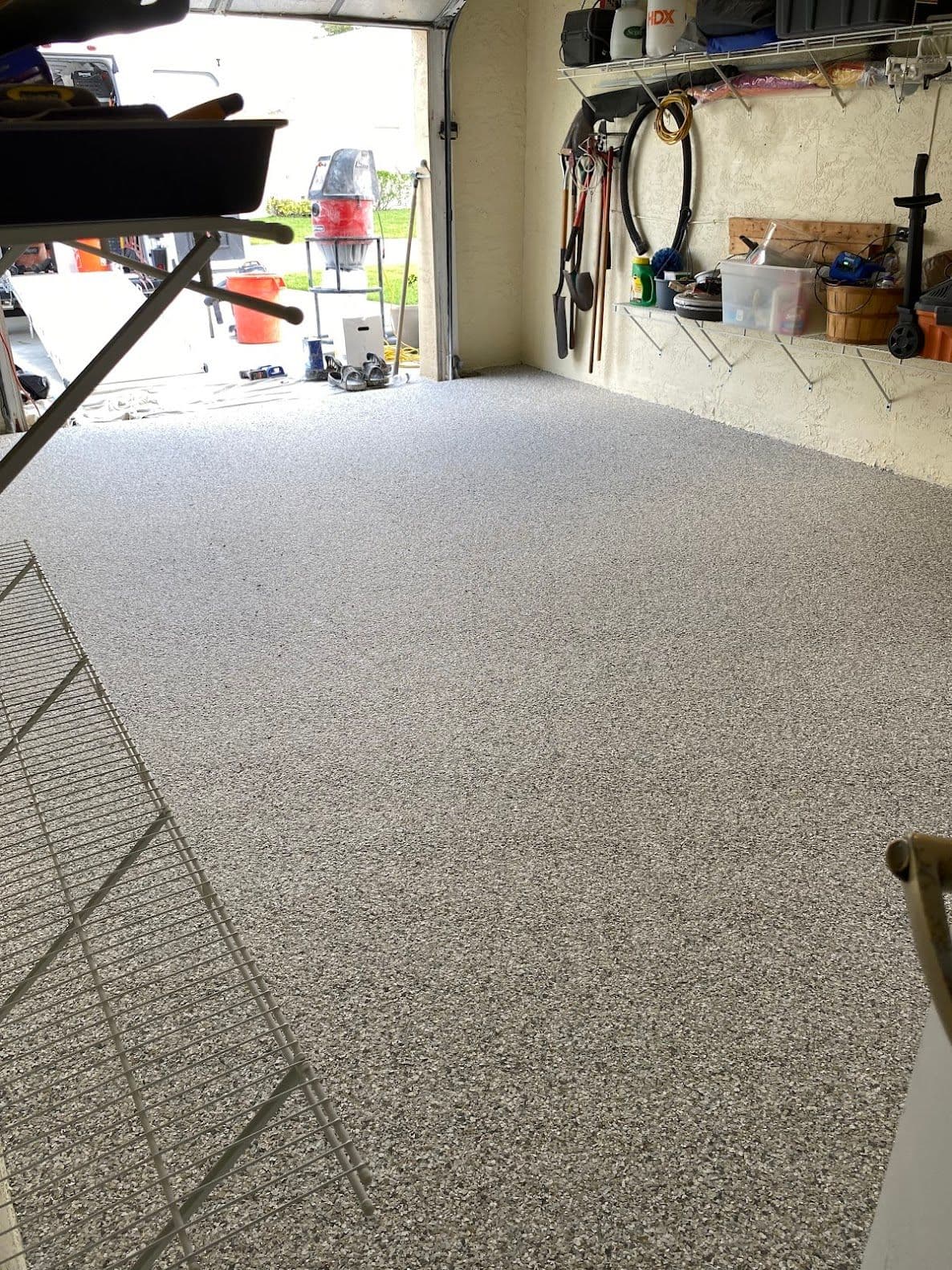
I am very pleased with the quality of work FloorTek has done for me. The two employees that did the actual work were very courteous, worked hard, and explained everything they were doing. Thank you for a great job.
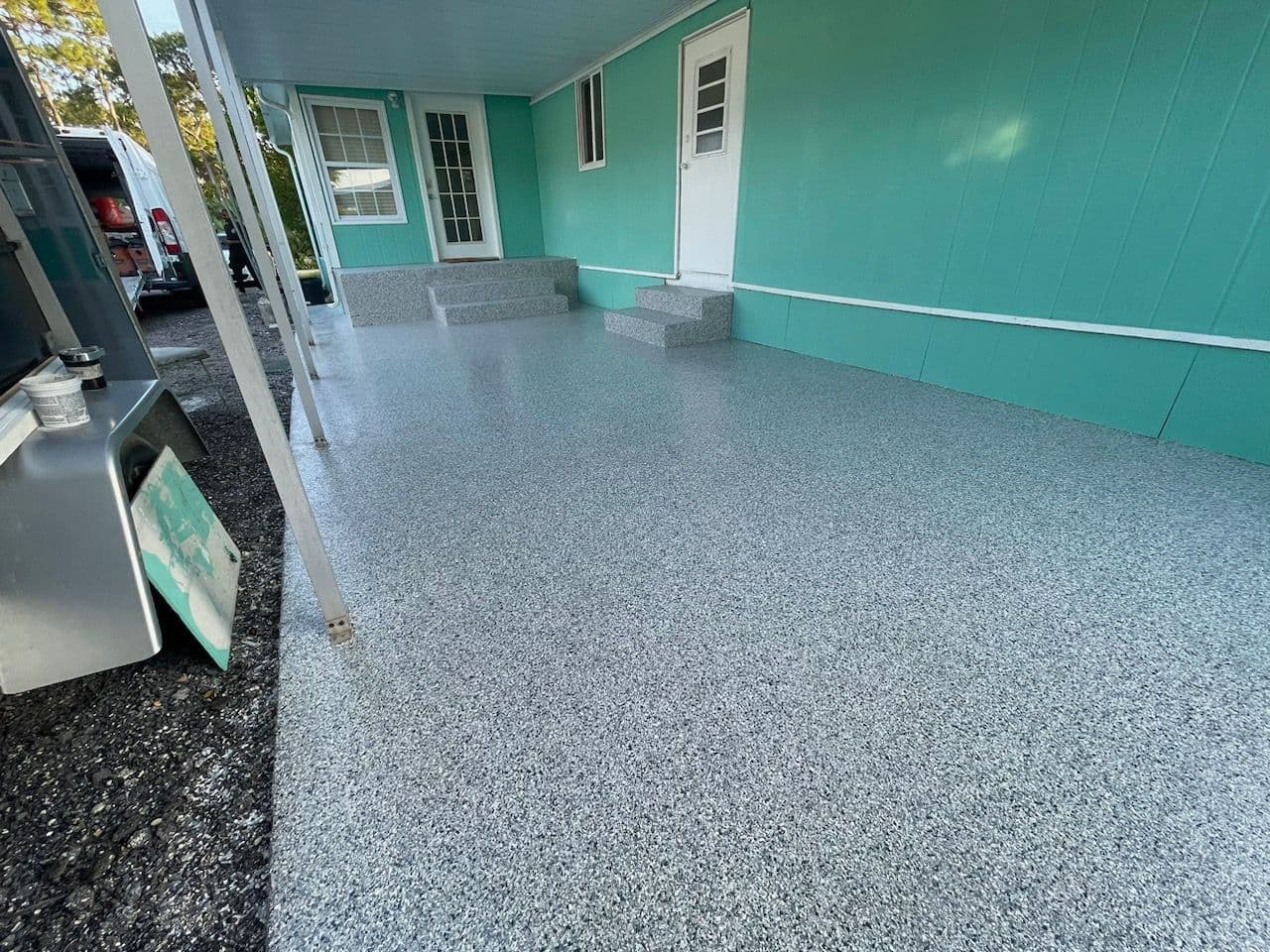
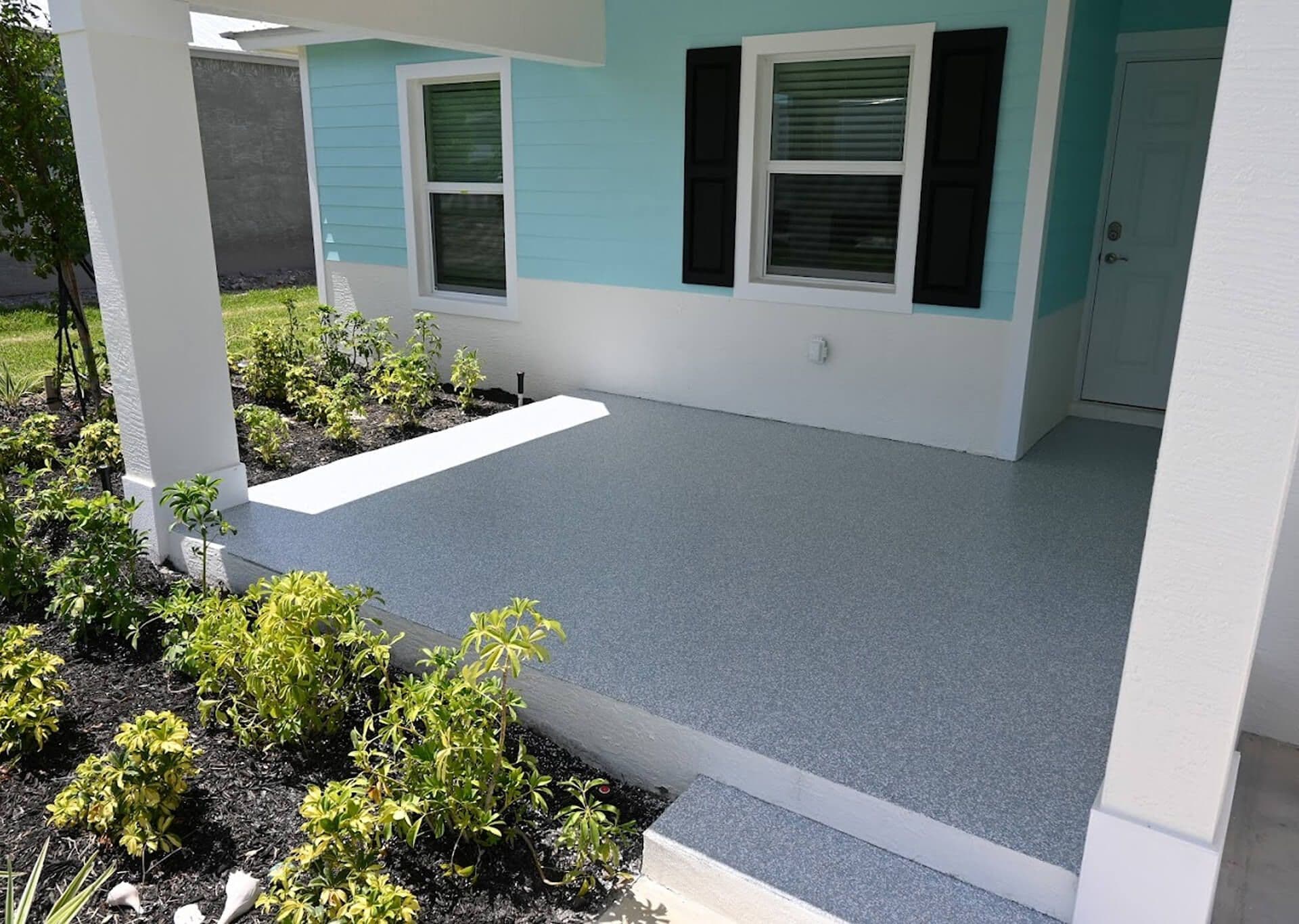
I was happy with the job Floortek did. Good customer communication and customer relationship. My old ugly porch was transformed and I love it. Nancy was very helpful throughout the process. Just know that rain may impact your schedule to make sure the products at highest quality during application.



Contact FloorTek Today